Quick 4-step process — most travelers approved within 10-15 business days
1
Complete the online application
Fill out our streamlined application form with your travel details and personal information. Our intelligent validation system pre-checks every field against Swiss and Schengen visa requirements, catching errors before submission and ensuring your application is complete and accurate.
2
Upload your documents
Submit your passport scan, recent photographs meeting Schengen specifications, travel insurance proof, and supporting documents. Our document specialists verify everything meets Swiss embassy standards, significantly reducing the risk of delays or requests for additional documentation.
3
We process your visa
Your verified application is submitted through official Schengen channels. We track processing status continuously and notify you immediately of any updates, appointment scheduling needs, or additional documentation requests via email and SMS.
4
Receive your visa
Your approved Schengen visa sticker is placed in your passport at the embassy or consulate. Once received, you're ready to explore Switzerland and travel freely throughout the 27 Schengen countries. Willkommen in der Schweiz!
Visa types needed for Switzerland
Available visa products
ETIAS Travel Authorisation - 3 years, Multiple entry Most Popular
ETIAS Travel Authorisation - 3 years, Multiple entry
ETIAS is the upcoming EU travel authorisation for visa-exempt travellers visiting the Schengen area. It is not yet in operation: order now and we prepare your application and file it with the EU the moment the system launches. Once issued, ETIAS is valid for 3 years (or until your passport expires) and covers unlimited short stays across all ETIAS countries.
Applicants must submit the following documents:
🛂 Passport: Scan of your passport bio page, valid for your trip
💳 Payment: Credit or debit card for the fee
Important to know
Presale: ETIAS is not yet in operation — we file your application when the EU launches the system
For visa-exempt (visa waiver) nationalities only
One authorisation per traveller, linked to your passport
Switzerland is a member of the Schengen Area but notably not a member of the European Union. This unique position means Switzerland participates fully in the Schengen free-movement zone while maintaining its own customs regulations and currency (Swiss Franc). A Swiss Schengen visa grants access to all 27 Schengen countries, making Switzerland an excellent gateway to European travel.
Visa-Free Countries
Citizens from approximately 60 countries can visit Switzerland without a visa for stays up to 90 days within any 180-day period. This includes passport holders from the United States, United Kingdom, Canada, Australia, Japan, South Korea, Brazil, Argentina, and all EU/EEA member states. The 90-day limit applies to total time spent across all Schengen countries combined — not per country.
Schengen Tourist Visa (Type C)
Travelers from countries not on the visa-exempt list must apply for a Schengen visa before traveling. The Short-Stay Schengen Visa (Type C) allows visits up to 90 days for tourism, visiting family or friends, business meetings, conferences, cultural events, and medical treatment. You should apply at the Swiss embassy or consulate if Switzerland is your main destination, or the country where you'll spend the most time if visiting multiple Schengen states.
Multiple-Entry Options
First-time applicants typically receive single or double-entry visas. Frequent travelers with a good visa history may qualify for multiple-entry visas valid for 1-5 years, allowing repeated visits without reapplying each time.
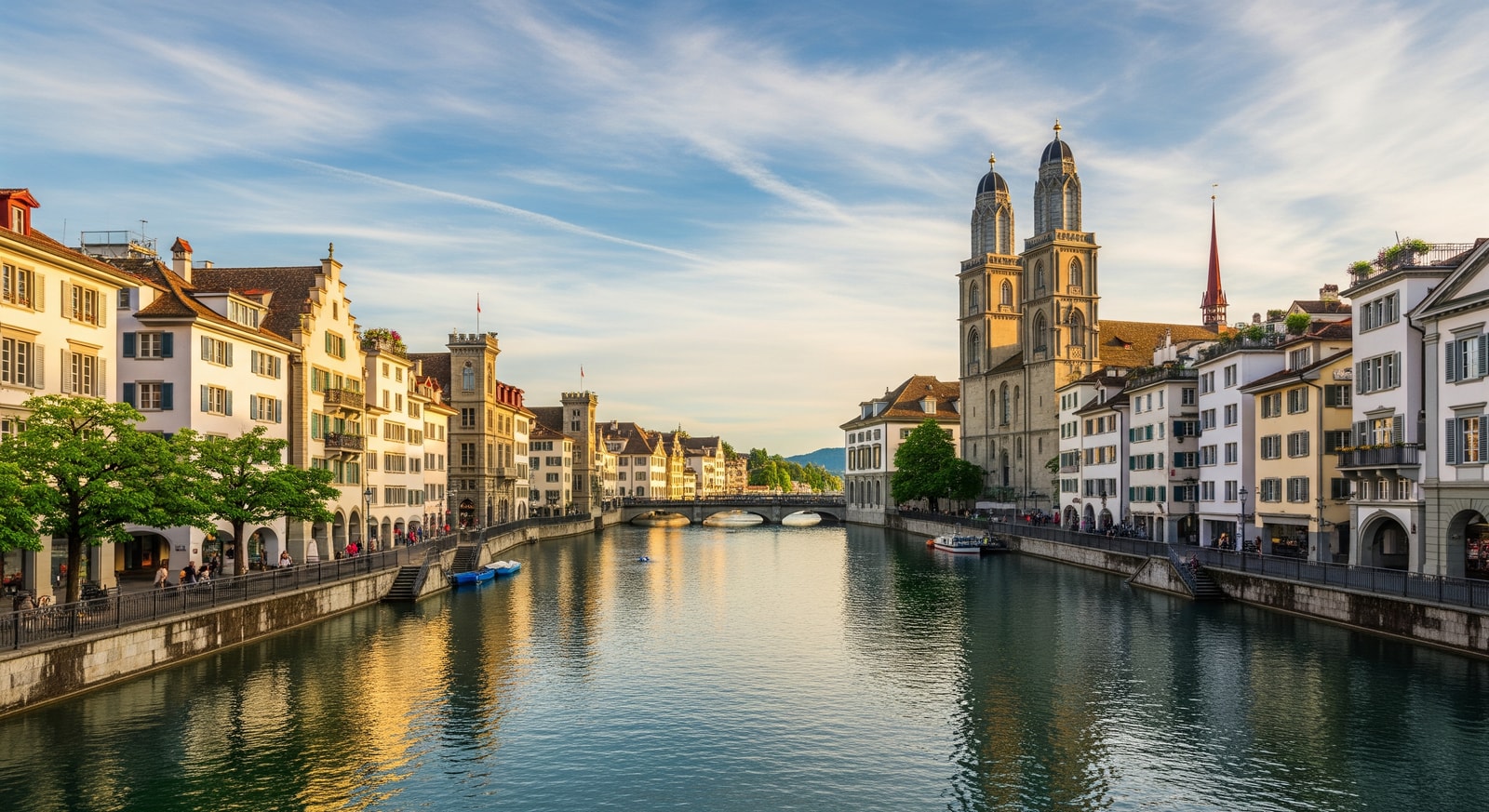
Zurich — Switzerland's largest city and a major European financial hub
Business & Work Visas
Schengen Business Visa
The Schengen Business Visa allows short-term business activities in Switzerland including attending meetings, conferences, trade fairs, negotiations, and professional training sessions. Like tourist visas, it's valid for stays up to 90 days within 180 days. Additional documentation required includes a letter of invitation from the Swiss company, proof of business ties to your home country, and evidence of the business relationship.
Swiss National Visa (Type D)
For stays exceeding 90 days or employment purposes, you need a Swiss National Long-Stay Visa (Type D) rather than a Schengen visa. This includes work permits, study programs, family reunification, and long-term business assignments. Processing takes significantly longer (8-12 weeks or more) and requires approval from Swiss cantonal authorities.
Work Permits
Switzerland operates a dual system for work permits. EU/EFTA citizens benefit from free movement agreements and can work with minimal formalities. Third-country nationals face stricter requirements, with permits generally limited to highly skilled workers, executives, specialists, and fields with documented labor shortages. Swiss employers must demonstrate they couldn't fill the position with a Swiss or EU candidate.
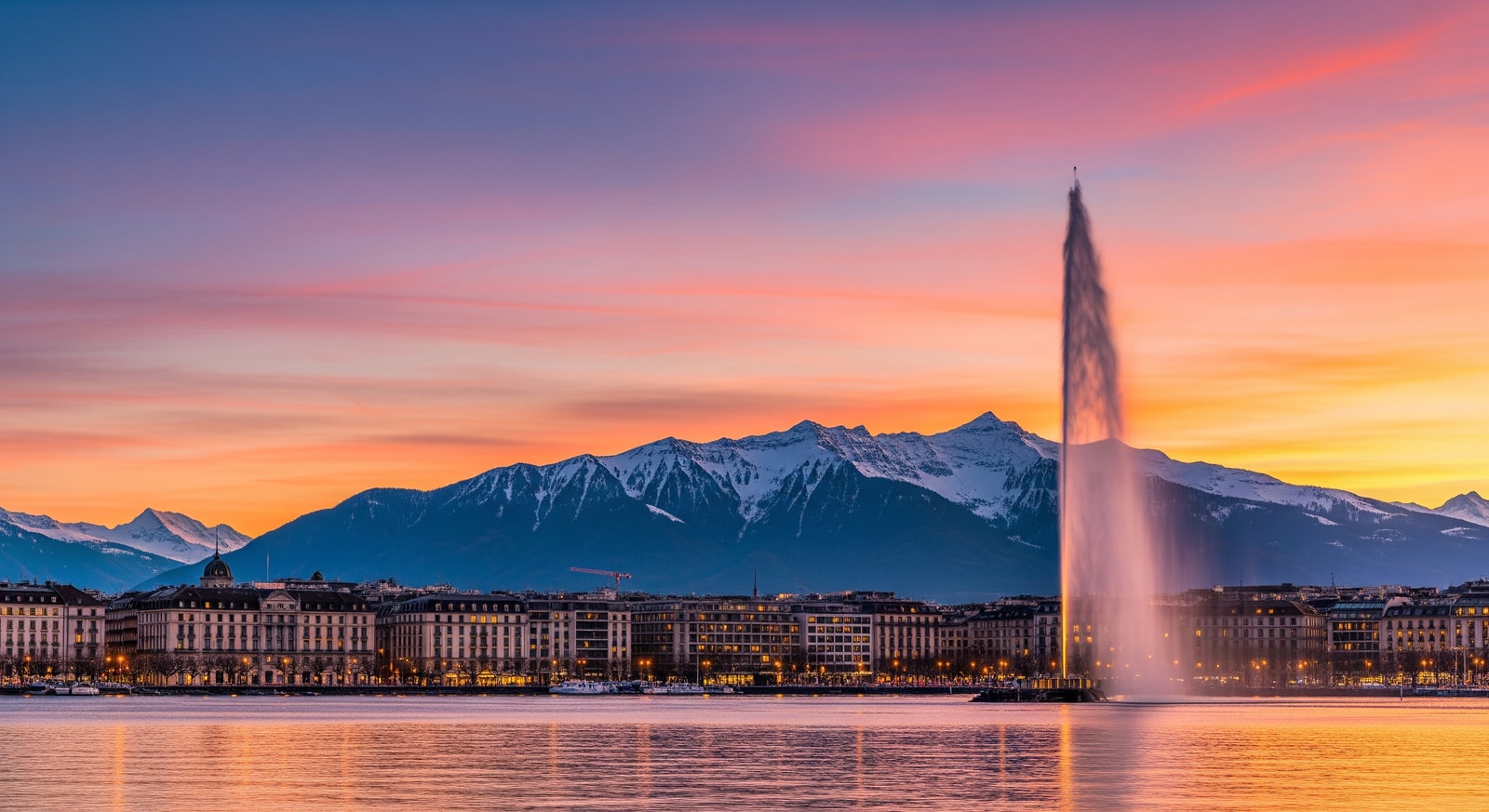
Geneva — Home to the United Nations, CERN, and numerous international organizations
Visa Fees & Requirements
Schengen Visa Fees
The standard Schengen visa fee is EUR 80 for adults and EUR 40 for children aged 6-12. Children under 6 are exempt from fees. Some nationalities have reduced fees through bilateral agreements. Additional service fees may apply if using visa application centers (VFS Global, TLS Contact) rather than applying directly at embassies.
Required Documents
A complete Schengen visa application includes:
• Completed application form — signed and dated
• Valid passport — minimum 3 months validity beyond departure, at least 2 blank pages
• Passport photographs — 2 recent photos meeting Schengen biometric specifications
• Travel insurance — minimum EUR 30,000 coverage including emergency medical evacuation
• Travel itinerary — flight reservations, accommodation bookings
• Proof of funds — bank statements, employment letter, tax returns
• Purpose documentation — invitation letters, hotel confirmations, tour bookings
Financial Requirements
Switzerland recommends travelers have at least CHF 100 per day of their stay, reflecting Switzerland's high cost of living. Proof can include bank statements, credit card limits, sponsorship letters, or prepaid accommodation.
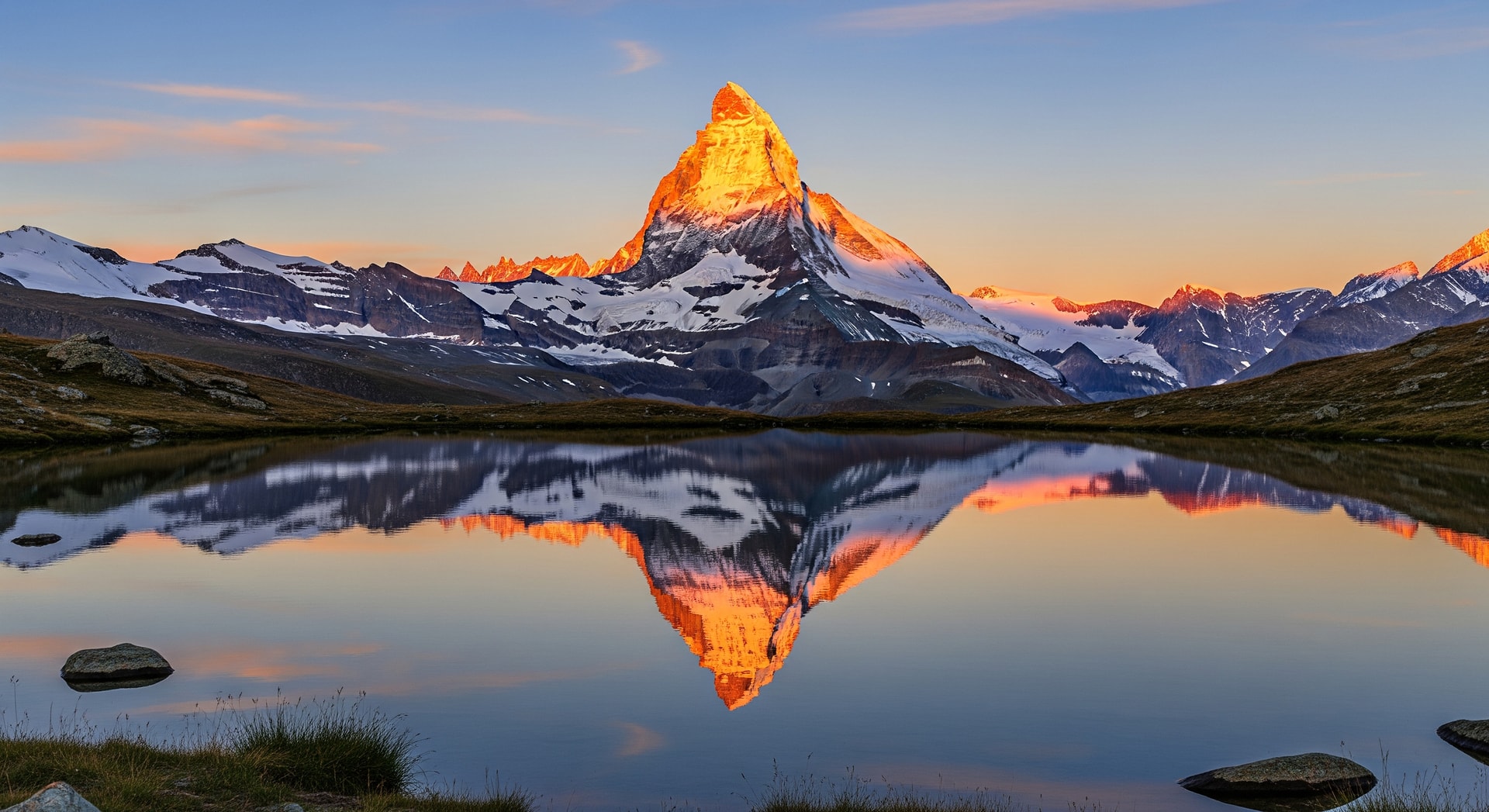
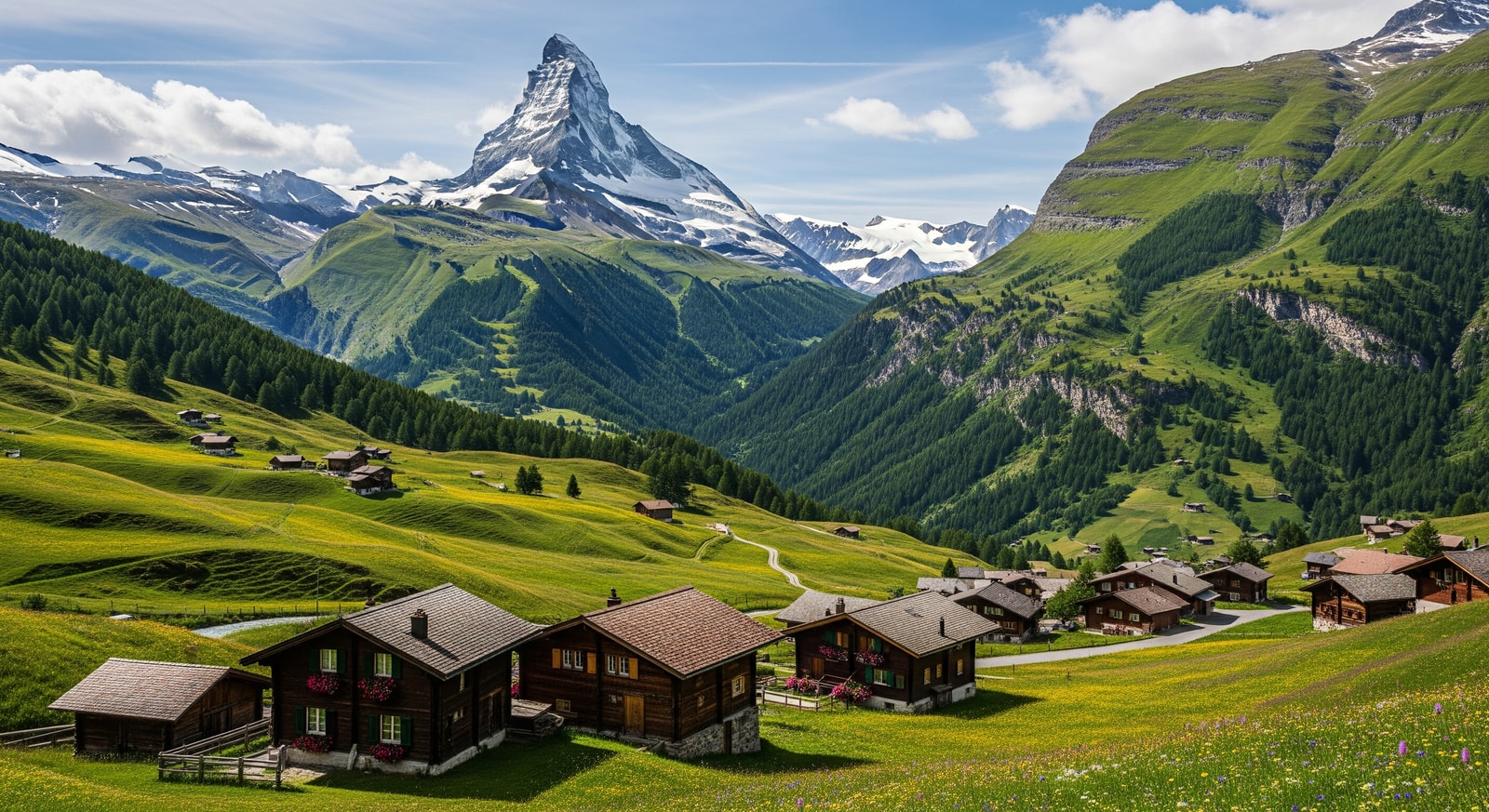
The Swiss Alps — World-renowned for skiing, hiking, and breathtaking natural beauty
Entry Points & Processing Times
Major International AirportsZurich Airport (ZRH) is Switzerland's largest and busiest international gateway, handling most intercontinental flights. Geneva Airport (GVA) serves western Switzerland and has strong connections to France and international destinations. Basel-Mulhouse-Freiburg Airport (BSL/MLH/EAP) is uniquely tri-national, serving Switzerland, France, and Germany. Bern Airport (BRN) handles limited international traffic.
Land Borders
Switzerland shares borders with Germany, France, Italy, Austria, and Liechtenstein. While passport controls within Schengen are generally absent, random checks occur. When entering from non-Schengen countries, full border controls apply. Switzerland's customs regulations differ from the EU, so goods may be checked even at Schengen internal borders.
Processing Times
Schengen visa processing typically takes 10-15 working days, though this can extend to 30-45 days during peak seasons or for complex applications. Apply at least 4-6 weeks before travel but no more than 6 months in advance. Embassy appointments may have separate waiting periods, especially in high-demand locations — book your appointment as early as possible.
ETIAS (Coming Soon)
Starting in 2025, visa-exempt travelers will need to obtain ETIAS (European Travel Information and Authorisation System) authorization before visiting Switzerland and other Schengen countries. This online pre-screening will be valid for 3 years and allow multiple entries.
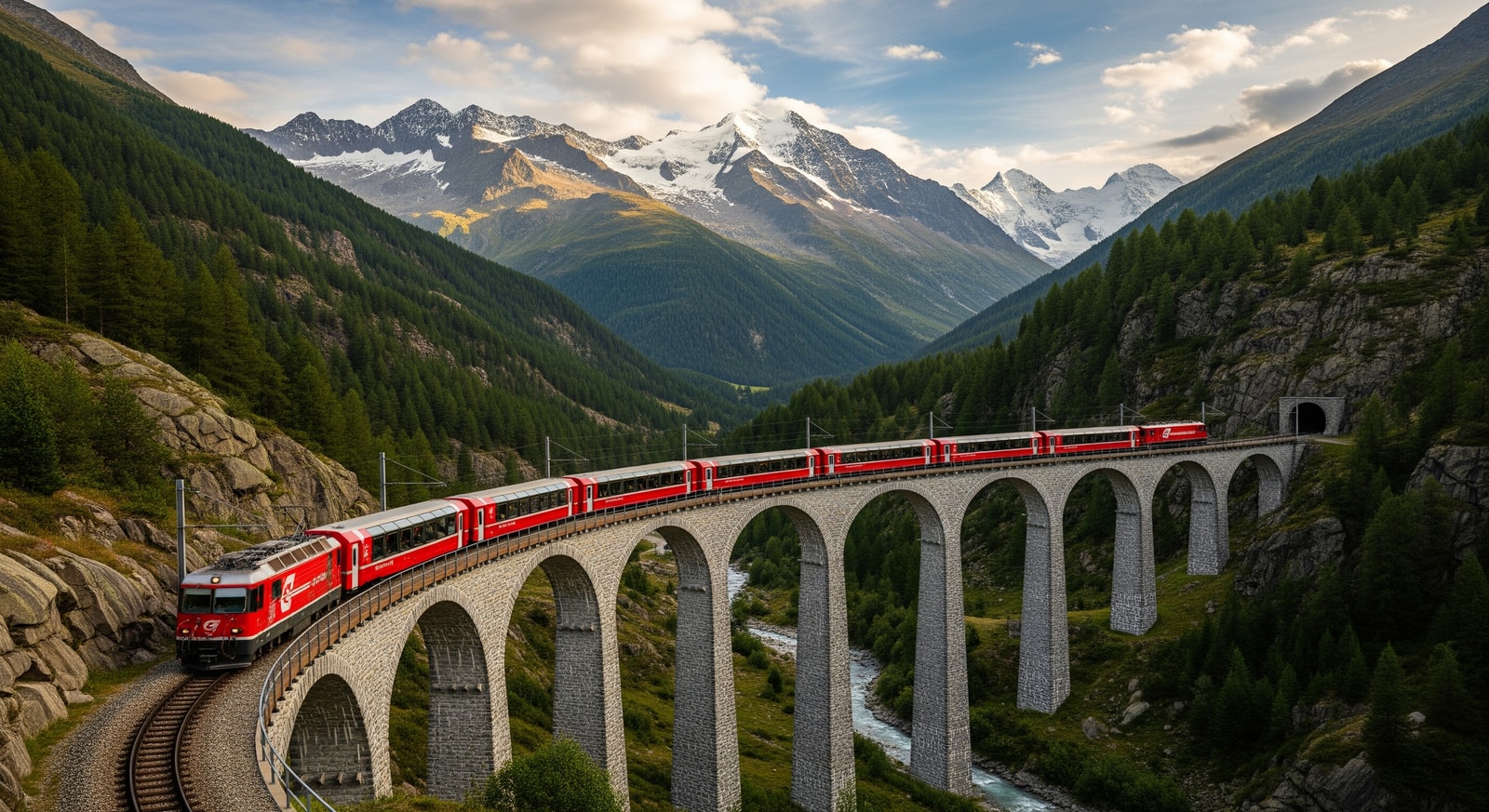
Switzerland's iconic rail network connects Alpine villages with major cities year-round
Why Choose DoVisa?
See the difference between applying yourself vs using our expert service
Travelers to Switzerland rated this product 4.8 out of 5 based on 8 reviews.
4.8/ 5
Based on 8 verified reviews
Filter by rating
Rachel M.Jan 15, 2026
"DoVisa made my Schengen visa application for Switzerland so much easier. Clear instructions, great document checklist, and my visa was approved on the first attempt. Now planning my ski trip to Zermatt!"
James K.Jan 8, 2026
"Business visa for Geneva approved without issues. The team helped me prepare all the corporate documents and even assisted with the embassy appointment booking. Professional service throughout."
Priya S.Dec 22, 2025
"Good experience overall. The application form was straightforward and support team answered my questions quickly. Took about 12 days for processing which was as expected."
Thomas B.Dec 10, 2025
"Third time using DoVisa for European trips. They really know the Schengen system inside out. Got a 2-year multiple entry visa this time which is perfect for my frequent travel."
Maria G.Nov 28, 2025
"Applied for family visa to visit relatives in Lucerne. DoVisa helped us organize invitation letters and all supporting documents. All four visas approved together!"
Daniel W.Oct 15, 2025
"Solid service for my Swiss visa. Would recommend booking embassy appointment early as slots fill up fast. DoVisa reminded me about this which was helpful."
Chen L.Aug 20, 2025
"Dream trip to the Swiss Alps finally happening! The visa process seemed daunting at first but DoVisa broke it down into simple steps. Approved in 10 days."
Sophie R.Jun 5, 2025
"Excellent support when I had questions about travel insurance requirements. They recommended policies that meet the EUR 30,000 Schengen requirement. Very knowledgeable team."
Rachel M.Jan 15, 2026
"DoVisa made my Schengen visa application for Switzerland so much easier. Clear instructions, great document checklist, and my visa was approved on the first attempt. Now planning my ski trip to Zermatt!"
James K.Jan 8, 2026
"Business visa for Geneva approved without issues. The team helped me prepare all the corporate documents and even assisted with the embassy appointment booking. Professional service throughout."
Priya S.Dec 22, 2025
"Good experience overall. The application form was straightforward and support team answered my questions quickly. Took about 12 days for processing which was as expected."
Switzerland Visa FAQs
What types of visas are available for Switzerland?
Switzerland, as a Schengen member, offers several visa categories. Schengen Short-Stay Visa (Type C) covers tourism, business, family visits, medical treatment, and cultural events for up to 90 days within any 180-day period. Transit Visa (Type A/B) allows passage through Swiss airports or territory. National Long-Stay Visa (Type D) is for stays exceeding 90 days, including work permits, study programs, and family reunification. Airport Transit Visa is required by certain nationalities to transit through Swiss airports without leaving the international zone. The right visa depends on your nationality, purpose of visit, and intended length of stay. Most tourists and business travelers from non-visa-exempt countries need a Type C Schengen visa.
Do I need a visa to visit Switzerland?
It depends on your nationality. Visa-exempt countries (approximately 60 nations) can visit Switzerland for up to 90 days within 180 days without a visa. This includes citizens of the United States, United Kingdom, Canada, Australia, New Zealand, Japan, South Korea, Brazil, Argentina, Mexico, and all EU/EEA member states. Countries requiring visas include China, India, Russia, Indonesia, Philippines, Egypt, Nigeria, Pakistan, and many others. Even visa-exempt travelers will soon need ETIAS authorization (European Travel Information and Authorisation System), expected to launch in 2025. Check the Swiss State Secretariat for Migration website or contact DoVisa to confirm your specific requirements.
What is the Schengen visa and how does it work?
The Schengen visa is a unified short-stay visa that grants access to 27 European countries: Austria, Belgium, Bulgaria, Croatia, Czech Republic, Denmark, Estonia, Finland, France, Germany, Greece, Hungary, Iceland, Italy, Latvia, Liechtenstein, Lithuania, Luxembourg, Malta, Netherlands, Norway, Poland, Portugal, Slovakia, Slovenia, Spain, Sweden, and Switzerland. With a single Schengen visa, you can travel freely between these countries without additional border controls. The standard validity is up to 90 days within any 180-day period. You should apply at the embassy of your main destination country — if visiting multiple countries equally, apply at the first country of entry. Switzerland issues Schengen visas through its embassies and consulates worldwide.
What documents do I need for a Switzerland Schengen visa?
A complete application requires: Completed application form — signed and dated, one per applicant. Valid passport — minimum 3 months validity beyond planned departure, at least 2 blank pages, issued within last 10 years. Passport photographs — 2 recent biometric photos (35x45mm, white background). Travel insurance — minimum EUR 30,000 coverage including medical emergencies and repatriation, valid for all Schengen countries. Flight itinerary — round-trip reservation (don't buy tickets until visa approved). Accommodation proof — hotel bookings, rental confirmations, or invitation letter from host. Financial evidence — bank statements (last 3-6 months), employment letter, tax returns showing sufficient funds (CHF 100/day recommended). Purpose documentation — specific to your visit type (invitation letters, conference registration, tour bookings, etc.). Additional documents may be requested based on your specific circumstances.
How long can I stay in Switzerland with a Schengen visa?
The standard Schengen visa allows stays of up to 90 days within any 180-day period. This is a rolling calculation — at any point in time, you can have spent no more than 90 of the previous 180 days in the Schengen Area. Important: This limit applies to total time across all 27 Schengen countries combined, not just Switzerland. Days spent in France, Germany, Italy, or any other Schengen country count toward your 90-day limit. For longer stays, you need a Swiss National Visa (Type D), which requires different application procedures and approval from Swiss cantonal authorities. Overstaying your visa is a serious offense that can result in fines, deportation, and future visa bans.
Can I extend my Switzerland visa?
Schengen visa extensions are difficult and rarely granted. Extensions are only possible for serious reasons such as medical emergencies, force majeure (natural disasters, flight cancellations), or important personal reasons that couldn't be foreseen. You must apply at the Swiss cantonal migration authority before your current visa expires. Extensions cannot exceed the 90-day Schengen limit. For planned longer stays, you must apply for a National Long-Stay Visa (Type D) from your home country before traveling — this cannot be done from within Switzerland. If you wish to return to Switzerland after using your 90 days, you must wait until 90 days have passed outside the Schengen Area, or apply for a new long-stay visa.
Can I work in Switzerland with a tourist visa?
No, the Schengen tourist visa does not permit any form of employment in Switzerland. Permitted activities: Tourism, visiting friends and family, attending business meetings, conferences, training sessions, cultural events, and medical treatment. Not permitted: Paid employment, unpaid internships, freelance work for Swiss clients, or any activity that would require a work permit if performed by a resident. To work legally: You need a Swiss work permit and National Visa (Type D). Switzerland has strict labor market regulations, particularly for non-EU/EFTA citizens. Work permits are generally limited to highly skilled workers, specialists, and fields with documented shortages. EU/EFTA citizens have easier access through free movement agreements but still need permits for stays over 90 days. Consequences: Working illegally can result in deportation, fines, and lengthy bans from Schengen countries.
How long does Switzerland visa processing take?
Standard processing time is 10-15 working days from when the embassy receives your complete application. However, processing can extend to 30-45 days during peak travel seasons (summer, December holidays), for complex applications, or if additional documentation is requested. Some nationalities require consultation with Swiss authorities, adding extra time. Recommended timeline: Apply at least 4-6 weeks before travel, but no more than 6 months in advance. Book your embassy appointment as early as possible — in high-demand locations, appointment slots may have their own waiting periods of 2-4 weeks. Urgent processing: Some embassies offer expedited processing for proven emergencies (family death, urgent business), but this is discretionary and not guaranteed.
What if my Switzerland visa application is rejected?
If rejected, you'll receive a letter explaining the reason(s). Common rejection reasons: Insufficient proof of funds; inadequate travel insurance; missing or incomplete documents; doubts about genuine intent to leave (immigration risk); previous visa violations; incomplete travel itinerary; unclear purpose of visit. Your options: You can reapply immediately with stronger documentation addressing the rejection reasons. You can also appeal the decision within 30 days to the State Secretariat for Migration — appeals are reviewed but rarely successful without new evidence. Prevention tips: Provide comprehensive financial documentation, demonstrate strong ties to your home country (property, employment, family), include detailed travel plans, and ensure travel insurance meets all Schengen requirements. DoVisa guarantee: If rejection results from our processing error, we provide full service fee refunds and complimentary reapplication assistance.
Do I need to attend an embassy appointment?
Yes, most Schengen visa applicants must attend an in-person appointment at a Swiss embassy, consulate, or authorized visa application center (VAC) such as VFS Global or TLS Contact. During the appointment, you'll submit your application documents, provide biometric data (fingerprints and photograph), and may have a brief interview. Biometric exemptions: Children under 12 don't provide fingerprints. If you've given biometrics for a previous Schengen visa within the last 59 months, you may not need to provide them again (though document submission still requires in-person or authorized representative attendance). Appointment booking: Book early — popular locations may have waiting times of 2-4 weeks or longer. DoVisa can assist with appointment scheduling and ensure you arrive fully prepared with all required documents.
What travel insurance do I need for Switzerland?
Schengen visa applicants must have travel insurance meeting these mandatory requirements: Minimum coverage of EUR 30,000 (approximately CHF 28,000); valid for all 27 Schengen countries; covers the entire duration of your stay plus a few extra days; includes emergency medical treatment, hospitalization, and medical repatriation (return to home country if medically necessary); issued by an insurance company recognized in Switzerland/EU. Recommended coverage: Trip cancellation, baggage loss, personal liability. Important: Print your insurance certificate — you'll need it for the visa application and may be asked to show it at the border. Policy must be valid from your first day of entry until departure from Schengen territory. DoVisa can recommend insurance providers that meet all Schengen requirements.
When is the best time to visit Switzerland?
Summer (June-August): Peak tourist season with warm weather (20-30°C in valleys), perfect for hiking, lake activities, and exploring Alpine meadows. Crowds at major attractions; book accommodation early. Winter (December-March): World-class skiing and snowboarding in resorts like Zermatt, Verbier, St. Moritz, and Jungfrau region. Christmas markets in December. Cold temperatures but well-equipped infrastructure. Spring (April-May): Wildflowers bloom in lower elevations, fewer crowds, shoulder-season prices. Some high-altitude passes still snow-covered. Autumn (September-October): Golden larch forests, grape harvest in wine regions, crisp clear days ideal for photography. Year-round attractions: Cities like Zurich, Geneva, Bern, and Lucerne are excellent any time. Museums, chocolate tours, and scenic train journeys operate continuously. Note: Switzerland is expensive year-round, but shoulder seasons offer better value.
Is Switzerland part of the European Union?
No, Switzerland is not an EU member and has no plans to join. However, Switzerland has extensive bilateral agreements with the EU covering trade, free movement of people (for EU/EFTA citizens), and participation in specific EU programs. Key differences from EU: Switzerland uses the Swiss Franc (CHF), not the Euro (though Euros are widely accepted in tourist areas). Switzerland has its own customs regulations, so goods may be checked even when arriving from EU countries. VAT refund procedures differ from EU systems. What's the same: Switzerland is a full member of the Schengen Area, so there are no routine passport controls when traveling between Switzerland and other Schengen countries. A Schengen visa for Switzerland grants access to all Schengen states. For visa purposes, Switzerland operates identically to EU Schengen members.
What are Switzerland's main entry airports?
Zurich Airport (ZRH): Switzerland's largest and busiest airport, handling most intercontinental flights. Located 13km from Zurich city center with excellent train connections (10 minutes to Hauptbahnhof). Hub for Swiss International Air Lines. Geneva Airport (GVA): Major gateway for western Switzerland and the French-speaking region. Uniquely has a Swiss and French sector — exiting through the French side takes you directly into France. Strong connections to European and some long-haul destinations. Basel-Mulhouse-Freiburg Airport (BSL/MLH/EAP): Tri-national airport serving Switzerland, France, and Germany. Budget carrier hub (easyJet, Wizz Air). EuroAirport has separate Swiss and French exits. Bern Airport (BRN): Small regional airport with limited international service. Lugano Airport (LUG): Tiny airport serving Italian-speaking Switzerland, mainly domestic and limited European connections.
Still have questions?
Our team is here to help 24/7
Get Visa Tips & Exclusive Deals
Join 1,000+ travelers. No spam, unsubscribe anytime.



 With DoVisa