
Certified Tetum & Portuguese Document Translation
Professional certified translations of Timor-Leste documents accepted by USCIS, IRCC, the UK Home Office, and universities worldwide. Expert translators in Tetum and Portuguese with full certification.
TrustpilotSelect Languages
Drag & drop your documents here
or
PDF, JPEG, PNG, WebP — Max 10MB per file. Word documents: please save as PDF first.
Certified translators · Accepted by governments, courts & universities worldwide · View sample
Select a destination country to view pricing
How Timor-Leste Certified Translation Works
Submit Your Documents Securely
Upload clear scans of your Timor-Leste documents — Certidão de Nascimento, Certidão de Casamento, academic records, or police clearances — through our encrypted portal. We accept PDF, JPEG, and PNG. Our intake specialists review each upload for legibility and flag any issues before processing begins.
Translator Assignment
Your documents are matched with a certified translator who specialises in Tetum and Portuguese — the two official languages of the República Democrática de Timor-Leste. For documents containing Indonesian or English sections, bilingual specialists handle those passages to ensure complete accuracy.
Translation & Certification
The translator produces a complete certified translation and attaches a signed certification statement confirming accuracy and completeness. For documents issued by the Direcção Nacional dos Registos e do Notariado, our translators are experienced with Timorese civil registry formats and official seals.
Delivery with Full Certification
Receive your certified translation as a high-resolution PDF within your chosen timeframe. A physical copy with original translator signature is shipped via tracked courier for authorities that require hard copies. All translations include a certification cover sheet accepted by immigration agencies, universities, and embassies worldwide.
Timor-Leste Translation Service Specifications
Popular Language Pairs
We support all languages — 100+ language pairs available for Timor-Leste documents including Tetum, Portuguese, Indonesian, and English.
Common Documents
- Birth certificates — Certidão de Nascimento (RDTL)
- Marriage certificates — Certidão de Casamento
- Death certificates — Certidão de Óbito
- Police clearance certificates — Registo Criminal
- Academic diplomas and transcripts
- National identity cards — Bilhete de Identidade
- Passports and travel documents
- Court judgments and legal orders
- Employment contracts and references
- Business registration documents — Registo Comercial
- Medical records and health certificates
- Property and land title documents
Turnaround Time
Certification Details
Timor-Leste Translation Requirements & Regulatory Framework
Embassy Acceptance
Notarization Process
Apostille Information
Legal Framework
Common Scenarios for Timor-Leste Document Translation
Immigration & Visa Applications
Timorese nationals applying for visas to Australia, Portugal, the UK, United States, or other destinations need certified translations of their Certidão de Nascimento, Certidão de Casamento, and Registo Criminal for immigration authorities such as USCIS, IRCC, and the Australian Department of Home Affairs.
Academic & University Admissions
Students from Timor-Leste applying to universities in Australia, Portugal, the European Union, or North America require certified translations of academic transcripts and diplomas originally issued in Tetum or Portuguese. Credential evaluation agencies including WES and ICAS accept our certified translations.
Family Reunification & Marriage Abroad
Timorese nationals joining family members abroad, or marrying a foreign national, require translations of birth certificates (Certidão de Nascimento) and single status declarations for submission to foreign civil registry offices and immigration authorities.
Business & Corporate Documentation
Companies doing business in or with Timor-Leste require certified translations of business registration documents (Registo Comercial), contracts, and compliance documentation for international partners, investors, and regulatory bodies.
Legal Proceedings & Court Submissions
Legal matters involving Timor-Leste — including inheritance disputes, property title transfers, and court judgments — require certified translations of original documents for use in foreign courts or arbitration proceedings.
Diaspora & Citizenship Applications
Members of the Timorese diaspora in Australia and Portugal often need certified translations of civil registry documents when applying for citizenship, renewing passports, or registering births and marriages with foreign authorities.
Timor-Leste's Dual-Language Document System: Tetum and Portuguese
Timor-Leste's official document system reflects the country's unique linguistic heritage. Following independence in 2002, the Constitution of the República Democrática de Timor-Leste designated Tetum and Portuguese as co-official languages, with Indonesian and English recognised as working languages. Civil registry documents — including birth certificates (Certidão de Nascimento), marriage certificates (Certidão de Casamento), and death certificates (Certidão de Óbito) — are issued in Portuguese by the Direcção Nacional dos Registos e do Notariado under the Ministério da Justiça.
Tetum, the most widely spoken indigenous language, uses a Latin script influenced by Portuguese vocabulary. This creates a distinctive translation challenge: Tetum documents may contain Portuguese loanwords written in Tetum orthography, place names with Tetum spellings, and personal names that follow local naming conventions distinct from those of mainland Portugal. Our translators are specifically trained in both languages as used in Timor-Leste, ensuring that nuances of Timorese Tetum are accurately rendered for foreign authorities.
For documents originating from the Indonesian administration period (1975–1999), additional challenges arise: such records may be in Bahasa Indonesia, use Indonesian administrative formats, and reference institutions that no longer exist. Our specialist translators handle these historical documents with the expertise required for acceptance by USCIS, IRCC, and other immigration authorities requiring full genealogical documentation.
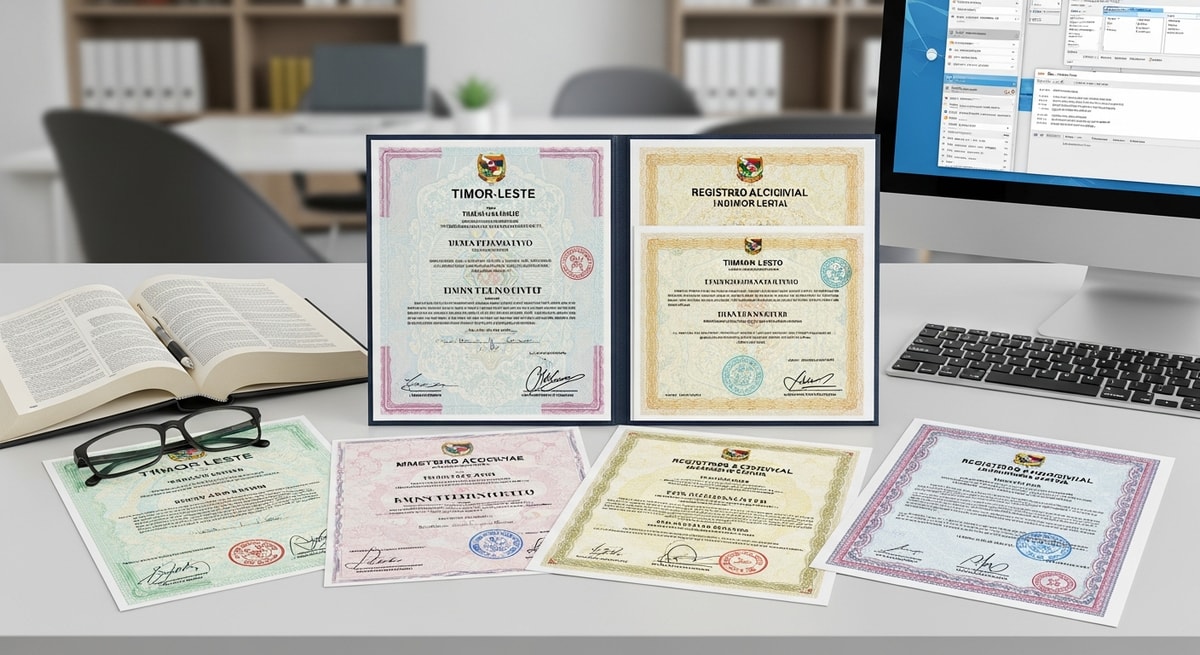
Timor-Leste civil registry documents are issued in Portuguese by the Direcção Nacional dos Registos e do Notariado
Consular Legalization: Getting Timor-Leste Documents Accepted Abroad
Because Timor-Leste is not a member of the Hague Apostille Convention, documents issued in the country cannot be authenticated with a simple apostille stamp. Instead, international recognition requires a multi-step consular legalization process. This is a critical consideration for anyone using Timorese documents abroad — whether for immigration, academic, or legal purposes.
The consular legalization chain for Timor-Leste documents typically involves: (1) authentication by the issuing authority within Timor-Leste, (2) authentication by the Ministério dos Negócios Estrangeiros e Cooperação (Ministry of Foreign Affairs and Cooperation), and (3) legalization by the embassy or consulate of the destination country in Dili or in a third country. The full process typically takes 10-20 business days depending on the destination country's consular presence in Timor-Leste.
It is important to note that many foreign authorities — including USCIS, the UK Home Office, IRCC Canada, and the Australian Department of Home Affairs — accept certified translations without requiring the underlying original document to carry an apostille. A certified translation accompanied by a copy of the original document is often sufficient. DoVisa's certified translations are prepared to meet these international standards. For situations where full consular legalization of the original is required, we advise clients on the process and coordinate with our local network of document procurement specialists.

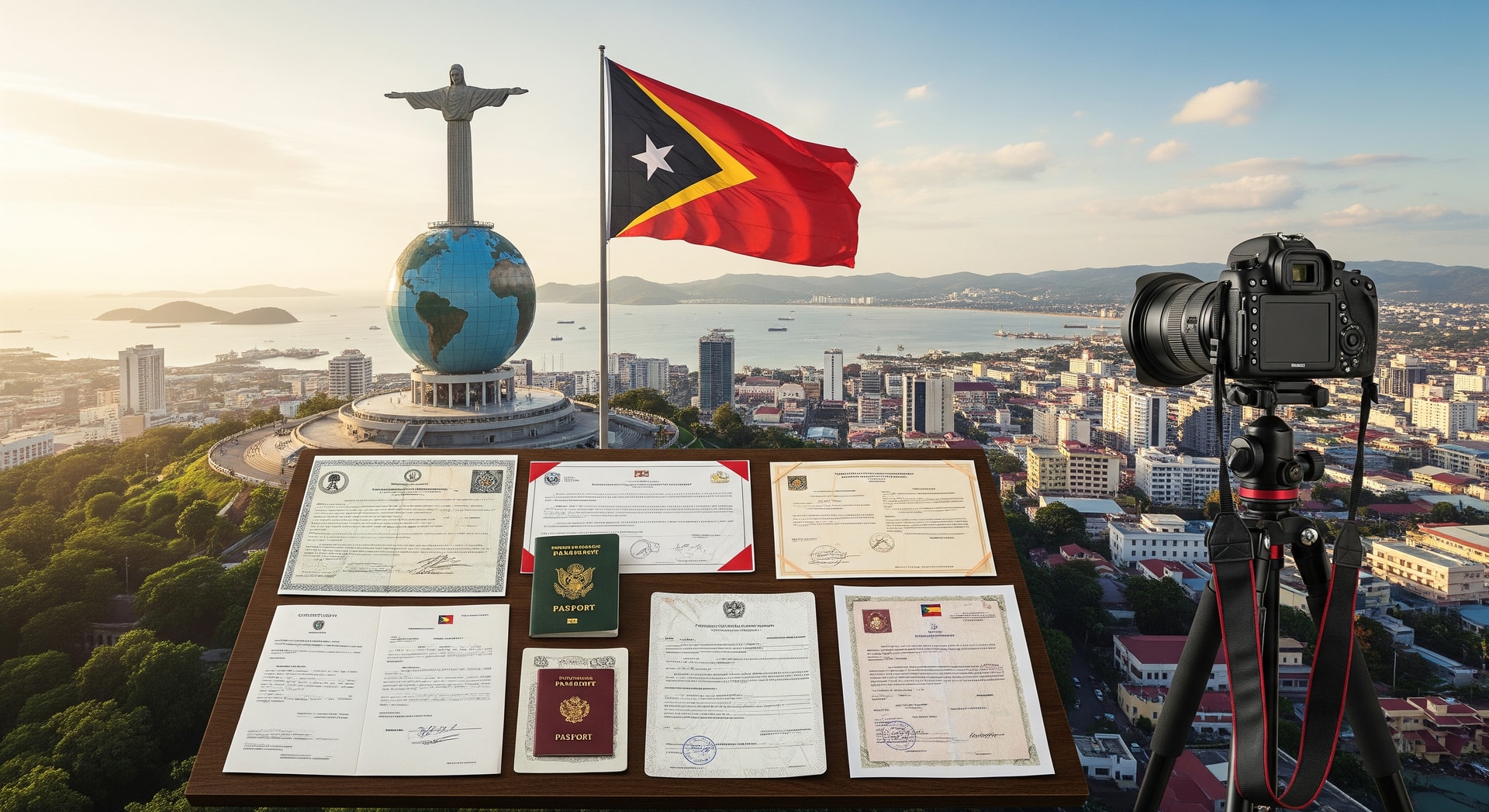
Consular legalization through the Ministério dos Negócios Estrangeiros e Cooperação is required for documents used internationally
"My Certidão de Nascimento from Timor-Leste was translated perfectly for my Australian visa application. DoVisa handled both the Tetum and Portuguese sections. Approved by the Department of Home Affairs without any issues."
"Needed my university transcripts translated from Portuguese for WES credential evaluation in Canada. Fast turnaround — 3 business days — and WES accepted the certified translation on the first submission."
"Translated my Certidão de Casamento for a UK spousal visa. The translation was accurate and the certification letter met UK Visas and Immigration requirements. Delivery was a day later than expected but quality was excellent."
"My police clearance (Registo Criminal) was translated for a US green card application. USCIS accepted it without any request for evidence. Excellent service and fast digital delivery."
"DoVisa translated my birth certificate and marriage certificate for a Portuguese residency application. Both documents were in Tetum and the translators clearly understood the Timorese civil registry format."
"Good service overall for my academic transcripts translated from Portuguese to English. Submitted to a UK university and accepted. Minor formatting question was resolved quickly by their support team."
"Translated my Bilhete de Identidade and Certidão de Nascimento for a Canadian family reunification application. IRCC accepted everything. Very professional service and clear certification statement."
"Translation of my court documents took a bit longer than the initial estimate due to an older Indonesian-era record. The team communicated the delay and the final translation was thorough and accepted by the Australian Federal Court."
"Needed my medical records translated from Portuguese for a US employer. DoVisa delivered the certified translation in 2 days with the express option. My employer's HR team accepted it immediately."
"Translated business registration documents (Registo Comercial) from Portuguese to English for an international partner. The translation captured all the technical terminology correctly and was accepted by the foreign legal team."
"My Certidão de Óbito needed for an estate matter in Australia was translated with full certification. The Australian solicitor confirmed it met the court's requirements. Smooth and professional process."
"My Certidão de Nascimento from Timor-Leste was translated perfectly for my Australian visa application. DoVisa handled both the Tetum and Portuguese sections. Approved by the Department of Home Affairs without any issues."
"Needed my university transcripts translated from Portuguese for WES credential evaluation in Canada. Fast turnaround — 3 business days — and WES accepted the certified translation on the first submission."
"Translated my Certidão de Casamento for a UK spousal visa. The translation was accurate and the certification letter met UK Visas and Immigration requirements. Delivery was a day later than expected but quality was excellent."
Timor-Leste Document Translation FAQs
What types of Timor-Leste documents can be translated?
Are your translations certified and accepted by immigration authorities?
How long does translation of Timor-Leste documents take?
Do you translate documents in both Tetum and Portuguese?
Can Timor-Leste documents get an apostille?
What is the consular legalization process for Timor-Leste?
Do I need notarization with my certified translation?
Can you translate older Indonesian-era documents from Timor-Leste?
How much does certified translation of Timor-Leste documents cost?
Can you translate handwritten Timor-Leste documents?
What format will I receive my translation in?
Will my translation be accepted by Australian immigration authorities?
Are translations of Timor-Leste medical records accepted by overseas employers?
Get Your Timor-Leste Documents Translated Today
Professional certified Tetum and Portuguese translations accepted by USCIS, IRCC, the UK Home Office, and Australian immigration authorities