Certified South Sudan Document Translation
Professional certified translations for South Sudanese birth certificates, civil records, and legal documents. Accepted by USCIS, embassies, and institutions in Uganda, Kenya, Australia, and beyond.
TrustpilotSelect Languages
Drag & drop your documents here
or
PDF, JPEG, PNG, WebP — Max 10MB per file. Word documents: please save as PDF first.
Certified translators · Accepted by governments, courts & universities worldwide · View sample
Select a destination country to view pricing
How South Sudan Certified Translation Works
Upload Your South Sudanese Documents
Scan or photograph your South Sudanese documents — birth certificates, civil records, court orders, academic certificates, or official letters — and upload them through our secure encrypted portal. We accept PDF, JPEG, and PNG formats. Our intake team reviews each upload within 2 hours to confirm legibility and completeness. South Sudanese documents may vary significantly in format depending on the issuing authority, the era in which they were issued, and whether they originate from areas previously under SPLA-administered or Khartoum-administered governance — our specialists are prepared for all variants.
Expert Translator Assignment
Your documents are matched with a certified translator who has native-level proficiency in English and expertise in South Sudanese administrative terminology, legal language, and the multilingual context unique to this young nation. For documents containing Arabic (widely used before and after independence), Dinka, Nuer, Bari, or other South Sudanese languages, we assign translators with specialist knowledge of those linguistic communities. Our network includes translators from the South Sudanese diaspora in Uganda, Kenya, Australia, and the United States.
Certified Translation & Quality Review
The assigned translator produces a complete and accurate certified translation, paying careful attention to proper nouns, place names, administrative divisions (state, county, payam, boma), official terminology from South Sudanese government institutions, and the specific formatting conventions required by receiving authorities such as USCIS, IRCC, and the Australian Department of Home Affairs. A second linguist then cross-checks the translation for accuracy, consistency, and correct rendering of names before the certified statement is affixed.
Delivery with Full Certification
Your certified translation is delivered as a digitally signed, high-resolution PDF. For receiving authorities that require original hard copies with wet-ink signatures, we dispatch printed translations via tracked international courier to your address in Uganda, Kenya, Ethiopia, the United States, Australia, or anywhere worldwide. We can also coordinate authentication through the South Sudan Ministry of Foreign Affairs and International Cooperation and destination country embassy legalization for documents requiring the full consular legalization chain.
South Sudan Translation Service Specifications
Popular Language Pairs
We support all languages — 100+ language pairs available for South Sudanese documents, including indigenous languages of the Nilotic and Central Sudanic families.
Common Documents
- Birth certificates issued by the National Civil Registry
- Marriage certificates (civil and customary)
- Death certificates from the Ministry of Interior
- South Sudan national ID cards
- South Sudan passports and travel documents
- Academic certificates from South Sudanese universities and schools
- Police clearance certificates
- Court orders and legal judgments
- Business registration documents from the Ministry of Commerce
- Refugee and asylum documentation
- Land and property title documents
- Military discharge and service records
Turnaround Time
Certification Details
South Sudan Translation Requirements & Regulatory Framework
Embassy Acceptance
Notarization Process
Apostille Information
Legal Framework
Common Scenarios for South Sudan Document Translation
Refugee Resettlement & Asylum Applications
South Sudan has one of the world's largest refugee crises, with millions displaced to Uganda, Kenya, Ethiopia, Sudan, and beyond. Resettlement to the United States, Australia, Canada, and Europe requires certified translations of all identity documents — birth certificates, marriage records, baptism certificates from church registries, and school documents. UNHCR and partner resettlement agencies accept our translations. Our translators understand the specific document landscape of South Sudanese refugees, including documents issued by SPLA authorities, church record books, and community attestations where formal civil records do not exist.
Immigration & Family Reunification Visas
South Sudanese nationals living in the diaspora — primarily in Uganda, Kenya, Ethiopia, Australia, the United States, and Canada — need certified translations of birth certificates, marriage certificates, and family records for family reunification visa petitions. USCIS Form I-130, spousal visa applications to the UK, and Australian partner visas all require certified translations of South Sudanese vital records. Our translators handle the varied formats of South Sudanese civil registration, including documents issued under Sudanese administration before 2011.
Academic Credential Evaluation
South Sudanese students and professionals applying to universities or seeking employment in English-speaking countries need certified translations of academic certificates from institutions such as the University of Juba, Upper Nile University, and the University of Bahr el Ghazal, as well as secondary school leaving certificates. WES (World Education Services) and similar credential evaluation agencies accept our translations. We handle documents from both South Sudanese and Sudanese-era educational institutions, noting the historical context of each credential.
Legal Proceedings & Court Documents
Cross-border legal matters involving South Sudanese parties require certified translations of court orders, judgments, land title documents, and affidavits. South Sudanese court documents may be issued in English or may contain Arabic sections for pre-independence proceedings. Inheritance matters, property disputes, and civil status determinations often involve translating documents issued by multiple authorities across different time periods. Our legal translators handle the terminology of South Sudan's hybrid common law and customary law legal system.
NGO, Humanitarian & Development Work
South Sudan hosts a large international humanitarian presence, with NGOs, UN agencies, and development organizations requiring translation of project documents, community agreements, local authority correspondence, and staff documentation. Translations between English and Dinka, Nuer, Bari, or Arabic are frequently needed for community engagement materials, consent forms, and program reports. We support INGO field offices with document translation needs across South Sudan's ten states.
Business Registration & Commercial Documents
Companies operating in or entering the South Sudanese market need translations of business registration certificates from the Ministry of Commerce, Industry and Investment; tax clearance documents from the National Revenue Authority; petroleum and mining contracts; and land lease agreements. Foreign investors require translated South Sudanese legal and regulatory documents, while South Sudanese businesses seeking international financing or partnerships need certified English translations of their corporate documentation.
South Sudan's Civil Registration System and Document Heritage
South Sudan became the world's newest independent nation on 9 July 2011, following a referendum in which 98.83% of voters chose independence from Sudan. This historic moment created a state that inherited complex administrative realities: decades of civil war had disrupted civil registration, scattered communities across international borders, and produced a population with fragmented or entirely absent formal identity documentation. Understanding this context is essential for anyone seeking to translate South Sudanese documents.
Civil registration in South Sudan is administered by the Ministry of Interior through the National Civil Registry. The registry system, while being progressively developed since independence, faces significant challenges: low registration rates (particularly for births in rural areas and conflict-affected regions), incomplete records from the pre-independence period, and the destruction of records during civil conflict both before and after 2011. Many South Sudanese — especially those born during periods of displacement or in rural areas — rely on alternative documentation such as church baptism records, UNHCR registration documents, village chief attestations, and school enrollment records as primary identity evidence.
Documents from the pre-independence era (before July 2011) present particular translation challenges. Records issued under Sudanese administration are often in Arabic, using Sudanese administrative terminology and referencing Sudanese legislative frameworks. Birth and marriage records from church registries — particularly from the Catholic, Episcopal, and Presbyterian churches that have historically maintained extensive records in Southern Sudan — may be in English, Arabic, or indigenous languages. Our translators are equipped to handle all these document types, providing accurate translations with appropriate contextual notes that explain the historical and administrative context to receiving authorities.
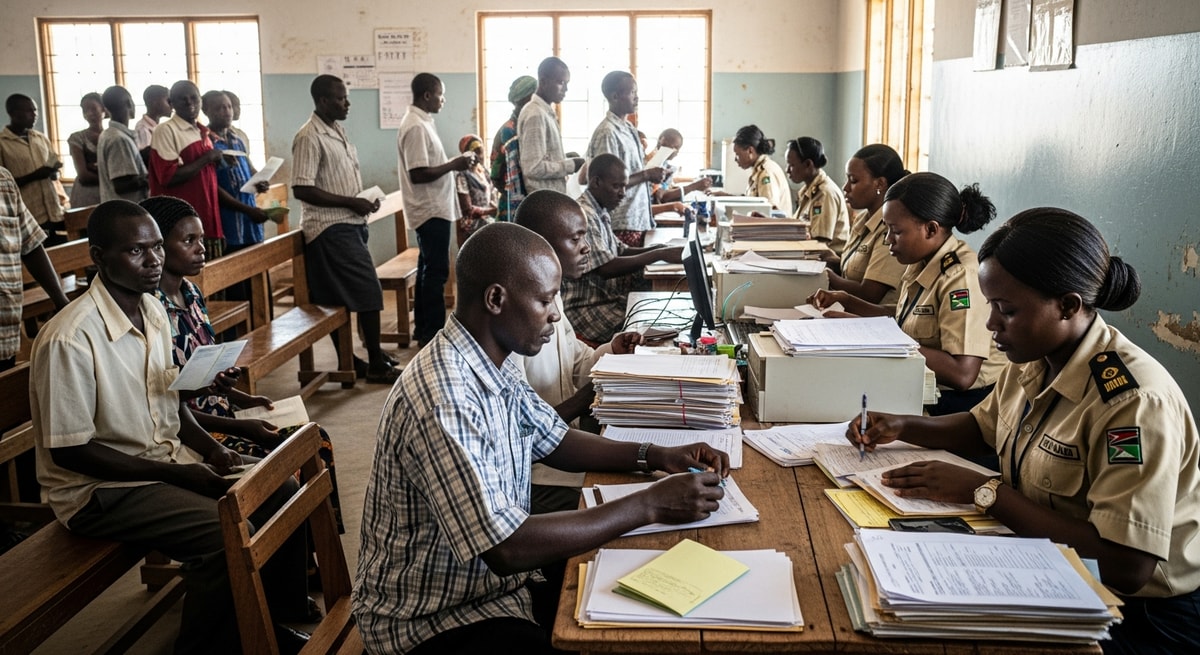
South Sudan's civil registration system has been developing since independence in 2011, serving a population whose documentation was disrupted by decades of conflict
Consular Legalization: Getting South Sudanese Documents Accepted Internationally
Because South Sudan is not a member of the Hague Apostille Convention, documents issued in South Sudan cannot receive the simplified apostille stamp that would be recognized by the Convention's 120+ member states. Instead, South Sudanese documents intended for international use must undergo a full consular legalization process — a sequential authentication chain that establishes the document's legitimacy through multiple official channels.
The consular legalization process for South Sudanese documents follows this sequence: First, the document (and its certified translation, if required) is submitted to the Ministry of Foreign Affairs and International Cooperation (MOFAIC) in Juba for authentication. MOFAIC verifies the signature and seal of the issuing authority and affixes its own authentication stamp. Second, the authenticated document is presented to the embassy or consulate of the destination country in Juba — or the nearest accredited diplomatic mission, as not all countries maintain embassies in Juba — for final legalization. Each embassy has its own requirements, fees, and processing timelines. The complete process typically takes 10-20 business days, though this can vary significantly based on the destination country's diplomatic presence and processing capacity in South Sudan.
The geographic reality of South Sudan's diplomatic landscape adds complexity: some destination countries do not maintain resident embassies in Juba, requiring South Sudanese applicants to travel to missions in Nairobi, Addis Ababa, or Kampala for the final legalization step. DoVisa helps clients navigate these practical challenges, advising on the nearest available embassy and coordinating document submission across multiple jurisdictions. Our network of partner agents in Juba, Nairobi, and Kampala facilitates the complete authentication chain for South Sudanese applicants regardless of their current location.
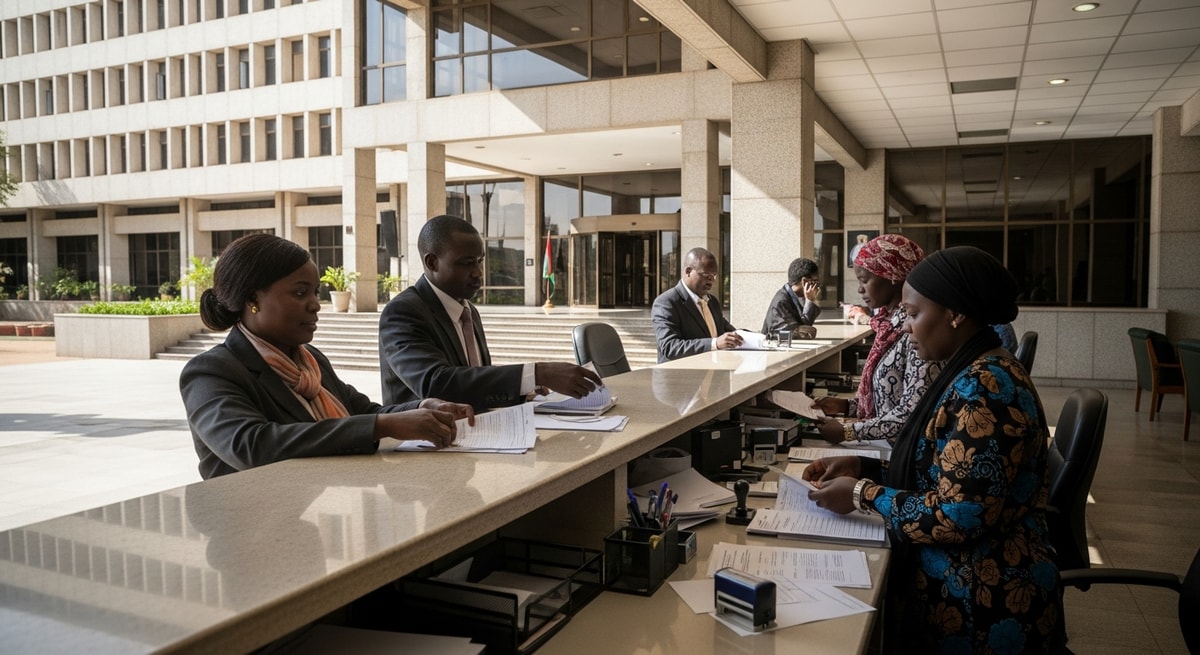
South Sudan's Ministry of Foreign Affairs and International Cooperation handles document authentication as part of the consular legalization process
Translating for the South Sudanese Diaspora
The South Sudanese diaspora is one of the largest — relative to home country population — in the world. Driven by decades of civil conflict and, more recently, the civil war that erupted in 2013 and again in 2016, an estimated 2.2 million South Sudanese live as refugees in neighboring countries, while hundreds of thousands more have resettled permanently abroad. The diaspora is concentrated in Uganda (approximately 900,000 refugees, the world's largest refugee-hosting country), Kenya, Ethiopia, and Sudan. Settled diaspora communities exist in Australia (particularly in Melbourne and Sydney), the United States (with major communities in Omaha, Nebraska; Phoenix, Arizona; Houston, Texas; and Minnesota), and across Europe.
For diaspora communities, translation of South Sudanese documents is a pervasive need touching virtually every aspect of life in a new country. Immigration and family reunification petitions require certified translations of birth and marriage certificates. School enrollment for children requires translation of prior academic records. Employment requires credential evaluation using translated academic and professional certificates. Housing sometimes requires translated identity documents. Social services and healthcare registration requires identity verification. For South Sudanese asylum seekers, the translation of any available documentation — however informal — can be critical to establishing identity and supporting protection claims.
DoVisa specializes in serving diaspora clients: our online platform allows South Sudanese living in Uganda, Kenya, Australia, or the United States to upload their documents and receive certified translations without needing to travel. We understand the practical challenges of South Sudanese documentation — including the reliance on church records, community attestations, and UNHCR registration documents as primary identity evidence — and we work with our clients to present these documents in the most effective way for the receiving authority's requirements.
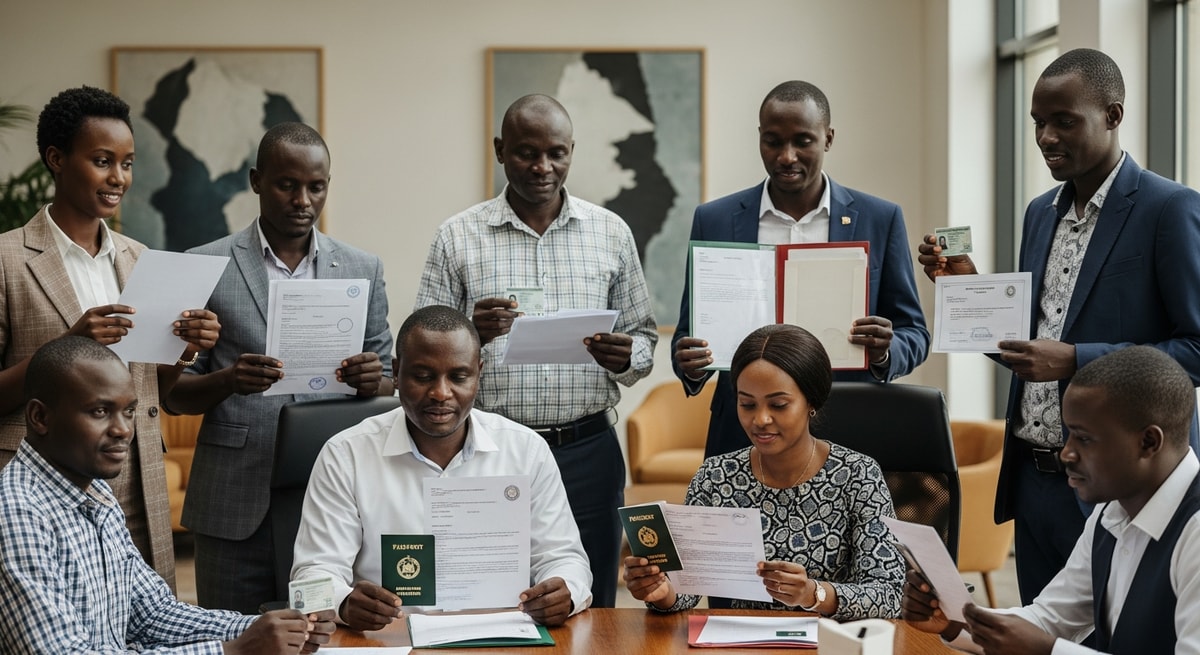
The South Sudanese diaspora spans Uganda, Kenya, Australia, and the United States, creating ongoing demand for document translation services
"Needed my South Sudanese birth certificate translated for my USCIS green card application. DoVisa handled it perfectly — USCIS accepted without any RFE. The translator understood the South Sudanese civil registry format and got all the administrative terminology right."
"Translated my University of Juba degree certificate and transcripts for a WES credential evaluation in Canada. The translator included helpful contextual notes about the South Sudanese grading system. WES accepted the translation on first submission. Very professional service."
"Used DoVisa to translate my marriage certificate from church records for my Australian partner visa. The certificate was in English but had some Dinka community-specific terms that the translator handled well. Department of Home Affairs accepted it without issues."
"I needed an Arabic-language pre-independence record translated into English for my UK visa application. DoVisa's translator understood it was a Sudanese-era document and translated it accurately with proper context notes. UK Visas and Immigration accepted it."
"Our organization needed Dinka-to-English translations of community consent forms for a health project in Warrap State. The Dinka was handled by a native speaker from the same dialect region. Accurate and respectful of community terminology."
"My school certificate translation was slightly delayed because the document scan was poor quality and needed a clearer copy. Once I sent a better scan, they completed it in 2 days and the Canadian immigration office accepted it. Worth the wait for the accuracy."
"Translated my children's South Sudanese birth certificates for their Australian citizenship applications. Four documents with complex name spellings across Dinka and English — all handled perfectly. The Department of Home Affairs accepted all four without any queries."
"Good translation of court documents for a property dispute with cross-border implications in Uganda and South Sudan. The translator understood both the English legal terminology and the Ugandan court's requirements. Our advocate was satisfied with the accuracy."
"Resettlement from a Ugandan refugee camp to the US required translation of my UNHCR registration documents and church baptism certificate. DoVisa worked with what we had and produced translations that the resettlement agency accepted. Lifesaving service."
"Translated business registration documents from South Sudan's Ministry of Commerce for a financing application with a Kenyan bank. The financial terminology was handled accurately and the bank's legal team confirmed the translation was sufficient for their review."
"Needed my South Sudanese police clearance certificate translated for a work visa application in Germany. The letter from the South Sudan National Police Service was accurately translated and the German embassy in Nairobi accepted it without requesting changes."
"Needed my South Sudanese birth certificate translated for my USCIS green card application. DoVisa handled it perfectly — USCIS accepted without any RFE. The translator understood the South Sudanese civil registry format and got all the administrative terminology right."
"Translated my University of Juba degree certificate and transcripts for a WES credential evaluation in Canada. The translator included helpful contextual notes about the South Sudanese grading system. WES accepted the translation on first submission. Very professional service."
"Used DoVisa to translate my marriage certificate from church records for my Australian partner visa. The certificate was in English but had some Dinka community-specific terms that the translator handled well. Department of Home Affairs accepted it without issues."
South Sudan Document Translation FAQs
What types of South Sudanese documents can be translated?
We translate all types of South Sudanese documents including birth and death certificates from the National Civil Registry, marriage certificates (civil and customary), national ID cards, passports, academic certificates from South Sudanese schools and universities, police clearance certificates from the South Sudan National Police Service, court orders and judgments, business registration documents, and pre-independence records issued under Sudanese administration (often in Arabic). We also translate church baptism records, community attestations, UNHCR registration documents, and other alternative identity documents commonly used by South Sudanese diaspora and refugee communities.
What languages are used in South Sudanese official documents?
English is the official language of the Republic of South Sudan under the Transitional Constitution (2011), and most government documents issued since independence are in English. However, Arabic remains widely used, particularly for records predating independence (before July 2011) issued under Sudanese administration. Across South Sudan's 64+ ethnic communities, documents may also appear in or contain annotations from Dinka, Nuer, Bari, Zande, Shilluk, Acholi, Madi, and other indigenous languages. Church records from the Catholic, Episcopal, and Presbyterian missions — which maintained extensive records throughout the civil war period — may be in English, Arabic, or indigenous languages. DoVisa translates from all these language sources into English and other international languages.
Are DoVisa's translations certified and accepted by immigration authorities?
Yes. Each translation carries a signed certification statement from the assigned translator attesting to accuracy and completeness. Our certified translations are accepted by USCIS (US Citizenship and Immigration Services), UK Visas and Immigration, IRCC (Immigration, Refugees and Citizenship Canada), the Australian Department of Home Affairs, and UNHCR and its resettlement partners. They are also accepted by credential evaluation agencies including WES (World Education Services), international universities, and employers requiring credential verification. If a receiving authority rejects our translation due to a quality issue, we revise and reissue at no additional cost.
How long does South Sudan document translation take?
Standard delivery is 4-6 business days for most South Sudanese document types. Express service (2-3 business days) is available for vital records and documents up to 5 pages. Rush delivery within 24 hours is available for single-page documents such as birth certificates where translator availability permits. Documents in Arabic (pre-independence records) or indigenous languages (Dinka, Nuer, Bari) may require slightly longer timelines due to specialist translator availability. If your documents also require consular legalization through the Ministry of Foreign Affairs and International Cooperation and the destination country's embassy, add 10-20 business days for the complete authentication chain. We recommend allowing at least 4-5 weeks before any immigration or resettlement deadline.
Can South Sudan documents get an apostille?
No. South Sudan is not a member of the Hague Apostille Convention. Having gained independence on 9 July 2011, South Sudan is one of the world's newest nations and has not yet acceded to the Convention. South Sudanese documents cannot receive an apostille and must instead undergo full consular legalization for international use: (1) authentication by the South Sudan Ministry of Foreign Affairs and International Cooperation (MOFAIC) in Juba, and (2) legalization by the destination country's embassy or consulate in Juba or the nearest accredited mission. This process typically takes 10-20 business days. DoVisa manages the complete legalization chain on your behalf.
What if I don't have formal identity documents?
This is a very common situation for South Sudanese nationals, given decades of civil conflict that disrupted civil registration across the country. Many South Sudanese rely on alternative documentation including church baptism records, UNHCR registration cards and documents, school enrollment records, community attestations signed by village chiefs or elders, and letters from NGO or humanitarian organizations. DoVisa can translate all of these document types. We clearly note in the certified translation the type and source of the document, helping receiving authorities understand the documentary context. For resettlement applications, we work closely with clients to translate whatever documentation is available and present it in a way that best supports the application.
Do I need notarization with my South Sudanese document translation?
For most international purposes — including US immigration filings with USCIS, UK visa applications, Canadian IRCC submissions, and Australian Department of Home Affairs applications — a certified translation with the translator's signed declaration is sufficient. You do not need an additional notarization step. However, if your documents will be submitted to South Sudanese domestic courts or authorities, or if they require the full consular legalization chain for recognition in a third country, additional attestation steps may be needed. DoVisa can coordinate notarial attestation through partner legal practitioners in Juba and authentication through the Ministry of Foreign Affairs and International Cooperation when the specific receiving authority requires it. Contact us to clarify the requirements for your specific use case.
How does DoVisa handle pre-independence South Sudanese documents in Arabic?
Many South Sudanese vital records predating 9 July 2011 were issued under Sudanese administration and are in Arabic, using Sudanese administrative terminology, Arabic numerals, and references to Sudanese-era laws and administrative divisions. These documents require a translator with expertise in both Sudanese Arabic administrative language and the specific South Sudanese context — including the geographic, ethnic, and administrative realities of what was then Southern Sudan. Our translators handling these documents include Arabic-language specialists who are familiar with Sudanese civil registration formats and can accurately render place names, ethnic identifiers, and administrative references for international receiving authorities. We include contextual notes explaining the pre-independence administrative context where this is useful for the receiving authority.
What languages can South Sudanese documents be translated into?
We translate South Sudanese documents into any of our 100+ supported target languages. The most commonly requested target languages for South Sudanese documents are English (for non-English speakers processing documents), French (for applications in France, Belgium, Canada's French-speaking institutions, or Francophone African countries), German (for German visa and immigration applications), Arabic (for South Sudanese documents going to Arabic-speaking countries or institutions), and Spanish, Italian, Portuguese for relevant immigration contexts. For documents currently in Dinka, Nuer, Bari, Zande, or Shilluk, English is the primary target language, though we can arrange onward translation into other international languages.
Can you translate documents for South Sudanese refugees in Uganda or Kenya?
Yes, we specifically serve South Sudanese refugees and diaspora communities in Uganda, Kenya, Ethiopia, Sudan, and elsewhere. Our fully online process means you can upload your documents from anywhere with an internet connection — from Kampala, Nairobi, Addis Ababa, or any city worldwide — and receive your certified translation digitally. For resettlement applications processed through the UNHCR, IOM, or US Refugee Admissions Program, we are experienced with the translation requirements of each agency. We also provide physical hard copies shipped via international courier to your address in Uganda, Kenya, or any other country.
How much does South Sudan document translation cost?
DoVisa uses a per-page pricing model with automatic volume discounts for larger document sets. Volume pricing makes larger orders — common for immigration document packages requiring multiple certificates — significantly more cost-effective than single-page pricing. Express and rush service options carry a surcharge. Consular legalization and authentication coordination are quoted separately, as fees vary by destination country. Upload your documents on our order page for an instant quote before any payment. No hidden fees apply.
Can you translate handwritten South Sudanese documents?
Yes. Many South Sudanese documents — particularly older birth certificates, land records, and church records — contain handwritten entries that may be in English, Arabic, or indigenous scripts. Some documents may be entirely handwritten. Our translators are experienced with the handwriting conventions found in South Sudanese administrative and religious records. If a section is genuinely illegible, we mark it clearly as [illegible] in the translation rather than guessing. If the scan quality is insufficient for accurate translation, we contact you within 2 hours to request a clearer image. We also advise clients on how to obtain replacement documents from South Sudanese authorities when originals are damaged or lost.
What format will I receive my South Sudan translation in?
All certified translations are delivered as digitally signed, high-resolution PDFs via email within the quoted delivery timeframe. Each PDF includes the full translation formatted to match the original document's structure, followed by the translator's certification statement with their name, qualifications, and signature. For receiving authorities that require original paper copies with wet-ink signatures — such as some US courts or authorities requiring notarized hard copies — we dispatch printed translations via tracked international courier to your address. Courier delivery times vary by destination: 3-5 business days to most addresses in Uganda, Kenya, and Ethiopia; 5-10 business days to Australia, the United States, and Europe.
Do you translate documents from South Sudan's churches and missionary records?
Yes. Church records are especially significant for South Sudanese document needs because major denominations — including the Roman Catholic Church, the Episcopal Church of South Sudan, the Presbyterian Church of South Sudan, and others — maintained vital records throughout periods when the civil registration system was non-functional. Baptism registers, marriage records, and confirmation documents from these churches often serve as the primary or only evidence of birth and identity. Our translators handle records from all major denominations, understanding the specific formats, languages, and terminologies used by each church's administrative system. We translate from English, Latin, Arabic, or indigenous language church records into the target language required by your receiving authority.
Get Your South Sudan Documents Translated Today
Certified translations of South Sudanese documents accepted by USCIS, UK Visas and Immigration, IRCC, and the Australian Department of Home Affairs