Certified Niue Document Translation Services
Professional certified translations of Niue documents in Niuean and English, accepted by Immigration New Zealand, the Australian Department of Home Affairs, and international authorities worldwide.
TrustpilotSelect Languages
Drag & drop your documents here
or
PDF, JPEG, PNG, WebP — Max 10MB per file. Word documents: please save as PDF first.
Certified translators · Accepted by governments, courts & universities worldwide · View sample
Select a destination country to view pricing
How Niue Certified Translation Works
Submit Your Documents Securely
Upload clear scans of your Niue documents through our encrypted portal. We accept PDF, JPEG, and PNG formats. Our intake specialists review each upload for legibility, ensuring stamps and seals from the Niue Office of the Registrar of Births, Deaths and Marriages and the Niue High Court are clearly visible before assignment.
Translator Assignment
Your documents are matched with a certified translator expert in Niuean and English. Niue is a bilingual country where both Niuean and English are official languages. Official documents may be in English, Niuean, or both. Niuean is a Polynesian language with distinct vocabulary and personal naming traditions requiring specialist expertise.
Translation & Certification
The translator produces a complete certified translation with a signed certification statement attesting to accuracy and completeness. Our certified translations are accepted by Immigration New Zealand for all visa and residence categories, by the Australian Department of Home Affairs, and by USCIS and IRCC for Niuean New Zealand citizens applying abroad.
Delivery with Full Certification
Receive your certified translation as a high-resolution PDF via email, with a physical signed copy shipped by tracked courier if required. For documents needing apostille, DoVisa coordinates the full process through the <strong>Registrar of the High Court of Niue</strong> in Alofi, the designated Hague Apostille competent authority for Niue.
Niue Translation Service Specifications
Popular Language Pairs
We support all languages — 100+ language pairs available for Niue documents.
Common Documents
- Birth certificates from the Niue Office of the Registrar of Births, Deaths and Marriages
- Marriage certificates from the Niue Registrar's Office in Alofi
- Death certificates from the Niue Births, Deaths and Marriages Registry
- Police clearance certificates from the Niue Police Service
- New Zealand passports and Niue identification documents
- Court orders and judicial documents from the High Court of Niue
- Academic transcripts and school records
- Employment references and professional certificates
- Church records from the Ekalesia Niue (Niue Congregational Church)
- Land title records and property documents
- New Zealand citizenship certificates held by Niuean residents
- Adoption and family court orders
Turnaround Time
Certification Details
Niue Translation Requirements & Regulatory Framework
Embassy Acceptance
Notarization Process
Apostille Information
Legal Framework
Common Scenarios for Niue Document Translation
New Zealand & Australian Immigration
Niueans holding New Zealand citizenship frequently migrate to New Zealand and Australia, requiring certified translations of Niuean vital records for enrollment, employment, professional licensing, and social services. Our translations meet Immigration New Zealand and Australian Department of Home Affairs requirements for all residence and work categories.
International Visa Applications
Niuean New Zealand citizens applying for work visas or residency in third countries — Canada, the UK, EU countries, or Japan — need certified translations of Niue vital records. Our translations are accepted by IRCC Canada, the UK Home Office, Schengen area embassies, and immigration authorities worldwide.
Family Reunification
Niueans sponsoring family members for New Zealand residence or foreign nationals marrying Niuean citizens need certified translations of birth certificates, marriage certificates, and family documents. We translate documents for immigration submissions across New Zealand, Australia, and Pacific nations.
Education & Academic Credentials
Students from Niue applying to universities in New Zealand, Australia, or further abroad need certified translations of school records and academic certificates. Our translators understand Niue's educational system and produce translations accepted by WES and university admissions offices internationally.
Legal & Estate Proceedings
Estate proceedings, customary land matters, and legal disputes involving Niuean residents require certified translations of High Court orders, land records, and family documents for New Zealand or international court proceedings. Our translations are accepted by the Court of Appeal of New Zealand and international legal institutions.
Niuean Language and the 'Rock of Polynesia'
Niue — known as Hoku o Polynesia (the Rock of Polynesia) — is a single raised coral island in the South Pacific, approximately 2,400 km northeast of New Zealand. With a population of approximately 1,500-1,700 people on the island, and over 20,000 Niueans living in New Zealand and Australia, Niue's diaspora vastly outnumbers its homeland population.
Niuean (known in the language as vagahau Niue) is a Polynesian language of the Tongic branch, closely related to Tongan and Samoan. It is an official language of Niue alongside English, and is unique as one of the world's languages with official status in a self-governing Pacific nation. Niuean is written using the Latin script and has a relatively straightforward phonological system, but its vocabulary, personal naming traditions, and grammatical structures are distinct from other Pacific languages.
Vital records from Niue — issued by the Niue Office of the Registrar of Births, Deaths and Marriages in Alofi — are primarily in English, but personal names, place names, and occasional Niuean terminology appear throughout. Church records from the Ekalesia Niue (Niue Congregational Church), which has been central to Niuean life since the London Missionary Society established Christianity on the island in 1849, may contain more extensive Niuean-language content and genealogical information critical for immigration and heritage research.
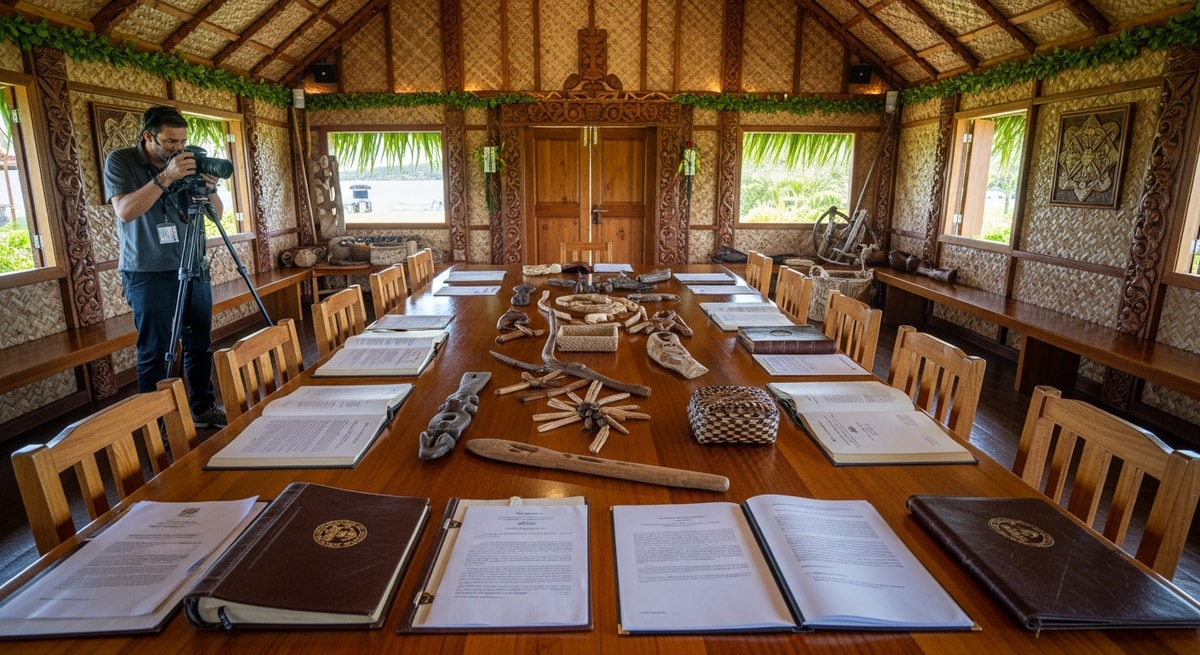
Niuean (vagahau Niue) is an official language of Niue alongside English and appears in vital records, church documents, and land records
Apostille Certification for Niue Documents
Niue has been a Contracting Party to the Hague Apostille Convention since 2 March 1999. This membership enables Niue public documents to receive apostille certification for international use across 125+ Hague Convention member countries without additional consular legalization. The designated competent authority is the Registrar of the High Court of Niue, located in Alofi.
The apostille process applies to Niue public documents including birth and marriage certificates from the Births, Deaths and Marriages Registry, court orders from the High Court, and documents bearing the official seals or signatures of Niue public authorities. Apostille processing at the High Court Registrar's office typically takes up to 14 business days. Apostille certificates are issued in the standard Hague Convention format.
Niue's free association status with New Zealand means some documents held by Niueans — particularly New Zealand passports and certain New Zealand government records — may require apostille through New Zealand authorities rather than Niue's own system. DoVisa advises clients on the correct pathway for their specific document type. For Niueans in New Zealand or Australia, our remote submission service eliminates the need to travel to Alofi to process apostille requests in person. Electronic apostille (e-apostille) is not currently available for Niue documents.

The Registrar of the High Court of Niue has served as the apostille competent authority since Niue's accession to the Hague Convention in 1999
"Niue birth certificate translated for a New Zealand professional license application. Immigration New Zealand accepted the certified translation immediately. DoVisa's specialist knowledge of Niuean vital records was evident."
"Marriage certificate from Niue translated for an Australian partner visa. Accepted by the Department of Home Affairs on first submission. The Niuean personal names were rendered correctly. Excellent service."
"Birth certificate and church record from Ekalesia Niue translated for a genealogy project and family immigration petition. The Niuean church terminology was translated accurately. IRCC Canada accepted the certified translations."
"The birth certificate translation was correct but took an extra day because an older part of the document was in Niuean script. DoVisa communicated clearly and the certified translation was accepted by the UK Home Office without issues."
"Apostilled Niue birth certificate for an employment application in Japan. DoVisa translated the document and coordinated the apostille through the High Court of Niue Registrar in Alofi. Professionally managed from start to finish."
"Land record from the Niue Land Court translated for an estate proceeding in New Zealand. The customary land terminology was handled with impressive specialist knowledge. Our Auckland solicitor confirmed the translation was legally accurate."
"Niue birth certificate translated for a New Zealand professional license application. Immigration New Zealand accepted the certified translation immediately. DoVisa's specialist knowledge of Niuean vital records was evident."
"Marriage certificate from Niue translated for an Australian partner visa. Accepted by the Department of Home Affairs on first submission. The Niuean personal names were rendered correctly. Excellent service."
"Birth certificate and church record from Ekalesia Niue translated for a genealogy project and family immigration petition. The Niuean church terminology was translated accurately. IRCC Canada accepted the certified translations."
Niue Document Translation FAQs
What types of Niue documents can DoVisa translate?
Are DoVisa's Niue translations accepted by Immigration New Zealand?
How long does Niue document translation take?
Are Niueans New Zealand citizens?
Does Niue participate in the Hague Apostille Convention?
Is electronic apostille (e-apostille) available for Niue documents?
What is the Niuean language?
Do I need notarization with my Niue translation?
How much does certified translation of Niue documents cost?
What format will I receive my translation in?
Get Your Niue Documents Translated Today
Certified translations accepted by Immigration New Zealand, the Australian Department of Home Affairs, and international authorities worldwide