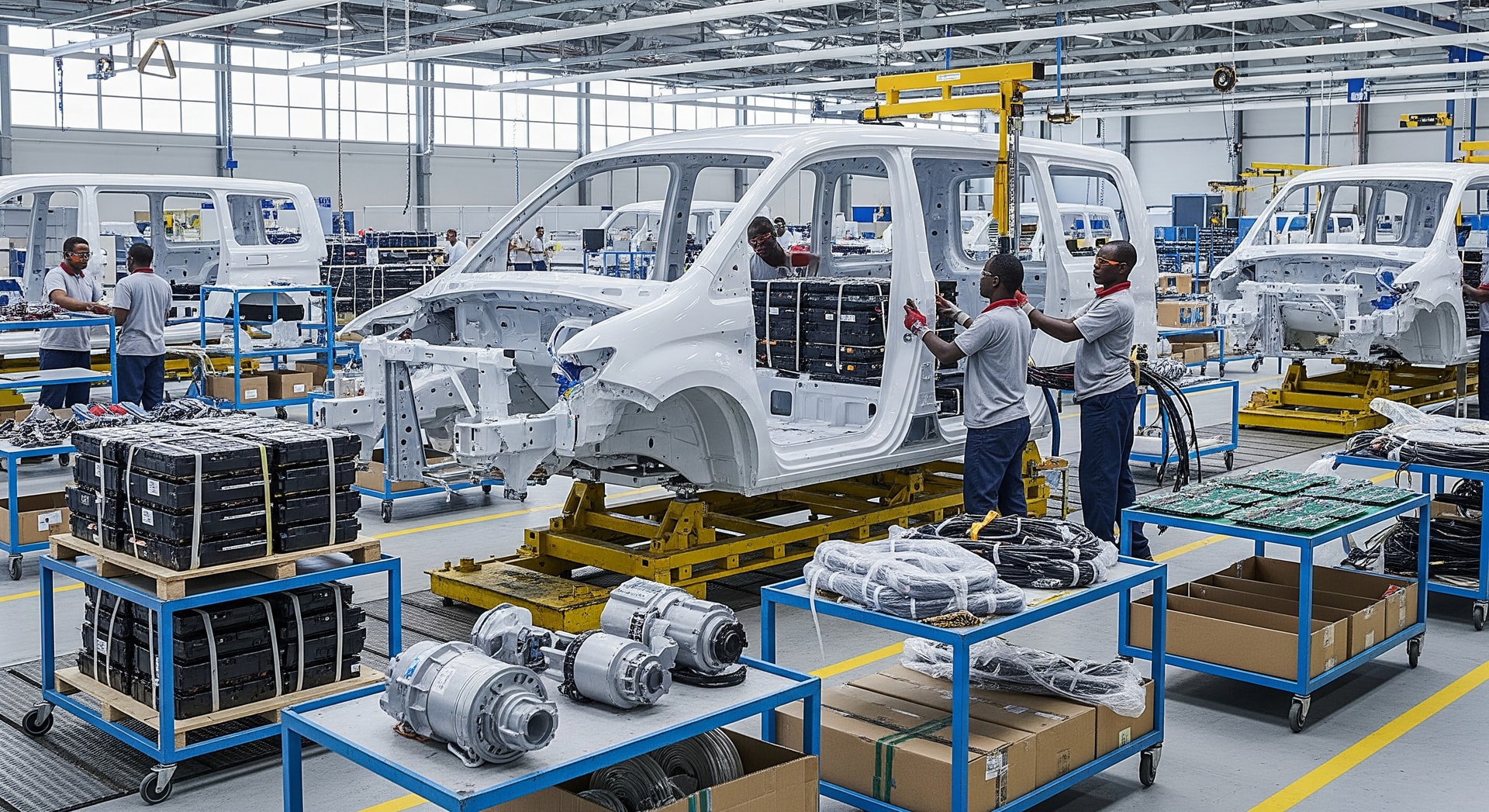
Electric van assembly in Nigeria and Kenya, using Chinese EV kits, is accelerating Africa's shift to cleaner transport while creating jobs and cutting emissions.
Summary: Nigeria and Kenya have begun assembling electric vans from Chinese EV kits, a move expected to create jobs, cut emissions and expand affordable electric mobility. Nigeria's Saglev aims for about 2,500 vans a year; Kenya's Rideence Africa has a US$2.46 million assembly project with financing schemes to broaden access.
Electric van assembly is gaining momentum in Africa as Nigeria and Kenya start locally assembling vehicles from Chinese EV kits. The initiatives are designed to grow the continent’s electric vehicle market, generate local employment, and reduce dependence on fossil-fuel transport.
Nigeria’s initiative: Saglev scales local production
In Nigeria, Saglev — a joint venture between the Stallion Group and China’s Sokon Motor — is assembling 18-seat electric vans using Dongfeng EV kits. The company plans to ramp up output to roughly 2,500 units annually and intends to offer multiple electric models across West Africa as part of a broader transition to cleaner transport.
To tackle frequent power shortages that threaten EV uptake, Saglev is investing in solar-powered charging stations. This strategy aims to ensure reliable charging and could provide a replicable model for other African markets facing similar energy constraints.
Kenya’s model: Rideence Africa focuses on affordability
In Kenya, Rideence Africa, together with Associated Vehicle Assemblers (AVA), has launched a local assembly operation backed by a US$2.46 million investment to assemble Chinese EV components domestically. The project aims to make electric vans viable for commercial fleets and individual owners.
- Lease-to-own plans that lower upfront costs
- Pay-as-you-drive schemes to ease monthly payments
- Targeting fleet operators and independent drivers to scale usage
Why assembling Chinese CKD kits matters
Using Chinese complete knock-down (CKD) kits — where semi-assembled components are shipped for final local assembly — offers a cost-effective route for nascent EV industries. This approach reduces the cost of finished imports while seeding local supply chains and technical skills.
- Job creation through local assembly plants and suppliers
- Skills transfer to technicians and engineers working on EVs
- Lower import and delivery costs compared with finished vehicles
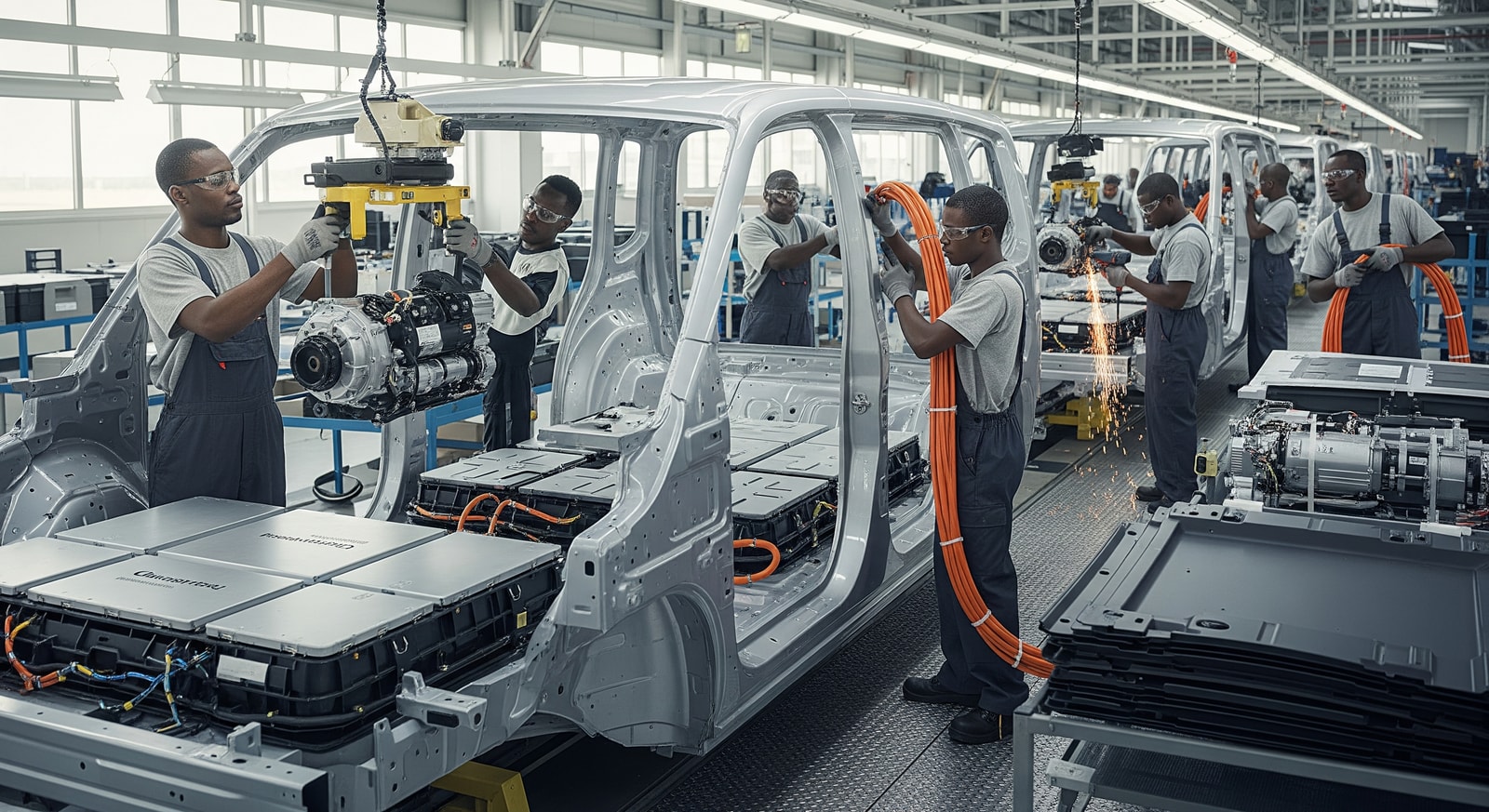
Chinese manufacturers deepen Africa footprint
China’s influence in the EV sector is expanding across Africa. Okla Global has pledged to grow operations in Kenya, Nigeria, South Africa, Egypt and Zimbabwe, and has appointed an investment bank to steer its continental expansion and scale local EV production.
Challenges that must be addressed
Despite momentum, several barriers remain: limited charging infrastructure across cities and corridors; relatively high upfront costs for new EVs even with financing; the current small size of EV fleets compared with millions of internal combustion vehicles; and the continued popularity of cheaper second-hand imports — including used cars brought in from the UAE — which can slow new-EV adoption.
What this means for travelers and the industry
So what? For passengers and the travel sector, the rise of locally assembled electric vans could translate into cleaner urban transport, quieter rides and lower operating costs for fleet operators — potentially reducing fares over time. For the automotive and energy industries, these projects signal new manufacturing opportunities, demand for charging infrastructure, and a need for policies that support investment and workforce training.
Sources