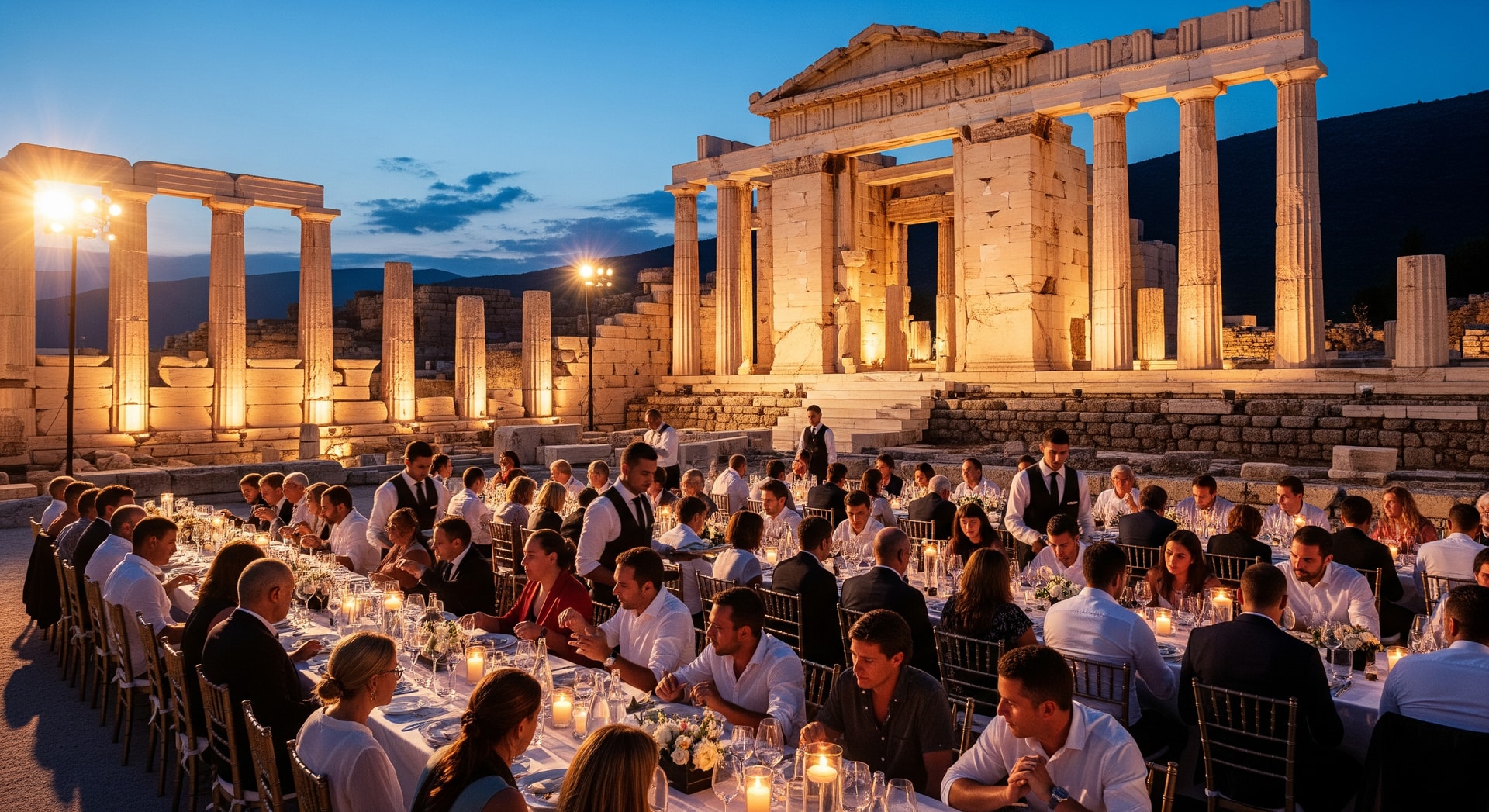
Greece has launched a programme opening archaeological sites to gastronomy events, advancing Greece gastronomy tourism by combining local cuisine with cultural heritage.
Summary: Greece will host gastronomy events at 19 archaeological sites in a controlled programme that combines food experiences with cultural heritage to boost gastronomy tourism and benefit local economies.
Greece has introduced a pioneering initiative that opens selected archaeological sites to organised gastronomy events, aiming to grow Greece gastronomy tourism by merging culinary experiences with the country’s historic settings. The programme’s first phase will take place at 19 cultural sites, enabling visitors to sample local cuisine amid nationally significant ruins.
Sites included in the first phase
The rollout covers a geographically diverse set of locations, with notable inclusions such as Delphi, Nicopolis and the Roman Forum of Thessaloniki. Event organisers will operate within strict frameworks designed to protect the integrity of each site while offering curated culinary programming.
- Delphi — renowned for its ancient sanctuary and panoramic setting
- Nicopolis — birthplace of a major Roman-era city and coastal heritage
- Roman Forum of Thessaloniki — urban archaeological complex in Greece’s second city
Gastronomy tourism: a strategic growth area
Gastronomy tourism—travel motivated by local food and culinary traditions—has been expanding worldwide. Greece’s new approach is intended to capitalise on this trend by offering multisensory events that connect food with place, history and storytelling, attracting travellers who seek both cultural depth and authentic dining experiences.
By staging meals and tasting events at heritage sites, organisers hope guests will gain a richer appreciation of Greece’s culinary lineage while experiencing monuments in a living, contemporary context. The model positions gastronomy as a vehicle for deeper engagement with local traditions.
Blending culinary arts with historical context
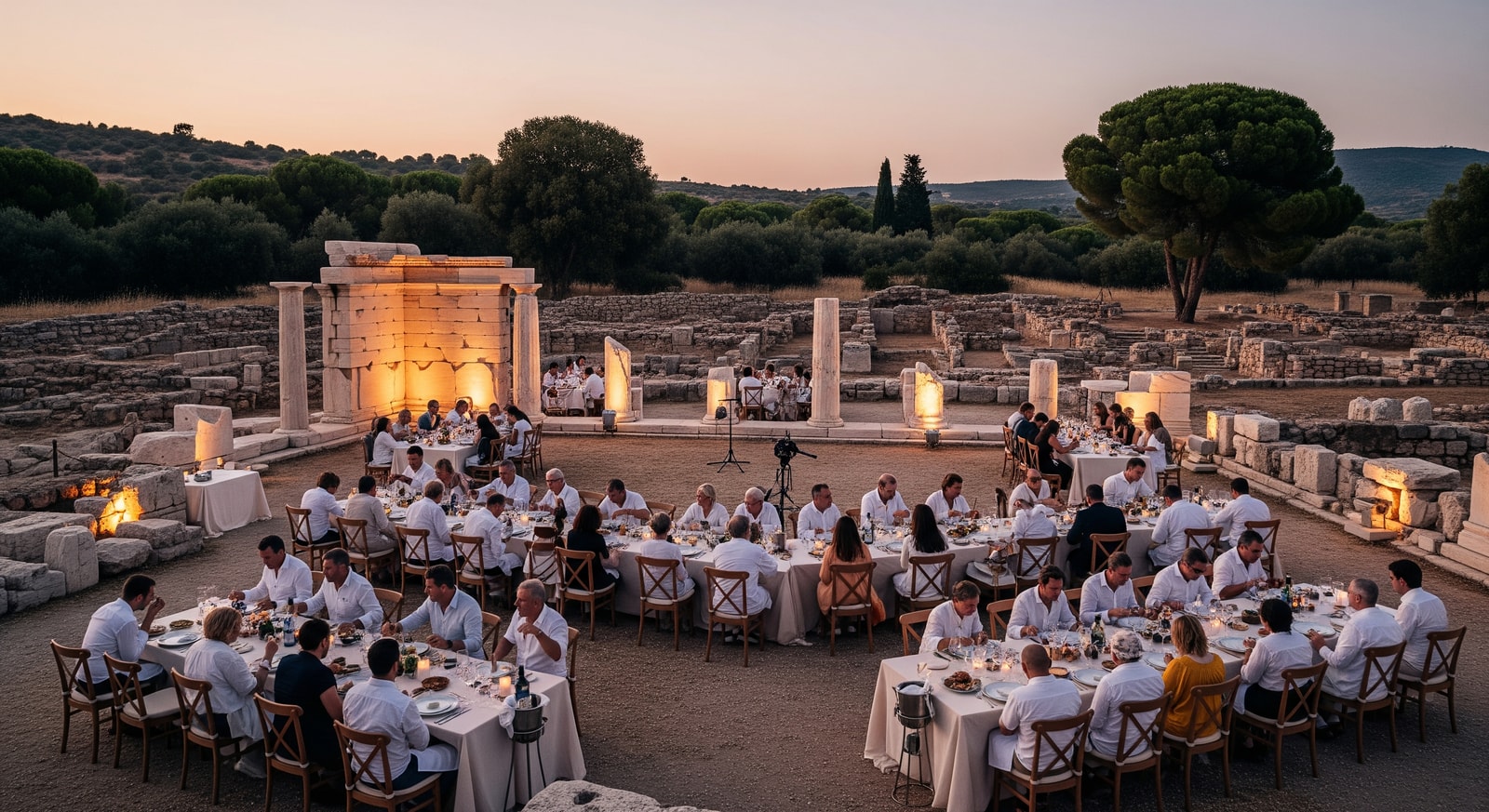
The initiative emphasises careful programming: menus may draw on traditional or ancient-inspired recipes, while educational elements and interpretive material will situate dishes within their historical and cultural contexts. Access, setup and visitor numbers will be controlled to minimise wear on archaeological remains.
- Curated menus inspired by local and historical recipes
- Interpretive talks or displays linking food to site history
- Strict site management plans to protect physical heritage
Economic and community benefits
Authorities expect the programme to support local economies by creating demand for restaurants, chefs, food producers and tourism operators. Events in less-visited regions could help distribute tourism spending more widely and stimulate job creation within local food supply chains.
Organisers also see the scheme as a way to promote and preserve culinary traditions, ensuring that regional recipes and production methods remain visible parts of the visitor experience rather than being sidelined by mass tourism.
Global appeal and future prospects
By offering unique combinations of ancient settings and contemporary cuisine, Greece aims to broaden its international appeal at a moment when travellers seek authentic, place-based experiences. If managed sustainably, the programme could position Greece as a leader in gastronomy tourism and inspire similar models elsewhere.
Officials emphasise that all events will be strictly regulated to balance visitor enjoyment with conservation priorities, reflecting a long-term focus on safeguarding cultural assets while developing tourism offerings.
What this means for travellers and the industry
For travellers, the programme offers novel ways to experience Greece: dining that is informed by—and physically set within—historic environments. For tourism businesses and local producers, it creates new revenue opportunities and a platform to showcase regional gastronomy to international visitors.
So what? The initiative signals a shift toward experiential, culturally anchored tourism in Greece. Visitors should expect curated, limited-capacity events that combine food and history, while industry stakeholders will need to balance commercial potential with conservation responsibilities to ensure these activities remain sustainable.
Sources