Songkran Festival in Thailand combines spirited water fights with deeply rooted Buddhist rituals as communities observe the Thai New Year from April 13 to April 15, 2026.
Summary: The Songkran Festival is Thailand’s traditional New Year celebration, officially observed from April 13–15, 2026. The holiday blends Buddhist purification rituals, family observances and the famous nationwide water fights, with major events in Bangkok, Chiang Mai, Phuket and Pattaya.
The Songkran Festival is Thailand’s annual New Year celebration and one of the country’s most distinctive cultural events. Songkran Festival activities in 2026 officially fall on April 13 to April 15, but public celebrations often begin earlier and can stretch beyond those dates in cities such as Bangkok and Chiang Mai. The festival draws both locals and international visitors eager to take part in its mix of spiritual renewal and exuberant street festivities.
What is Songkran? A Blend of Spirituality and Celebration
The word Songkran comes from the Sanskrit term meaning “passing” or “movement,” referring to the sun’s transition into Aries and the start of the Thai New Year. Historically the festival focused on purification and renewal — a ritual washing to remove misfortune and begin afresh. Today those spiritual roots coexist with loud, joyful street celebrations in which water acts as both a symbol of cleansing and the main ingredient of the fun.
Cultural and Religious Practices: Respect and Renewal
Beyond the water fights, Songkran retains important Buddhist traditions. A central practice is paying respect to elders through Rod Nam Dum Hua, where younger people gently pour water over the hands of older family members to symbolically wash away bad luck and invite good fortune. Visiting temples to make offerings and take part in prayers is also common, with many Thais participating in ceremonies to earn merit and feel spiritually renewed.
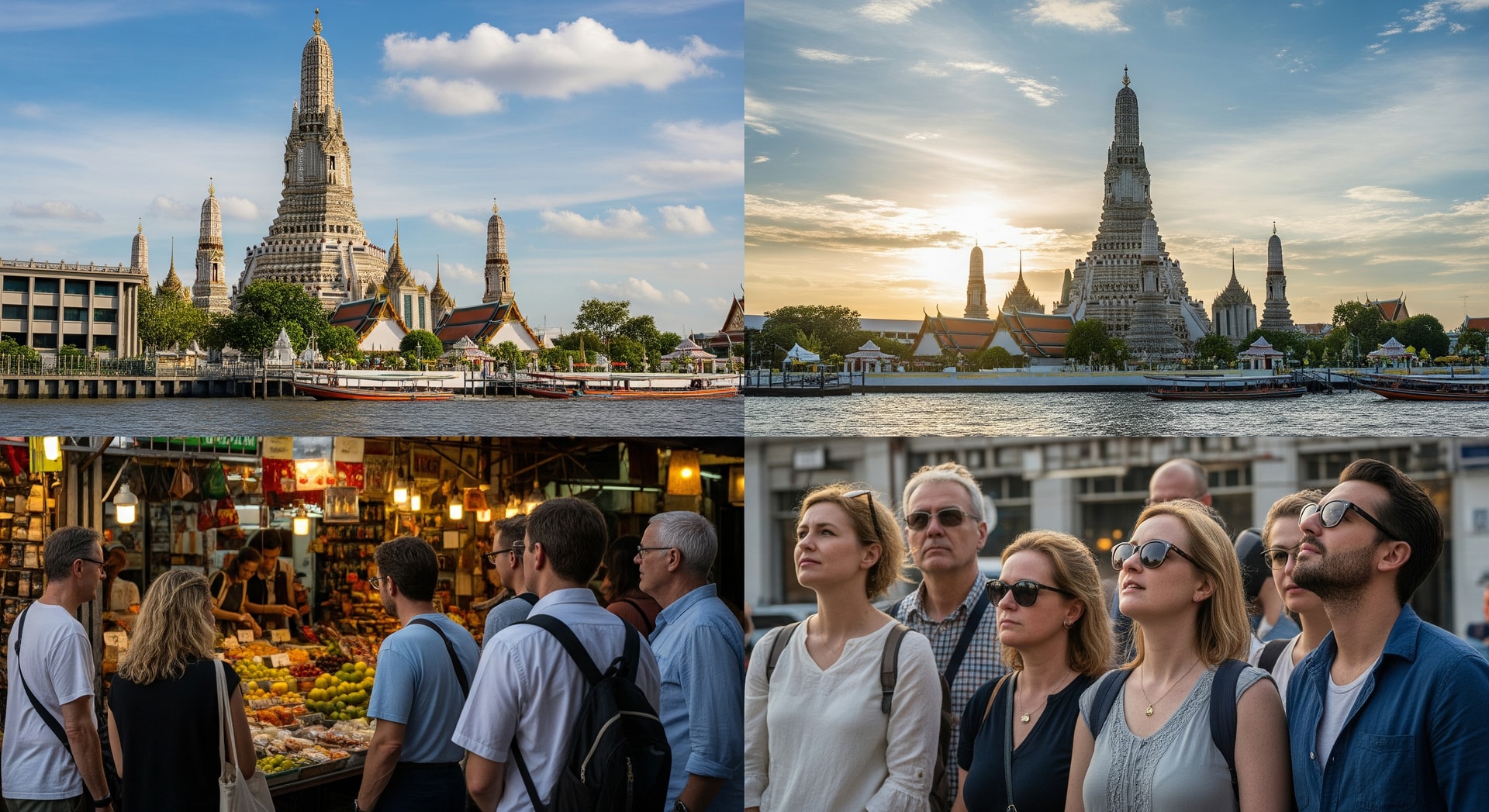
In Bangkok, major temples such as Wat Arun and Wat Phra Kaew stage special ceremonies that allow visitors to connect with the festival’s religious dimension while witnessing traditional rituals.
Water Fights: The Heart of Songkran Celebrations
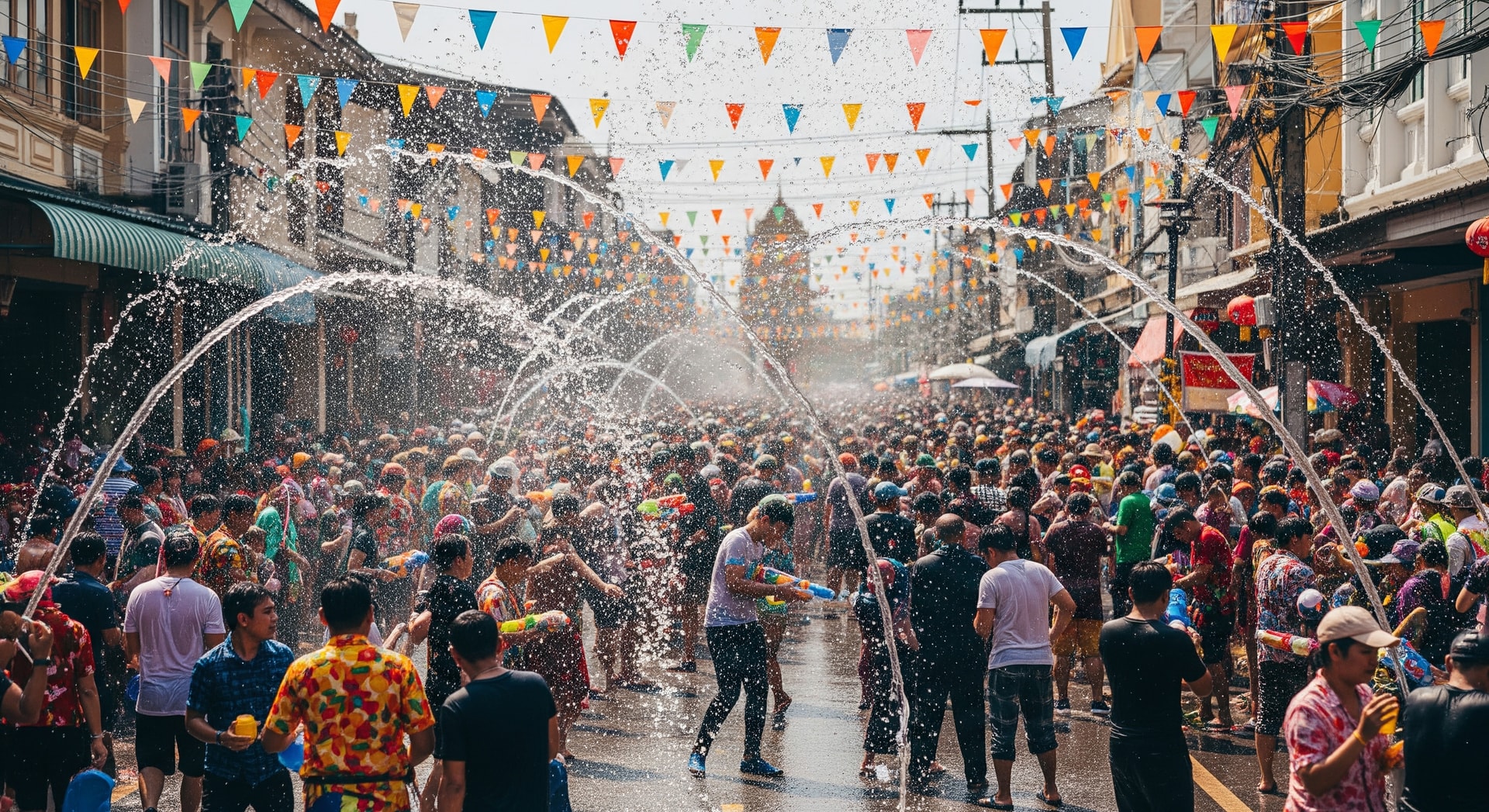
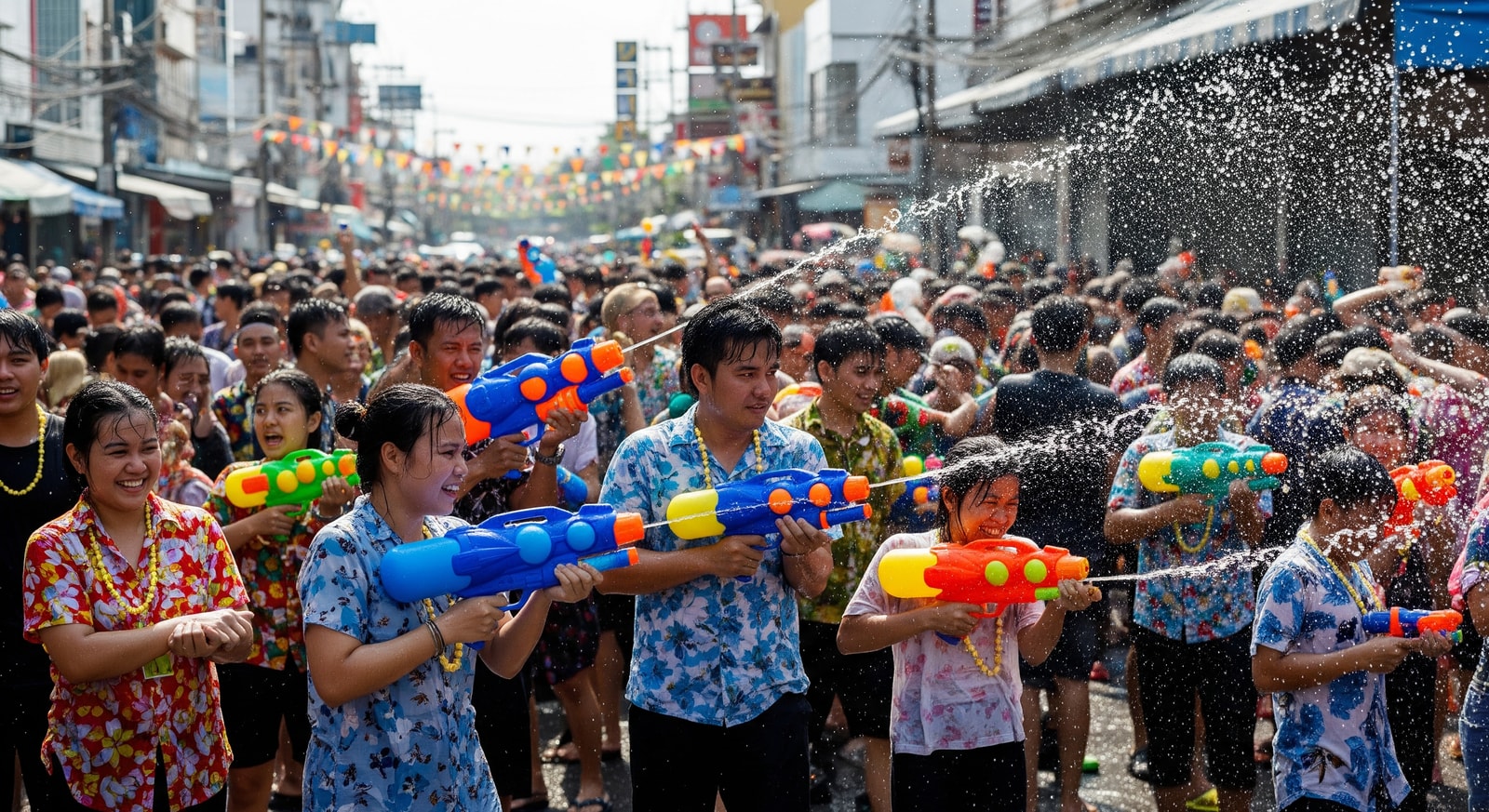
What distinguishes Songkran internationally are the vibrant water fights that turn streets, squares and temple areas into communal play zones. Armed with water guns, buckets and hoses, participants splash water on one another as a public act of purification and camaraderie. The atmosphere is inclusive — people of all ages and nationalities are encouraged to join — but local authorities emphasise safety and advise using clean, non-toxic water during festivities.
- Bangkok: Large-scale street parties on Khao San Road, Siam Square and Silom Road with parades and performances.
- Chiang Mai: Celebrations that often extend beyond the official dates, centred in the Old City around the moat.
- Phuket and Pattaya: Beachside festivities that mix water fights with parties and traditional dance performances.
- Nong Khai: A quieter, more traditional observance focused on family gatherings and temple rituals.
Travel Tips for Songkran 2026
- Pack light, quick-drying clothing and use waterproof cases for electronics.
- Respect local customs: avoid targeting monks, elderly people or young children during water fights.
- Stay hydrated: April is one of Thailand’s hottest months.
- Book accommodation early as this is a peak travel period with higher rates and limited availability.
- Consider visiting smaller centres such as Sukhothai or Nakhon Si Thammarat for a more traditional experience.
- Exercise caution on wet roads and follow local safety guidance to avoid slips and traffic incidents.
Authorities recommend that participants use safe, non-toxic water and remain mindful of public safety as celebrations can be intense in central urban locations. While the festivities are friendly and inclusive, travellers should be aware of slippery streets and the potential for heavy crowds around major events.
Songkran 2026: A Festival of Renewal and Community
Songkran remains one of Thailand’s most meaningful and beloved celebrations, combining the solemnity of Buddhist rites with the exuberance of public festivities. Whether you seek the spiritual calm of temple ceremonies or the high-energy fun of street celebrations, Songkran offers a unique opportunity to experience Thai culture, community values and seasonal tradition all at once.
Why this matters: For travellers, Songkran 2026 is both a cultural highlight and a logistical consideration — expect crowded streets, busy transport hubs and booked hotels, but also unforgettable cultural experiences. For the travel industry, the festival reinforces Thailand’s appeal as a destination that blends heritage and lively public events, driving seasonal demand and encouraging services that cater to respectful, safe participation.
Sources