Canary Islands digital travel initiatives are reshaping how visitors plan and experience trips, using data and apps to boost sustainability and personalised services.
Summary: Canary Islands digital travel initiatives are using data, mobile apps and enhanced connectivity to personalise visitor experiences, improve crowd management and support sustainability across Tenerife, Lanzarote and Fuerteventura.
The Canary Islands are embedding digital tools into tourism management and visitor services, with Canary Islands digital travel strategies guiding how people plan, book and enjoy their stays while reducing environmental impact.
Predictive data drives travel planning
Data analytics and predictive modelling are influencing decisions from the moment travellers start researching the islands. Airlines and booking platforms increasingly rely on demand modelling and price-optimisation algorithms to update fares and availability in real time.
- Dynamic pricing and availability based on booking patterns and search trends
- Granular weather and sea-condition datasets for surfers, hikers and outdoor visitors
- Mobility flow data to inform where and when visitors travel between islands
Authorities across the archipelago apply these insights to manage visitor flows and address overtourism, responding to community concerns and aiming to protect local lifestyles and fragile environments.
Smart infrastructure supports sustainability goals
Local authorities are treating data as an operational asset. Real-time footfall monitoring, occupancy analytics and mobility datasets identify overcrowding and environmental pressure points so managers can redirect visitors to lesser-used sites across Tenerife, Lanzarote and Fuerteventura.
Digital tools also help businesses measure and reduce carbon footprints. Free carbon calculators and guided reduction plans enable small operators to align with net-zero strategies and contribute aggregated data to destination-level planning.
Cities such as Adeje on Tenerife are piloting ‘smart destination’ concepts by embedding sensors and intelligence into municipal services. These systems collect data on visitor numbers, water use and noise at beaches and public spaces to optimise services and ease congestion.
Long-term initiatives to strengthen Tenerife’s digital backbone — including projects linked to the ALiX data and connectivity centre — aim to improve information exchange and global connectivity, bolstering the islands’ competitiveness.
Mobile apps become the traveller’s everyday companion
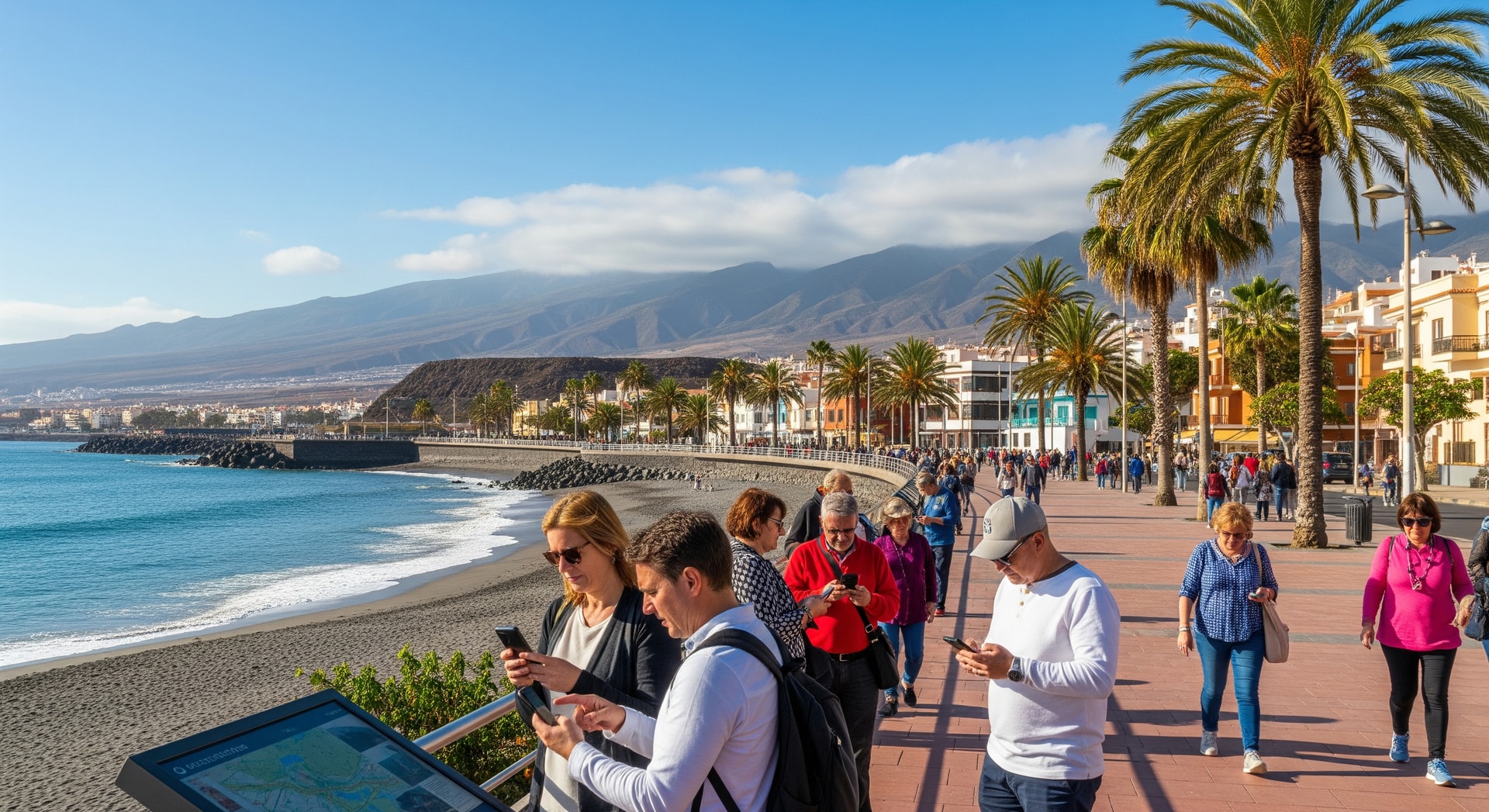
Printed maps and static guides are giving way to mobile apps that handle navigation, transport updates, ferry timetables and micro‑mobility options. Real-time alerts for weather, gate changes or delays reduce uncertainty for visitors moving between beaches, towns and hiking trails.
- Personalised recommendations for restaurants, events and hidden sights
- Integrated translation and digital payment capabilities
- App-based crowd management and experiential curation

Connectivity fuels remote work and seamless travel
Stable high-speed internet is now a baseline expectation. The rise of remote work and digital nomads has pushed accommodation providers to advertise fibre connections, while co‑working spaces and beachside Wi‑Fi hotspots cater to visitors who mix work and leisure.
Balancing technology with authentic experiences
Officials stress that digital tools are intended to remove logistical friction rather than replace in-person discovery. The region aims to ensure that data and apps let visitors focus on the islands’ volcanic landscapes, culture and hospitality while systems operate quietly in the background.
What this means for travellers and the industry
For travellers, the islands’ digital shift promises fewer surprises, more tailored recommendations and better tools to avoid crowded spots. For businesses and policymakers, the integrated approach offers data-led ways to reduce environmental impact while improving visitor satisfaction. Source: Canarian Weekly
So what? The Canary Islands’ embrace of digital travel means trips will be easier to plan, more personalised and potentially gentler on local ecosystems. Travellers should expect smarter apps and stronger connectivity; the tourism industry must continue investing in data tools and sustainability measures to keep growth responsible and visitors happy.
Sources