
Bwindi chimpanzee census confirms 426 individuals, redefining conservation and primate tourism in Uganda's Bwindi Impenetrable National Park.
Summary: A 2025 census, unveiled on 24 February 2026, documented at least 426 chimpanzees in Bwindi Impenetrable National Park, confirming a stable resident population and opening new opportunities for primate tourism and conservation management.
A rigorous survey known as the Bwindi chimpanzee census has established that Bwindi Impenetrable National Park in Uganda supports a sizeable, resident chimpanzee population. The findings, released on 24 February 2026, follow fieldwork carried out in 2025 and mark a major shift in how this UNESCO World Heritage site is understood by scientists and the travel industry.
A scientifically robust survey
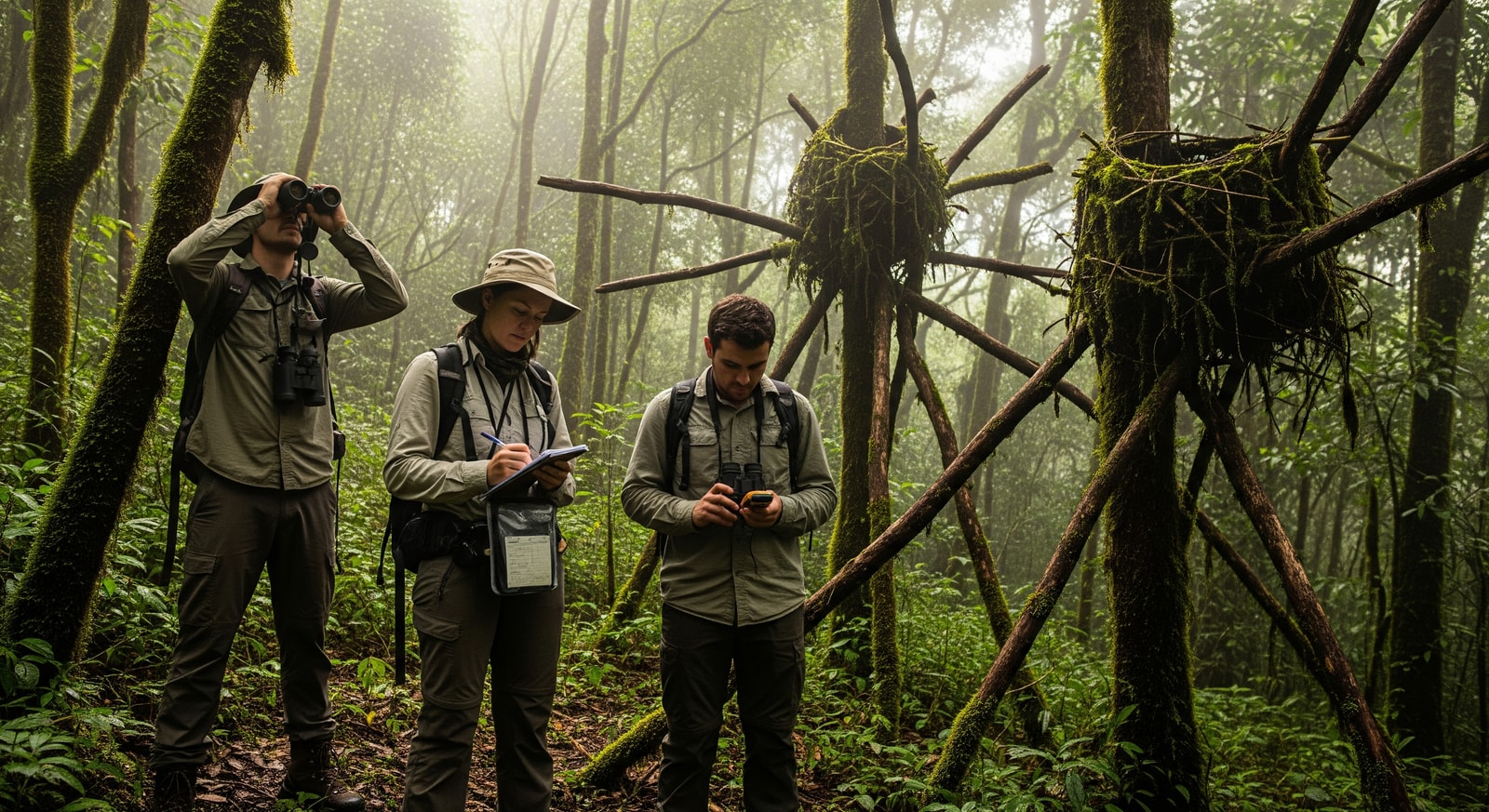
The census was carried out through a formal partnership between the Uganda Wildlife Authority (UWA) and the Jane Goodall Institute (JGI) Uganda. Teams applied a standardized line-transect method across the park’s 320.9 square kilometres, working in difficult and steep terrain. Rather than relying on direct sightings in dense forest, researchers located and georeferenced chimpanzee nests — a non-invasive approach that estimates numbers by using nightly nest-building behaviour as a proxy for individuals.
Population results and distribution
Survey teams recorded at least 426 chimpanzees in the park, yielding an estimated density of about 1.33 individuals per square kilometre. The data show that chimpanzees are broadly distributed across Bwindi, with the highest concentrations located in the park’s northern sector — an area researchers refer to as the “neck of Bwindi.” These results confirm that chimpanzees are a permanent and thriving component of the forest, rather than occasional visitors.
Redefining the primate trekking offer
Bwindi has long been synonymous with mountain gorilla trekking in sectors such as Buhoma, Ruhija, Rushaga and Nkuringo. The census creates scope for regulated chimpanzee habituation and tracking in underused northern areas, enabling a potential “dual-ape” experience where visitors could observe both mountain gorillas and chimpanzees within the same protected landscape. Tourism planners expect this diversification to lengthen stays and attract travellers seeking deeper primate-focused itineraries.
Benefits for conservation management
Establishing a population baseline is central to Uganda’s National Chimpanzee Conservation Strategy (2023/24–2032/33). The census data will guide investments in ranger patrol allocation, disease surveillance and habitat protection, and will help identify priority zones for monitoring. Survey teams reported only minimal signs of human disturbance along transects, indicating current protection measures by the UWA are largely effective, but the data also underline ongoing risks.
- Documented threats: climate change, habitat fragmentation, and potential cross-species disease transmission
- Management actions: targeted ranger patrols, focused disease monitoring and adaptive habitat protection
- Strategic value: precise baseline for long-term conservation planning
Economic and community implications
Officials highlight the potential socioeconomic benefits of expanding primate tourism. New activities around chimp tracking and habituation could create jobs for guides, trackers and hospitality workers in areas that previously received fewer visitors. Increased permit sales and longer itineraries will strengthen revenue-sharing programmes that direct a portion of park fees toward community projects, reinforcing the link between conservation and local livelihoods.
Bwindi as a biodiversity stronghold
The confirmation of a substantial chimpanzee population cements Bwindi’s reputation as a complex and ancient refuge that supports multiple great ape species. The park is now recognised among the rare sites where mountain gorillas and chimpanzees coexist and flourish in overlapping habitats, offering researchers and eco-conscious travellers unique insights into interspecies dynamics and forest resilience.
Why this matters: For travellers and the tourism industry, the census means new, scientifically grounded experiences, potential for longer itineraries and strengthened conservation funding through tourism revenue. So what? Visitors can expect a broader range of primate encounters in Bwindi, while operators and communities stand to benefit from diversified offerings that link wildlife protection to local prosperity. Prospective visitors should watch for new permit rules and regulated habituation programmes as they are introduced.
Sources