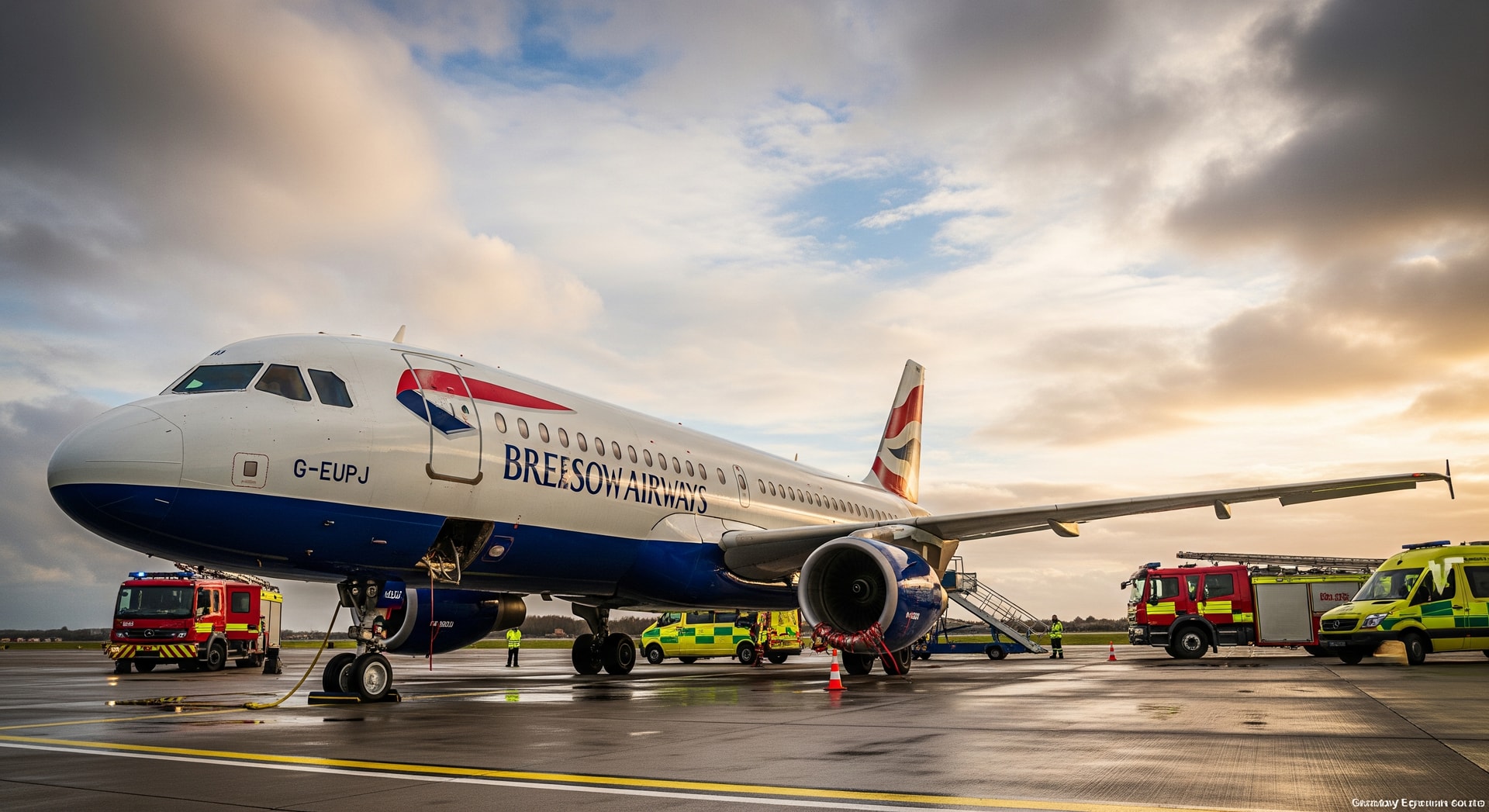
BA1481 declared an emergency shortly after departing Glasgow for London Heathrow, prompting the aircraft to hold at 8,000 feet while crew assessed the situation.
Summary: BA1481, an Airbus A319 (G-DBCE) operating from Glasgow to London Heathrow on 11 February 2026, declared an emergency shortly after takeoff, squawking 7700 and holding at 8,000 feet while the crew assessed the situation.
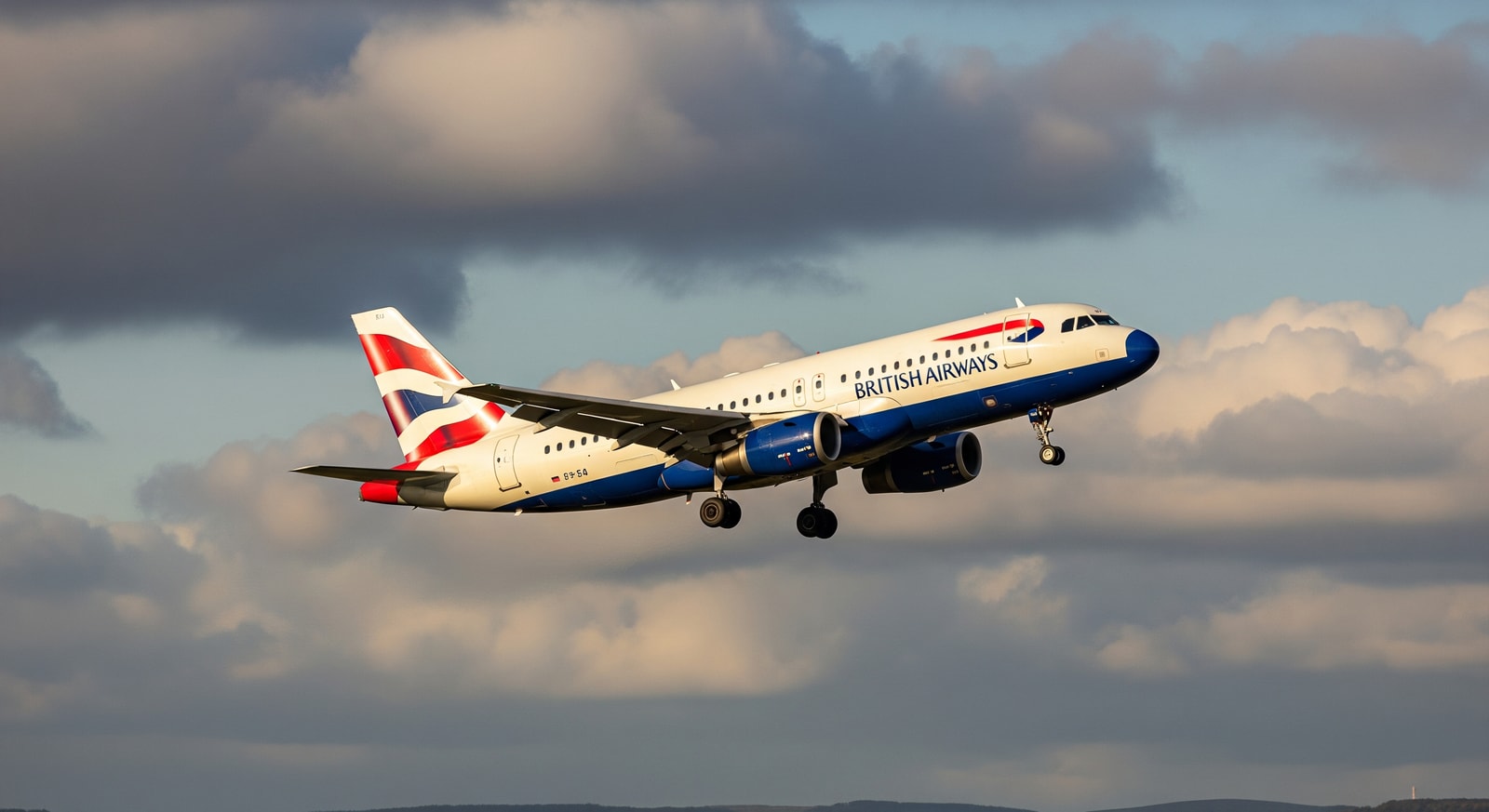
British Airways flight BA1481 issued an emergency alert soon after departing Glasgow for London Heathrow on 11 February 2026. The domestic service, operated by an Airbus A319-131 registered G-DBCE, climbed to about 8,000 feet before the crew stopped the ascent and declared the emergency, activating the internationally recognised squawk code 7700.
What happened on BA1481?
The flight departed Glasgow Airport from runway 05 bound for London Heathrow. Approximately 25 minutes after takeoff, while climbing to cruise, the crew halted the climb at around 8,000 feet and issued an emergency squawk. Air traffic control and the flight crew then implemented emergency procedures as the aircraft held south of Glasgow while the situation was evaluated.
Timeline of the incident
- Departure: Took off from Glasgow Airport (runway 05) on 11 February 2026
- Climb stopped: Ascent halted at roughly 8,000 feet
- Emergency declared: Crew set squawk 7700 about 25 minutes after departure
- Holding pattern: Aircraft circled south of Glasgow while crew assessed the issue
- Status at 45 minutes: The flight remained in a holding pattern as procedures continued
Why crews declare emergencies
An emergency declaration in flight can be prompted by a range of conditions, from instrument warnings or system faults to other operational concerns. Declaring an emergency—by selecting squawk 7700—gives air traffic control and the crew priority handling and time to diagnose the problem, coordinate with maintenance teams and, if needed, prepare for an expedited return or diversion.
How British Airways responded
According to reporting at the time, the flight crew followed established emergency procedures, kept passengers informed and coordinated with air traffic control and ground teams. Ground crews at Glasgow and London Heathrow stood ready to receive the aircraft should a diversion or immediate landing become necessary. Reports indicate the crew prioritised passenger safety throughout the event.
- Aircraft type: Airbus A319-131, registration G-DBCE
- Emergency code used: Squawk 7700
- Altitude when holding: Approximately 8,000 feet
- Time to emergency: Declared ~25 minutes after departure
Context: recent in-flight incidents
The BA1481 event sits alongside other recent technical or diversion incidents that underline the routine use of protocols to protect passengers. While many such events end without injury, each prompts investigation and review to maintain safety standards.
- Starsky Aviation (Somalia) — Mogadishu: Runway overrun / emergency landing, all survived; investigation ongoing
- Air Canada AC858 — Toronto to London: In‑flight diversion; passengers disembarked at alternate airport
- easyJet EZY3211 — Edinburgh to Paris: Technical diversion, landed safely at Manchester
- easyJet (Edinburgh–Fuerteventura service) — diverted and landed in Porto
- United Airlines UA1125 — Denver origin: Technical emergency, successful landing
- Hainan Airlines HU492 — Brussels return: Technical issue and fuel dump, safe landing
- British Airways A319 — Glasgow to London: Technical emergency, returned safely
Safety and maintenance implications
Incidents like BA1481 emphasise the layered nature of aviation safety: routinely inspected aircraft, well-rehearsed crew procedures and coordinated ground support all reduce risk. Airlines and regulators review each occurrence to determine causes and whether changes to training or maintenance cycles are needed.
What this means for travellers
For passengers, the BA1481 episode is a reminder that emergency declarations are precautionary measures designed to safeguard everyone on board. While such events can cause delays and anxiety, they also reflect the system working as intended: crews prioritise safety, air traffic control gives priority handling, and ground teams prepare for all outcomes. Travellers should expect airlines to provide updates and support where disruptions occur.
So what? The immediate takeaway for travellers is reassurance: emergencies like this trigger established safety procedures and do not necessarily indicate a wider safety problem. However, expect possible delays, stay attentive to crew announcements and check with your airline if your flight plans could be affected.
Sources