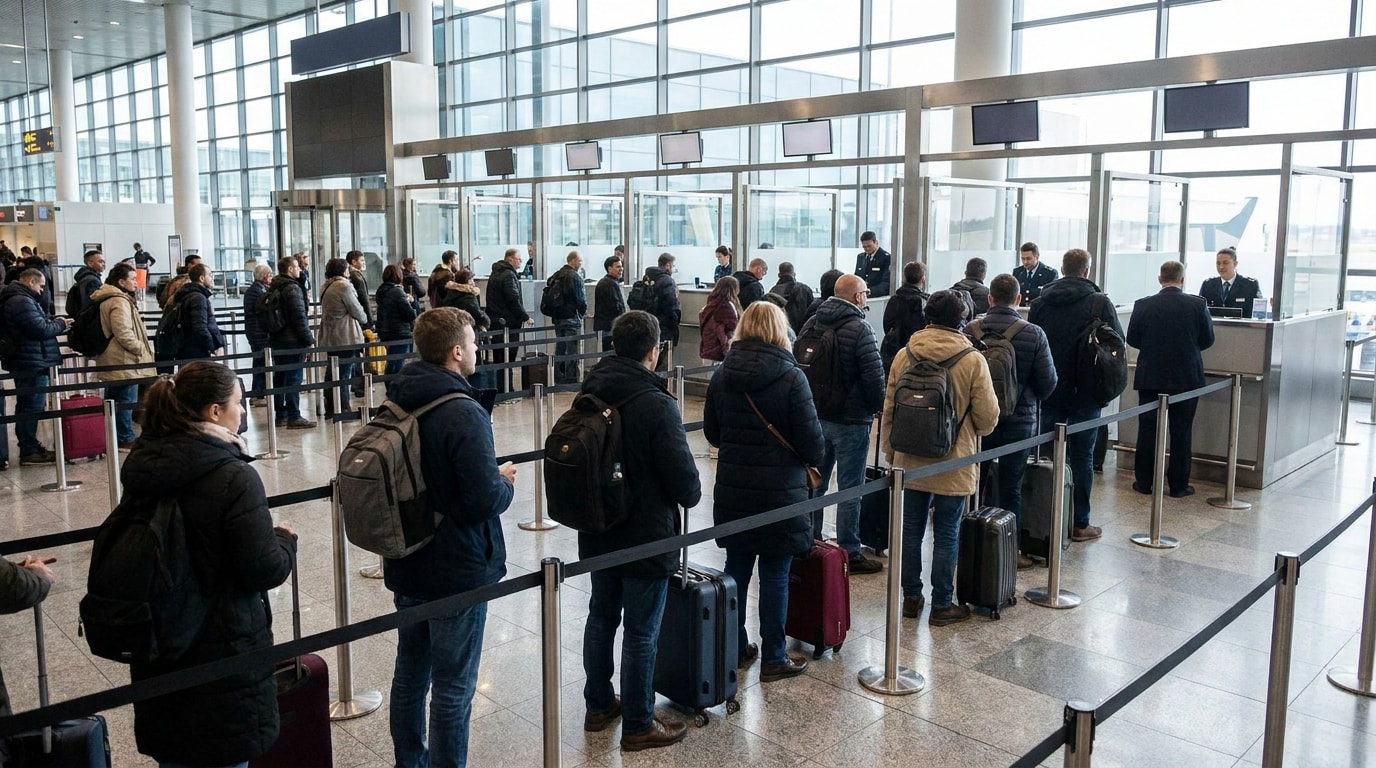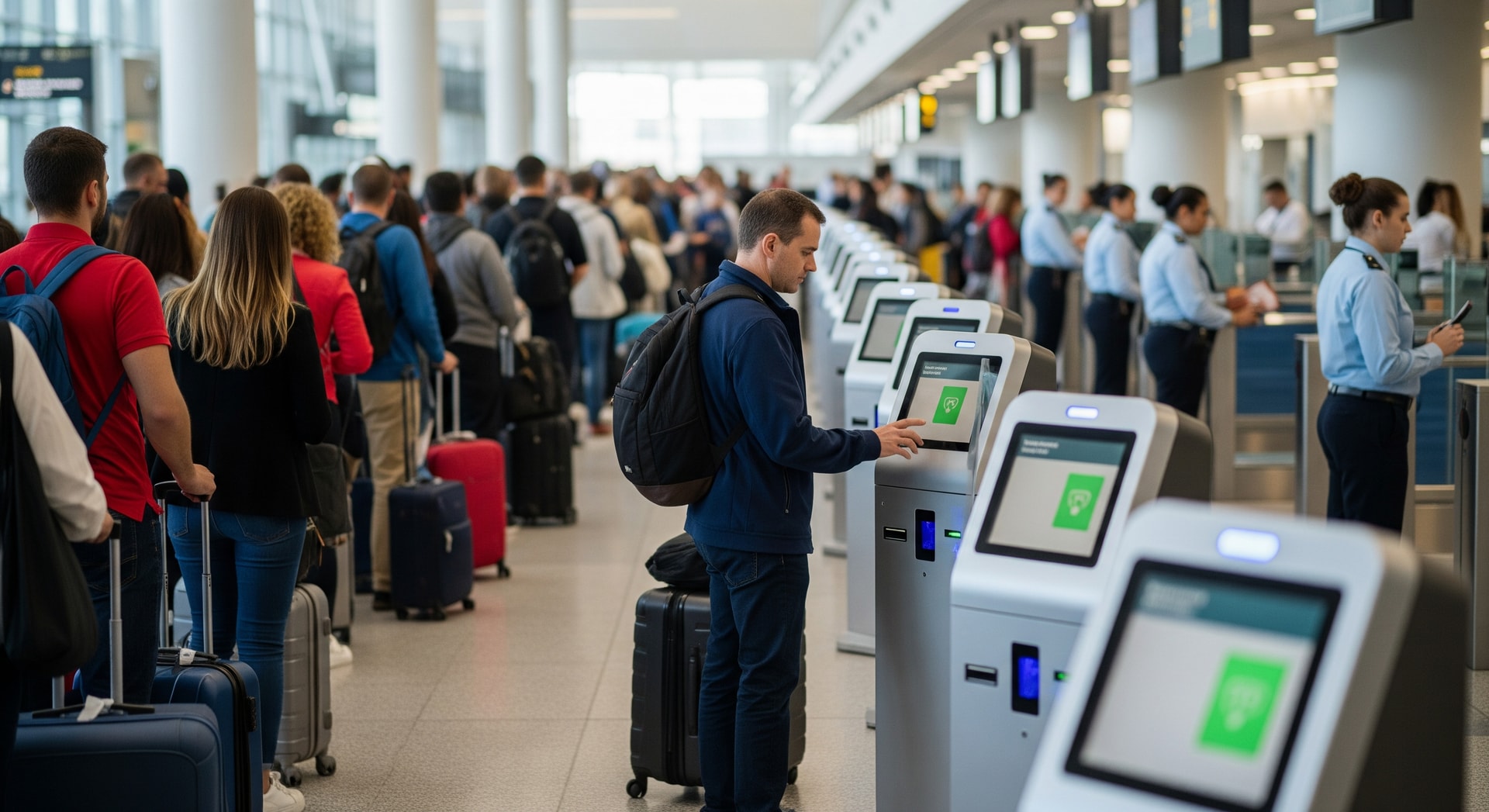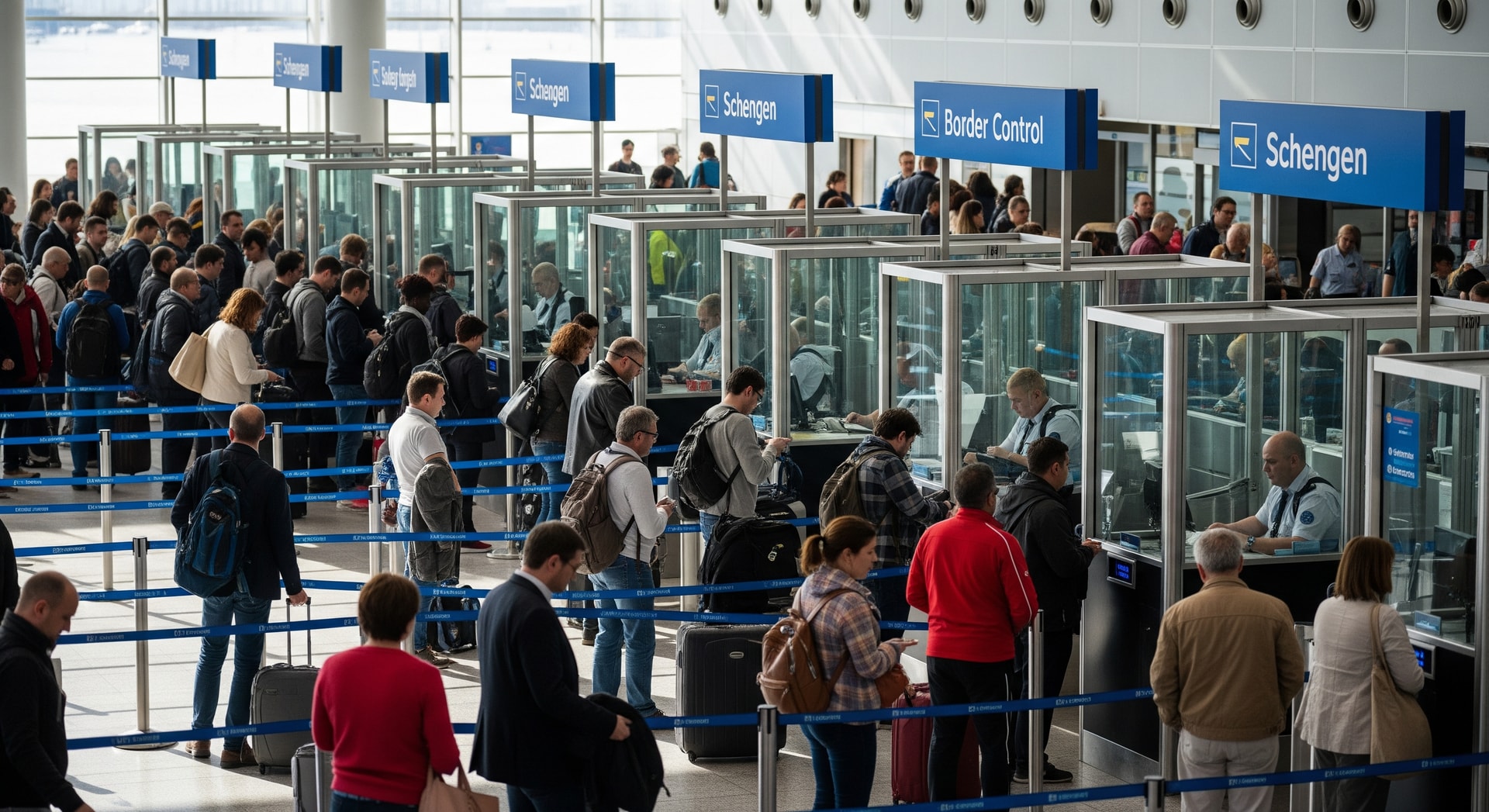
ACI EUROPE, A4E and IATA warn that EES delays risk causing long queues of up to four hours during the summer peak if staffing, technology and pre-registration issues are not resolved.
Summary: ACI EUROPE, A4E and IATA have warned the European Commission that ongoing EES delays, understaffed border teams, tech faults and low uptake of the Frontex pre-registration app could produce passenger queues of up to four hours during the summer peak.
Three major aviation organisations — ACI EUROPE, Airlines for Europe (A4E) and the International Air Transport Association (IATA) — have raised urgent concerns about the Schengen Entry/Exit System (EES). They say current delays linked to the EES rollout risk creating severe queuing for passengers as the summer travel season nears.
How the EES rollout is affecting passenger flow
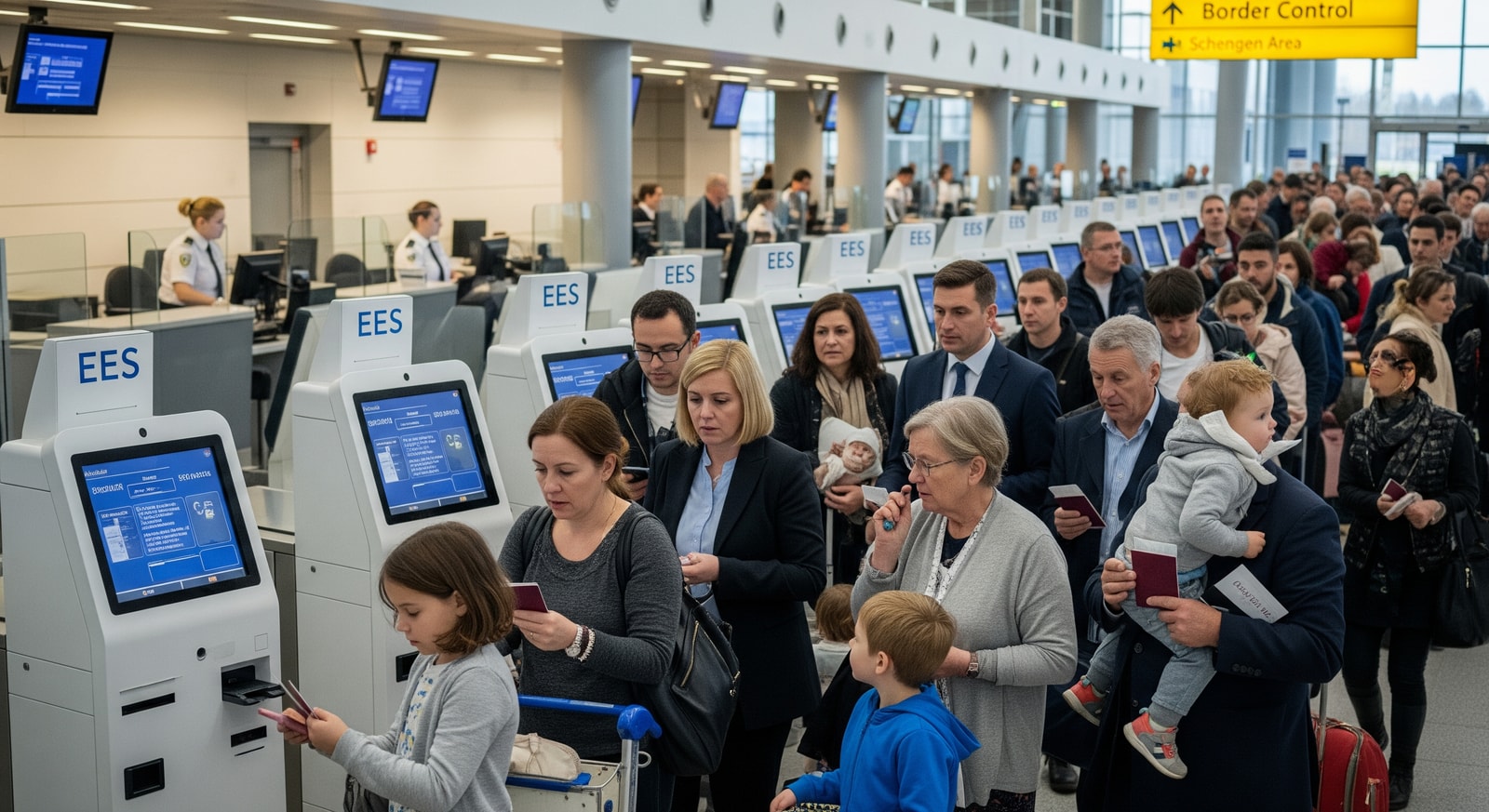
The Schengen Entry/Exit System, intended to electronically register entries and exits of third-country nationals to boost border security, is being implemented in phases. At the current stage, 35% of third-country nationals arriving in the Schengen Area must be registered, a requirement that has already increased processing times at border checks.
ACI EUROPE, A4E and IATA report that several European airports have seen excessive waits — in some cases up to two hours — and warn that, without fixes, peak summer months could see queues extending to four hours or more per passenger.
Main factors driving the delays
- Chronic understaffing of border control teams, which reduces processing capacity as EES increases workload
- Unresolved technological issues affecting automated systems and integrations that were supposed to speed up registrations
- Low adoption of the Frontex pre-registration app by travellers and insufficient encouragement from some Member States
Each of these problems compounds the others: staffing shortages make it harder to manage system outages, technical glitches slow automated kiosks, and limited pre-registration denies border authorities the efficiency gains the Frontex app was designed to deliver.
Call to the European Commission and Commissioner Brunner
In a letter to Magnus Brunner, the EU Commissioner for Internal Affairs and Migration, the three aviation bodies urged immediate measures to tackle the issues before the busy summer period. They asked the Commission to clarify whether Member States could retain the option to partially or fully suspend EES until the end of October 2026, given the operational pressures.
Under Regulation 2025/1534, the possibility to suspend EES will no longer be available after early July, and the aviation organisations say the current rules and the Schengen Border Code leave uncertainty over whether timely suspension or relaxation measures can be activated when needed.
What the sector is asking for
- Immediate action to fix technology faults and improve system reliability
- Support to address staffing shortages at border control points
- Stronger promotion and uptake of the Frontex pre-registration app among travellers
- Regulatory clarity and flexibility on temporary suspension or adjustment of EES during peak periods
Airports and airlines stress that pragmatic flexibility will be essential to avoid a summer of severe disruption. Without clear and timely measures, they warn, the EES rollout risks undermining passenger experience and the operational efficiency of European hubs.
Why this matters to travellers and the industry
If the issues cited by ACI EUROPE, A4E and IATA are not resolved, travellers should expect longer wait times at Schengen borders during the summer travel peak. For airlines and airports, prolonged delays could mean flight disruptions, missed connections and reputational damage across Europe's busiest travel period.
Practical tip: Travellers from third countries should check guidance on pre-registration tools and allow extra time for border checks during summer months.
Sources