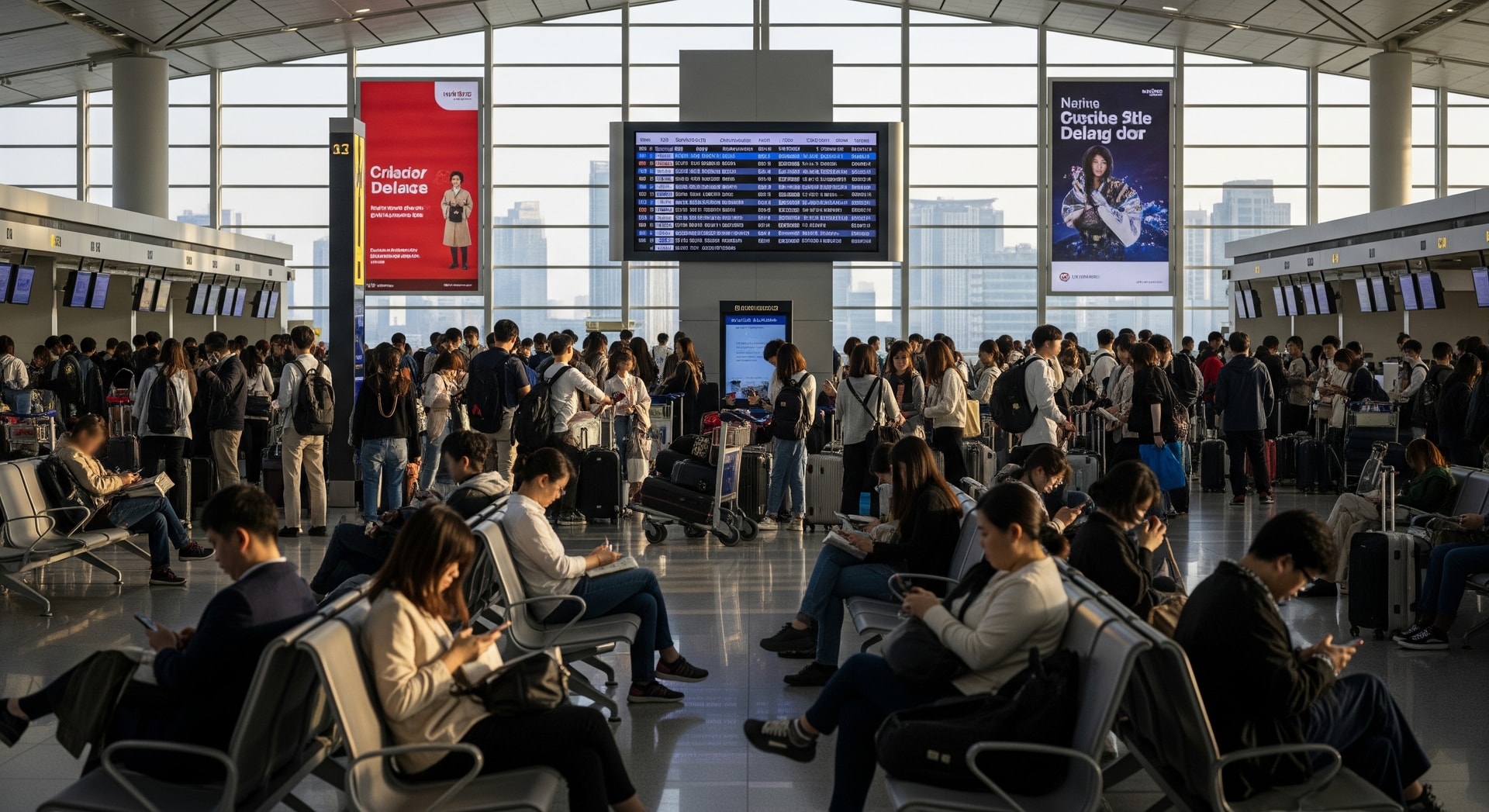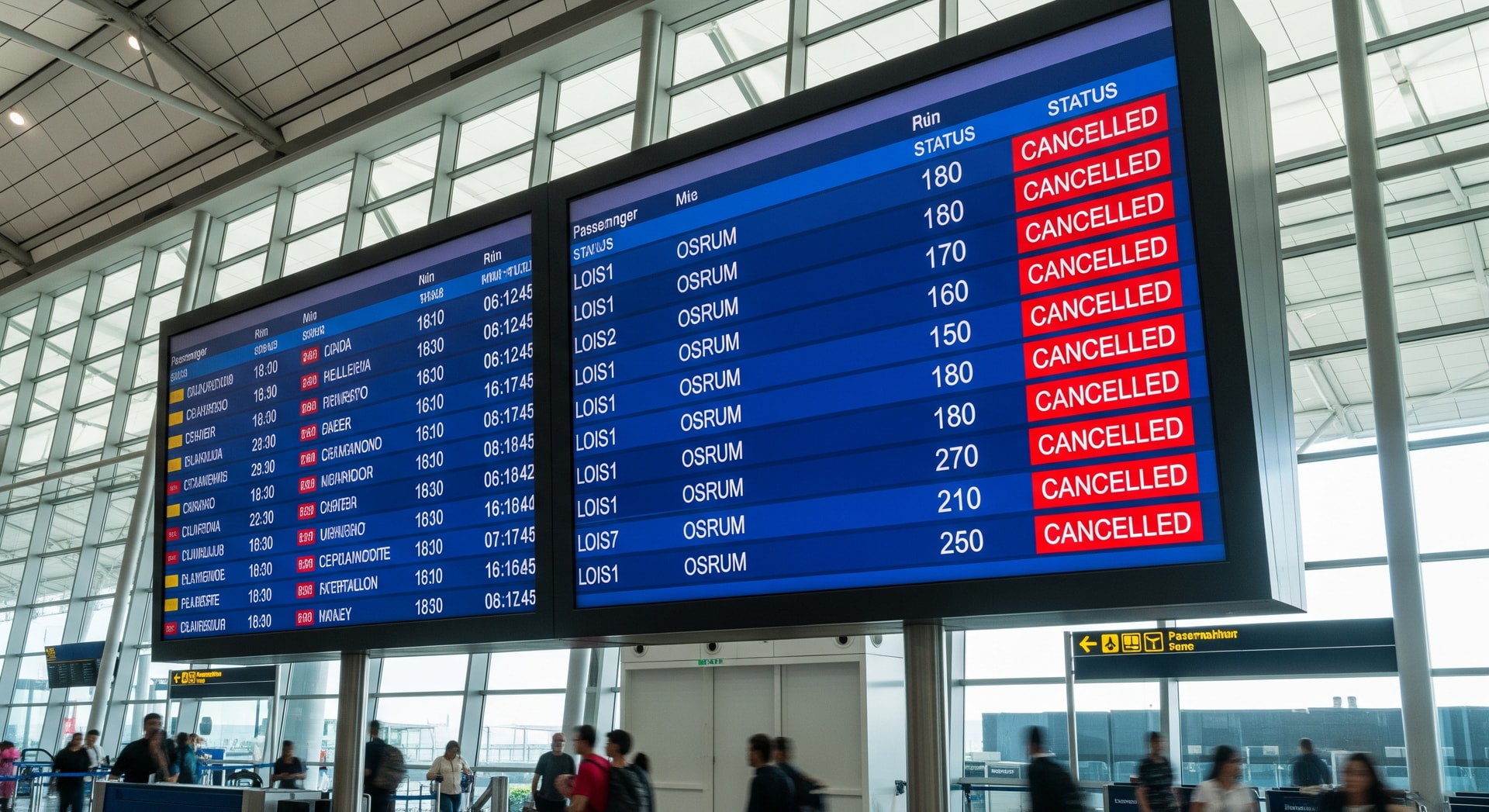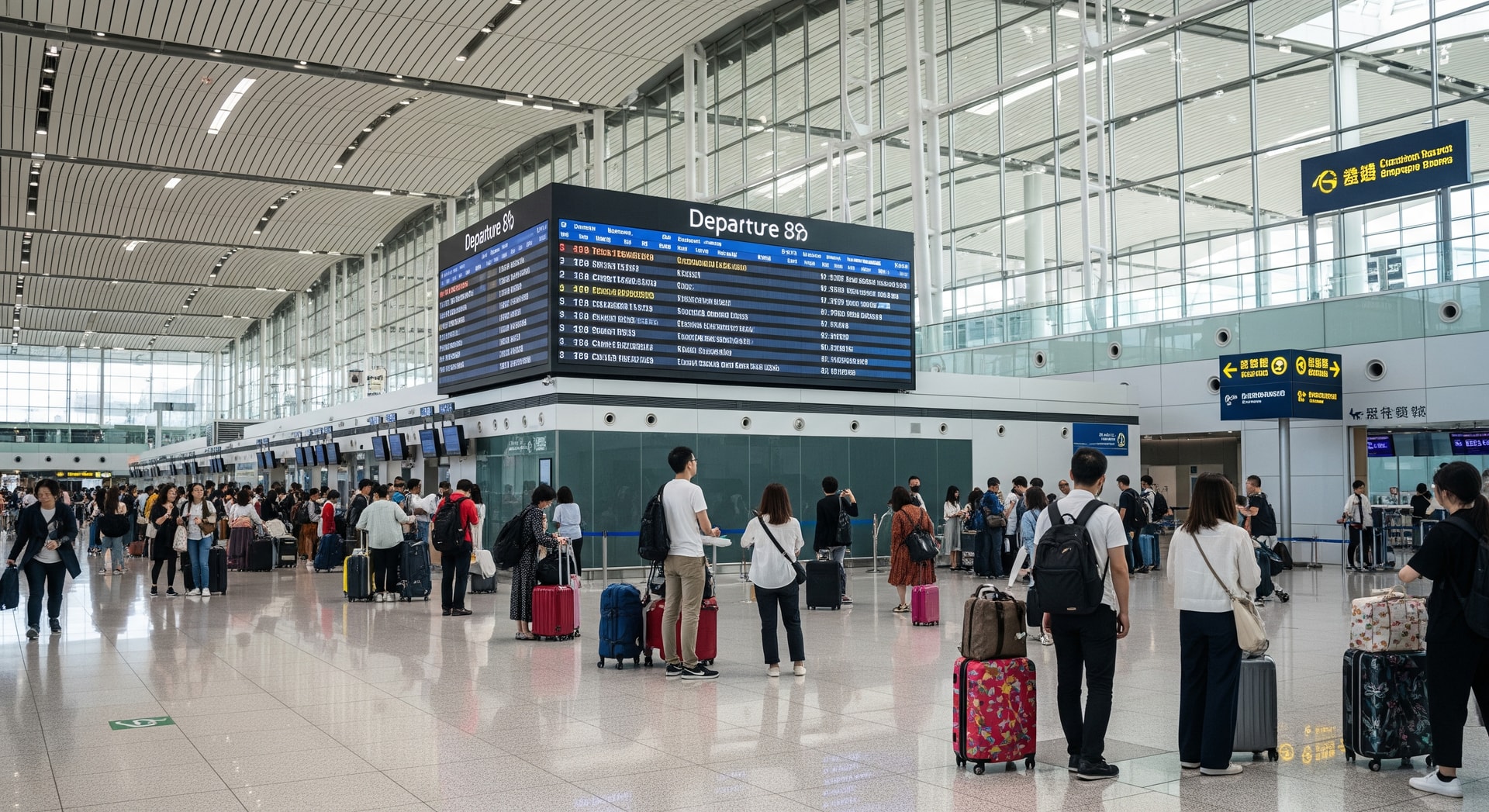
Asia flight disruptions left 143 flights canceled and 3,909 delayed, stranding thousands of passengers across Japan, Singapore, Thailand, Indonesia and Hong Kong.
Summary: Asia recorded 3,909 flight delays and 143 cancellations across multiple countries, leaving thousands of passengers affected. Major hubs in Japan, Singapore, Malaysia, Thailand and Indonesia were among the worst hit.
Asia flight disruptions on 7–8 February 2026 resulted in 3,909 delayed movements and 143 cancellations, leaving travellers stranded across the region. The widespread problems affected major airports and a mix of low-cost and full-service carriers, producing congestion and extended wait times for many routes.
Scope of the disruption across key hubs
The disturbances were region-wide, with Japan at the centre of cancellations and other countries recording high delay volumes. Tokyo Haneda alone reported the largest single-airport disruption by delay volume, while several other international hubs experienced significant knock-on effects.
- Tokyo Haneda: 611 delays, 23 cancellations
- Kuala Lumpur International: 470 delays, 0 cancellations
- Singapore Changi: 453 delays, 3 cancellations
- Bangkok Suvarnabhumi: 381 delays, 2 cancellations
- Narita International: 363 delays, 8 cancellations
- Incheon International: 336 delays, 0 cancellations
- Jakarta Soekarno-Hatta: 325 delays, 9 cancellations
- Hong Kong International: 282 delays, 1 cancellation
- Fukuoka Airport: 217 delays, 13 cancellations
- Osaka Itami: 153 delays, 11 cancellations
- Izumo: 23 cancellations
- Kikai: 16 cancellations
Airlines with the largest disruptions
Both flag carriers and low-cost airlines experienced substantial operational pressure. Japan Airlines and All Nippon Airways were among the most affected by volume, while carriers across Southeast Asia also recorded large numbers of delayed flights.
- Japan Airlines (JAL): 491 delays, 32 cancellations
- All Nippon Airways (ANA): 275 delays, 9 cancellations
- AirAsia: 200+ delays (across Malaysia and Singapore operations)
- Singapore Airlines: 160+ delays
- Lion Air: 157 delays (primarily Indonesia)
Why delays far outnumbered cancellations
Across the region, large hubs remained operational but experienced high delay ratios. The pattern points to congestion, air traffic flow restrictions and aircraft rotation issues rather than widespread airport closures — factors that tend to create cascading delays across multiple carriers and routes.
Geography of passenger impact
Cities repeatedly named among the most affected included Tokyo, Osaka, Fukuoka, Singapore, Bangkok, Kuala Lumpur, Jakarta, Hong Kong, Incheon and Jeju. The mix of domestic and short-haul services in Japan produced a disproportionate share of cancellations there, while Southeast Asian hubs were mainly delay-driven.
Advice for affected passengers
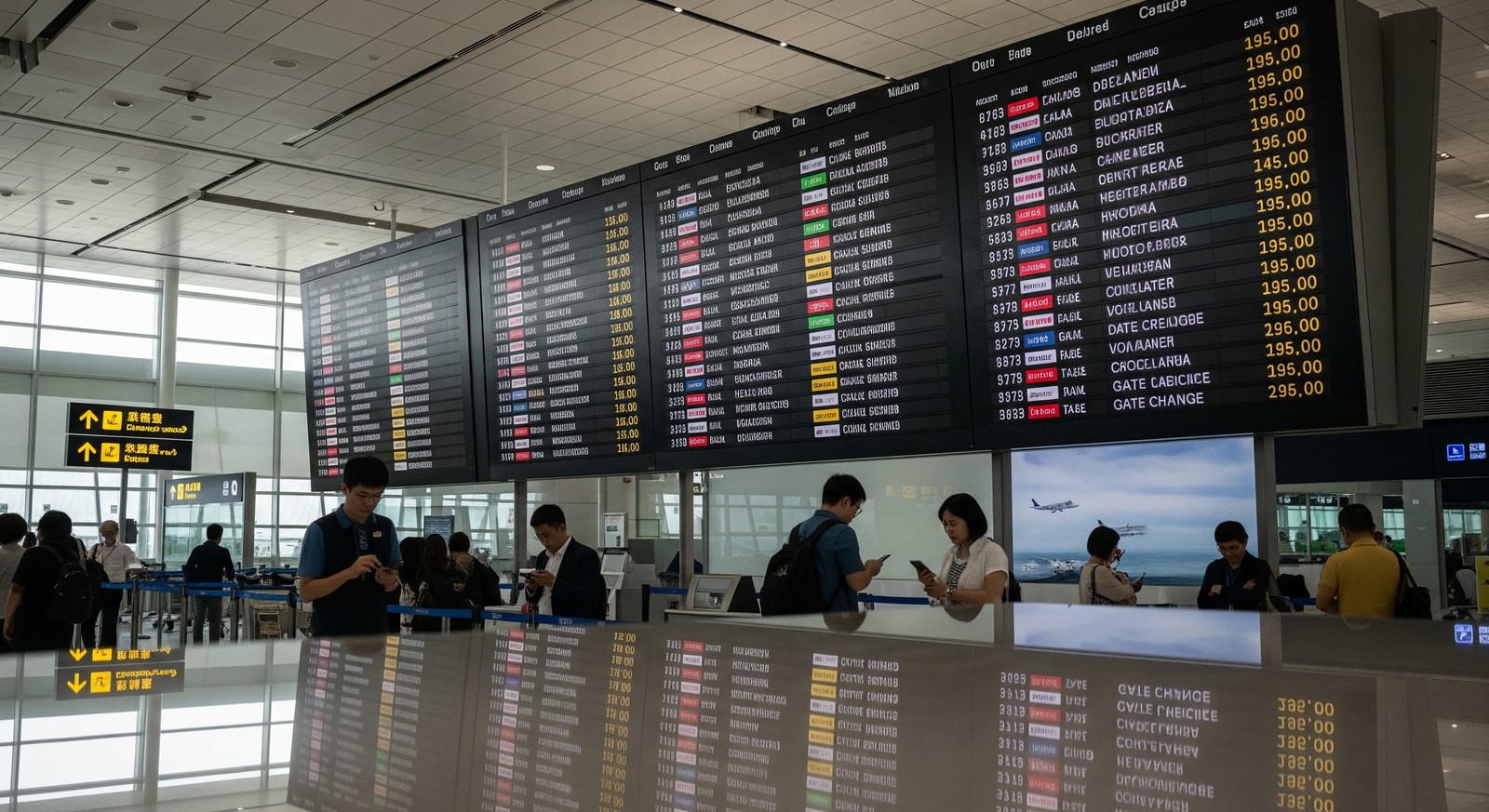
- Monitor airline apps and airport departure boards frequently
- Allow extra time for check-in and security amid congestion
- Confirm rebooking options and compensation eligibility with your carrier
- Avoid tight connections where possible
- Keep boarding passes and delay or cancellation notifications for claims
Passengers should stay in close contact with their airline for the latest rebooking information and retain all travel documentation if they plan to file a claim for delays or cancellations.
What this reveals about regional operations
The data indicate systemic strain rather than isolated failures. In Japan, JAL and ANA together accounted for a large share of cancellations, reflecting pressure within domestic and regional short-haul networks. In Southeast Asia, low-cost carriers such as AirAsia and Lion Air contributed substantially to delay volumes, amplifying ripple effects across connecting services.
Why this matters: For travellers, the disruptions underscore the importance of flexibility when planning regional trips in Asia and of checking flight status frequently. For airlines and airports, the incident highlights how congestion and aircraft rotation problems can quickly escalate into region-wide disruption, affecting passenger experience and operational resilience.
Sources