Queen Mary 2 reunion in Long Beach brought the active ocean liner alongside the retired Queen Mary, attracting global visitors after a historic Panama Canal transit.
Summary: Queen Mary 2 arrived in Long Beach on 2 February 2026 as part of its 108‑night World Voyage, anchoring alongside the retired Queen Mary for a rare public reunion that highlighted Cunard’s heritage and modern world cruising.
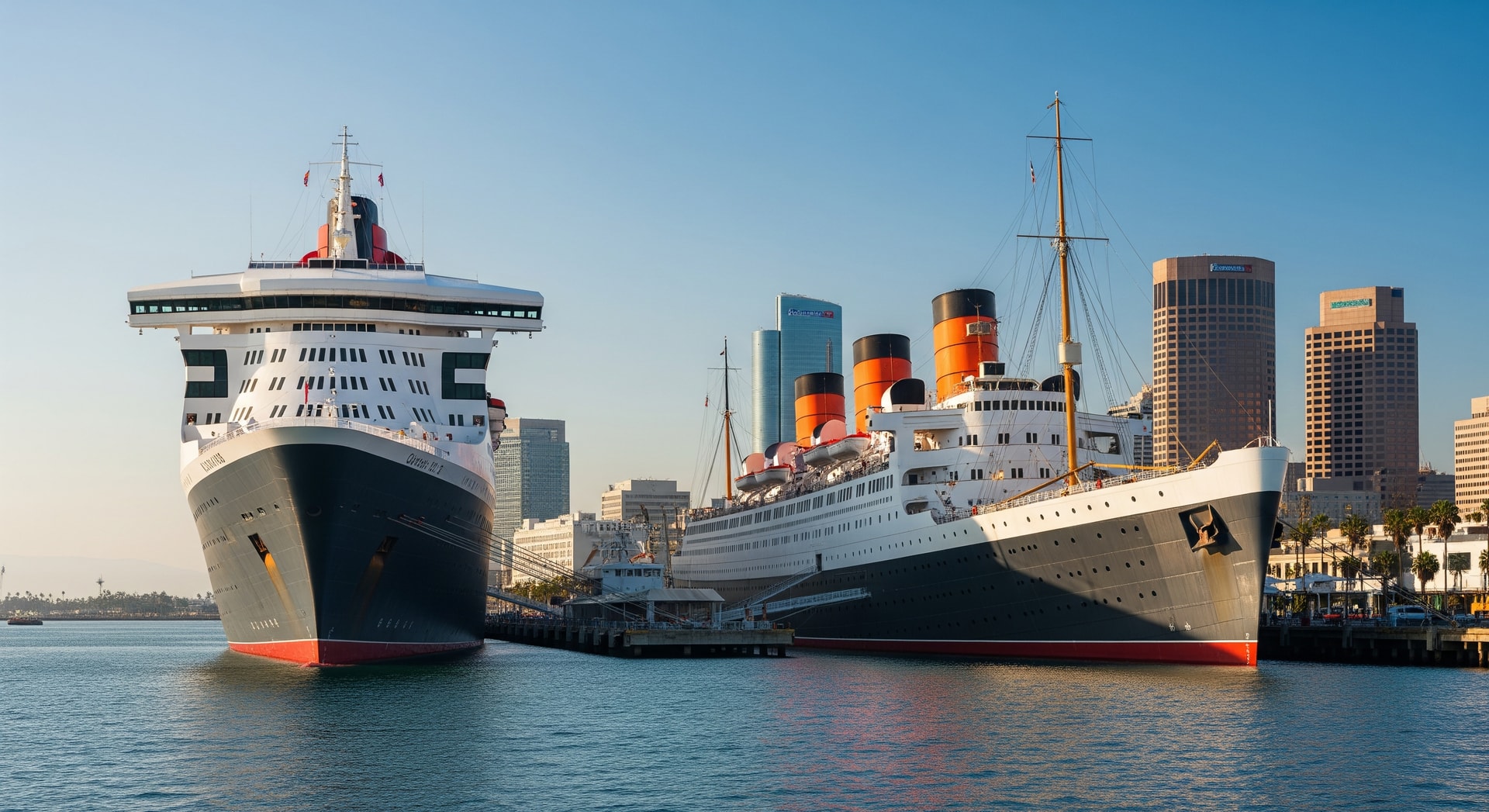
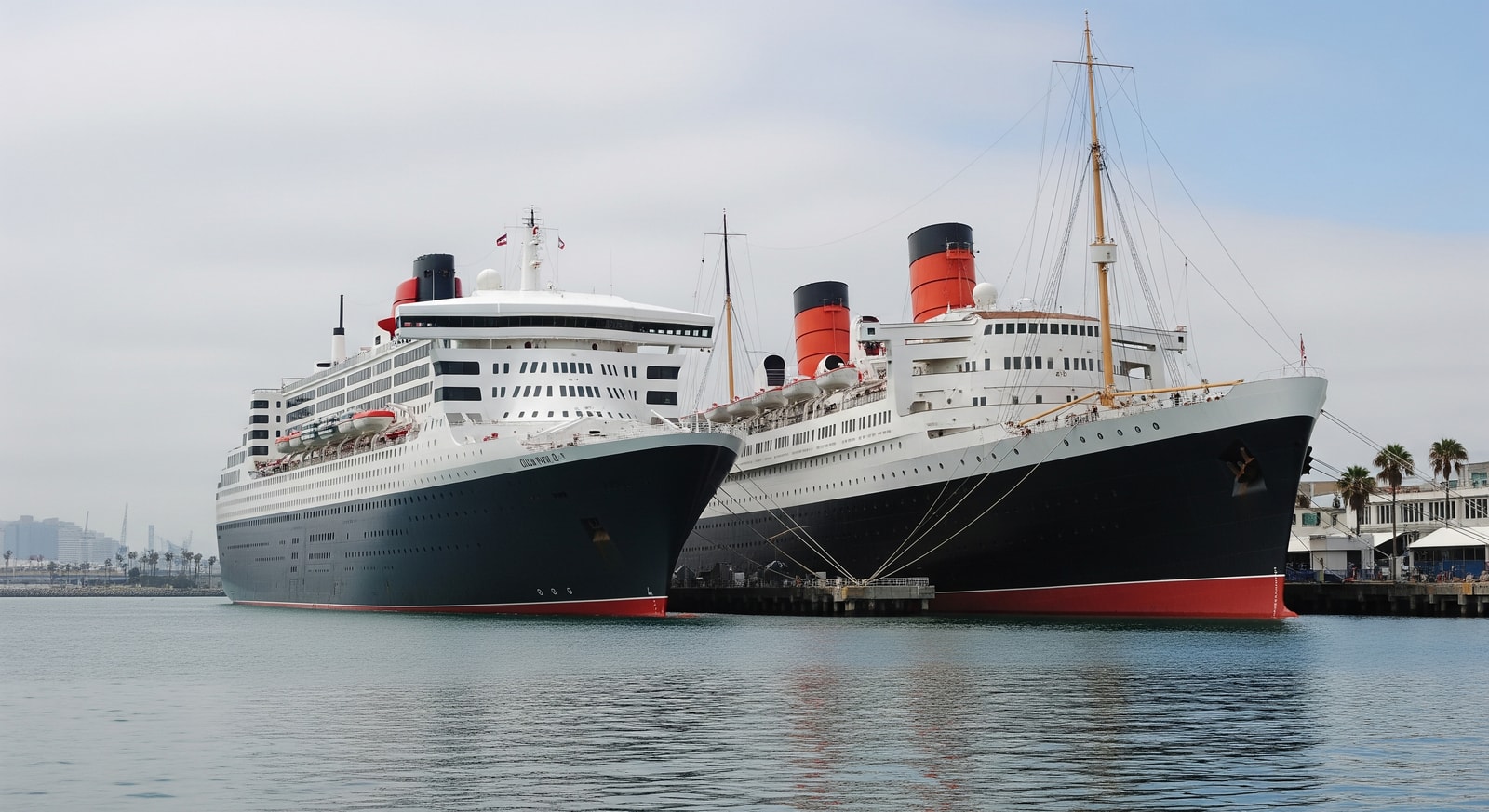
The Queen Mary 2 reunion in Long Beach drew international attention when the active ocean liner arrived on 2 February 2026 to visit the historic, permanently berthed Queen Mary. The meeting offered passengers and visitors a striking contrast between contemporary ocean travel and a preserved piece of maritime history, and it came after Queen Mary 2 completed a landmark transit of the Panama Canal as part of her 108‑night World Voyage.
A Rare Maritime Reunion
The encounter paired Queen Mary 2 — widely noted as the only true ocean liner still in regular service — with the retired Queen Mary, now a cultural landmark on the Long Beach waterfront. Cunard framed the visit as a celebration of the line’s past and present, conveying through press statements that the event underscored the lasting appeal of ocean travel across different eras and generations.
Historic Panama Canal Transit
Earlier in the itinerary, Queen Mary 2 achieved a milestone by making her first transit of the Panama Canal during the World Voyage. Guests witnessed the canal crossing, which included an overnight at the Cocoli Mooring Station and a passage beneath the Bridge of the Americas — moments highlighted by Cunard as emblematic of the voyage’s adventurous spirit and the ship’s engineering capability.
- Arrival in Long Beach: 2 February 2026, a public reunion with the retired Queen Mary
- Panama Canal transit: maiden passage for Queen Mary 2, overnight at Cocoli Mooring Station
- Bridge of the Americas: highlighted as part of the canal experience
Return to Southern California and Port Calls
Following the Long Beach visit, Queen Mary 2 proceeded to the Port of Los Angeles where she berthed overnight — her first scheduled call there in 17 years. The overnight stop allowed passengers to explore Los Angeles’ cultural neighborhoods, dining scene and waterfront attractions, transforming the voyage stop into an opportunity for urban exploration as well as oceanic travel.
Legacy and Cultural Tourism at the Queen Mary
The original Queen Mary has been moored in Long Beach since 1967 and operates today as a museum, hotel and event venue that preserves Art Deco design and maritime heritage. One notable artifact linking the two vessels is the refurbished whistle from the original Queen Mary, which now resides in Queen Mary 2’s starboard funnel — a tangible connection between the ships that drew interest from history enthusiasts and guests.
The 108‑Night World Voyage Experience
At the centre of these events was Queen Mary 2’s 108‑night World Voyage, an itinerary designed to connect passengers with a wide range of global destinations. Cunard markets the voyage as a blend of relaxation and cultural discovery, with long port stays and a programme of onboard enrichment, dining and entertainment that aims to make world cruising an immersive travel option for discerning travellers.
Cunard: Preserving Tradition, Shaping Tomorrow
Cunard’s long-standing reputation for elegant service and global exploration was on view during the Long Beach reunion. Travel commentators and company officials suggested the event could spur broader interest in maritime tourism, encouraging new travellers to consider voyages that combine heritage, luxury and discovery. The gathering of the two Queens thus served both as a tribute to Cunard’s past and as a showcase for the appeal of contemporary world cruising.
- Historic appeal: reunions like this spotlight maritime heritage and draw museum and cruise visitors.
- Itinerary value: canal transits and long port stays add unique experiences to world voyages.
- Destination impact: port calls such as Los Angeles bring economic and cultural benefits to host cities.
Why this matters: For travellers, the Queen Mary 2 reunion illustrates how modern voyages can offer both ambitious sea passages — such as a Panama Canal transit — and meaningful connections to maritime history. For the cruise and destination industries, events like this raise public interest in world cruising and cultural tourism, potentially boosting bookings and visitor numbers at heritage ports and waterfront attractions.
Sources