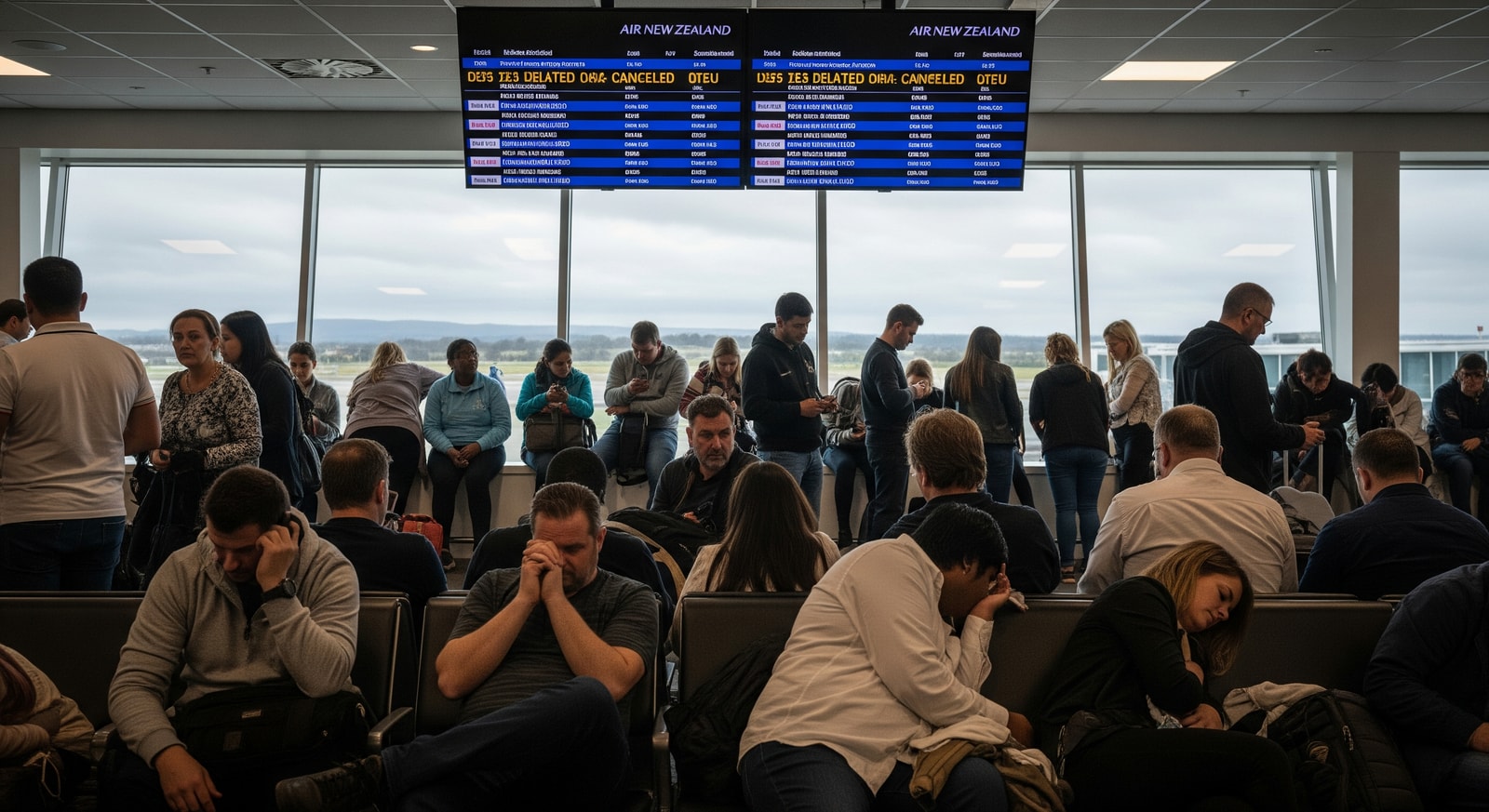
Air New Zealand strike strands thousands as the carrier cancels 54 flights and delays 76 across major New Zealand airports, disrupting travel in Auckland, Rotorua, Wellington and regional centres.
Summary: A two-day strike by Air New Zealand's international cabin crew beginning 12 February 2026 led to 54 flight cancellations and 76 delays, leaving thousands of travellers stranded at major hubs including Auckland, Rotorua and Wellington.
The Air New Zealand strike that began on February 12, 2026 has left thousands of passengers stranded after the carrier cancelled 54 flights and delayed a further 76, with the disruption centred on hubs such as Auckland, Rotorua and Wellington.
Scope of the disruption
Air New Zealand reported that the two-day industrial action by its international cabin crew has affected both domestic and international services. In total, 54 flights were cancelled and 76 were delayed across the airline’s network as it attempted to reallocate aircraft and crew where possible.
- Cancellations: 54 flights across domestic and international schedules
- Delays: 76 flights impacted by late departures or altered schedules
- Major hubs affected: Auckland (AKL), Wellington (WLG), Rotorua (ROT)
- Smaller regional airports also impacted: Kerikeri/Bay of Islands (KKE), Napier (NPE), Nelson (NSN), Tauranga (TRG)
Why crews walked off the job
The strike follows almost ten months of stalled contract talks between the airline and its international cabin crew. Negotiations have centred on pay, benefits and working conditions; Air New Zealand had offered salary increases between 4.14% and 6.41% in the first year of a proposed deal, but the cabin crew rejected the terms and moved to industrial action.
Which services were hardest hit
Long-haul services operated with widebody aircraft were among the most affected, as the industrial action involved international cabin crew. Regional and domestic connections also suffered, particularly those that link smaller centres to New Zealand’s main airports, leaving many travellers without straightforward alternatives.
- Long-haul international flights impacted by crew shortages on widebody aircraft
- Tasman and Pacific services were partly redeployed to reduce cancellations
- Regional links—Kerikeri to Auckland, Napier to Auckland, Wellington to Rotorua—saw heavy disruption
What passengers can do now
Air New Zealand has asked affected customers to contact its customer service teams and to monitor the airline’s website and social channels for live updates. Rebooking options have been prioritised where capacity allows; the carrier has also advised some passengers to seek local accommodation while they wait for alternative flights.
- Contact Air New Zealand customer service for rebooking or refunds
- Register for flight notifications via your booking portal
- If rebooking is not immediately available, the airline may offer vouchers or partial refunds
- Consider travel insurance claims if additional costs are incurred
Wider economic and tourism impacts
The cancellations and delays have disrupted tourism and business travel across New Zealand. Visitors to Rotorua, Wellington and Auckland have had plans interrupted, while companies report missed meetings and logistical headaches. Tourism—an important contributor to the national economy—faces short-term friction while services are restored.
Why this matters: The strike highlights how protracted industrial disputes in a national carrier can ripple through the travel ecosystem. For travellers, the immediate implications are disrupted itineraries, longer waits for customer support, and the need to confirm connections. For the industry, prolonged action risks revenue loss, reputational harm and operational strain until negotiations conclude.
Sources