Comprehensive 4-step process — permit applications typically reviewed within 3-6 months
1
Complete the permit application
Fill out our comprehensive application form detailing your expedition purpose, scientific objectives, team qualifications, environmental impact assessment, and proposed activities. Access to Heard & McDonald Islands requires approval from the Australian Antarctic Division, and our experts help ensure your application meets all regulatory requirements.
2
Upload expedition documentation
Submit your detailed expedition proposal, environmental impact statement, vessel certification, emergency response plan, team credentials, research permits, and proof of adequate insurance. Our specialists review every document against Australian Antarctic Division standards to maximize approval chances.
3
We coordinate with Australian authorities
Your verified application is transmitted to the Australian Antarctic Division for assessment. We liaise with relevant authorities throughout the review process, facilitate any requests for additional information, and keep you informed of progress via regular updates.
4
Receive your permit approval
Upon approval, you'll receive your official permit documentation with specific conditions for your visit. We provide detailed briefings on environmental protocols, biosecurity requirements, and reporting obligations. Your sub-Antarctic expedition awaits!
Visa types needed for Heard Island and McDonald Islands
Available visa products
Australia eVisitor - 1 year, Multiple entry Most Popular
Australia Visitor Visa - 1 year, Multiple entry
Australia eVisitor - 1 year, Multiple entry
The Heard Island and McDonald Islands Visitor Visa provides access to Antarctic ecosystems and pristine wilderness. Valid for 1 Year with multiple entry, this visa allows stays up to 90 days. Perfect for tourism, family visits, and business.
Applicants must submit the following documents:
🛂 Passport: Valid for at least 6 months with blank pages
The Heard Island and McDonald Islands Visitor Visa provides access to Antarctic ecosystems and pristine wilderness. Valid for 1 Year with multiple entry, this visa allows stays up to 90 days. Perfect for tourism, family visits, and business.
Applicants must submit the following documents:
🛂 Passport: Valid for at least 6 months with blank pages
Heard & McDonald Islands Entry Requirements & Permit Information
Scientific Research Permit
Project-specific duration
For approved scientific research expeditions
Australian Visa Required
Entry via Australia
Valid Australian visa needed for transit
Expedition Transit Permit
Voyage duration
For vessels passing through territory waters
Environmental Permit
Activity-specific
Required for any land-based activities
Essential Requirements
📘Valid passport with 12+ months validity
📄Approved permit from Australian Antarctic Division
🏥Comprehensive expedition and medical insurance
🧳Strict biosecurity compliance documentation
✈️Valid Australian visa for transit
💰Proof of expedition funding and support
Access Requirements & Permit System
Heard Island and McDonald Islands (HIMI) represent one of Earth's most restricted destinations. This Australian external territory is uninhabited and has no permanent infrastructure, with access strictly controlled to protect its pristine wilderness status.
Australian Jurisdiction & Permit Requirements
As an Australian external territory, all visits require prior approval from the Australian Antarctic Division (AAD). There is no tourist access — the territory is reserved exclusively for approved scientific research, environmental monitoring, and official government expeditions. Any person wishing to visit must hold a valid permit issued under the Environment Protection and Management Ordinance 1987.
Who Can Apply?
Permit applications are typically approved for: scientific researchers conducting approved studies (geology, glaciology, biology, climate science); government officials performing environmental monitoring; documentary crews with scientific partnerships and minimal environmental impact plans. Casual tourism or adventure travel applications are not accepted.
Australian Visa Requirement
All visitors must hold a valid Australian visa for transit through Australia. Expeditions typically depart from Hobart, Tasmania, making Australian entry the gateway to reaching these remote islands.
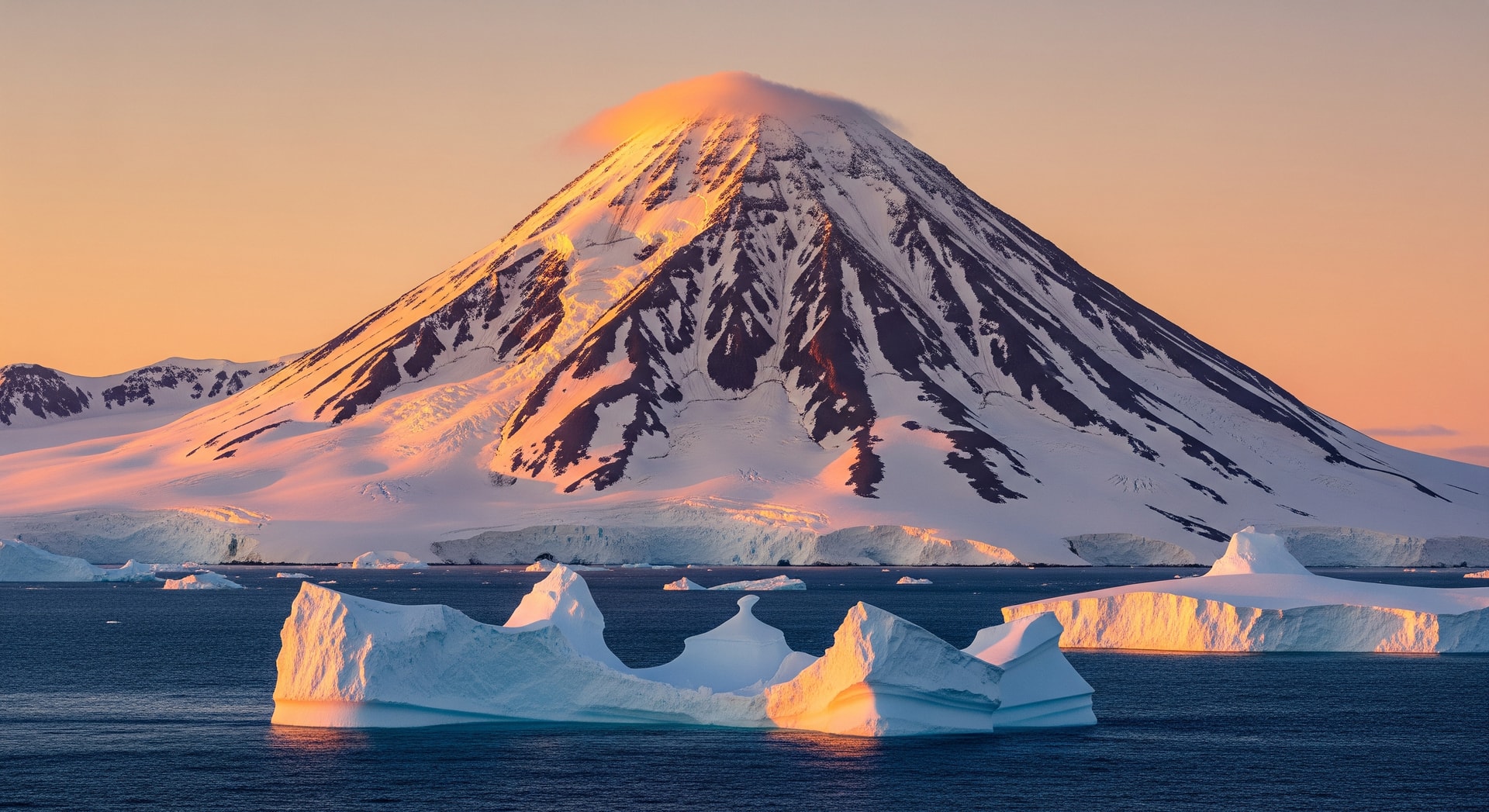
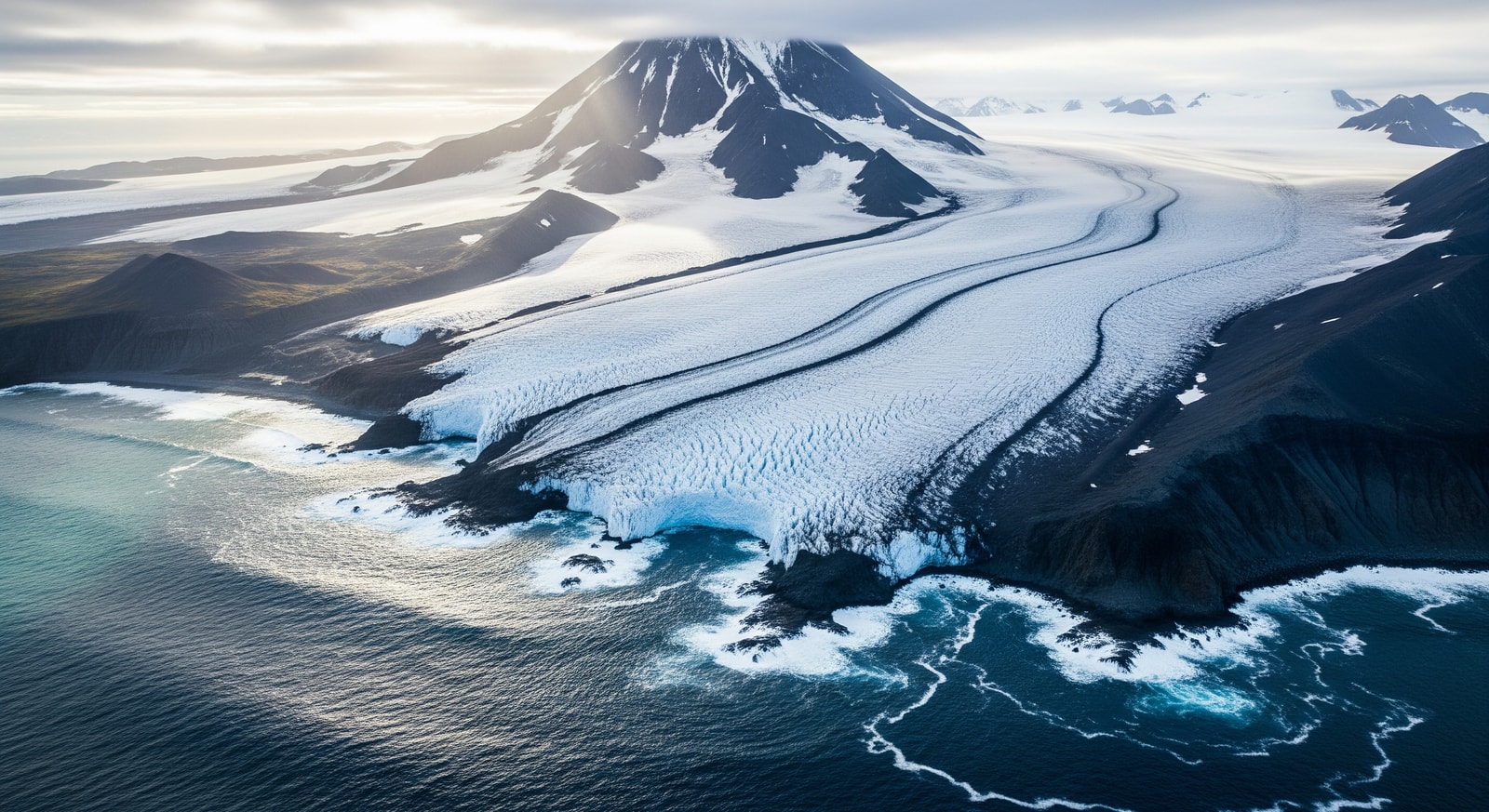
Heard Island glaciers — Approximately 80% of the island is covered by glacial ice
Scientific Research & Expedition Permits
Scientific Research Permit
The primary permit type for Heard & McDonald Islands allows approved scientific activities within the territory. Applications must demonstrate clear scientific value, minimal environmental impact, and alignment with Australia's Antarctic research priorities. Research permits have been granted for studies including: volcanic monitoring of Big Ben (Mawson Peak), glaciological surveys tracking climate change impacts, marine biology research in surrounding waters, and geological investigations.
Environmental Activity Permit
Any activity that may affect the environment — including landing, traversing, sampling, or installing equipment — requires an Environmental Activity Permit. This involves submitting a detailed environmental impact assessment and demonstrating that the activity will not cause lasting damage to the territory's World Heritage values.
Expedition Transit Permit
Vessels passing through the Heard Island and McDonald Islands Marine Reserve require transit permits. This includes fishing vessels, research ships, and any maritime traffic. The marine reserve extends 200 nautical miles from the islands, encompassing one of the world's most pristine marine ecosystems.
Application Timeline
Permit applications should be submitted 6-12 months in advance due to the rigorous assessment process and logistical coordination required.
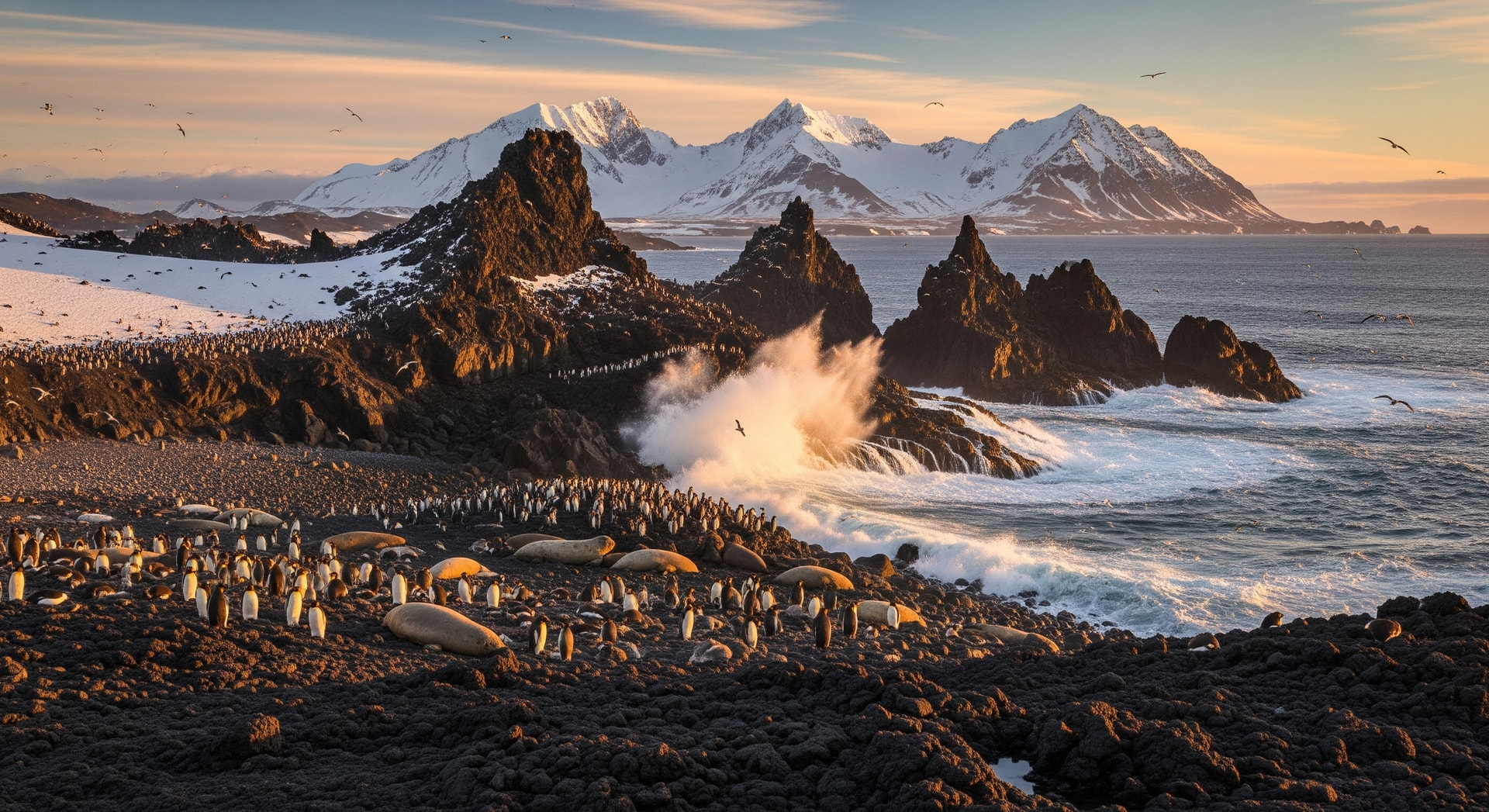
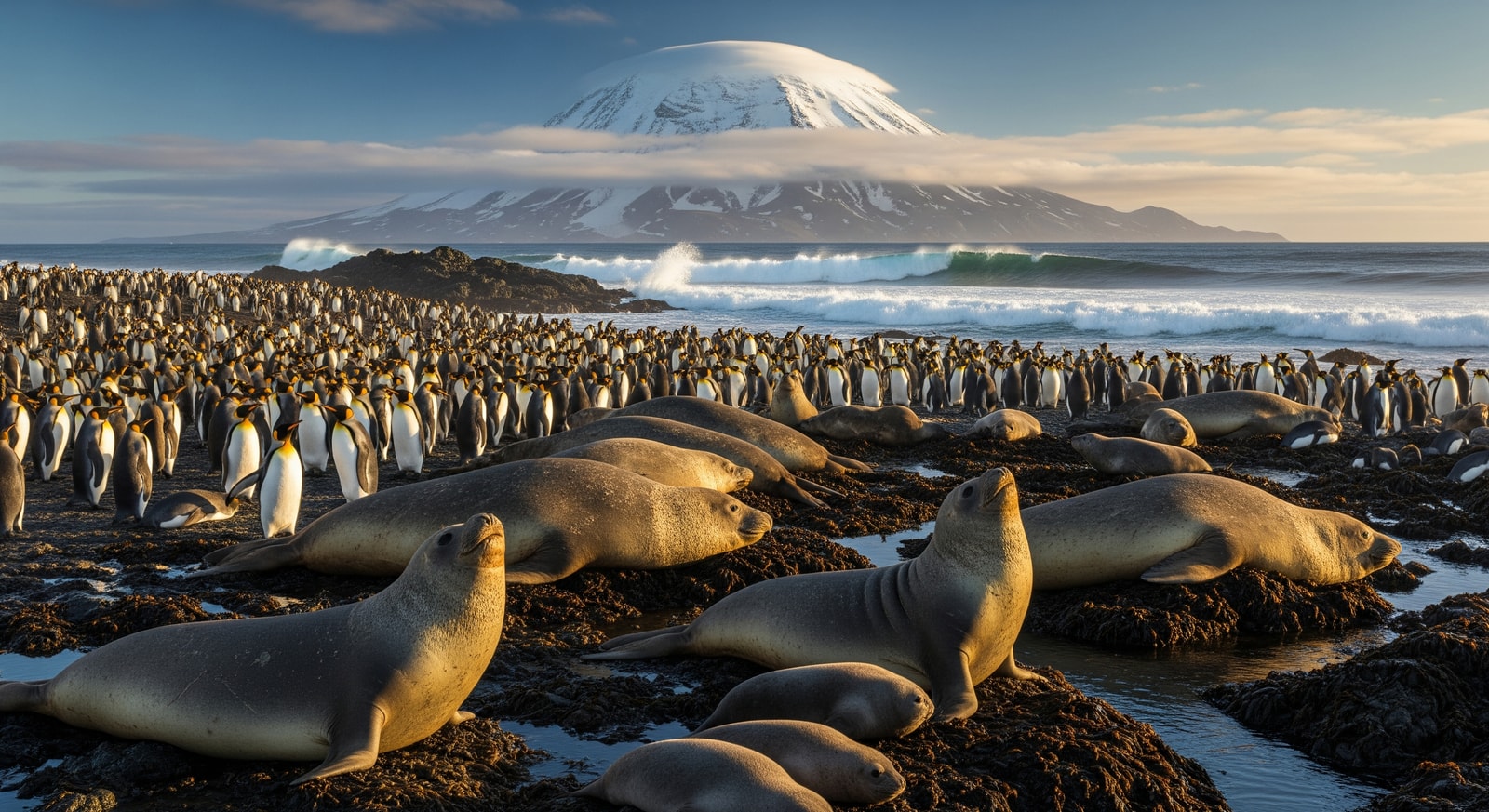
Heard Island wildlife — Home to millions of seabirds and marine mammals
Environmental Protection & Biosecurity
UNESCO World Heritage Protection
Heard Island and McDonald Islands were inscribed as a UNESCO World Heritage Site in 1997 for their outstanding natural values. They represent the only sub-Antarctic islands with active volcanism and are among the most pristine ecosystems on Earth — free from introduced species and human habitation. This status demands the highest level of environmental protection.
Strict Biosecurity Requirements
All expeditions must adhere to rigorous biosecurity protocols to prevent introduction of non-native species:
• Equipment inspection: All gear, clothing, and supplies must be thoroughly cleaned and inspected before departure from Australia
• Boot and clothing protocols: Specific cleaning procedures for footwear and outer garments
• Food restrictions: No fresh produce, soil, or untreated organic material may be brought ashore
• Seed and spore checks: Velcro, pockets, and crevices inspected for seeds
• Waste management: All waste must be removed from the territory
Protected Areas & Restrictions
Certain areas have additional protection. Access to active volcanic zones, seal breeding colonies, and sensitive vegetation areas may require specific justification and conditions.
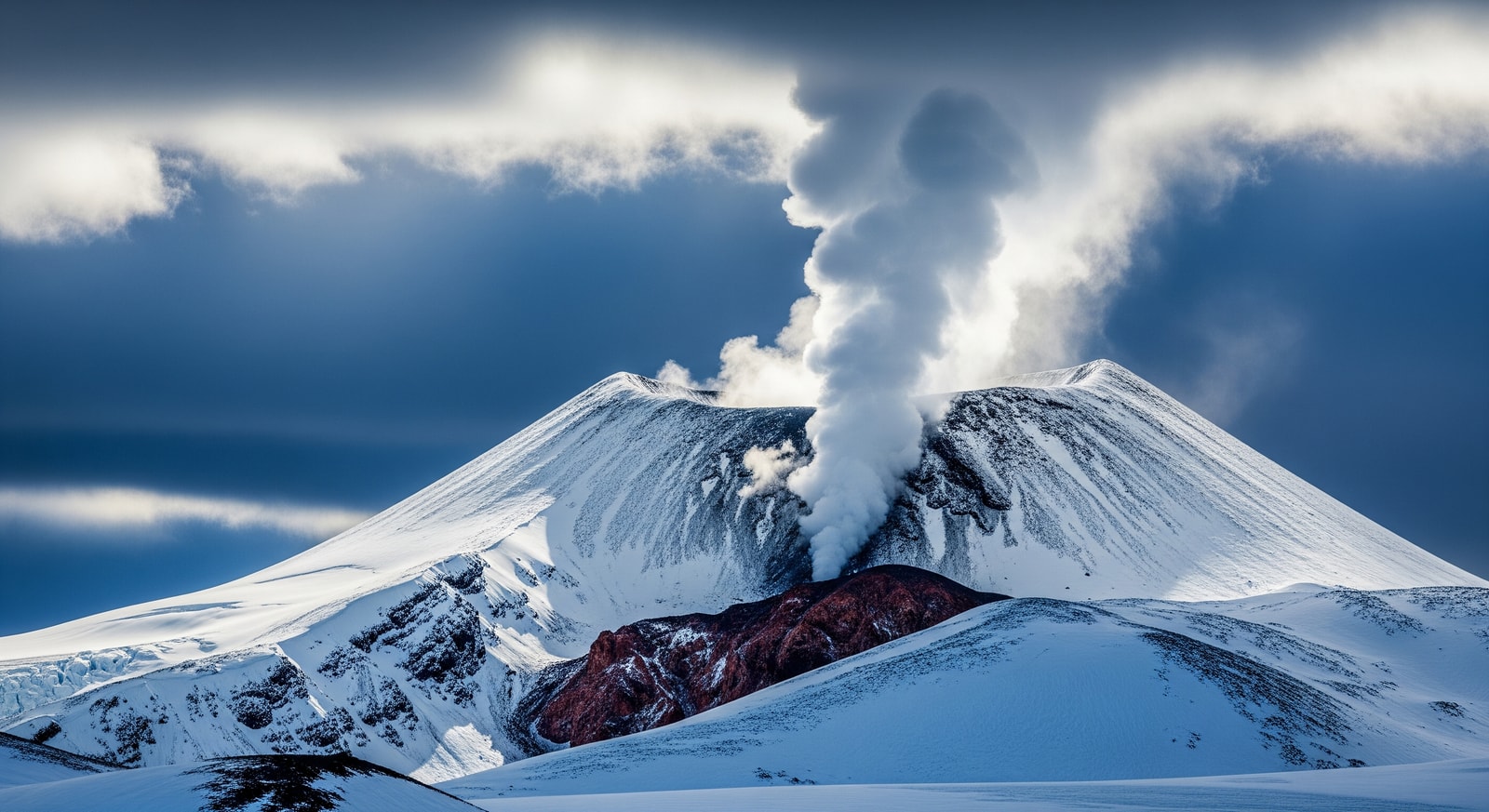
Big Ben (Mawson Peak) — Australia's only active volcano at 2,745 meters
Logistics & Practical Information
Getting to Heard & McDonald Islands
Reaching HIMI is one of the world's most challenging journeys:
• Departure point: Expeditions depart from Hobart, Tasmania, Australia
• Distance: Approximately 4,000 km southwest of Perth, 1,500 km north of Antarctica
• Travel time: 10-14 days by ship from Hobart depending on weather and sea conditions
• Vessel requirements: Ice-strengthened vessels with appropriate safety certifications required
• No airstrip: The islands have no landing facilities — all access is by sea
Weather & Conditions
The sub-Antarctic climate is severe and unpredictable. Strong winds, heavy precipitation, and rapidly changing conditions are normal. The optimal expedition window is November-March (Southern Hemisphere summer), when conditions are marginally more favorable. Even in summer, temperatures rarely exceed 5C, and blizzards can occur without warning.
Currency & Services
As an uninhabited territory, there are no facilities, services, or infrastructure. Expeditions must be entirely self-sufficient. The Australian Dollar (AUD) is the official currency for any transactions related to permit fees and Australian departure logistics.
Emergency Planning
All expeditions must have comprehensive emergency response plans, satellite communication equipment, and evacuation procedures. Medical emergencies require evacuation to Australia — a multi-day journey.
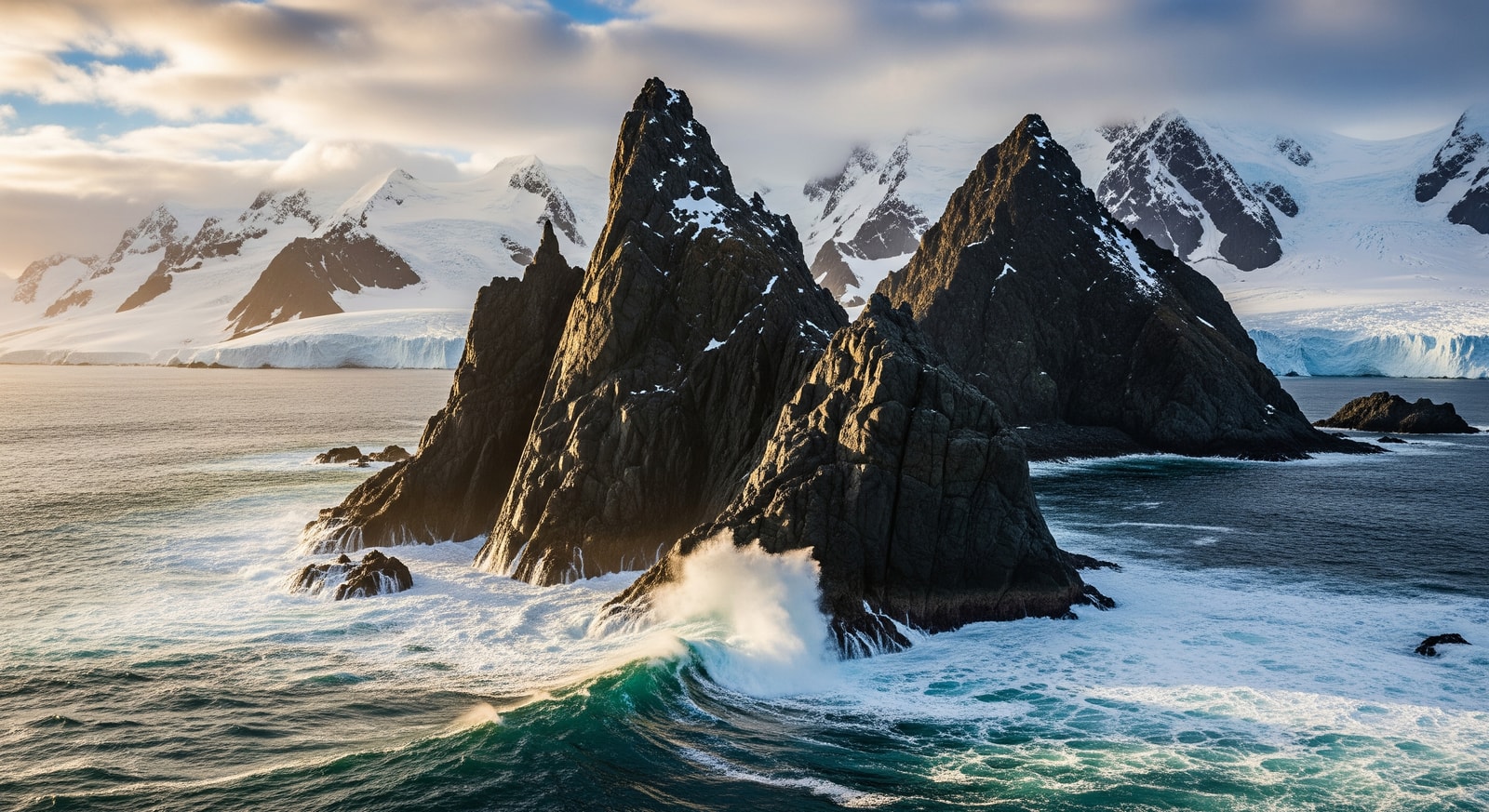
Heard Island coastline — Remote shores at the edge of the habitable world
Why Choose DoVisa?
See the difference between applying yourself vs using our expert service
Travelers to Heard & McDonald Islands rated this product 4.7 out of 5 based on 6 reviews.
4.7/ 5
Based on 6 verified reviews
Filter by rating
Dr. Sarah M.Dec 15, 2025
"DoVisa's expertise in Antarctic permits was invaluable. Our glaciology research expedition received approval in 4 months with their guidance through the complex AAD requirements."
Prof. James K.Oct 22, 2025
"Incredibly thorough support for our volcanic monitoring expedition to Big Ben. The environmental impact assessment guidance alone saved us months of work."
Rebecca L.Aug 30, 2025
"Navigating HIMI permit requirements seemed impossible until DoVisa explained the process. Our documentary crew permit was approved after detailed review."
Dr. Anders P.Jun 14, 2025
"Outstanding assistance with our marine biology research permit. The biosecurity documentation support was excellent and our application was complete first submission."
Michael T.Apr 8, 2025
"Professional and knowledgeable team who understand the unique challenges of sub-Antarctic research permits. Highly recommended for any HIMI expedition planning."
Dr. Emily W.Feb 19, 2025
"Good support navigating the Australian Antarctic Division requirements. The permit process is lengthy but DoVisa kept us informed throughout."
Dr. Sarah M.Dec 15, 2025
"DoVisa's expertise in Antarctic permits was invaluable. Our glaciology research expedition received approval in 4 months with their guidance through the complex AAD requirements."
Prof. James K.Oct 22, 2025
"Incredibly thorough support for our volcanic monitoring expedition to Big Ben. The environmental impact assessment guidance alone saved us months of work."
Rebecca L.Aug 30, 2025
"Navigating HIMI permit requirements seemed impossible until DoVisa explained the process. Our documentary crew permit was approved after detailed review."
Heard & McDonald Islands Permit FAQs
What permits are required to visit Heard & McDonald Islands?
Visiting Heard Island and McDonald Islands requires multiple permits from Australian authorities. All visitors need: a permit from the Australian Antarctic Division under the Environment Protection and Management Ordinance 1987; an Environmental Activity Permit for any land-based activities; vessel permits for ships entering the Marine Reserve; and a valid Australian visa for transit through Australia. There is no general tourist access — permits are only issued for approved scientific research, environmental monitoring, or official government purposes. Applications must demonstrate clear scientific merit, minimal environmental impact, and compliance with biosecurity requirements.
Can tourists visit Heard & McDonald Islands?
No, Heard & McDonald Islands are not open to general tourism. The territory is administered exclusively for environmental protection and scientific research. Unlike some Antarctic destinations that permit regulated tourism, HIMI's World Heritage status and pristine condition mean access is restricted to: approved scientific researchers conducting valuable studies; government officials performing monitoring and management activities; documentary crews with demonstrated minimal impact and scientific partnership. Adventure tourism, cruise ship visits, and casual exploration applications are not approved. This ensures the islands remain one of Earth's most pristine wilderness areas.
How do I apply for a scientific research permit?
Scientific research permit applications must be submitted to the Australian Antarctic Division (AAD) well in advance — typically 6-12 months before your proposed expedition. Your application must include: detailed research proposal outlining scientific objectives and methodology; Environmental Impact Assessment demonstrating minimal ecological impact; team qualifications and experience in sub-Antarctic conditions; vessel specifications and safety certifications; emergency response and evacuation plans; biosecurity compliance plan; evidence of adequate funding and insurance. The AAD assesses applications against Australia's Antarctic science priorities and environmental protection obligations. DoVisa provides comprehensive support preparing and reviewing your application documentation.
What documents are required for Heard & McDonald Islands permit applications?
Permit applications require extensive documentation. Essential documents include: valid passports for all expedition members (12+ months validity recommended); completed AAD permit application forms; detailed research or activity proposal (20-50 pages typically); environmental impact assessment; vessel survey certificates and ice-class documentation; comprehensive insurance covering expedition activities, medical evacuation, and environmental liability; emergency response plan; biosecurity management plan; proof of expedition funding; team qualifications and medical fitness certificates; communications equipment specifications; waste management plan. DoVisa reviews all documentation against AAD requirements before submission to maximize approval chances.
How long does permit processing take?
Permit processing for Heard & McDonald Islands typically takes 3-6 months from submission of a complete application. However, the total planning timeline is longer: applications should be submitted 6-12 months before your intended expedition to allow for: initial assessment and any requests for additional information (4-8 weeks); environmental impact review (6-12 weeks); permit conditions negotiation; coordination with other approved activities; final approval and permit issuance. Factors affecting timeline: application completeness, complexity of proposed activities, time of year (peak expedition season applications receive higher volume), and any novel research activities requiring additional assessment. DoVisa's pre-submission review helps ensure applications are complete, minimizing delays.
What is the best time to visit Heard & McDonald Islands?
The only feasible period for expeditions is the Southern Hemisphere summer: November through March. Even during this window, conditions remain challenging. Weather considerations: Summer temperatures average 0-5C; winter temperatures drop to -10C with severe wind chill; strong winds (40-80 km/h common) and precipitation occur year-round; sea ice affects approaches during colder months; Southern Ocean swells make landings difficult. Optimal months: December-February offers the most favorable conditions, with longer daylight hours (up to 20 hours), marginally calmer seas, and accessible coastal areas. However, conditions remain unpredictable — expeditions must build flexibility into schedules for weather delays.
How do I get to Heard & McDonald Islands?
Reaching HIMI is one of the world's most difficult journeys. Route: All expeditions depart from Hobart, Tasmania, Australia. Distance: Approximately 4,000 km from Perth, 4,100 km from Hobart, and 1,500 km north of Antarctica. Travel time: 10-14 days by ship each way, depending on weather conditions. Vessel requirements: Ice-strengthened research vessels with appropriate safety certifications; no commercial passenger services exist. No airports: The islands have no airstrips — all access is by sea only. Logistics: Expeditions must be entirely self-sufficient with no resupply options. Ships anchor offshore and personnel transfer via small boats, weather permitting. The absence of harbors means landings are often postponed due to sea conditions.
What are the biosecurity requirements?
Biosecurity is paramount for protecting HIMI's pristine ecosystem. The islands are among the few places on Earth with no introduced species, and maintaining this status is a legal and ethical obligation. Requirements include: all clothing, footwear, and equipment must be thoroughly cleaned before departure; specific boot washing protocols before and after each landing; no fresh produce, soil, seeds, or untreated organic material may be brought ashore; all gear inspected for seeds in velcro, pockets, and seams; waste removal — nothing may be left on the islands; no contact with wildlife beyond approved research protocols; quarantine procedures for any scientific samples. Documentation: A comprehensive biosecurity management plan must be submitted with permit applications and followed rigorously throughout the expedition.
Do I need an Australian visa to visit Heard & McDonald Islands?
Yes, a valid Australian visa is required for all expedition members who are not Australian citizens or permanent residents. Since all expeditions depart from Hobart, Tasmania, you must legally enter Australia before proceeding to HIMI. Visa requirements: Depends on your nationality — options include ETA (Electronic Travel Authority), eVisitor visa, or full visa application. Ensure your Australian visa covers the full duration including expedition preparation time, voyage (typically 3-5 weeks total), and any post-expedition debriefing. Multiple entry: If your expedition may return to Australia for resupply or emergency, ensure your visa permits multiple entries. DoVisa can assist with both Australian visa and HIMI permit applications.
What happens if my permit application is rejected?
Permit rejections occur when applications don't meet the strict criteria for HIMI access. Common reasons: insufficient scientific justification; inadequate environmental impact assessment; biosecurity concerns; vessel not meeting ice-class requirements; incomplete emergency response plans; proposed activities conflict with other approved expeditions; insufficient experience in sub-Antarctic conditions. If rejected: You'll receive feedback on deficiencies; you may reapply with a strengthened application addressing concerns; some rejections allow appeal through administrative channels. Prevention: Thorough preparation is essential — DoVisa reviews applications against known AAD criteria before submission. We help identify and address potential issues early, significantly improving approval chances. Note that some proposals may simply not meet the threshold for access, regardless of application quality.
What wildlife can be seen on Heard & McDonald Islands?
Despite their harsh conditions, HIMI supports remarkable wildlife populations. Seabirds: Over 2 million breeding pairs including king penguins, macaroni penguins, gentoo penguins, black-browed albatrosses, giant petrels, and numerous other species. Marine mammals: Large populations of southern elephant seals (over 30,000) and Antarctic fur seals use the islands for breeding. Marine life: Surrounding waters host Patagonian toothfish, Antarctic krill, and diverse cold-water species. No land mammals: Unlike most sub-Antarctic islands, HIMI has no introduced rats, mice, cats, or rabbits — a key reason for its conservation importance. Wildlife protocols: Strict minimum approach distances and no-contact rules protect wildlife. Research involving animals requires additional ethics approvals. The pristine ecosystem is why access restrictions exist.
Is there any infrastructure on Heard & McDonald Islands?
No permanent infrastructure exists on Heard & McDonald Islands. The territory is uninhabited with no buildings, runways, harbors, roads, or facilities of any kind. Historical structures: Remnants of brief sealing and scientific expeditions from the 19th and 20th centuries exist but are protected heritage sites. Expedition requirements: All expeditions must be entirely self-sufficient, carrying all food, water purification, shelter, fuel, communication equipment, and emergency supplies. There is no resupply capability. Power and communications: Expeditions rely on portable generators and satellite communications. Medical facilities: None — expeditions must include trained medical personnel and carry comprehensive medical supplies. Any serious medical emergency requires evacuation to Australia, which takes 10-14 days minimum.
What is Big Ben volcano and is it dangerous?
Big Ben is Australia's only active volcano, rising to 2,745 meters at Mawson Peak on Heard Island. It's also one of the most active volcanoes in Australian territory, with confirmed eruptions in recent decades (most recently observed via satellite in the 2010s-2020s). Volcanic hazards: Lava flows, ash emissions, and volcanic gases present risks to expeditions. The summit area is heavily glaciated, with eruptions creating meltwater and potential lahars. Access restrictions: Approaching the active volcanic zone requires specific permit conditions and risk assessments. Some areas may be off-limits depending on volcanic activity. Monitoring: The volcano is monitored by satellite due to its remoteness. Expeditions receive briefings on current activity and must carry emergency communication for volcanic alerts. The combination of active volcanism and extensive glaciation makes Heard Island scientifically unique.
What insurance is required for Heard & McDonald Islands expeditions?
Comprehensive insurance is mandatory for all HIMI expeditions. Required coverage includes: expedition liability insurance covering activities in sub-Antarctic conditions; medical coverage including emergency evacuation (evacuations can cost hundreds of thousands of dollars); search and rescue coverage; environmental liability covering potential cleanup costs for any accidental impacts; vessel insurance appropriate for ice-class operations; equipment loss and damage coverage. Minimum amounts: The AAD specifies minimum coverage levels as part of permit conditions. Specialized insurers: Standard travel insurance is insufficient — you need policies from insurers experienced in polar expedition coverage. Documentation: Proof of insurance must be submitted with permit applications and verified before expedition departure. DoVisa can recommend insurance providers with polar expedition experience.
Why are Heard & McDonald Islands a UNESCO World Heritage Site?
Heard Island and McDonald Islands were inscribed on the UNESCO World Heritage List in 1997 for their outstanding universal value. Key criteria: The islands represent a rare example of active sub-Antarctic volcanism — Big Ben is one of only two active volcanoes in sub-Antarctic latitudes. They demonstrate ongoing geological and glacial processes in pristine conditions. The ecosystem is free from introduced species — one of very few places on Earth where this remains true. They provide habitat for globally significant wildlife populations including millions of penguins, seals, and seabirds. Scientific value: As a natural laboratory for studying climate change, volcanic processes, and undisturbed ecosystems. Protection implication: World Heritage status requires Australia to maintain the highest protection standards, directly resulting in the strict access restrictions that preserve these values.
Can I extend my permit once on Heard & McDonald Islands?
Permit extensions while on HIMI are extremely difficult and should not be relied upon. Pre-planning essential: Expeditions must plan their entire activity schedule in advance, and permits are issued for specific time periods with defined activities. Circumstances for extension: Extensions might be considered only for: unexpected scientific discoveries requiring additional documentation; weather delays preventing completion of approved activities; safety issues requiring extended stay. Process: Any extension request must be communicated via satellite to the Australian Antarctic Division in Hobart. Approval is not guaranteed and depends on environmental impact of extended stay, vessel fuel and supply status, and impact on other approved expeditions. Practical limits: Expedition supply constraints typically make significant extensions impractical regardless of permit status.
What are the emergency procedures for Heard & McDonald Islands?
Emergency preparedness is critical given HIMI's extreme remoteness. Required planning: All expeditions must submit comprehensive emergency response plans covering medical emergencies, vessel failure, weather stranding, volcanic events, and personnel injury. Communication: Satellite phones, HF radio, and emergency beacons (EPIRB) are mandatory. Regular check-ins with Australian authorities required. Evacuation: The nearest assistance is Australia — minimum 10-14 days away by ship. Air evacuation is impossible due to lack of runways. Medical: Expeditions must include trained medical personnel and carry extensive medical supplies for emergency surgery and stabilization. Weather contingency: Plans must account for being stranded for extended periods if weather prevents departure. Coordination: Australian Maritime Safety Authority (AMSA) and Australian Antarctic Division coordinate any emergency response. Expedition leaders must have clear protocols and authority to make safety decisions.
Still have questions?
Our team is here to help 24/7
Get Visa Tips & Exclusive Deals
Join 1,000+ travelers. No spam, unsubscribe anytime.
Ready to Explore Heard & McDonald Islands?
Join the select few who have witnessed Australia's most remote wilderness

 With DoVisa