EU flag

Get Your European Union Visa Online

Fast visa processing for tourism, business, and cultural exploration — discover Europe's rich heritage and modern wonders

4.6Trustpilot

Check Visa Requirements

See if you need a visa for EU

Please select your passport
Where are you going?

How to Get Your European Union Visa

Simple 4-step process — most applications processed within 15 business days

1

Complete the online application

Fill out our comprehensive Schengen visa form with your travel itinerary, personal details, and purpose of visit. Our intelligent system guides you through every field, ensuring your application meets the requirements of your main destination country. We help you identify which Schengen state should process your visa based on your travel plans.

2

Upload required documents

Submit your passport scan, recent biometric photograph meeting EU specifications (35x45mm, white background), travel insurance proof with minimum coverage of 30,000 EUR, accommodation bookings, and flight reservations. Our document specialists review every submission to ensure compliance with Schengen visa requirements before forwarding to the consulate.

3

Attend your visa appointment

Visit the designated Schengen consulate or visa application center for your biometric data collection (fingerprints and photograph). We prepare you with appointment confirmation, document checklist, and interview guidance. Our team monitors your application status and handles any additional documentation requests from the consulate on your behalf.

4

Receive your Schengen visa

Your approved Schengen visa sticker is placed in your passport, granting access to all 27 Schengen Area countries. The visa specifies your allowed stay duration (up to 90 days within any 180-day period) and validity dates. Welcome to Europe — your journey through centuries of history, culture, and natural beauty begins!

Traveler planning European trip with laptop showing map of Schengen countries
0+Happy Travelers
0/7Expert Support
0%+Approval Rate
0Customer Rating

European Union Visa Requirements & Entry Information

Schengen Visa

Up to 90 days in 180 days

Short-stay visa for tourism, business, or transit across all Schengen countries

Business Schengen

Up to 90 days in 180 days

For meetings, conferences, trade fairs, and professional activities in Europe

Airport Transit Visa

Transit only

For travelers connecting through Schengen airports without entering the area

ETIAS Authorization

Up to 90 days in 180 days

Future electronic authorization for visa-exempt travelers starting 2025

Essential Requirements

  • 📘Passport valid 3+ months beyond planned departure with 2 blank pages
  • 📷Biometric photo: 35x45mm, white background, recent within 6 months
  • 🏥Travel insurance covering minimum 30,000 EUR medical and repatriation
  • 🏨Confirmed accommodation bookings for entire stay in Schengen Area
  • 💰Proof of sufficient funds: approximately 100 EUR per day of stay
  • ✈️Round-trip flight bookings or detailed travel itinerary

Understanding the Schengen Area
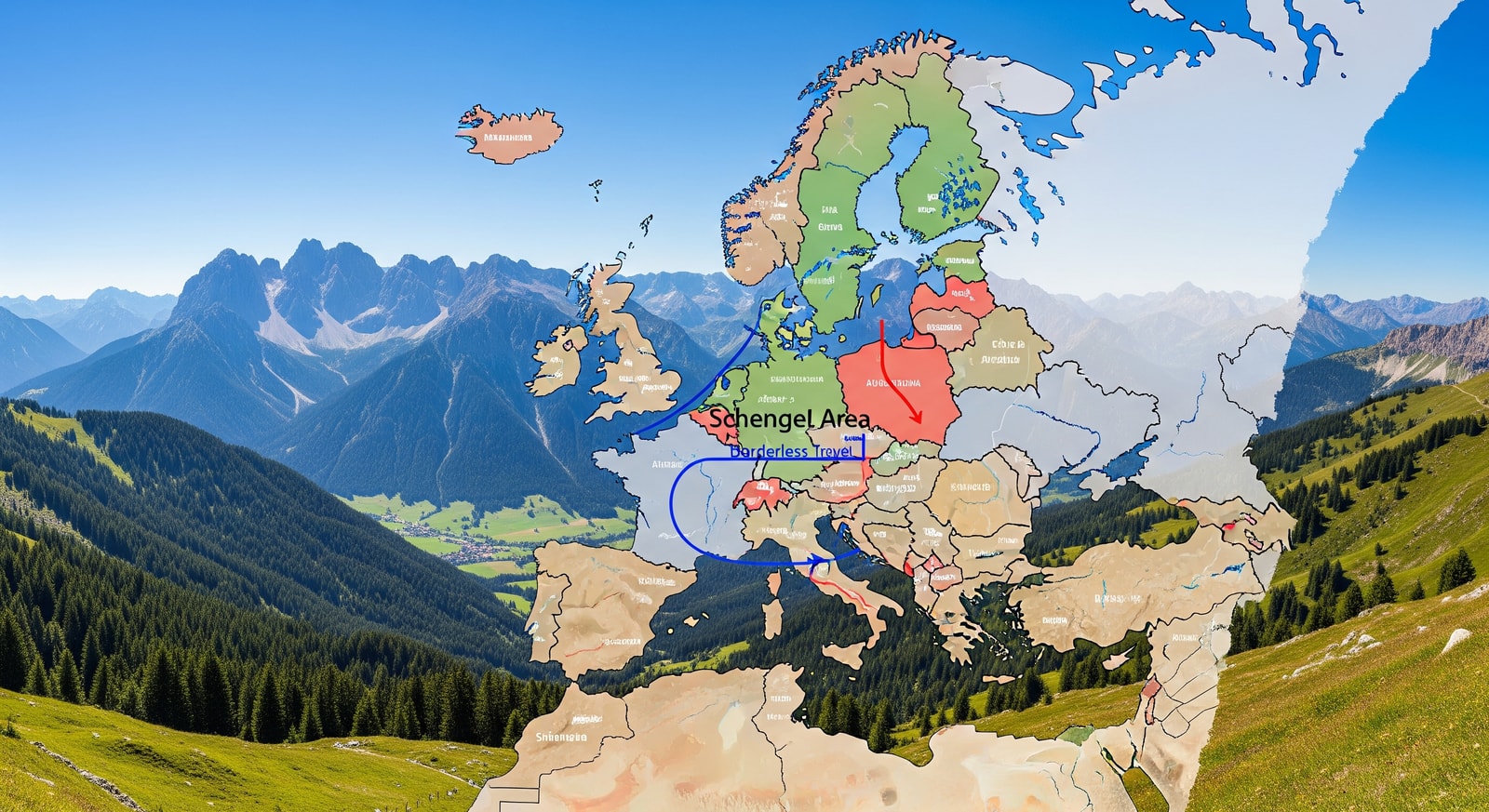
The Schengen Area represents one of the world's most significant achievements in freedom of movement, comprising 27 European countries that have abolished internal border controls. This includes most EU member states plus non-EU members Iceland, Liechtenstein, Norway, and Switzerland. The Schengen visa allows travelers to enter at one border and move freely throughout the entire zone without additional passport checks. The Uniform Schengen Visa (Type C) is the standard short-stay visa for tourism, business, family visits, cultural events, or medical treatment. It permits stays of up to 90 days within any 180-day period across all Schengen countries combined. This 90/180 rule is strictly enforced — immigration systems track entries and exits automatically. Multiple-entry Schengen visas may be issued with validity from 6 months to 5 years for frequent travelers with good visa history. When applying, you must submit to the consulate of your main destination country (where you'll spend the most nights) or, if visiting multiple countries equally, the country of first entry. This consulate will process your application according to common Schengen procedures while applying their specific documentary requirements.
Map of the Schengen Area highlighting 27 member countries with borderless travel zone indicated
The Schengen Area — 27 countries, one visa, borderless travel

National and Long-Stay Visas

National Visas (Type D) For stays exceeding 90 days, you'll need a national long-stay visa from the specific country where you plan to reside. These are issued for purposes including: • Study visas for university enrollment and academic programs • Work visas for employment with European companies • Family reunification for joining relatives who are EU residents • Research visas for scientists and academics at European institutions National visas are processed according to each country's immigration laws, with requirements varying significantly between member states. Processing times range from 4-12 weeks depending on the destination country and visa category. ETIAS — Future Electronic Authorization The European Travel Information and Authorization System (ETIAS) will become mandatory for citizens of visa-exempt countries (including USA, Canada, UK, Australia, Japan, and others) starting in 2025. This pre-travel authorization costs 7 EUR and remains valid for 3 years, allowing multiple entries under the 90/180 rule. ETIAS is not a visa but a security screening requirement similar to the US ESTA system.
Grand Place in Brussels at night with ornate guild houses illuminated in golden light
Brussels — the heart of European Union institutions and administration

Application Requirements and Fees

Documentation Requirements All Schengen visa applications require: • Valid passport: At least 3 months validity beyond your planned departure date and issued within the last 10 years, with minimum 2 blank pages • Application form: Completed and signed Schengen visa application form • Biometric photograph: Recent photo (within 6 months) measuring 35x45mm with white background, neutral expression, and no glasses • Travel insurance: Policy covering minimum 30,000 EUR for medical emergencies and repatriation, valid in all Schengen states • Travel itinerary: Complete flight bookings (or reservation) and day-by-day travel plan • Accommodation proof: Hotel bookings, rental agreements, or invitation letters from hosts with their identification • Financial means: Bank statements from last 3-6 months showing sufficient funds (approximately 100 EUR per day) • Employment proof: Employment letter, business registration, or student enrollment documents Visa Fees The standard Schengen visa fee is 90 EUR for adults and 45 EUR for children aged 6-12. Children under 6, students, and certain categories may qualify for fee waivers. Service fees at visa application centers are additional.
Eiffel Tower at golden hour with tourists walking along Champ de Mars gardens in Paris
Paris — one of Europe's most visited destinations under the Schengen visa

Entry Points and Travel Tips

Major Entry Points The Schengen Area includes hundreds of international airports and land border crossings. Major hubs include: • Frankfurt Airport (FRA) — Germany's largest, major connecting hub • Amsterdam Schiphol (AMS) — Netherlands' primary international gateway • Paris Charles de Gaulle (CDG) — France's main international airport • Madrid Barajas (MAD) — Spain's largest airport • Rome Fiumicino (FCO) — Italy's busiest international airport • Lisbon Portela (LIS) — Portugal's main gateway Processing Times Standard processing takes 15 calendar days from the date of application submission. During peak travel seasons (summer and December), processing may extend to 30-45 days. Apply at least 15 days but no more than 6 months before your intended travel date. Travel Tips Europe is best explored across multiple seasons — spring for Mediterranean coastlines and gardens, summer for Scandinavia and alpine regions, autumn for wine harvests and cultural festivals, winter for Christmas markets and skiing. The extensive rail network (Eurail, TGV, ICE) provides convenient intercity travel. Consider purchasing a Schengen-wide rail pass for extended journeys.
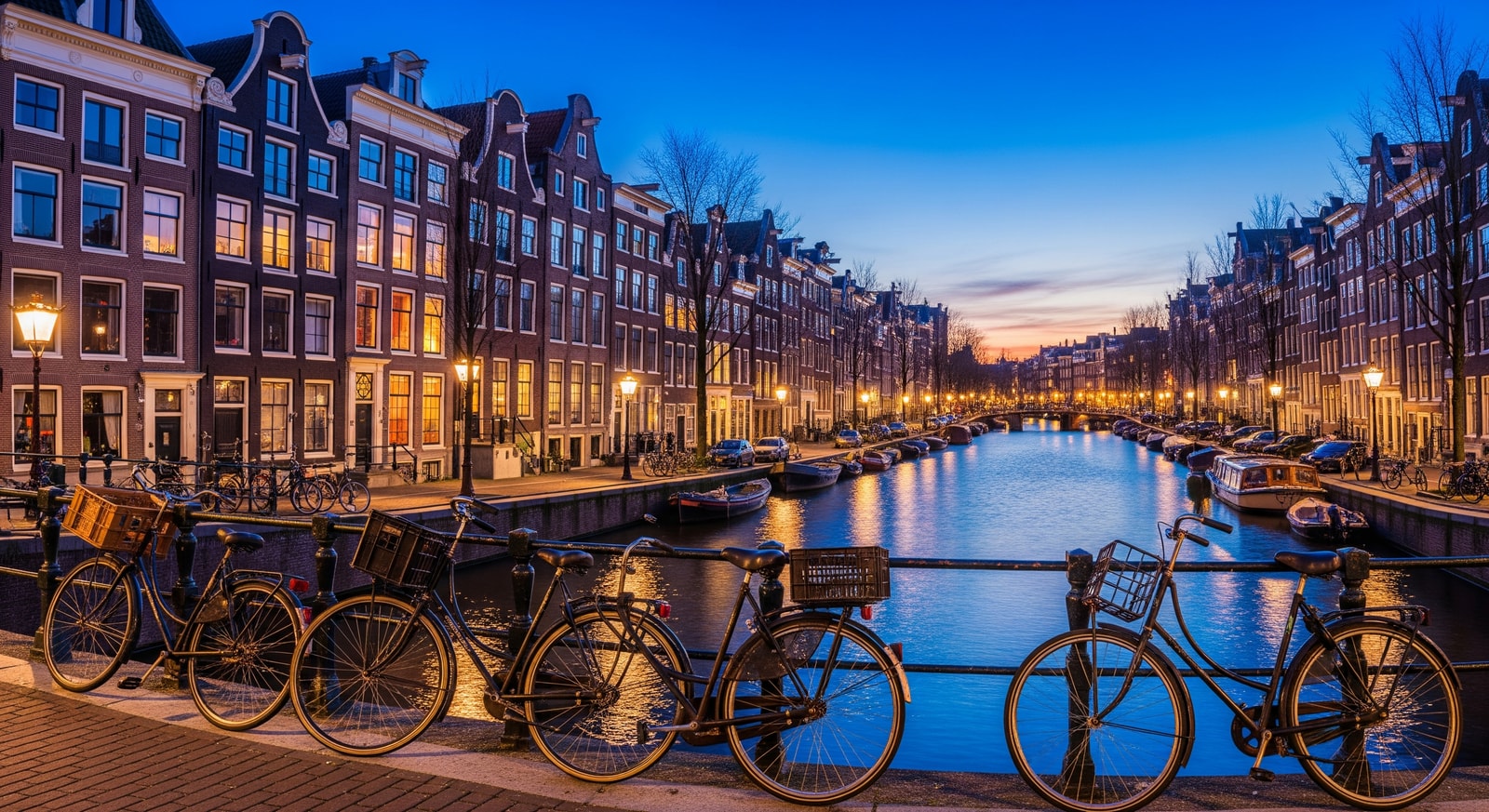
Historic canal houses and bicycles along Amsterdam's Prinsengracht canal at twilight
Amsterdam — picturesque canals and vibrant culture in the heart of Europe

Why Choose DoVisa?

See the difference between applying yourself vs using our expert service

Feature
📋Applying Yourself
With DoVisa
Application reviewExpert review before submissionNo expert check100% reviewed by experts
Document validationCheck documents meet requirementsRisk of rejectionPre-checked for errors
Customer supportHelp when you have questionsGovernment offices only24/7 dedicated support
Form guidanceAssistance filling out formsComplex forms aloneStep-by-step guidance
Status trackingKnow where your application isManual checkingReal-time updates
Refund if deniedProtection if visa is rejectedNo refund possibleMoney-back guarantee

Check Your Requirements

See what you need for European Union

Please select your passport
Where are you going?
1,000+Visas processed
24/7Expert support
4.7Customer rating
97%Approval rate

Certified Customer Reviews

Travelers to European Union rated this product 4.7 out of 5 based on 12 reviews.

4.7/ 5
Based on 12 verified reviews

Filter by rating

Jennifer M.Jan 15, 2026

"The Schengen visa process seemed overwhelming until DoVisa helped me organize everything. They identified which consulate I needed and reviewed all my documents. Approved for 2-year multiple entry!"

David K.Jan 8, 2026

"First time applying for Schengen visa. DoVisa made the complex requirements easy to understand. Got my visa in exactly 15 days as promised."

Maria S.Dec 28, 2025

"Good service overall. Had to wait a bit longer than expected due to peak season but the team kept me informed throughout. Visa approved."

Thomas B.Dec 19, 2025

"Applied for business Schengen visa for a conference in Berlin. DoVisa helped with the invitation letter requirements and corporate documentation. Very professional service."

Priya N.Dec 10, 2025

"Visiting 5 countries on one trip seemed like a documentation nightmare. DoVisa organized my itinerary perfectly and the consulate approved without any questions!"

Robert L.Nov 28, 2025

"Solid support team. They helped me understand the 90/180 day rule which I found confusing at first. Would recommend for first-time applicants."

Sophie W.Nov 15, 2025

"Got my Schengen visa renewed through DoVisa. Since I had good travel history, they advised me to apply for 5-year multiple entry. It worked!"

Ahmed H.Nov 2, 2025

"Excellent interview preparation. Was nervous about the consulate appointment but DoVisa gave me sample questions and tips. Everything went smoothly."

Lisa C.Oct 20, 2025

"The insurance requirement was confusing but DoVisa recommended a policy that met all Schengen requirements. Visa approved, now planning my Italy trip!"

Michael R.Oct 8, 2025

"Third Schengen visa with DoVisa. They know exactly what each consulate wants. Fast, efficient, no hassle. Will keep using them for all my European trips."

Elena V.Sep 25, 2025

"Family of 4 applying together. DoVisa coordinated all our applications and appointment slots. All visas approved same day. Made the process stress-free."

James T.Sep 10, 2025

"Decent service. Processing took the full 15 days but my documents were well prepared. No issues at the consulate interview."

European Union Visa FAQs

What is a Schengen visa and which countries does it cover?
A Schengen visa is a short-stay visa that allows travel to all 27 countries in the Schengen Area. This includes: Austria, Belgium, Bulgaria, Croatia, Czech Republic, Denmark, Estonia, Finland, France, Germany, Greece, Hungary, Iceland, Italy, Latvia, Liechtenstein, Lithuania, Luxembourg, Malta, Netherlands, Norway, Poland, Portugal, Romania, Slovakia, Slovenia, Spain, Sweden, and Switzerland. Note that Iceland, Liechtenstein, Norway, and Switzerland are in the Schengen Area but not the European Union. With one Schengen visa, you can enter any member country and travel freely between them without additional border checks.
How long can I stay in the Schengen Area?
The Schengen visa allows stays of up to 90 days within any 180-day period. This is a rolling calculation — at any given point, immigration systems check how many days you've spent in the Schengen Area during the previous 180 days. If you've used your 90 days, you must wait outside the Schengen Area until enough days expire from your calculation. The 90 days apply to your total time across all Schengen countries combined, not per country. There are online calculators to help you track your remaining days if you make multiple trips.
Which consulate should I apply to for my Schengen visa?
You must apply at the consulate of your main destination country — the country where you'll spend the most nights during your trip. If visiting multiple countries for equal durations, apply to the consulate of your first entry country. For example, if you're spending 5 nights in France, 3 in Spain, and 2 in Italy, apply at the French consulate. If spending equal time in all three but entering through Spain first, apply at the Spanish consulate. Applying to the wrong consulate can result in rejection, so plan your itinerary carefully before applying.
What documents are required for a Schengen visa application?
Standard requirements include: Valid passport (3+ months validity beyond departure, issued within last 10 years, 2 blank pages); completed application form; biometric photo (35x45mm, white background, taken within 6 months); travel insurance (minimum 30,000 EUR coverage for medical emergencies and repatriation, valid in all Schengen states); flight bookings (round-trip or confirmed itinerary); accommodation proof (hotel reservations, rental agreement, or host invitation); financial means (bank statements showing approximately 100 EUR per day); and proof of ties to home country (employment letter, property ownership, family connections).
How long does Schengen visa processing take?
Standard processing time is 15 calendar days from the date you submit your application at the consulate or visa application center. However, processing may extend to 30-45 days during peak travel seasons (summer months and December/January) or if additional documentation is requested. Some consulates offer expedited processing for urgent cases at additional cost. You can apply no earlier than 6 months and should apply at least 15 days before your intended travel date. We recommend applying 4-6 weeks in advance to allow buffer time for any complications.
What is the cost of a Schengen visa?
The standard Schengen visa fee is 90 EUR for adults and 45 EUR for children aged 6-12. Children under 6 are exempt from the fee. Some nationalities have reduced fees based on visa facilitation agreements with the EU. Additionally, visa application centers (VACs) charge service fees of approximately 20-30 EUR for handling applications on behalf of consulates. These fees are non-refundable regardless of the visa decision. Certain categories (students, researchers, humanitarian cases) may qualify for fee waivers — check with your specific consulate.
Can I extend my Schengen visa while in Europe?
Schengen visas can only be extended in exceptional circumstances such as force majeure (natural disasters, medical emergencies, or situations preventing travel), humanitarian reasons, or serious personal reasons. Extensions are granted at the discretion of the immigration authorities in the country where you're located and are generally difficult to obtain. A visa extension does not allow you to exceed the 90/180 day rule — it may only extend your visa validity period. For longer stays, you must apply for a national long-stay visa (Type D) before traveling. Overstaying your visa can result in fines, deportation, and future visa bans.
What is ETIAS and who will need it?
ETIAS (European Travel Information and Authorization System) is a pre-travel authorization that will become mandatory in 2025 for citizens of visa-exempt countries visiting the Schengen Area. This includes travelers from the USA, Canada, UK, Australia, New Zealand, Japan, South Korea, and approximately 60 other countries. ETIAS is not a visa — it's a security pre-screening that costs 7 EUR and remains valid for 3 years or until passport expiration. Travelers must obtain ETIAS approval before boarding flights to Schengen destinations. The system aims to enhance security while maintaining visa-free travel privileges.
Can I work in Europe with a Schengen tourist visa?
No, tourist and business Schengen visas do not permit employment or paid work in any Schengen country. Business visas allow attending meetings, conferences, trade fairs, and negotiating contracts, but not gainful employment. To work legally in Europe, you must obtain a national work visa (Type D) from the specific country where you'll be employed, plus a work permit from that country's labor authorities. Requirements vary significantly between EU member states. Working illegally on a tourist visa can result in deportation, visa cancellation, and multi-year bans from the Schengen Area.
What travel insurance is required for Schengen visa?
Schengen visa applications require comprehensive travel medical insurance that meets these criteria: minimum coverage of 30,000 EUR (or equivalent in USD); covers medical emergencies, hospitalization, and urgent medical treatment; includes repatriation coverage (return to home country in case of death or serious illness); valid in all Schengen member states; covers the entire duration of your stay plus a buffer period; and issued by a company recognized in the EU. Some consulates have lists of approved insurers. Keep your policy documents and emergency contact numbers accessible during travel.
What happens if my Schengen visa application is rejected?
If rejected, you'll receive a written notification explaining the reason(s) for refusal. Common reasons include: insufficient financial means, missing documents, unclear travel purpose, lack of ties to home country, previous visa violations, or incomplete travel insurance. You have the right to appeal the decision within a specified timeframe (usually 1-3 months depending on the country). Appeals are submitted to the consulate or a designated appeals board. Alternatively, you can reapply immediately with a strengthened application addressing the stated reasons for refusal. Multiple rejections can make future applications more difficult.
Do I need to print my visa or is it electronic?
The Schengen visa is a physical visa sticker placed in your passport — it is not electronic. After approval, you must collect your passport from the visa application center or consulate. The visa sticker contains your personal details, photograph, visa validity dates, number of entries permitted (single, double, or multiple), and the total days authorized. When traveling, always carry your passport with the visa and be prepared to show it at border crossings, even within the Schengen Area during random police checks. The sticker cannot be transferred to a new passport.
Can I visit the UK or Ireland with a Schengen visa?
No, the United Kingdom and Ireland are not part of the Schengen Area and require separate visas. The UK left the EU (Brexit) and has its own visa system. Ireland opted out of the Schengen Agreement and maintains its own immigration controls. However, if you have a valid Schengen visa, you may qualify for simplified UK visa procedures or the British-Irish Visa Scheme in certain cases. Similarly, some non-Schengen EU members like Cyprus, Bulgaria, and Romania accept Schengen visas for short stays under specific conditions — check current regulations before traveling.
What is the best time to visit Europe?
Spring (April-June) offers mild weather, blooming gardens, and fewer crowds — ideal for Mediterranean destinations, Netherlands tulips, and city exploration. Summer (July-August) brings peak tourism with warmest temperatures, best for Scandinavia, alpine regions, and beach destinations, but expect higher prices and crowds. Autumn (September-November) features wine harvests, fall foliage, cultural festivals, and pleasant temperatures with reduced tourist numbers. Winter (December-March) is perfect for Christmas markets (Germany, Austria), skiing in the Alps, and lower prices in southern Europe. Each season offers unique experiences across the diverse Schengen region.
What are the financial requirements for a Schengen visa?
You must demonstrate sufficient financial means to support yourself during your stay without working illegally. While not officially standardized, most consulates expect approximately 100 EUR per day of your planned stay. Acceptable proof includes: bank statements from the last 3-6 months showing regular income and stable balance; employment letter stating salary; sponsorship letter with sponsor's financial documents (for hosted visits); credit card statements; or scholarship letters for students. The exact requirements vary by consulate and your specific circumstances — employed travelers with regular income face less scrutiny than self-employed or retired applicants.
Can I enter Schengen through a different country than stated in my visa?

Generally, yes — you can enter the Schengen Area through any member country, regardless of which consulate issued your visa, as long as your entry makes geographic sense for your itinerary. However, if your travel plans differ significantly from what you stated in your application, border officials may question you about the change. For single-entry visas tied to a specific trip, significant deviations could raise suspicions. For multiple-entry visas, you have more flexibility. Always carry documentation (bookings, itinerary) that supports your travel plans in case of questions at the border.
DoVisa Schengen visa specialist helping customer navigate application requirements

Still have questions?

Our team is here to help 24/7

Ready to Explore Europe?

From Paris to Prague, Rome to Reykjavik — 27 countries await your discovery

Apply Now

Or apply via our mobile app

Download on App StoreGet it on Google Play