
Australia Maritime Travel Declaration
Complete your Australia Maritime Travel Declaration guidance and prepare for arrival — check requirements and Incoming Passenger Card details before you travel.
What Is the Australia Maritime Travel Declaration?
The Australia Maritime Travel Declaration was a maritime-specific pre-arrival passenger declaration used by some vessel operators and passengers to report biosecurity and personal information before arriving at Australian seaports. It was introduced as part of a broader move toward digital passenger processing to supplement the paper Incoming Passenger Card (IPC) and early electronic passenger systems.
Applications were originally submitted through digital portals operated by transport or shipping operators and, in some trials, via official government channels. Where applicable passengers received an electronic confirmation or receipt from the operator — usually an email confirmation or booking reference — which could be requested by the carrier at check-in and by Border Force officers on arrival. DoVisa provided guidance and document checks for travellers preparing maritime travel paperwork.
Unlike a visa, the Australia Maritime Travel Declaration never granted entry rights — it recorded passenger, voyage and biosecurity declarations to speed processing at the seaport. In 2025–2026 Australia consolidated passenger reporting and Border Force guidance emphasises the mandatory Incoming Passenger Card and other clearance steps at the border. The declaration did not replace visa requirements: most non-citizens still need a valid visa or travel authority to enter Australia.
For full entry rules see Australia visa information and the Department of Home Affairs guidance on entering Australia at immi.homeaffairs.gov.au. If you need help preparing documents, Apply for your Australia Maritime Travel Declaration now for step-by-step guidance and checklists.
Who Needs the Australia Maritime Travel Declaration?
Who Needs It
- Passengers arriving to Australia by sea who are asked by a carrier or port authority to submit pre-arrival information
- All international passengers must complete the Incoming Passenger Card (IPC) on arrival and hold a valid visa or travel authority if not an Australian or New Zealand citizen
- Children and minors — a parent or guardian completes any required declarations on their behalf
Who Is Exempt
- Australian citizens
- New Zealand citizens (acting under Trans-Tasman arrangements)
- Airline and vessel crew on active official duty
- Diplomatic and official passport holders on government business
Australia Entry Requirements & Restrictions
Passport Validity
Your passport must be valid for the length of your planned stay. If transiting a third country, check that country’s passport rules. See the Department of Home Affairs guidance at immi.homeaffairs.gov.au.
Vaccination & Health Rules
A Yellow Fever vaccination certificate is required if you arrive from a country with risk of yellow fever transmission; other routine vaccines are recommended. See the Australian Immunisation Handbook and CDC advice at immunisationhandbook.health.gov.au and CDC Australia.
Customs, Quarantine & Prohibited Items
Australia has strict biosecurity laws. Prohibited or restricted items include fresh food, plants, seeds, soil, certain animal products, illegal drugs and weapons. Some tobacco, alcohol and e-cigarette products are restricted — declare any items that may be regulated. See ABF prohibited goods.
Currency Declaration
You may carry an unlimited amount of cash, but you must declare AUD 10,000 or more (or equivalent) in cash on arrival. See Austrac guidance at abf.gov.au.
Travel Insurance & Medical Evacuation
Travel insurance is strongly recommended, especially for travel to remote areas. Medical facilities outside major cities are limited; evacuation to larger centres can be costly and slow.
Travel Tips for Australia Visitors
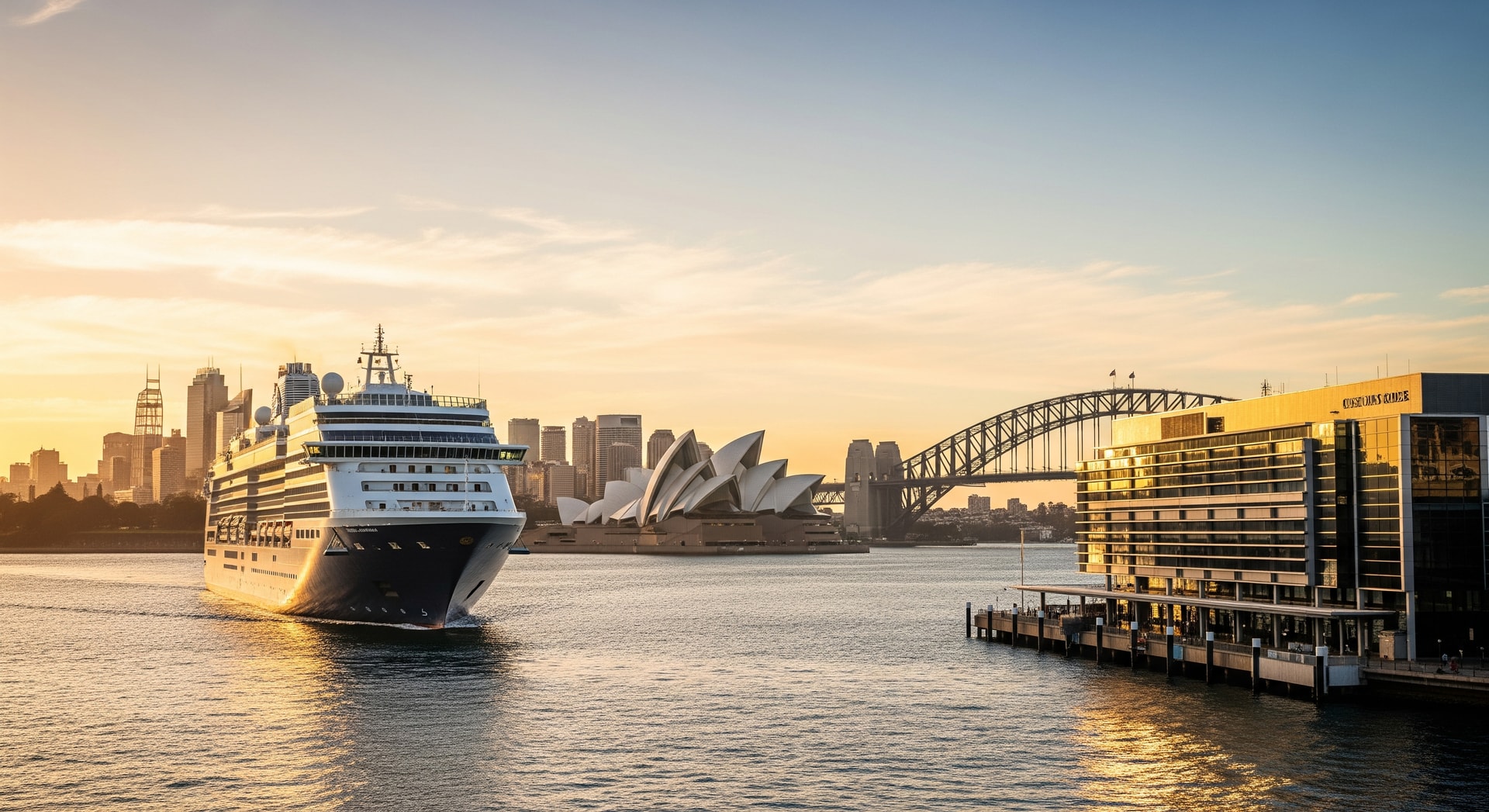
Australia has multiple international ports across its states and territories. Major international airports include Sydney Kingsford Smith (SYD), Melbourne Tullamarine (MEL), Brisbane (BNE) and Perth (PER). International seaports and cruise terminals handle arrivals at major cities — check your ship operator for the exact port of entry.
- Currency: Australian Dollar (AUD). US dollars are often accepted at tourism outlets, but carry AUD for domestic purchases and transfers.
- Language: English is the official language; Indigenous languages are also spoken regionally.
- Time zones: Mainland Australia ranges from UTC+8 (Western Australia) to UTC+10 (Eastern states); some regions use daylight saving — check local time before travel.
- Incoming Passenger Card (IPC): All arriving passengers must complete an IPC on arrival — keep receipts and be honest on declarations.
- Biosecurity: Declare any food, plant or animal items — fines and confiscation are common for undeclared goods.
- Plan connections: If you miss a scheduled ship or ferry transfer due to border checks, contact your carrier immediately — seaport transfers and clearance can add time.
- Remote travel: If heading to outback or island destinations, arrange medical evacuation cover and confirm local transfer schedules in advance.
"DoVisa helped me prepare the Australia Maritime Travel Declaration paperwork before my cruise — confirmation email and guidance arrived quickly and the boarding desk at Sydney (SYD) only needed the IPC and carrier receipt."
"Quick, clear checklist for the maritime declaration fields and biosecurity questions. Support guided me through the IPC vs carrier form distinction so I had the right documents for Perth (PER)."
"Form submission was straightforward and I received an email confirmation. Border officers at Melbourne (MEL) scanned our receipt and luggage cleared fast — great for families boarding a coastal cruise."
"Used DoVisa during a busy travel week. They clarified what to declare for food and plants and advised on the B534 export form for goods — saved us time at the seaport counter."
"The guidance was good but I had to double-check the carrier’s own pre-boarding questionnaire. Support helped me match details to the IPC and all was accepted at Brisbane (BNE)."
"DoVisa’s checklist made packing easier — declared the right items and uploaded travel docs to the carrier portal. Boarding went smoothly at Sydney and immigration asked only for passport and IPC."
"Friendly support clarified the difference between the carrier declaration and the government Incoming Passenger Card. Had everything printed and cleared customs quickly on arrival."
"Photo upload required a second attempt but support was responsive. Ultimately the confirmation was accepted by the ship operator before boarding."
"Minor delay — my boarding confirmation arrived later than expected and I had to show it at the seaport check-in. Support fixed it quickly and I still made the sailing."
"Excellent for first-time cruise travellers — clear explanation of biosecurity rules and the Incoming Passenger Card requirements. Feeling confident arriving at the Australian port."
"DoVisa helped me prepare the Australia Maritime Travel Declaration paperwork before my cruise — confirmation email and guidance arrived quickly and the boarding desk at Sydney (SYD) only needed the IPC and carrier receipt."
"Quick, clear checklist for the maritime declaration fields and biosecurity questions. Support guided me through the IPC vs carrier form distinction so I had the right documents for Perth (PER)."
"Form submission was straightforward and I received an email confirmation. Border officers at Melbourne (MEL) scanned our receipt and luggage cleared fast — great for families boarding a coastal cruise."
Australia Maritime Travel Declaration: Frequently Asked Questions
Ready to Apply for Your Australia Maritime Travel Declaration?
Get step-by-step guidance for pre-arrival checks and Incoming Passenger Card preparation. Support available 24/7 for travellers.
Check Price & Apply NowAustralia visa requirements by nationality
Sources & References
- Entering Australia — Crossing the border (Department of Home Affairs)
- Arriving In Australia — Australian Border Force (Incoming Passenger Card)
- Entering or leaving Australia — Australian Embassy (Australia in the USA)
- Australia's biosecurity and border controls — Smartraveller
- Vaccination for international travellers — Australian Immunisation Handbook
- Australia travel health information — CDC Travelers' Health
- Australia Entry Requirements — GOV.UK travel advice
- ABF — Prohibited goods and imports
Information last reviewed: Aug 30, 2026