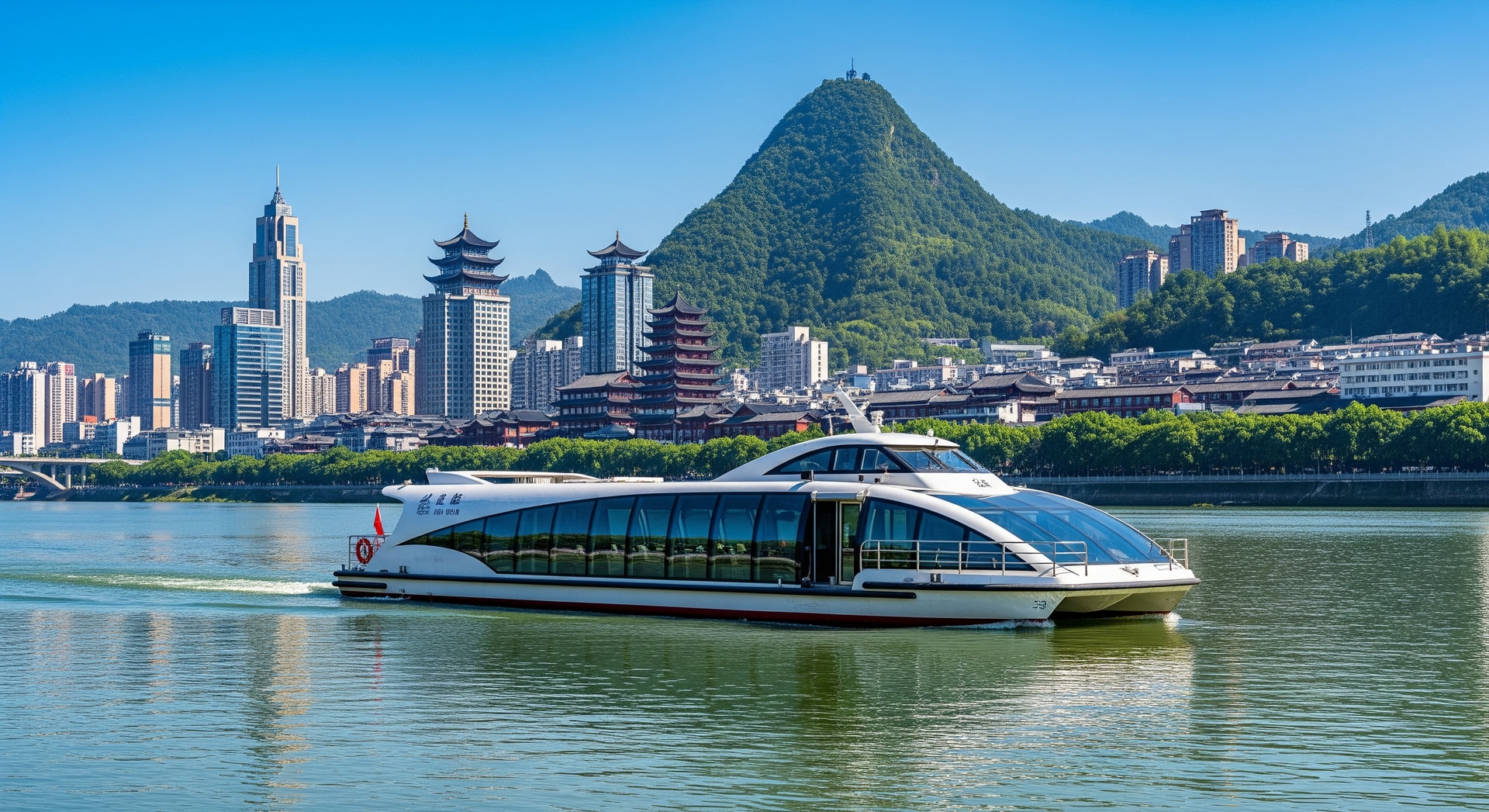
The Yibin Cultural Tourism electric sightseeing vessel has begun operations in Southwest China, positioning Yibin as a showcase for sustainable luxury travel on the Yangtze River system.
Summary: The Yibin Cultural Tourism electric sightseeing vessel has launched operations in Yibin—known as the “First City on the Yangtze River.” Built by the 712 Research Institute (China Shipbuilding Group), it is described as the largest electric sightseeing ship currently operating in Sichuan, carrying up to 205 passengers and powered by a 2,572 kWh CATL battery pack for up to six hours per charge.
The Yibin Cultural Tourism electric sightseeing vessel has officially begun operating in Southwest China, marking a new step in how river travel is being developed in Sichuan province. The launch in Yibin—often referred to as the “First City on the Yangtze River”—combines the area’s long-standing river heritage with newer low-emission transport technology.
According to the report, the ship’s debut is positioned as a turning point for local maritime tourism, moving away from conventional combustion engines and toward quieter, emissions-free sightseeing on inland waterways.
Yibin’s push for sustainable river tourism in Sichuan
The vessel was commissioned to operate on Sichuan’s inland waters and is described as part of a broader effort to strengthen local tourism through higher-quality, sustainability-focused infrastructure. The initiative also reflects wider environmental priorities tied to river protection while expanding tourism and related services.
Domestic engineering led by China Shipbuilding Group’s 712 Research Institute
Design and construction were led by the 712 Research Institute, a subsidiary of the China Shipbuilding Group. The project emphasized both durability and environmental compatibility, aiming to support tourism growth without the typical impacts associated with heavy river traffic.
The ship is described as the largest electric sightseeing vessel currently in operation in Sichuan. It measures 39.9 metres in length, with a beam of 10.8 metres and a depth of 2.5 metres, and it is configured with multiple decks to accommodate up to 205 passengers.
- Length: 39.9 metres
- Beam: 10.8 metres
- Depth: 2.5 metres
- Passenger capacity: up to 205
Battery-electric propulsion: CATL pack and dual 350 kW motors
At the center of the ship’s design is a 2,572 kWh lithium battery pack supplied by CATL. With this energy storage capacity, the vessel is reported to be able to operate for up to six hours on a single full charge, replacing diesel engine noise with a much quieter onboard experience.
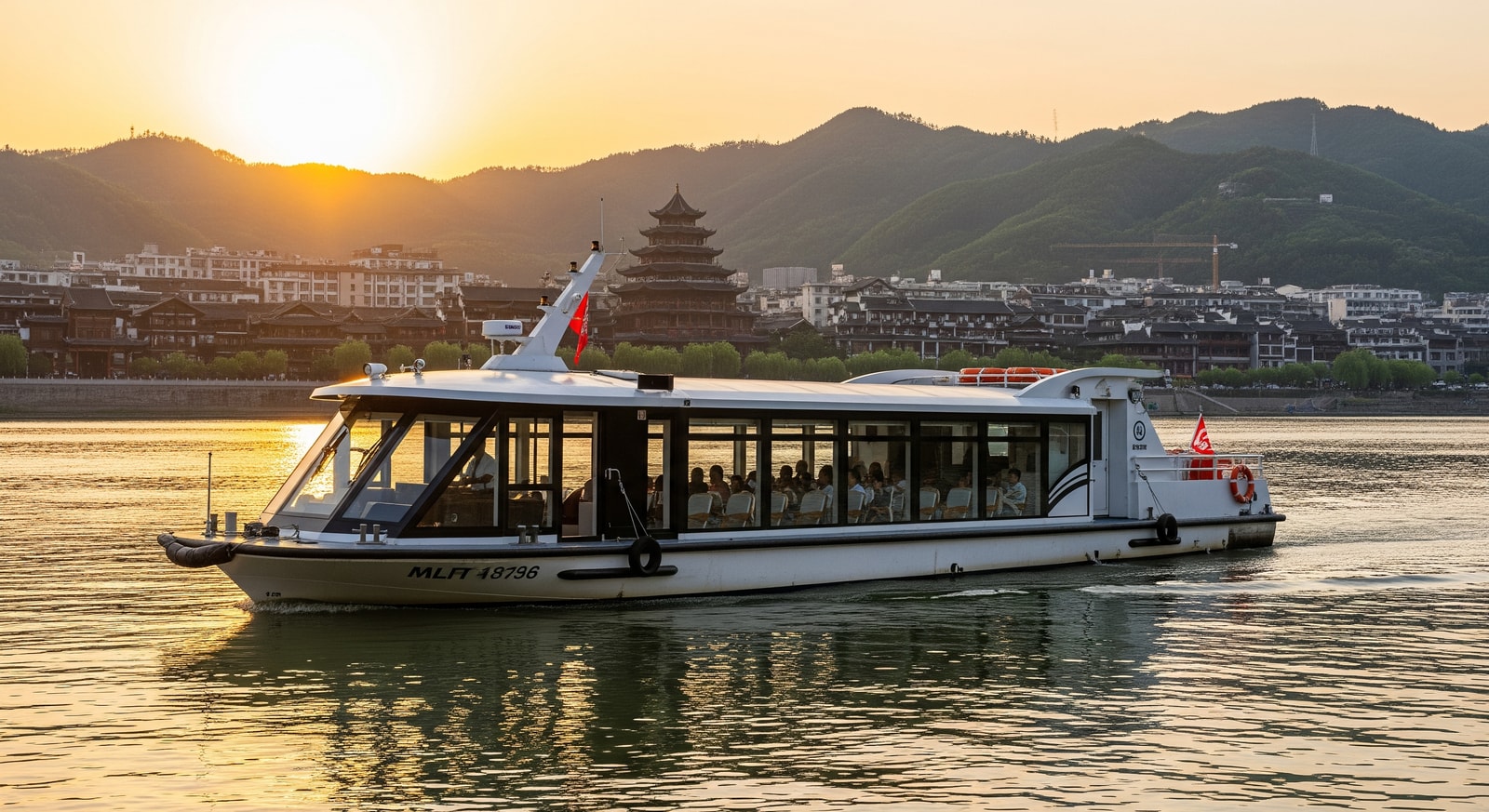
Power from the battery system is delivered through two 350 kW electric motors. The ship also includes battery and energy management systems integrated into the bridge, intended to manage electrical loads across onboard functions and maintain stable, efficient operations even when the vessel is running at full capacity.
Onboard amenities: dining, lounges, and panoramic windows
The interior layout spans three decks and is presented as a premium experience comparable to high-end hospitality standards. Amenities mentioned include a snack bar and a main-deck dining hall designed for onboard meals during sightseeing trips.
Lounges with large panoramic windows are also part of the design, aiming to provide wide, unobstructed views of the surrounding Sichuan scenery and the Yangtze River environment from a climate-controlled setting.
A multi-use venue for events and night cruises
Beyond standard sightseeing, the vessel is intended to function as a flexible venue. The top deck is described as an open-air space designed for outdoor viewing and photography, and it is also planned for uses such as live performances, private banquets, and product launches.
The ship is also equipped for nighttime operations, with exterior lighting installed along the vessel to support evening excursions. The report notes that this lighting is meant to create a distinctive presence on the water and offer views of Yibin’s skyline after dark.
Why the Yangtze River confluence matters for visitors
A key sightseeing highlight referenced is the confluence of the Min and Jinsha rivers, which travelers can view from the vessel while moving through the region’s waterways. The project is framed as an example of how tourism development can be paired with reduced environmental impact on river ecosystems.
For travelers and the tourism industry, the launch signals continued investment in cleaner transport options and higher-end experiences on inland routes in China. In practical terms, it suggests that visitors to Sichuan may see more low-noise, low-emission sightseeing products—particularly in environmentally sensitive river areas—while destinations like Yibin use new infrastructure to strengthen their appeal in a competitive domestic tourism market.
Sources