SAS flight incident at Brussels Airport saw an Airbus A320neo begin a takeoff roll from a taxiway before the crew aborted the attempt and evacuated all 145 people on board.
Summary: A Scandinavian Airlines Airbus A320neo operating as SK2590 began accelerating on taxiway E1 at Brussels Airport on 6 February 2026. The crew aborted the takeoff, evacuated all 145 people aboard with no injuries, and authorities are investigating the near-miss.
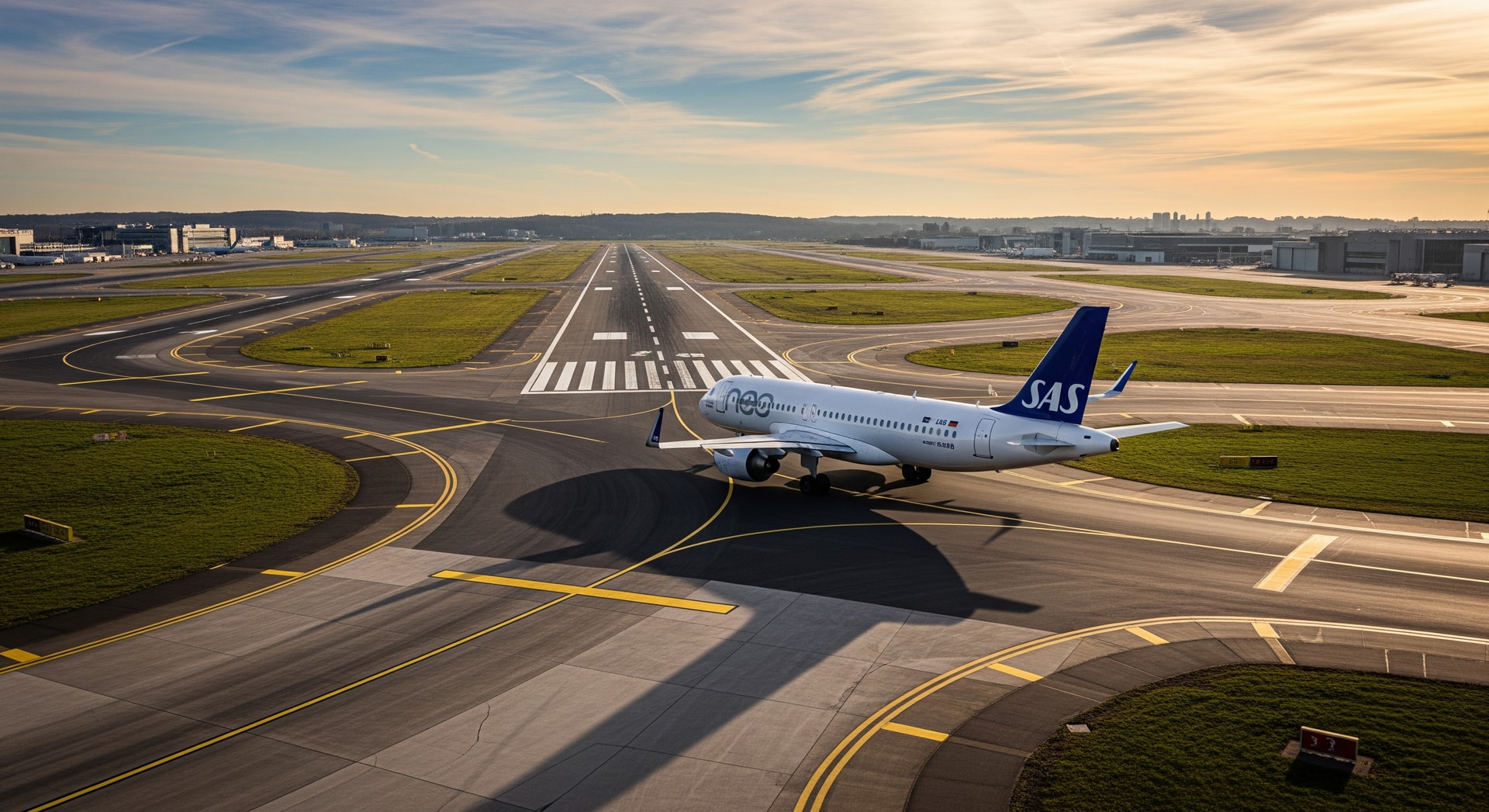
A Scandinavian Airlines (SAS) Airbus A320neo nearly initiated a takeoff from the wrong surface at Brussels Airport (Zaventem) on the evening of 6 February 2026. The incident — officially involving flight SK2590 bound for Copenhagen — occurred while the jet was taxiing toward its assigned runway with 145 passengers and crew on board.
How the event unfolded
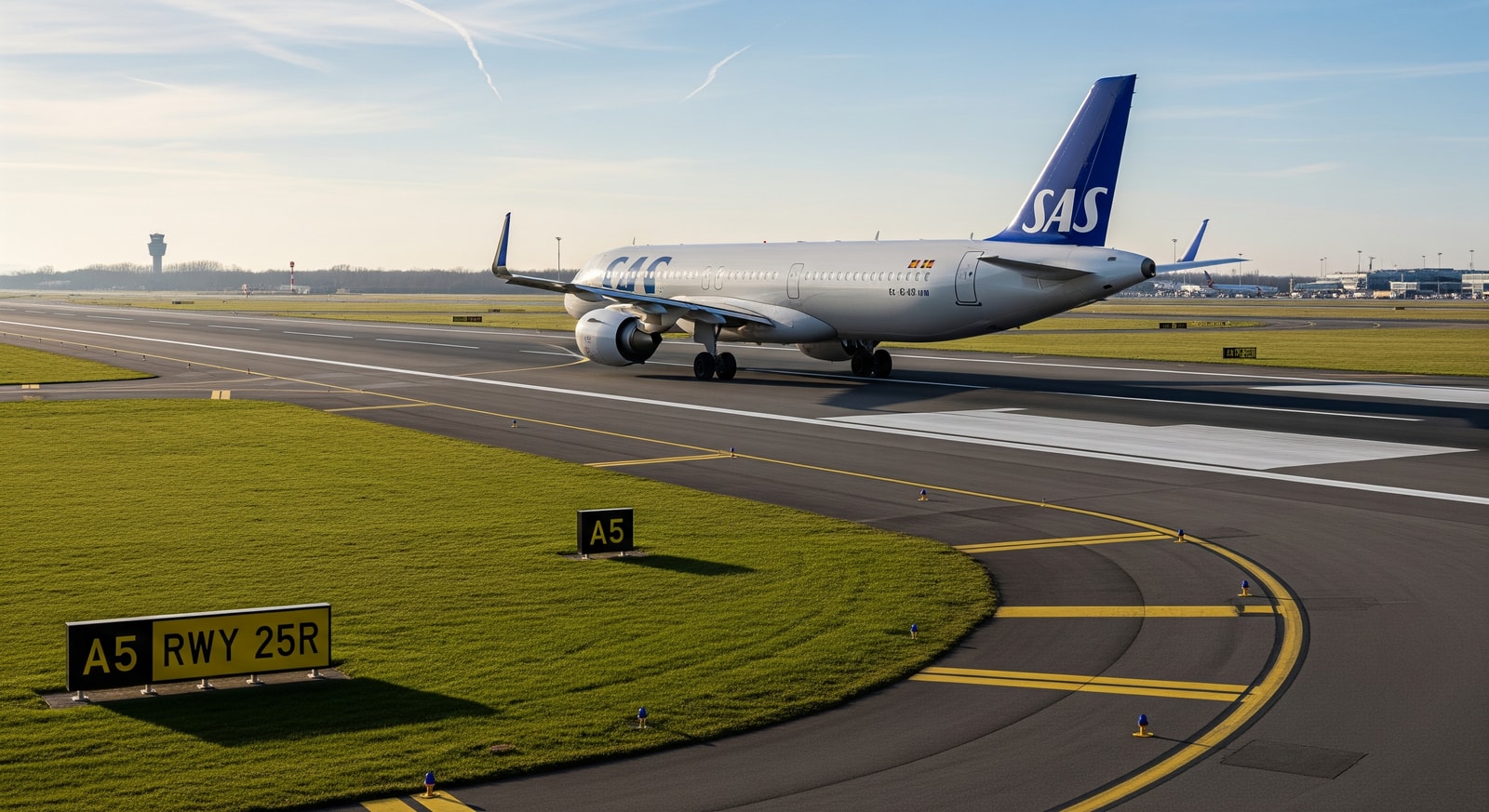
Around 9:54 pm local time on 6 February 2026, the A320neo had been cleared for takeoff. During the taxi, the flight crew inadvertently turned onto taxiway E1 — a route normally used by aircraft that have landed and are returning to the terminal — and started a takeoff roll from that taxiway instead of the designated runway.
Data shared on social media and by Flightradar24 indicate the aircraft accelerated to high speed before the crew stopped the attempt. Emergency services and airport teams then responded and evacuated the airplane; no injuries were reported.
Critical moments and technical details
According to publicly available flight-tracking data and eyewitness accounts, the A320neo reached speeds up to 107 knots (approximately 198 km/h or 123 mph) before the takeoff was rejected. The aborted run generated significant heat in the brakes, and the aircraft reportedly came to a stop after traveling a long distance, partially ending up on grass adjacent to the taxiway.
- Flight: SK2590 (SAS) to Copenhagen
- Aircraft: Airbus A320neo
- Occupants: 145 passengers and crew
- Time: Around 9:54 pm local time, 6 February 2026
- Peak speed during aborted takeoff: 107 knots (198 km/h / 123 mph)
Airport response and passenger safety
Airport authorities, emergency services and airline staff moved quickly after the aborted takeoff. Passengers were evacuated from the aircraft on the ground and emergency teams secured the scene. Officials reported no injuries among passengers or crew.
The incident temporarily disrupted airport operations, causing delays for both departures and arrivals as teams worked to clear the aircraft and restore normal traffic flows.
Why the taxiway error likely occurred
Initial accounts point to confusion between the assigned runway and taxiway E1. Complex taxiway layouts at major airports can contribute to navigational mistakes, especially under pressure to meet schedules or in busy traffic conditions. The event demonstrates how easily a routing error can occur even for experienced flight crews.
- Takeoff warning systems helped alert the crew to the anomaly
- Crew ability to reject a takeoff prevented escalation into a major accident
Next steps: investigation and operational continuity
After the evacuation, the flight was rescheduled to depart later that evening and passengers were accommodated. Scandinavian Airlines has said it will thoroughly investigate the incident and reaffirmed its commitment to operational safety and standards.
While the event is not expected to have long-term effects on SAS or Brussels Airport operations, it serves as a prompt for continued vigilance in ground navigation, crew procedures and airport surface management.
Why this matters to travelers: So what? This near-miss underscores the complexity of airport surface operations and the reliance on trained crews and safety systems to prevent accidents. For passengers, the takeaway is to stay attentive to airline communications during disruptions, expect possible delays after safety incidents, and understand that quick crew response and robust emergency procedures are key reasons such situations are resolved without injury.
Sources