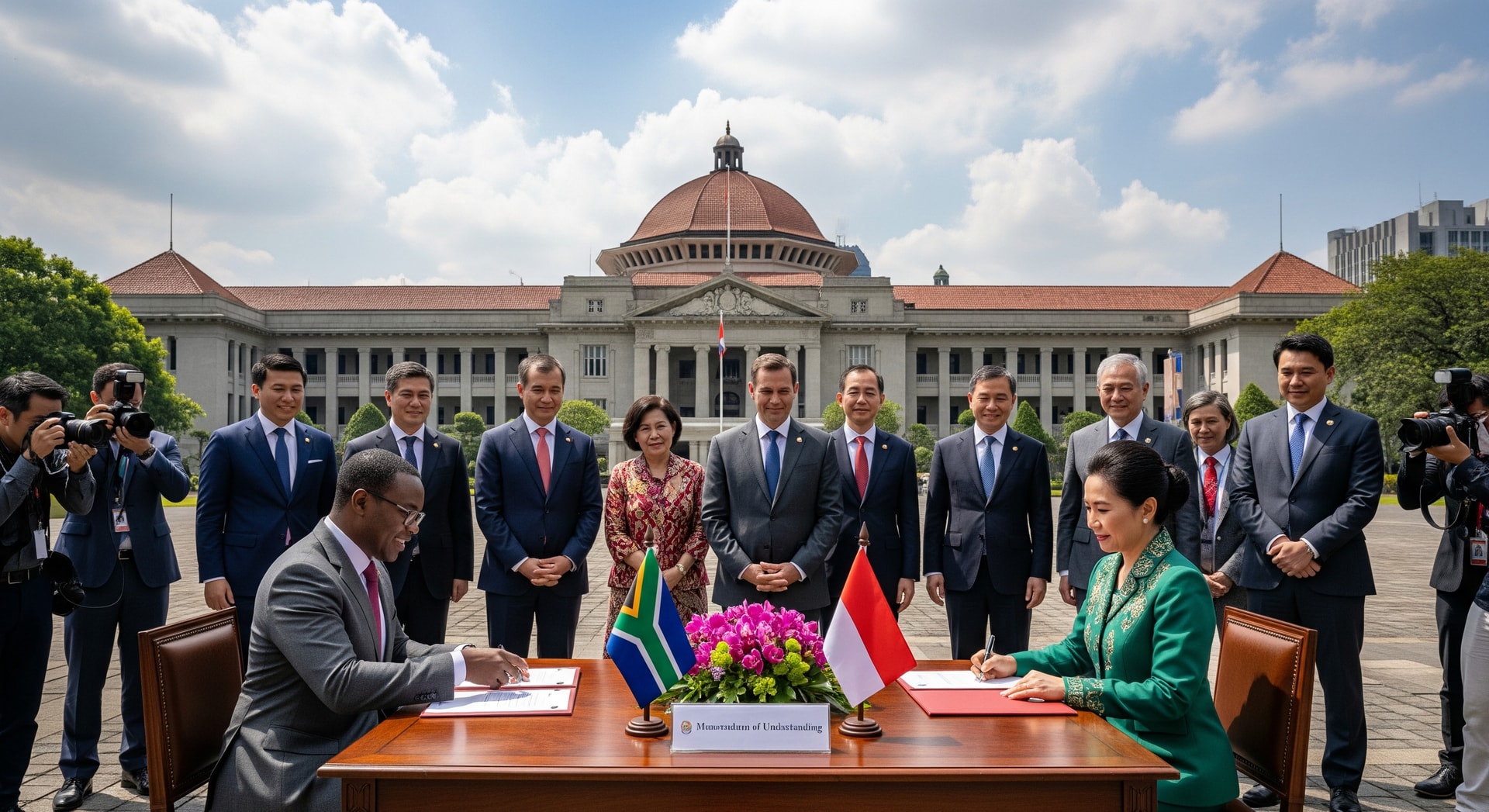
South Africa and Indonesia have signed a Memorandum of Understanding to deepen South Africa Indonesia tourism cooperation, prioritising air connectivity, joint marketing and inclusive, sustainable growth.
Summary: South Africa and Indonesia signed a Memorandum of Understanding on 5 February 2026 in Jakarta to deepen South Africa Indonesia tourism cooperation. The MoU sets out seven pillars — including air connectivity, visa facilitation, digital marketing, halal tourism, human resource development, investment and sustainability — to drive inclusive, sustainable visitor growth.
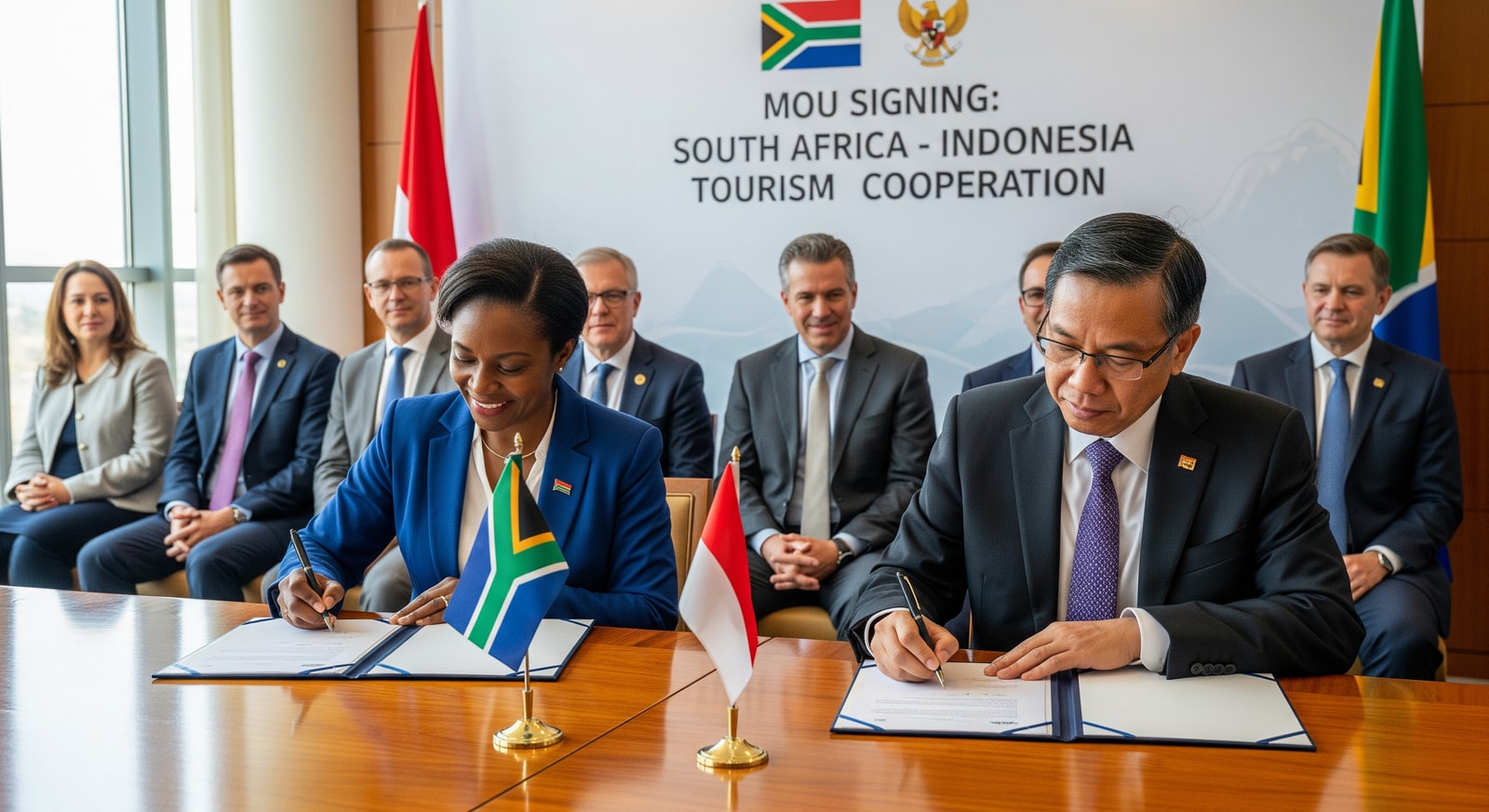
On 5 February 2026, Indonesia and South Africa formalised a partnership to expand South Africa Indonesia tourism ties through a Memorandum of Understanding signed in Jakarta by Indonesia’s Tourism Minister Widiyanti Putri Wardhana and South Africa’s Tourism Minister Patricia de Lille. The agreement prioritises improved accessibility, collaborative marketing and sustainable, inclusive tourism development.
MoU signed in Jakarta
The MoU, completed during talks in Jakarta, aims to strengthen bilateral tourism cooperation between the two countries and create a framework for sustained, mutually beneficial growth. The pact emphasises solidarity and long-term partnership between nations of the Global South.
A seven-pillar framework
- Sustainable Tourism Development
- Human Resource Development
- Marketing and Promotion
- Tourism Investment
- Safety and Service Standards
- Research and Development
- Digital Innovation
These seven strategic areas are intended to address core sector challenges and to build a tourism ecosystem focused on long-term value rather than short-term visitor numbers. The focus ranges from training and standards to innovation and cross-border promotion.
Improving accessibility and air links
A central aim of the agreement is to make travel between the two countries easier. The MoU highlights increasing air connectivity and simplifying visa procedures as crucial steps to encourage more Indonesian visitors to South Africa and vice versa.
Joint digital marketing and promotion
Recognising the power of online platforms, the two countries committed to collaborate on digital campaigns and social media outreach targeting new demographics, particularly younger travellers. They will also present joint pavilions and cross-promotional content at major travel events.
- South Africa will showcase wildlife tourism such as Kruger National Park, Cape Town beaches and safaris.
- Indonesia will promote its islands, cultural heritage and UNESCO World Heritage Sites.
- Both countries will present at events including the Bali & Beyond Travel Fair.
Halal tourism and inclusivity
With Indonesia hosting the world’s largest Muslim population, the partnership includes a push for halal-friendly services in South Africa — from halal-certified hotels and restaurants to Muslim-friendly experiences — positioning South Africa to attract Muslim travellers from Indonesia and the wider region.
Skills, investment and infrastructure
The MoU also emphasises human resource development through exchanges, training and capacity-building programmes in hospitality, sustainable tourism and digital marketing. It seeks to attract private-sector investment to modernise tourism infrastructure in key destinations.
- South Africa: expansion around Cape Town, Johannesburg and Durban
- Indonesia: improved access to Bali, Komodo Island and Yogyakarta
What this means for travellers and the industry
So what? For travellers, the agreement points to potentially easier travel between South Africa and Indonesia over time — more direct routes, simpler visa steps and services tailored to diverse needs, including halal options. For industry stakeholders, the MoU opens pathways for joint marketing, skills exchanges and investment opportunities that could raise service standards and broaden market access in both markets.
Sources