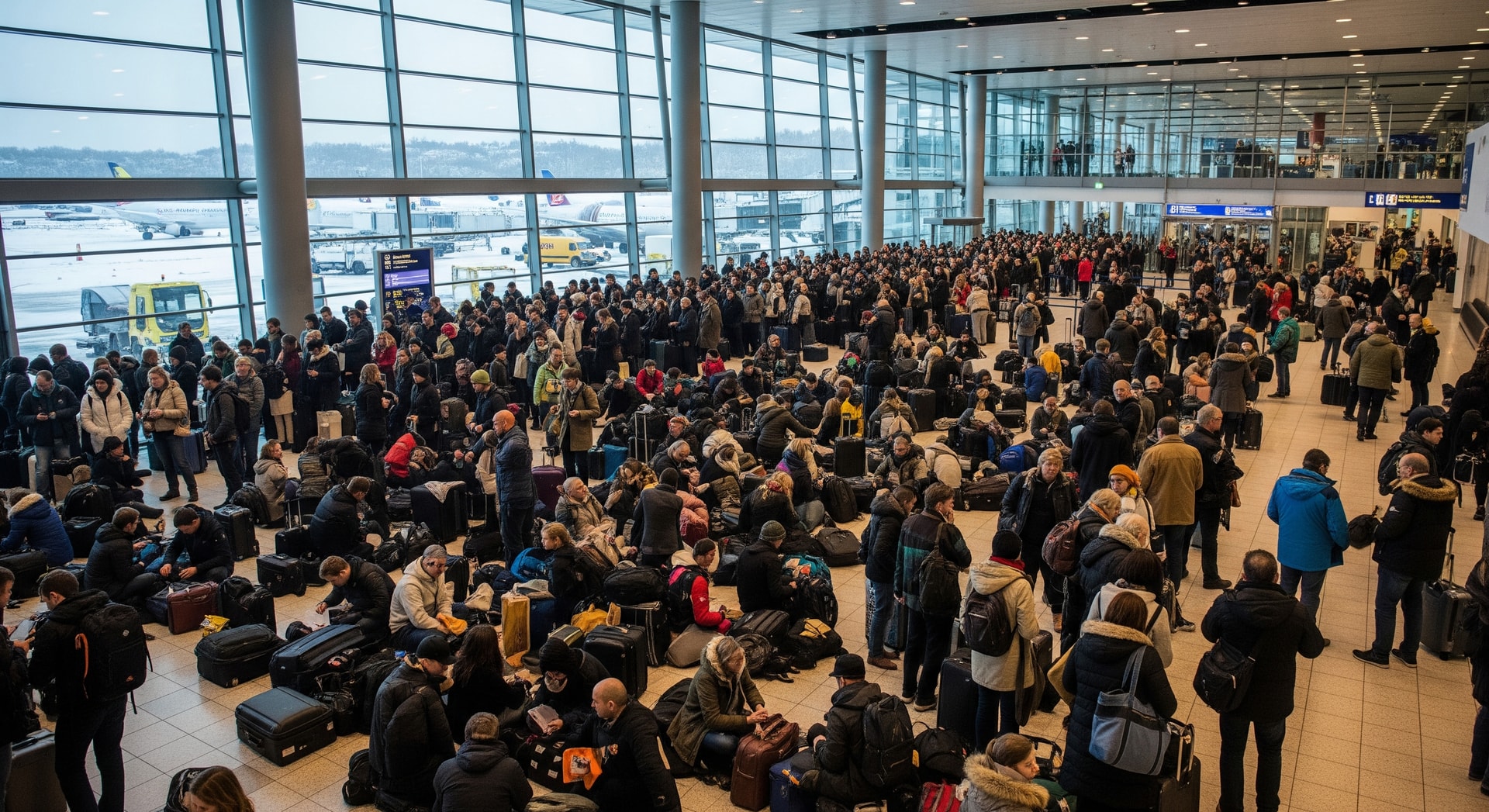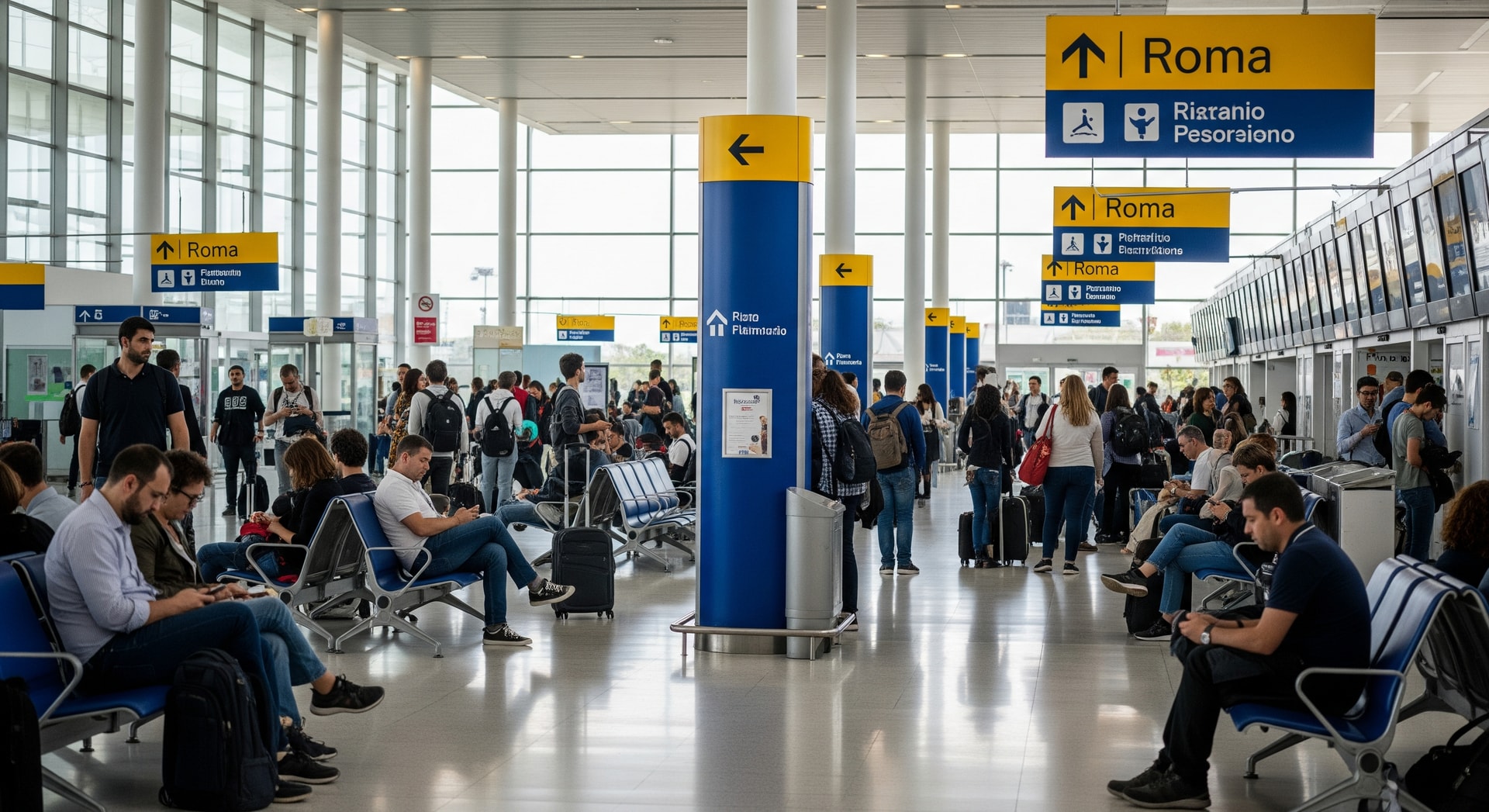
Italy flight delays left passengers grounded today as 383 flights were delayed and 13 cancelled across Rome, Milan, Bergamo and Catania.
Summary: Widespread disruption across Italy left passengers grounded today — authorities recorded 396 disruptions in total, comprising 383 delayed flights and 13 cancellations concentrated at Rome Fiumicino, Milan Malpensa, Bergamo, Milan Linate and Catania.
Italy flight delays affected travellers nationwide today as airports in Rome, Milan, Bergamo and Catania reported large volumes of disruption. National tallies show 396 operational incidents overall, made up of 383 delays and 13 cancellations, with the heaviest impacts seen at Rome Fiumicino and Milan Malpensa.
Overview of the nationwide disruption
The disruptions spanned both low-cost and full-service operators and affected short-haul and regional schedules. While delays far outnumbered cancellations, the combined total created significant knock-on effects for passengers and airline operations across multiple hubs.
- Total disruptions: 396 (383 delays, 13 cancellations)
- Rome Fiumicino: 133 delays, 4 cancellations
- Milan Malpensa: 118 delays, 2 cancellations
- Bergamo Orio al Serio: 71 delays, 2 cancellations
- Milan Linate: 31 delays, 3 cancellations
- Catania Fontanarossa: 30 delays, 2 cancellations
Airlines most affected
A range of carriers experienced operational issues. Low-cost operators accounted for a substantial share of the delays, but several legacy and network airlines also reported disruptions at Italian hubs.
- Ryanair: 114 delays, 7 cancellations (most impacted overall)
- Wizz Air Malta: 42 delays
- ITA Airways: 28 delays
- easyJet: 23 delays, 5 cancellations
- Air France: 8 delays
- KLM: 8 delays
- British Airways: 3 delays
- Other carriers affected included Lufthansa, Iberia and Pegasus Airlines
Airport-level details
The largest disruption volumes were recorded at Italy’s primary international gateways. Rome Fiumicino led the list by delay count, followed closely by Milan Malpensa. Regional hubs such as Bergamo and Catania also saw significant disturbance, while Milan Linate reported a smaller but notable cluster of cancellations.
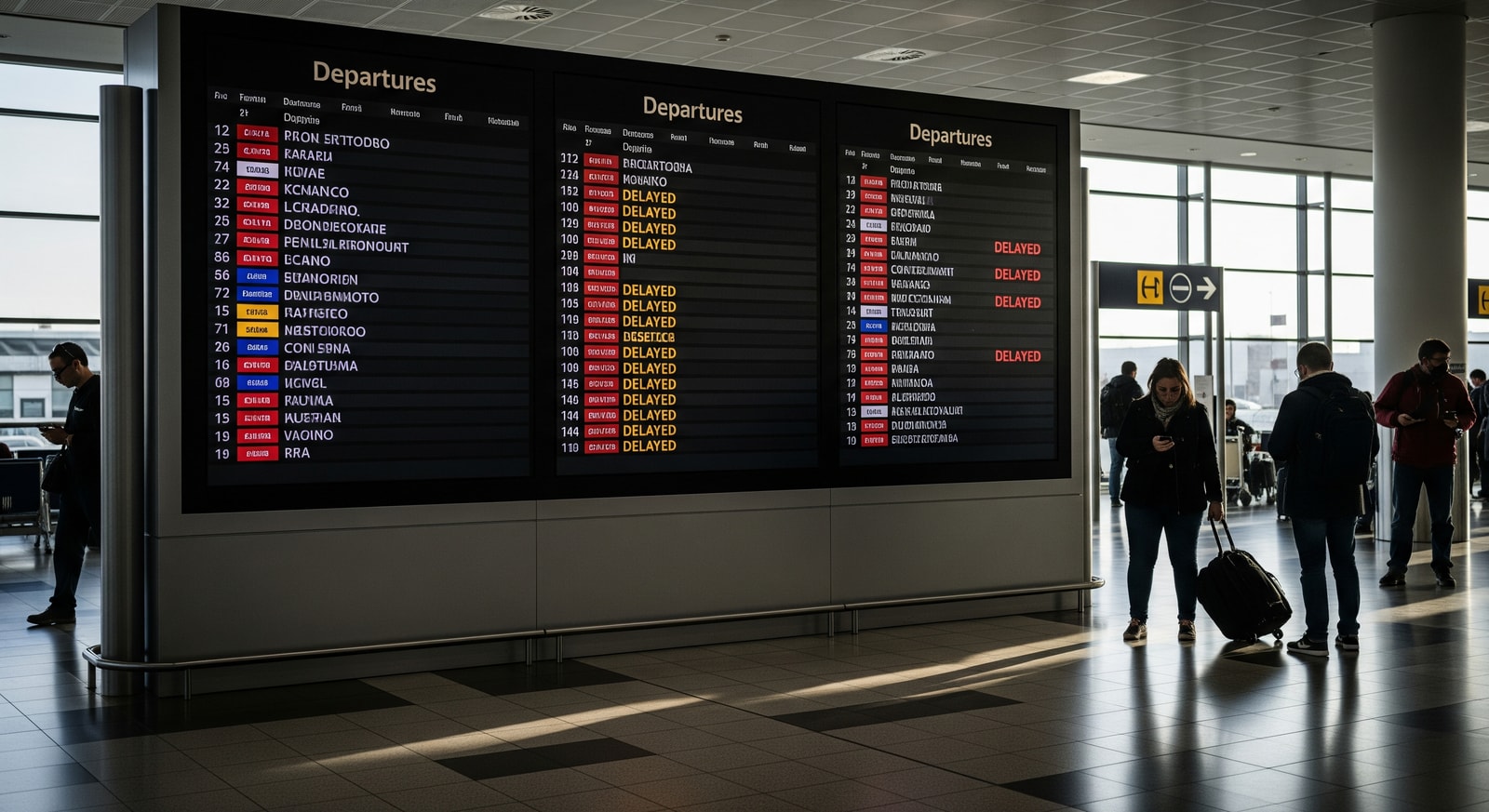
At Rome Fiumicino, delays affected a mix of low-cost and legacy services, with Ryanair, ITA Airways and Wizz Air Malta among those contributing to the count. Milan Malpensa’s issues were spread across multiple carriers, including Wizz Air Malta, easyJet and Ryanair. Bergamo’s disruption was driven mainly by Ryanair operations, while easyJet was responsible for all cancellations reported at Milan Linate.
What affected passengers should do
- Monitor airline messages and airport departure boards for real-time updates.
- Allow extra connection time when transiting busy airports such as Milan Linate.
- Check rebooking and refund options directly with the operating carrier.
- Keep boarding passes and reservation confirmations for any claims or compensation.
- Use official airline apps and airport channels for the latest operational information.
Passengers impacted by today’s disruptions should contact their airline for rebooking options and retain all travel documents if they intend to seek assistance or compensation. Where apps and airline notifications are available, these are the fastest ways to receive gate changes or alternative travel arrangements.
Why this matters — implications for travellers and the industry
So what? For travellers, the prevalence of delays over cancellations means many itineraries will be late rather than completely voided, increasing the risk of missed connections and extended time in terminals. For the aviation sector, concentrated disruption at major hubs highlights vulnerabilities in scheduling and capacity during peak periods. Travellers should plan for extra time, monitor carriers closely and be prepared to use rebooking channels. From an industry perspective, the incident underscores the continuing operational challenges facing airlines and airports as demand and network complexity grow.
Sources