AI hotel websites are under pressure as ChatGPT and Google’s Gemini deliver direct recommendations that can bypass hotel brand sites and OTAs.
Summary: Conversational AI like ChatGPT and Google’s Gemini are supplying instant accommodation recommendations and itineraries, reducing clicks to hotel and OTA websites and forcing hotels to rework distribution with APIs and machine‑readable content.
Hotel websites are facing a new test as conversational and generative AI tools alter how travellers discover and book stays. Platforms such as OpenAI’s ChatGPT and Google’s Gemini now offer instant answers — including property details, suggested itineraries and price comparisons — that can circumvent traditional channels and change where booking intent is captured.
AI-driven discovery reshapes the funnel
Instead of presenting lists of links, modern AI assistants provide direct recommendations and curated plans. That shifts the early stages of travel planning away from search results and aggregators, fundamentally undermining the gateway role once occupied by OTAs and brand websites.
Adoption is already significant: more than two-thirds of American travellers use AI for destination research and over half rely on it for planning activities. Many users now follow AI-generated suggestions through to booking, reducing the number of visits to intermediary sites.
Are hotel websites losing their central role?
The move toward conversational answers weakens the ability of aggregators and brand sites to capture intent at the top of the funnel. When an AI assistant supplies a recommendation and can complete bookings via an integrated flow, hotels and OTAs can lose visibility and control over the customer journey.
- Aggregators may see discovery decline as AI provides direct answers instead of link lists
- Agentic systems could plan and book trips autonomously, further reducing site visits
- Cross-sales and network effects that fuel OTA economics become harder to achieve
Scale, marketing spend and market concentration
Large hotel groups and online travel platforms currently dominate distribution. In the United States, major hotel chains control 72% of room supply, a concentration that gives them access to the data AI models ingest. At the same time, OTAs rely on massive marketing budgets to sustain visibility in traditional search.
- Nearly half of global bookings flow through the major OTAs
- Expedia devoted more than half its 2024 revenue to marketing — $6.8 billion
- Booking.com allocated about 30% of revenue to marketing, exceeding $7 billion
How hotels can respond: APIs and AI readiness
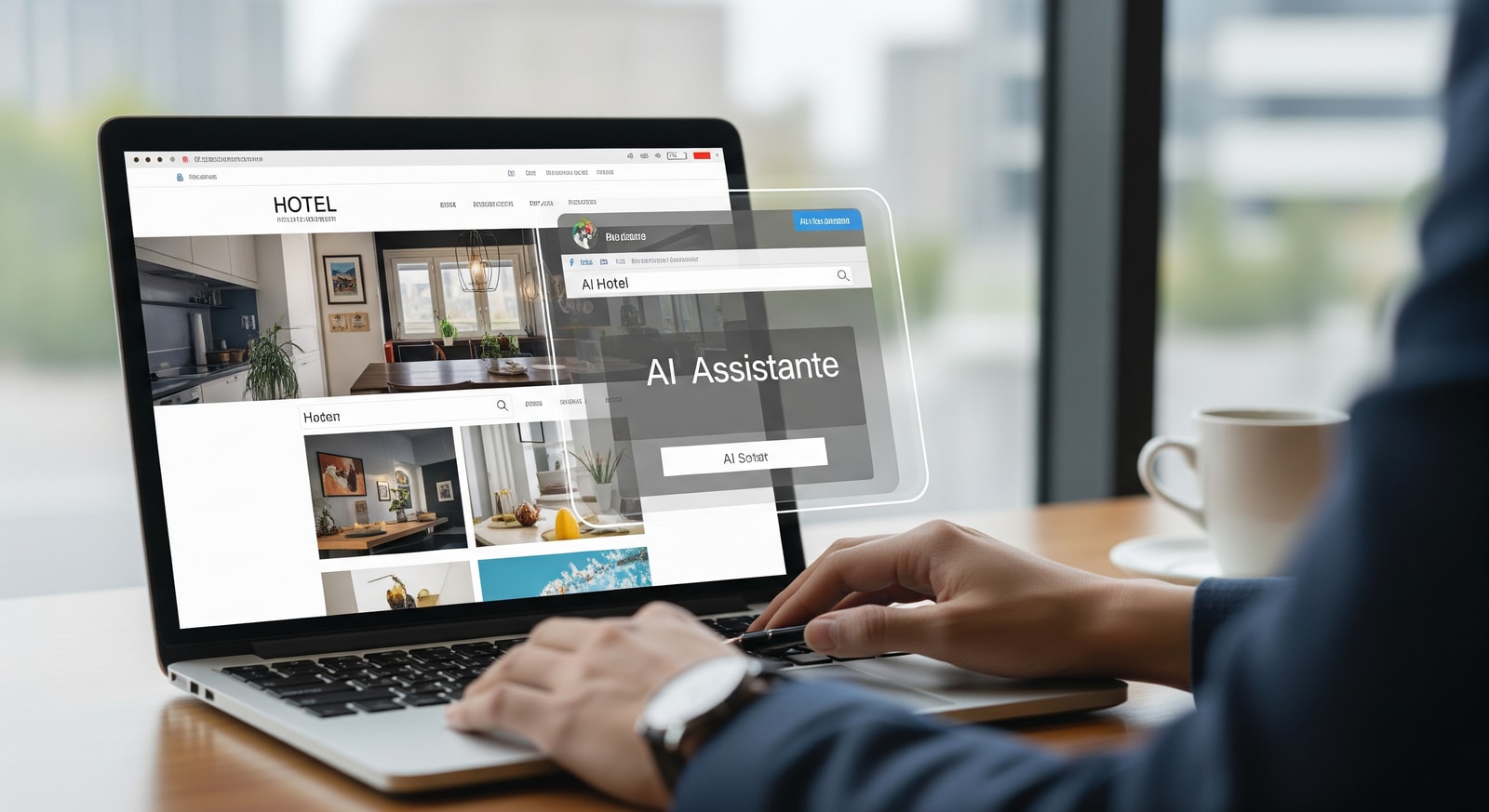
Industry commentary suggests hotels should focus on becoming machine‑readable and action‑ready. Rather than trying to maintain traffic at all costs, properties can provide standardized, secure APIs and integrate with intermediary AI layers so assistants can check availability, execute bookings and process payments on behalf of users.
- Expose availability, pricing and policies via secure APIs
- Make content machine-readable while preserving authentic local storytelling
- Partner with AI platforms and middleware to enable direct bookings through assistants
Under this model, websites remain important as sources of trust, detailed context and brand identity, even if transactional steps shift deeper into an API and agentic ecosystem. Rich, authentic content helps validate AI recommendations for both travellers and models operating in their stead.
The AI front desk and operational gains
Beyond distribution, AI is automating operations. AI receptionists and virtual agents can handle booking changes, guest communications and payments across channels including email and messaging apps. These tools have been shown to reduce staffing costs by 20% to 50% in contexts of labour shortages and high demand for 24/7 service.
For hotels, the priority is to make their inventory and processes accessible to decision‑making models: compelling content alone is not enough if an assistant cannot check a room, confirm price rules or take payment. Standardised, secure connectivity is the next infrastructure battleground.
So what? Travellers can expect easier discovery and more personalised planning as AI assistants improve, potentially reducing the number of clicks between inspiration and booking. For hoteliers and distribution partners, the shift demands technical investment: expose inventory via secure APIs, rethink the role of brand websites as trust and storytelling hubs, and prepare to transact through new agentic interfaces or risk losing direct access to guests.
Sources