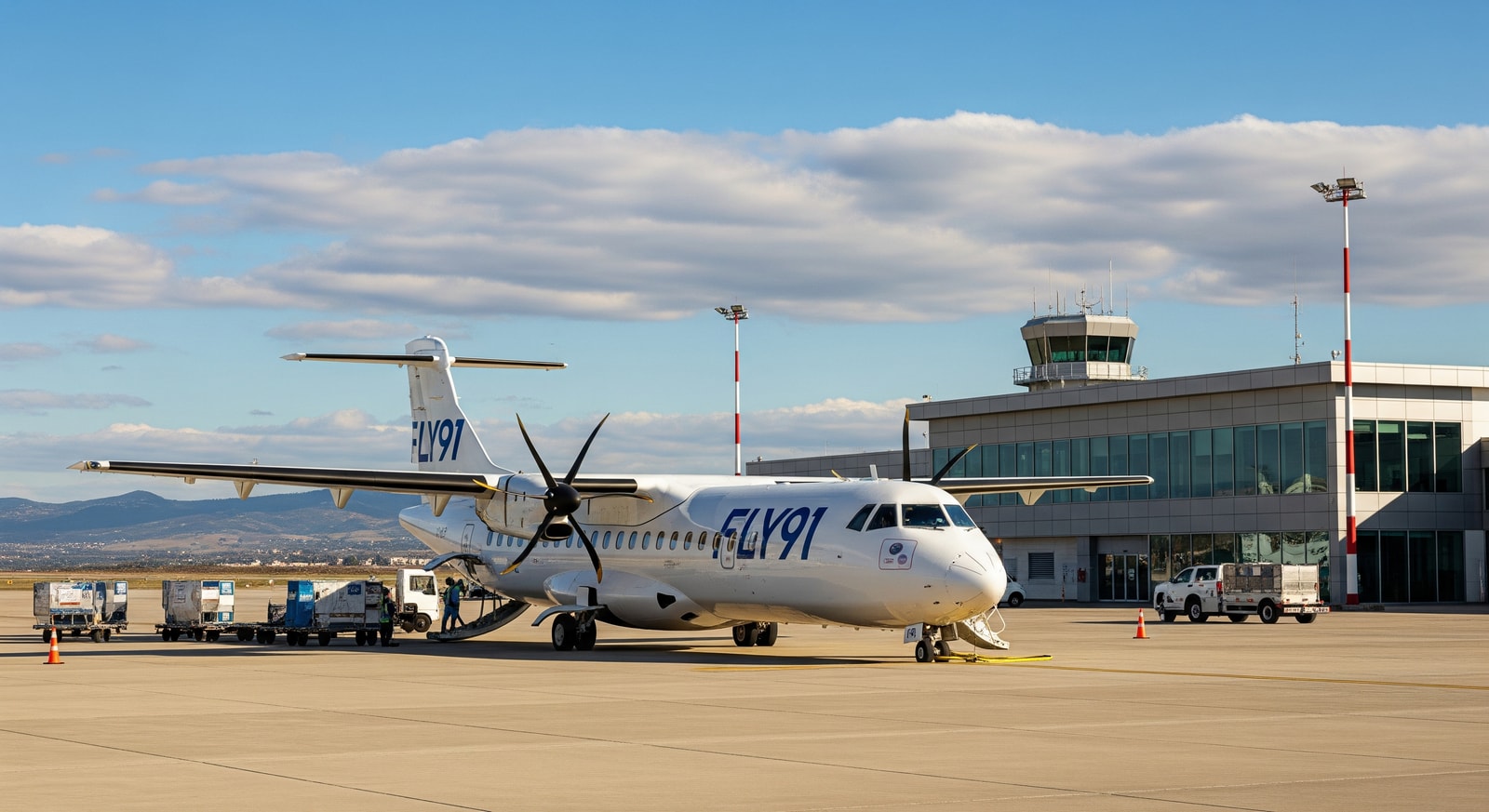
FLY91 ATR 72‑600 lease: FLY91 has leased two ATR 72‑600 turboprops to expand domestic connectivity, with one aircraft already in service and the second due to enter operations soon.
Summary: FLY91 has leased two ATR 72‑600 turboprops from Dubai Aerospace Enterprise (DAE) and TrueNoord to expand its domestic network. One aircraft (MSN 1233) arrived in late December 2025 and is already flying; the second (MSN 1236) was delivered in mid‑January 2026 and will enter service shortly.
Goa‑headquartered regional airline FLY91 has moved to strengthen domestic air links by leasing two ATR 72‑600 turboprops. The FLY91 ATR 72‑600 additions are intended to accelerate the carrier’s network growth and improve connections to smaller cities across India.
Lease agreements and delivery timeline
FLY91 announced that the two ATR 72‑600s were secured under long‑term operating leases with Dubai Aerospace Enterprise (DAE) and specialist regional lessor TrueNoord. According to the airline, one aircraft, registered MSN 1233, arrived in late December 2025 and is already in service. The second aircraft, MSN 1236, was delivered in mid‑January 2026 and is expected to begin operations soon.
- Aircraft type: ATR 72‑600 turboprop (short‑haul regional platform)
- Lessors: Dubai Aerospace Enterprise (DAE) and TrueNoord
- Deliveries: MSN 1233 (late Dec 2025, operational); MSN 1236 (mid‑Jan 2026, entering service)
Why the ATR 72‑600 fits FLY91’s regional plan
The ATR 72‑600 is widely used on short‑haul routes because of its fuel efficiency and capability to operate into smaller airports. FLY91’s management says the platform supports higher frequency services and operations at airports that larger jets cannot access, aligning with the carrier’s strategy to link underserved towns with major Indian centres.
This fleet growth also dovetails with government efforts to boost regional connectivity through schemes such as UDAN (Ude Desh ka Aam Nagrik), which aim to make flying more affordable and to stimulate tourism and local economies.
- Improved regional connectivity to tier‑2 and tier‑3 cities
- Higher flight frequencies for more flexible travel schedules
- Potential for competitive fares due to fuel‑efficient operations
- Support for tourism and regional economic activity
Passenger considerations and early integration risks
As FLY91 brings the new aircraft into service, travellers can expect changes common to any expansion phase. Initial schedule adjustments or minor operational teething issues are possible while the airline integrates the ATRs into its network. Regional airports may also have more limited ground facilities compared with major hubs.
- Possible schedule tweaks during early deployment
- Limited ground services at smaller airports
- Passenger perception: turboprops can be viewed as less comfortable in poor weather compared with larger jets
What this means for Indian aviation
FLY91’s ATR 72‑600 inductions signal confidence in regional demand and reflect a broader shift toward filling mobility gaps in India’s domestic market. By targeting routes that are under‑served, the airline contributes to making air travel more inclusive and supporting local economic growth—outcomes that are central to the UDAN initiative.
So what? For travellers, the immediate benefit is more route options and potentially better schedule flexibility to cities such as Hubballi, Vijayawada, Rajahmundry, Nanded and Dabolim (Goa). For the industry, the move demonstrates how leasing arrangements with lessors like DAE and TrueNoord can enable fast, cost‑efficient growth into regional markets.
Sources