
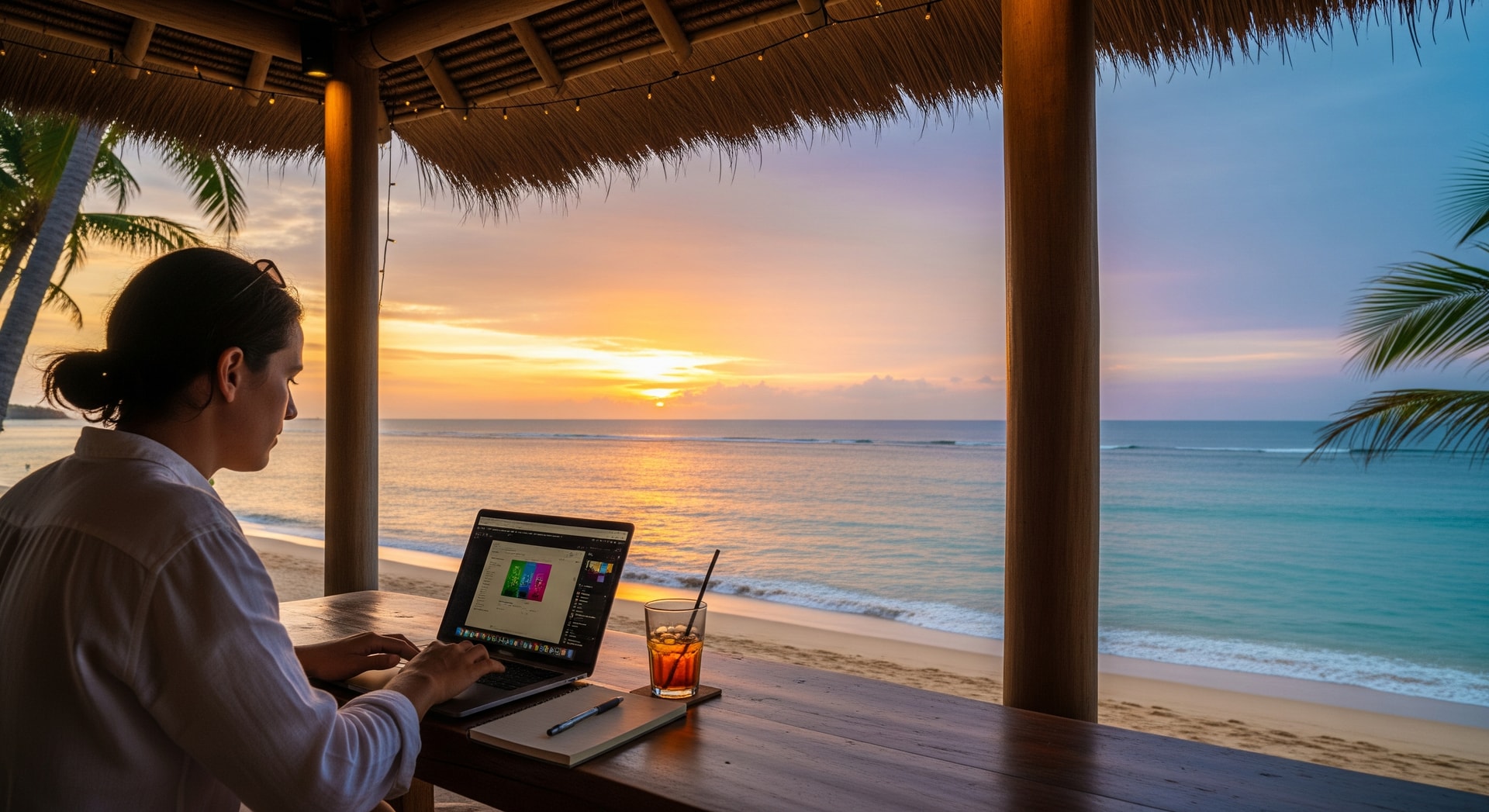
The rise of remote work has transformed how we think about where we live and work. In response, countries around the world have created digital nomad visas — special permits that allow remote workers, freelancers, and entrepreneurs to live and work legally for extended periods.
Whether you dream of coding from a beach in Bali, designing from a cafe in Lisbon, or taking calls with a view of the Alps, there's now a visa for that. This comprehensive guide covers the best countries for digital nomads in 2025, including requirements, costs, and practical tips from someone who's been there.
What is a Digital Nomad Visa?
A digital nomad visa is a residence permit that allows you to live in a country while working remotely for clients or employers outside that country. Unlike tourist visas, these permits:
- Allow legal residence for 6 months to 2+ years
- Permit you to work remotely (but not for local companies)
- Often provide a path to longer-term residency
- May include tax benefits in some countries
- Usually require proof of income or savings
Did You Know?
Over 50 countries now offer some form of digital nomad or remote work visa. The number has tripled since 2020, with new programs launching regularly.
Quick Comparison: Top 10 Digital Nomad Visas
Digital Nomad Visa Comparison 2025
| Country | Duration | Min. Income | Cost | Processing |
|---|---|---|---|---|
| Portugal (D7) | 1-2 years | €760/month | €90 | 2-3 months |
| Spain | 1 year (+2) | €2,520/month | €80 | 20 days |
| Thailand (DTV) | 5 years | $16,500/year | $270 | 2-4 weeks |
| Indonesia | 6 months (+) | $2,000/month | $300 | 3-5 days |
| Croatia | 1 year | €2,540/month | €55 | 2-4 weeks |
| Estonia | 1 year | €4,500/month | €100 | 30 days |
| Costa Rica | 2 years | $3,000/month | $250 | 2-3 weeks |
| Mexico | 4 years | $2,700/month | $150 | 1-2 weeks |
| UAE | 1 year | $3,500/month | $287 | 5 days |
| Malaysia (DE Rantau) | 1 year (+) | $24,000/year | $218 | 2-4 weeks |
Portugal: The European Favorite
Portugal consistently ranks as the #1 destination for digital nomads, and for good reason. The combination of affordable living, excellent weather, fast internet, and a welcoming expat community makes it hard to beat.

Portugal D7 Visa Requirements
- Proof of passive income: minimum €760/month (Portuguese minimum wage)
- Valid passport with 6+ months validity
- Clean criminal record certificate
- Health insurance valid in Portugal
- Proof of accommodation (rental contract or hotel booking)
- NIF (Portuguese tax number) — can be obtained remotely
Pro Tip: NHR Tax Regime
Portugal's Non-Habitual Resident (NHR) tax regime offers significant tax benefits for the first 10 years. Remote workers may qualify for a flat 20% tax rate on Portuguese-sourced income, and foreign income may be tax-exempt. Consult a tax advisor before applying.
Portugal D7 at a Glance
Duration: 2 years (renewable)
Path to citizenship: Yes, after 5 years
Schengen access: Yes, travel freely in EU
Cost of living: €1,500-2,500/month in Lisbon
Internet speed: Average 100+ Mbps
Spain: Europe's Newest Option
Spain launched its highly anticipated digital nomad visa in 2023, and it's quickly become one of the most attractive options in Europe. With a relatively fast processing time and a straightforward application, Spain offers everything from vibrant Barcelona to laid-back Valencia.
Spain Digital Nomad Visa Requirements
- Proof of remote work: employment contract or client contracts
- Minimum income: €2,520/month (200% of Spanish minimum wage)
- Work for non-Spanish companies (max 20% Spanish clients)
- 3+ years of experience or relevant degree
- Health insurance with full coverage in Spain
- Clean criminal record from past 5 years
Important Requirement
Spain requires that at least 80% of your income comes from clients or employers outside Spain. If you plan to take on Spanish clients, this visa may not be suitable.
Spain Digital Nomad Visa at a Glance
Duration: 1 year (renewable for 2 more)
Path to residency: Yes, leads to residence permit
Tax rate: 15% for first 4 years (Beckham Law)
Cost of living: €1,800-3,000/month in Barcelona
Processing: ~20 working days
Thailand: The Destination Thailand Visa (DTV)
Thailand has long been a digital nomad hotspot, but working remotely was technically in a legal gray area. The new Destination Thailand Visa (DTV), launched in 2024, finally provides a legitimate long-term option for remote workers.
Thailand DTV Requirements
- Proof of employment or freelance work
- Minimum income: 500,000 THB/year (~$16,500)
- Health insurance covering Thailand
- No criminal record
- Valid passport with 6+ months validity
- Evidence of remote work capability
Why Choose Thailand?
Thailand offers an unbeatable combination of low cost of living (€1,000-1,500/month for a comfortable lifestyle), excellent food, tropical weather, and a massive digital nomad community. Chiang Mai and Bangkok have world-class co-working spaces.
Thailand DTV at a Glance
Duration: 5 years (180 days per entry)
Multiple entries: Yes
Cost: 10,000 THB (~$270)
Extensions: Available at immigration
Tax: Only on Thai-sourced income
Indonesia: The B211A Remote Worker Visa
Indonesia, home to the legendary island of Bali, has embraced digital nomads with its B211A visa. While not officially called a "digital nomad visa," it's designed for remote workers and has become the go-to option for those wanting to live the Bali dream.

Indonesia B211A Requirements
- Proof of remote employment or business ownership
- Bank statement showing $2,000/month income
- Health insurance covering Indonesia
- Return or onward flight ticket
- Sponsor letter (can be arranged through visa agencies)
- Passport with 18+ months validity
Visa Agent Required
The B211A requires a local sponsor. Most digital nomads use a licensed visa agent (costs around $150-200 for the service). DoVisa can connect you with trusted agents in Bali.
Indonesia B211A at a Glance
Duration: 60 days (extendable to 180 days)
Extensions: 4 x 30-day extensions available
Cost: ~$300 including agent fees
Processing: 3-5 business days
Cost of living: $1,200-2,000/month in Bali
More Great Options
Croatia
Croatia offers a 1-year digital nomad permit with one of the lowest income requirements in Europe (€2,540/month). Enjoy stunning Adriatic coastline, affordable living, and EU-quality infrastructure without Schengen visa complications.
Estonia
The world's most digital country offers a Digital Nomad Visa with seamless e-residency integration. Perfect for entrepreneurs who want to run an EU-based company while traveling. Requires higher income (€4,500/month) but offers excellent digital infrastructure.
Costa Rica
Costa Rica's Rentista visa allows digital nomads to stay for 2 years with proof of $3,000/month income. Enjoy world-class surfing, biodiversity, and a stable democracy in Central America. Pura vida!
Mexico
Mexico doesn't have a specific digital nomad visa, but the Temporary Resident Visa allows stays of up to 4 years. With proof of income (~$2,700/month) and a straightforward application, Mexico City and coastal towns like Playa del Carmen attract thousands of remote workers.
UAE (Dubai)
Dubai's Virtual Working Program offers a 1-year visa for remote workers earning $3,500/month. It's a premium option with zero income tax, world-class amenities, and easy access to Europe, Asia, and Africa. Ideal for higher earners.
Malaysia (DE Rantau)
Malaysia's DE Rantau pass is one of Asia's most affordable options. With income requirements of just $24,000/year and living costs of $1,000-1,500/month, it's perfect for freelancers and entrepreneurs. Kuala Lumpur and Penang have excellent infrastructure.
Tax Considerations
Taxes as a digital nomad can be complex. Here are key points to consider:
- Home country obligations: Some countries (like the US) tax citizens on worldwide income regardless of residence
- Tax residency rules: Spending 183+ days in a country often triggers tax residency
- Tax treaties: Check if your home country has treaties with your destination
- Local requirements: Some digital nomad visas require local tax registration
Seek Professional Advice
Tax laws vary significantly by country and personal situation. Always consult a qualified international tax advisor before making decisions about where to establish tax residency.
Tax Rates by Country
| Country | Tax on Foreign Income | Notes |
|---|---|---|
| Portugal (NHR) | 0-20% | NHR regime for first 10 years |
| Spain | 15% | Beckham Law for first 4 years |
| Thailand | 0% | Only Thai-sourced income taxed |
| Indonesia | 5-35% | Complex rules, seek advice |
| UAE | 0% | No income tax |
| Estonia | 20% | Only on distributed profits |
| Costa Rica | 0% | Territorial tax system |
How to Choose the Right Destination
With so many options, choosing can be overwhelming. Consider these factors:
- Budget: What's your monthly income? Match it to cost of living + visa requirements
- Climate preference: Tropical beaches or European seasons?
- Time zone: If you have calls with specific regions, time zones matter
- Community: Do you want an established nomad scene or prefer going off the beaten path?
- Long-term goals: Do you want a path to permanent residency or citizenship?
- Tax situation: Consider your home country's rules and potential tax benefits
Start with a Trial Run
Before committing to a long-term visa, visit your target destination on a tourist visa first. Spend 2-4 weeks testing the internet, exploring neighborhoods, and getting a feel for daily life.
Frequently Asked Questions
Do I need a digital nomad visa or can I work on a tourist visa?
Can I bring my family on a digital nomad visa?
What happens if I earn less than the minimum income requirement?
Can I work for local clients on a digital nomad visa?
How do I handle healthcare as a digital nomad?
What's the best country for a first-time digital nomad?
Can I switch from a tourist visa to a digital nomad visa?
Do digital nomad visas lead to permanent residency?
Ready to Work From Anywhere?
The digital nomad lifestyle is more accessible than ever. With proper planning and the right visa, you can legally live and work in some of the world's most beautiful destinations.
DoVisa helps remote workers navigate the visa application process for 50+ digital nomad programs worldwide. Our team has firsthand experience with these visas and can guide you through requirements, document preparation, and submission.
Get Your Digital Nomad Visa
Check your eligibility and start your application today
Get the DoVisa App
Track your visa application, store documents securely, and get real-time updates on your phone.







Comments(17)
Leave a Comment
Just got approved for Portugal's D7! This guide was incredibly helpful in understanding the requirements. The NHR tax tip alone saved me thousands.
Currently in Bali on the B211A. Can confirm the visa agent is necessary but worth it. Living costs here are incredible - I spend about $1,400/month including a nice villa with a pool!
The Spain digital nomad visa looks perfect for me. Quick question - does the 3 years experience requirement need to be in the same field as my current remote work?
Great comparison table! I've been torn between Thailand and Indonesia. The DTV's 5-year validity is amazing, but I love Bali's vibe. Decisions, decisions...
Estonia's e-Residency + Digital Nomad Visa combo is underrated. I run my EU company through e-Residency and the visa process was smooth. Income requirement is high though.
I'm a French citizen so I can live in Portugal/Spain without a visa, but this guide helped me understand tax implications. The NHR regime is a game changer!
Mexico is so underrated! No special visa needed for 180 days, amazing food, great weather in places like Oaxaca and Merida. Been here 6 months on the Temporary Resident visa now.
Japan really needs to get on the digital nomad visa train. Temporary visitor status is limiting and working remotely is technically not allowed 😢
Croatia deserves more attention! I spent 4 months in Split and Dubrovnik. Affordable, beautiful, fast internet, and amazing coffee culture. The visa process was straightforward too.
Important note for US citizens - we're taxed on worldwide income regardless of where we live! The FEIE (Foreign Earned Income Exclusion) helps but doesn't eliminate US tax obligations entirely.
Just applied for Thailand's DTV through DoVisa. Super easy process! Waiting for approval now. Will update with my experience.
The tax section is so important. I made the mistake of not researching this before moving to Portugal and had a surprise tax bill. Now I have a proper accountant and use the NHR benefits correctly.
Dubai's program is perfect if you earn well. Zero income tax is hard to beat, and the quality of life is incredible. Just know that it's more expensive than most other options.
Does anyone know if the income requirements are per person or per family? Planning to move with my wife who doesn't work.
Costa Rica's Rentista visa is wonderful. The $3k/month sounds high but includes healthcare access through CAJA (public health system). Been here 18 months and love it!
Thanks for including Malaysia! The DE Rantau pass is relatively new but very promising. Kuala Lumpur is an amazing city with incredible food and low costs.
Pro tip: SafetyWing insurance mentioned in the FAQ has been great for me. Had to use it once in Thailand and the claim process was smooth. About $45/month is very reasonable.