

Tanzania stands as one of Africa's most promising business destinations, offering unprecedented opportunities in mining, agriculture, tourism, manufacturing, and infrastructure development. As East Africa's largest economy by GDP and the gateway to landlocked nations like Zambia, Malawi, and the Democratic Republic of Congo, Tanzania has positioned itself as a critical hub for regional and international trade. The country's strategic location along the Indian Ocean, with major ports in Dar es Salaam, Tanga, and Mtwara, makes it essential for businesses looking to expand into the East African market.
The Tanzania Business e-Visa provides entrepreneurs, investors, and professionals with a streamlined pathway to conduct commercial activities in this dynamic African nation. Whether you're exploring investment opportunities in Tanzania's rapidly growing construction sector, attending trade fairs in Dar es Salaam, negotiating contracts with local partners, or conducting market research for potential expansion, the business e-visa facilitates your entry while maintaining proper immigration compliance.
This comprehensive guide covers everything business travelers need to know about obtaining a Tanzania Business e-Visa in 2026, including eligibility requirements, the step-by-step application process, required documentation, work permit regulations, business culture insights, and practical tips for conducting successful business operations in Tanzania. We'll also explore the differences between business visas and work permits, helping you understand which authorization is appropriate for your specific activities.
What is the Tanzania Business e-Visa?
The Tanzania Business e-Visa is an electronic travel authorization that permits foreign nationals to enter Tanzania for legitimate business purposes. Introduced as part of Tanzania's efforts to modernize immigration services and attract foreign investment, the e-visa system allows business travelers to apply entirely online without visiting a Tanzanian embassy or consulate. This digital solution has significantly streamlined the process for international business professionals seeking to explore opportunities in one of Africa's fastest-growing economies.
The business e-visa is specifically designed for commercial activities that do not involve direct employment in Tanzania. This includes attending business meetings, negotiating contracts, participating in conferences and trade fairs, conducting site inspections, exploring investment opportunities, and meeting with potential business partners. The visa permits multiple business activities during your stay, making it ideal for professionals who need to accomplish various objectives during a single trip.
It's essential to understand that the Tanzania Business e-Visa is distinct from a work permit. While the business visa allows you to conduct commercial negotiations and explore business opportunities, it does not authorize you to take up employment, receive salary from a Tanzanian employer, or engage in productive work that would typically be performed by a Tanzanian resident. For activities beyond short-term business visits, you'll need to explore Tanzania's work permit categories, which we'll discuss later in this guide.
The Tanzania Immigration Department has invested significantly in its e-visa infrastructure, resulting in a more efficient application process with shorter processing times compared to the traditional embassy application route. Most business e-visa applications are processed within 3-10 business days, though expedited processing is available for urgent travel needs. Once approved, your e-visa is delivered electronically and must be printed for presentation at Tanzanian immigration checkpoints.
Tanzania Business e-Visa at a Glance
Validity: 90 days from issue date
Stay duration: Up to 90 days per entry
Entries: Single or multiple entry options available
Application: Fully online process via official portal
Purpose: Meetings, conferences, negotiations, trade activities, site visits
Processing: 3-10 business days (standard)
Format: Electronic visa sent via email as PDF
Extension: Possible through Immigration Services in Tanzania

Tanzania
Capital: Dodoma
Currency: Tanzanian Shilling (TZS)
Language: Swahili, English
Timezone: UTC+3 (East Africa Time)
Processing: 3-10 business days
Quick Facts
- Population: 65 million
- Largest economy in East Africa
- Commercial hub: Dar es Salaam
- Power: 230V, Type D/G plugs
- Country code: +255
- Business language: English & Swahili
Who Can Apply for the Tanzania Business e-Visa?
The Tanzania Business e-Visa is available to business professionals, entrepreneurs, and investors from most countries worldwide. Tanzania maintains an open approach to international business engagement, recognizing the importance of foreign investment and commercial partnerships for economic development. Understanding your eligibility and the appropriate visa category is crucial for a successful application.
Unlike the tourist e-visa, the business category requires applicants to demonstrate a legitimate business purpose for their visit. This typically involves providing documentation that establishes your commercial intentions, such as invitation letters from Tanzanian companies, conference registration confirmations, or evidence of scheduled business meetings. The immigration authorities want to ensure that business visa holders are genuinely engaged in commercial activities rather than seeking alternative forms of entry.
- Eligible nationalities: Citizens of over 100 countries including USA, UK, EU members, Canada, Australia, Japan, China, India, and most Asian, European, and American nations
- Business purposes covered: Meetings, conferences, trade fairs, contract negotiations, site inspections, investment exploration, market research, partnership discussions
- Company requirements: Applicants should be employed by or represent a legitimate business entity with verifiable registration
- Professional categories: Employed professionals, company directors, business owners, consultants, investors, entrepreneurs, trade representatives
- Passport requirements: Must have at least 6 months validity beyond your intended stay in Tanzania
- Previous travel history: Prior visa denials do not automatically disqualify you, but may require additional documentation
- Age requirements: No specific age restrictions for business visa applicants
EAC Citizens Have Different Requirements
Citizens of East African Community member states (Kenya, Uganda, Rwanda, Burundi, South Sudan) enjoy preferential treatment and may not need a visa for short business visits. Check the specific bilateral agreements between your country and Tanzania, as requirements can vary based on reciprocal arrangements.
Tanzania Business e-Visa Requirements
Gathering all required documents before starting your application is essential for a smooth and successful Tanzania Business e-Visa process. Business visa applications typically require more documentation than tourist visas, as immigration authorities need to verify the legitimacy and nature of your commercial activities. Incomplete or inconsistent documentation is one of the primary reasons for application delays or rejections.
All documents should be in English or accompanied by certified English translations. Digital copies must be clear, legible, and properly formatted according to the portal specifications. Taking time to prepare quality documentation will significantly improve your chances of a swift approval and demonstrate professionalism to the Tanzanian authorities reviewing your application.
- Valid passport with at least 6 months validity beyond your planned stay in Tanzania
- Passport-style digital photograph (recent, white background, face clearly visible, no glasses)
- Clear color scan of your passport bio-data page showing all personal details
- Business letter from your employer on company letterhead stating purpose of visit, dates, and financial responsibility
- Invitation letter from Tanzanian company or organization with registration details and contact information
- Conference registration confirmation (if attending conferences or trade fairs)
- Valid email address for application notifications and visa delivery
- Credit or debit card (Visa/Mastercard) for online payment
- Travel itinerary including intended arrival date and port of entry
- Accommodation details in Tanzania (hotel booking or business host address)
- Return or onward flight ticket confirmation
- Company registration certificate or business license of your organization
- Proof of sufficient funds for your stay (bank statement or company financial guarantee)
- Yellow fever vaccination certificate (required for all travelers)
Yellow Fever Vaccination is Mandatory
Tanzania requires ALL travelers to have a valid Yellow Fever vaccination certificate, regardless of your country of origin. This is strictly enforced at all entry points. Without this certificate, you WILL be denied entry. Get vaccinated at least 10 days before travel, as this is when the vaccine becomes effective. The certificate provides lifetime protection.
Business Letter Requirements
Your employer's business letter is a critical document that significantly influences your application's success. This letter should be comprehensive yet concise, clearly establishing your professional status and the legitimate business purpose of your visit. Immigration officers rely heavily on this document to assess the nature of your planned activities in Tanzania.
- Company letterhead: Must include company logo, full registered address, phone numbers, and official email
- Employee details: Your full name (matching passport), job title, department, and employment start date
- Visit purpose: Specific explanation of business activities planned in Tanzania
- Tanzanian contacts: Names, companies, and contact details of people you'll be meeting
- Financial responsibility: Confirmation that the company covers travel expenses
- Travel dates: Specific dates of travel and expected duration of stay
- Authorization: Signature from a senior company official (HR Director, CEO, or authorized representative)
- Company registration: Include company registration number and country of incorporation
Invitation Letter from Tanzania
While not always mandatory, an invitation letter from your Tanzanian business contact, partner, or hosting organization significantly strengthens your application. This document provides third-party verification of your business purpose and demonstrates that legitimate commercial relationships exist. For conference attendance, the conference registration confirmation can serve a similar purpose.
- Company information: Full legal name, registration number (TIN), physical address in Tanzania
- Host contact: Name, title, phone number, and email of the person issuing the invitation
- Purpose statement: Clear explanation of why you're being invited and planned activities
- Meeting schedule: Dates and general agenda for your business interactions
- Accommodation arrangements: Whether the host is providing accommodation or not
- Responsibility declaration: Statement of the host's responsibility during your visit
- Official stamp: Company seal or stamp is expected on formal Tanzanian business correspondence
How to Apply: Step-by-Step Process
The Tanzania Business e-Visa application is conducted entirely online through the official immigration portal or through trusted visa services like DoVisa. The process typically takes 15-30 minutes to complete if you have all documents prepared in advance. Following these steps carefully will help ensure a smooth application experience and minimize the risk of delays or rejection.
We recommend starting your application at least 2-3 weeks before your intended travel date. While standard processing takes 3-10 business days, allowing extra time provides a buffer for any unexpected issues or additional documentation requests. Business travelers on tight schedules can opt for expedited processing for an additional fee.
- Verify your eligibility - Confirm your nationality qualifies for the Tanzania Business e-Visa using our visa checker tool
- Gather all required documents - Prepare your passport, photos, business letters, invitation letter, and supporting documentation
- Create an account - Register on the official Tanzania Immigration portal or begin your application through DoVisa
- Select visa type - Choose 'Business Visa' from the available categories (not Tourist)
- Enter personal information - Fill in your full name, date of birth, nationality, and other details exactly as they appear in your passport
- Provide passport details - Enter your passport number, issue date, expiration date, and issuing country
- Add travel information - Specify your intended arrival date, port of entry, accommodation address, and duration of stay
- Enter company details - Provide information about your employer and the Tanzanian company or organization you'll be visiting
- Describe business purpose - Write a clear description of your planned business activities in Tanzania
- Upload required documents - Submit digital copies of all required documents in the specified formats (usually PDF or JPEG)
- Review application thoroughly - Double-check all information for accuracy before proceeding to payment
- Pay the visa fee - Complete the secure online payment using your credit or debit card
- Receive confirmation - Get an email with your application reference number and tracking instructions
- Monitor application status - Log in to check progress and respond promptly to any additional information requests
- Download approved e-Visa - Once approved, save and print your e-visa PDF document
- Prepare for travel - Carry printed e-visa copies along with all original supporting documents
Apply for Your Tanzania Business e-Visa
Costs & Processing Times
The Tanzania Business e-Visa fee varies based on your nationality and the type of visa you're applying for. Fees are paid online during the application process and are generally non-refundable, even if your application is denied. It's important to budget for this cost and ensure you're applying for the correct visa type, as applying for the wrong category would require a new application and additional fees.
Processing times can vary depending on application volume, the completeness of your documentation, and the time of year. Peak business travel seasons may experience slightly longer processing times due to higher application volumes. Submitting a complete application with clear documentation typically results in faster processing.
Tanzania Business e-Visa Fees & Processing
| Visa Type | Fee (USD) | Processing Time | Validity |
|---|---|---|---|
| Single Entry Business | $50-100 | 3-10 business days | 90 days from issue |
| Multiple Entry Business | $100-200 | 5-15 business days | Up to 1 year |
| Express Processing | +$50-100 | 1-3 business days | Same validity |
| Urgent Processing | +$100-150 | 24-48 hours | Same validity |
Nationality-Based Fee Variations
Tanzania applies different visa fee structures based on bilateral agreements with various countries. US citizens typically pay higher fees due to reciprocity principles. Check the specific fee for your nationality before applying, as costs can range from $50 to $250 depending on your passport.
Work Permits vs Business Visa: Understanding the Difference
One of the most important distinctions for business travelers to understand is the difference between a Tanzania Business e-Visa and a Tanzania Work Permit. These two authorizations serve fundamentally different purposes, and using the wrong one can result in serious legal consequences, including deportation, fines, and future entry bans. Understanding which authorization is appropriate for your activities is essential for compliance with Tanzanian immigration law.
The business visa is designed for short-term commercial visits where you're not engaging in productive work that would typically be performed by a Tanzanian resident. This includes attending meetings, negotiating deals, exploring investment opportunities, and conducting business discussions. You remain employed by and paid by your foreign employer throughout your visit.
A work permit, on the other hand, is required when you'll be physically working in Tanzania, receiving payment from a Tanzanian entity, or performing tasks that contribute directly to a Tanzanian employer's operations. This includes project work, consulting engagements, technical installations, training delivery, and any form of employment.
Business Visa vs Work Permit
| Activity Type | Business Visa | Work Permit |
|---|---|---|
| Attending meetings | Yes | Not required |
| Contract negotiations | Yes | Not required |
| Conference attendance | Yes | Not required |
| Site inspections | Yes | Not required |
| Investment exploration | Yes | Not required |
| Employed by Tanzanian company | No | Required |
| Receiving Tanzanian salary | No | Required |
| Long-term project work | No | Required |
| Technical installations | No | Required |
| Training/consulting services | Limited | Usually required |
Work Permit Compliance is Strictly Enforced
Tanzania takes work permit violations seriously. Working without proper authorization can result in deportation, substantial fines (up to $5,000), and bans on future entry. If your activities go beyond what a business visa permits, apply for the appropriate work permit category. The Tanzania Immigration Services Department offers several work permit classes for different types of employment.
Tanzania Work Permit Categories
For those whose activities require a work permit, Tanzania offers several categories designed for different types of employment:
- Class A: For investors and self-employed individuals running their own businesses in Tanzania
- Class B: For employees of Tanzanian-registered companies, including expatriate managers and specialists
- Class C: For specific approved professions including teachers, doctors, and specialized technical professionals
- Short-Term Work Permit: For temporary assignments typically lasting 3-6 months, often used for project work
- Special Pass: For very short-term technical work or emergency situations (usually up to 60 days)
I can work for my foreign company in Tanzania using just a business visa as long as I'm paid abroad
The source of your salary doesn't determine whether you need a work permit. What matters is the nature of your activities. If you're performing productive work in Tanzania that contributes to ongoing operations (not just attending meetings), you likely need a work permit, regardless of who pays you. A business visa is strictly for business visits, not for remote work or temporary assignments.
Doing Business in Dar es Salaam
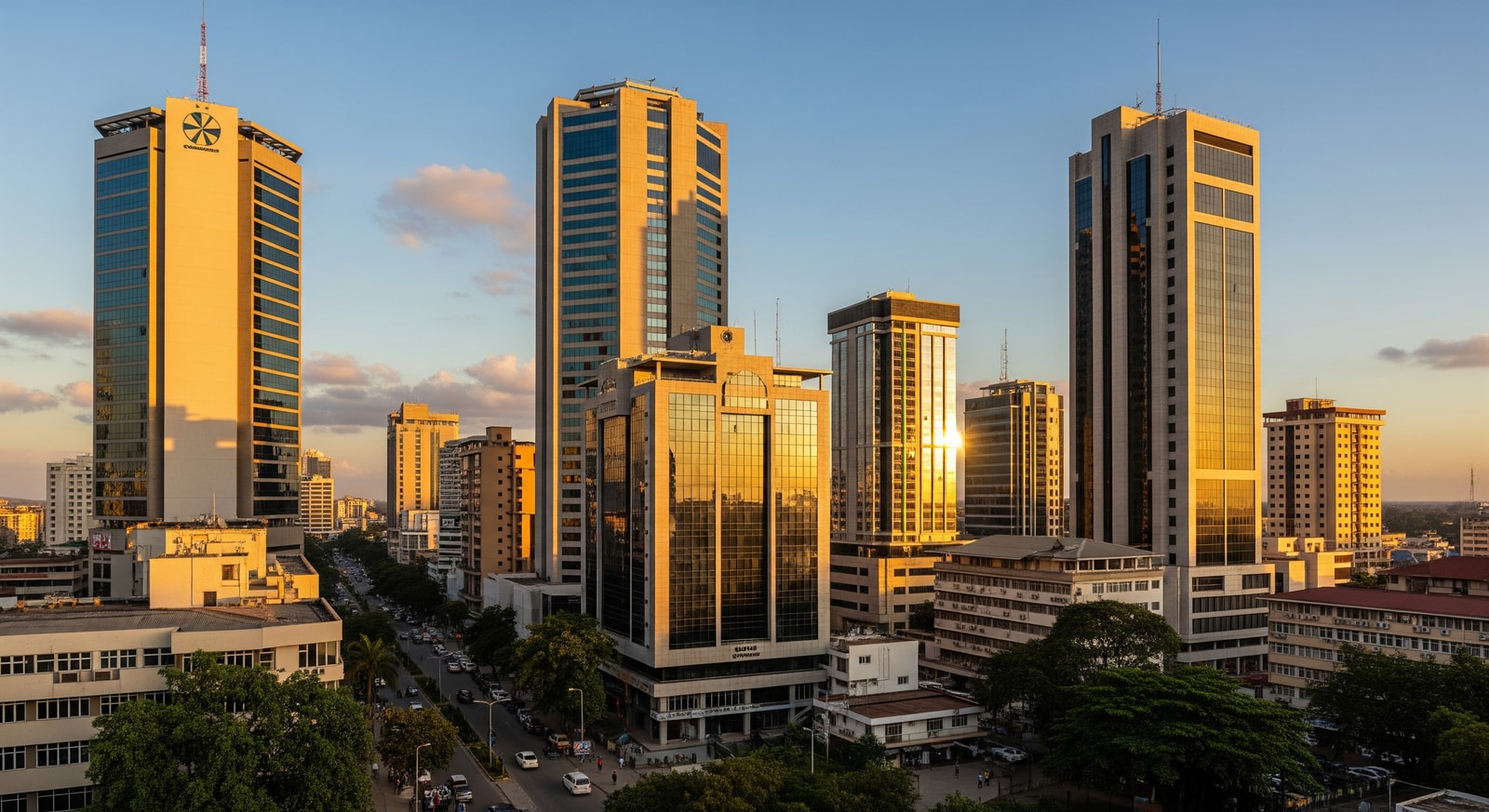
Dar es Salaam is Tanzania's commercial heartbeat and the largest city in East Africa. While Dodoma serves as the official political capital, Dar es Salaam remains the country's economic powerhouse, housing the headquarters of major banks, corporations, international organizations, and government economic ministries. For business travelers, understanding Dar es Salaam's business landscape is essential for successful commercial engagement in Tanzania.
The city has transformed dramatically over the past decade, with new business districts, modern office towers, and improved infrastructure emerging alongside the historic city center. The port of Dar es Salaam handles over 95% of Tanzania's international trade and serves as a crucial gateway for landlocked neighbors, making the city a natural hub for regional commerce and logistics.

Key Business Districts
- Central Business District (Posta): The traditional heart of commerce, home to major banks, the stock exchange, and government economic offices
- Masaki/Oyster Bay: Upscale area with international hotels, embassies, and expatriate-friendly business facilities
- Mikocheni: Growing business area with modern office complexes and technology companies
- Kariakoo: The bustling trading district, essential for understanding local commerce and supply chains
- TPDC/Msasani: Energy sector hub, hosting oil and gas companies and related services
- Mlimani City area: Emerging commercial zone with shopping centers and corporate offices
Business Accommodation
Dar es Salaam offers a range of business-class accommodation options. For optimal business travel, consider hotels in the Masaki, Oyster Bay, or CBD areas, which provide easy access to commercial districts and meeting venues.
- Hyatt Regency Dar es Salaam: Premium business hotel in Kilimani with excellent conference facilities
- Serena Hotel: Established luxury property popular with international business travelers
- Ramada Resort by Wyndham: Waterfront location with business amenities
- Southern Sun Dar es Salaam: Central location with comprehensive business services
- Slipway Hotel: Boutique option in Msasani with marina views
- Holiday Inn Dar es Salaam: Reliable business-class option with meeting rooms
Trade & Investment Opportunities
Tanzania presents diverse opportunities for international business engagement across multiple sectors. The government's industrialization strategy and infrastructure development programs have created significant opportunities for foreign investors and trading partners. Understanding the key sectors and trade dynamics will help you identify the most promising areas for your business activities.
The Tanzania Investment Centre (TIC) serves as the primary government agency promoting and facilitating foreign investment. Registering with TIC can provide various incentives, including tax benefits, import duty exemptions, and streamlined regulatory processes. For serious investors, engaging with TIC early in the process is highly recommended.
Key Sectors for Business Opportunities
- Mining: Tanzania is Africa's fourth-largest gold producer with significant deposits of tanzanite, diamonds, and other minerals
- Agriculture: Coffee, tea, cashews, and horticulture offer export opportunities with over 80% of the population engaged in agriculture
- Tourism: Serengeti, Kilimanjaro, and Zanzibar drive a booming tourism sector seeking infrastructure and service investments
- Energy: Natural gas discoveries offshore have created opportunities in the energy sector and related services
- Construction: Rapid urbanization and infrastructure programs create demand for building materials and construction services
- Manufacturing: Government incentives support local manufacturing in textiles, food processing, and consumer goods
- Technology: Growing tech startup ecosystem in Dar es Salaam with mobile money and fintech leading innovation
- Healthcare: Expanding private healthcare sector seeking equipment, pharmaceuticals, and management expertise
Tanzania Trade Statistics
GDP: $75+ billion (2025 estimate)
GDP Growth: 5-6% annually
Major exports: Gold, cashews, coffee, tobacco, manufactured goods
Major imports: Machinery, vehicles, petroleum, pharmaceuticals
Key trading partners: China, India, UAE, Kenya, South Africa
Free trade zones: Export Processing Zones in Dar es Salaam, Tanga, Mtwara
Tanzania Chamber of Commerce & Industry
The Tanzania Chamber of Commerce, Industry, and Agriculture (TCCIA) is an essential resource for business travelers. The chamber provides networking opportunities, business matching services, market information, and advocacy support. Many international business delegations work with TCCIA to arrange meetings with potential local partners and navigate the business environment.

Tanzania Business Culture & Etiquette
Success in Tanzanian business often depends on understanding and respecting local customs and cultural expectations. Tanzanian business culture blends African relationship-oriented approaches with influences from colonial history and Islamic traditions, particularly in coastal areas and Zanzibar. Taking time to understand these nuances will significantly improve your business outcomes and help build lasting partnerships.
Relationship building is central to Tanzanian business culture. Unlike some Western business environments where transactions can be purely transactional, Tanzanian partners typically want to know and trust the people they're doing business with before committing to significant deals. Be prepared to invest time in relationship development before expecting concrete business outcomes.
- Greetings matter: Always greet people properly with handshakes. In formal settings, use titles and surnames until invited to use first names
- Relationship first: Expect small talk about family, health, and general topics before business discussions begin
- Dress code: Conservative business attire is expected. Men should wear suits or formal shirts; women should dress modestly
- Meeting punctuality: Foreign visitors are expected to be punctual, but meetings may start later than scheduled. Patience is valued
- Business cards: Bring plenty and exchange at the start of meetings. Present and receive with both hands or the right hand
- Decision-making: Decisions often take time and may involve consultation with various stakeholders. Avoid pressuring for immediate answers
- Hierarchy matters: Respect seniority and organizational hierarchy. The most senior person typically leads discussions
- Language: English is widely used in business, though some Swahili phrases are appreciated. Interpretation may be helpful for technical discussions
- Hospitality: Accept offers of tea or refreshments graciously; declining can be considered rude
- Friday prayers: In Muslim-majority areas and Zanzibar, avoid scheduling meetings during Friday afternoon prayer times
Learn Basic Swahili Phrases
While English suffices for business, a few Swahili phrases demonstrate respect and cultural awareness. 'Habari' (hello), 'Asante' (thank you), 'Karibu' (welcome), and 'Kwaheri' (goodbye) are appreciated. Business counterparts will recognize your effort to engage with local culture.
Negotiation Style
Tanzanian business negotiations tend to be more relationship-focused and less confrontational than some Western styles. Building trust and demonstrating long-term commitment often matters more than securing the best immediate price. Understanding local negotiation dynamics will help you navigate discussions more effectively.
- Take your time: Negotiations may span multiple meetings. Rushing can be counterproductive
- Build relationships: Personal connections often influence business decisions as much as commercial terms
- Be patient: Direct confrontation is generally avoided. Disagreements may be expressed indirectly
- Show respect: Acknowledge experience and expertise of Tanzanian counterparts
- Long-term focus: Emphasize the potential for ongoing partnership rather than one-time transactions
- Written agreements: Once terms are agreed, formal written contracts are standard practice
- Legal review: Engage local legal counsel for significant agreements to ensure compliance with Tanzanian law
Business in Tanzania is slow and inefficient, making it difficult to accomplish anything during a short visit
While relationship-building takes time, Tanzania's business environment has modernized significantly. With proper preparation, clear objectives, and the right local contacts, productive business trips are absolutely achievable. Many successful deals are initiated during week-long business visits, with follow-up conducted remotely. The key is managing expectations and leveraging local partnerships effectively.
Common Mistakes to Avoid
Business visa applications and commercial visits to Tanzania can be complicated by avoidable errors. Understanding common mistakes helps you navigate the process smoothly and makes a professional impression on your Tanzanian business counterparts. Attention to detail in your visa application also reflects the care you'll bring to business relationships.
Avoid These Critical Errors
These mistakes can delay your visa, cause entry refusal, or damage business relationships:
- Wrong visa category: Selecting tourist instead of business visa, or vice versa, causes problems at immigration and may require a new application
- Missing yellow fever certificate: This is non-negotiable. Without it, you will be denied entry regardless of visa status
- Vague purpose statement: Immigration authorities need specific details about your business activities, not general statements
- Insufficient documentation: Missing invitation letters or incomplete business letters create delays and raise red flags
- Passport validity: Ensure at least 6 months validity. Don't assume 3 months is sufficient
- Last-minute application: Business travelers should apply 2-3 weeks in advance, not days before travel
- Inconsistent information: Details across application, business letter, and invitation letter must match
- Neglecting work permit requirements: Attempting to work on a business visa can have serious legal consequences
- Ignoring cultural norms: Dismissing relationship-building or showing impatience damages business prospects
- Inadequate trip planning: Arriving without confirmed meetings or clear objectives wastes time and opportunity
DoVisa Expert Review Service
Our business travel specialists review every application before submission, checking for common errors, verifying document quality, and ensuring all requirements are met. This pre-submission review significantly reduces rejection risk and speeds up the approval process for busy professionals.




Frequently Asked Questions
What's the difference between a Tanzania tourist and business e-visa?
Can I work in Tanzania with a business e-visa?
How long can I stay in Tanzania with a business e-visa?
Do I need an invitation letter from a Tanzanian company?
How long does the Tanzania business e-visa take to process?
Can I extend my Tanzania business e-visa?
Is yellow fever vaccination really mandatory for Tanzania?
Can I visit Zanzibar with my Tanzania business e-visa?
What currency should I bring for business travel to Tanzania?
Is Tanzania safe for business travelers?
What's the best time of year for a business trip to Tanzania?
Do I need travel insurance for my business trip?
Ready for Your Business Trip to Tanzania?
Tanzania offers extraordinary business opportunities in one of Africa's most dynamic economies. From the bustling commercial hub of Dar es Salaam to emerging sectors in mining, agriculture, tourism, and technology, the country welcomes international partners ready to engage in its growth story. The Tanzania Business e-Visa provides a straightforward pathway for professionals to explore these opportunities while maintaining proper immigration compliance.
With proper preparation, the right documentation, and respect for local business culture, your Tanzania business trip can open doors to lasting partnerships and significant commercial opportunities. The combination of Tanzania's strategic location, natural resources, growing consumer market, and improving business environment makes it an increasingly attractive destination for international trade and investment.
Whether you're attending your first meeting in Dar es Salaam or expanding an existing regional presence, DoVisa is here to support your business travel needs with expert guidance, document verification, and reliable processing. Start your application today and take the first step toward your Tanzanian business success. Karibu Tanzania sana - You are very welcome in Tanzania!
Get Your Tanzania Business e-Visa Now

Get the DoVisa App
Apply for your Tanzania Business e-Visa and track application status from anywhere.







Comments(12)
Leave a Comment
Excellent comprehensive guide! I've been doing business in Tanzania for three years now and wish I had this resource when I started. The information about work permits vs business visas is especially important - I've seen colleagues get into trouble by not understanding the distinction.
Just returned from a two-week business trip to Dar es Salaam. The e-visa process was straightforward with DoVisa - approved in 5 days. My tip: book a hotel in Masaki area for easy access to business meetings. The traffic in Dar can be brutal during rush hour!
Is the invitation letter absolutely required? My Tanzanian contact is a small business owner who's unfamiliar with issuing such documents.
The business culture section is spot-on. Relationship building really is essential in Tanzania. My advice: plan for at least 2-3 meetings before expecting to close any significant deal. First meetings are usually about getting to know each other.
Working in the mining sector and Tanzania has been incredible for business opportunities. The infrastructure around Dar es Salaam has improved dramatically. Make sure to get your yellow fever shot well in advance - they really do check at the airport!
How long before my trip should I apply for the business e-visa? I have meetings scheduled in 10 days.
Pro tip from a frequent business traveler: The Hyatt Regency in Dar es Salaam has excellent meeting rooms you can book by the hour. Perfect for hosting clients when you don't have local office space. Their business center is top-notch.
I'm attending a trade fair in Dar es Salaam next month. Do I need a business visa or will a tourist visa work since I'm not actually doing deals there?
The comparison table for business visa vs work permit is incredibly helpful. My company almost made the mistake of sending our engineer on a business visa for a 3-month installation project. This guide helped us understand we needed a short-term work permit instead.
Don't underestimate the importance of learning a few Swahili phrases! My business contacts in Dar really appreciated when I greeted them with 'Habari za asubuhi' (good morning). Small gestures like this build rapport quickly.
Can I extend my business visa while in Tanzania if my negotiations take longer than expected?
Just wanted to share my positive experience - DoVisa processed my Tanzania business visa in 4 days, and their document review caught an error in my business letter before submission. The port of Dar es Salaam is impressive, and the city is growing fast. Great opportunities for logistics and trade businesses!