Simple 4-step process — most travelers receive visa on arrival within minutes
1
Complete the online application
Fill out our streamlined application form with your personal details, travel dates, and purpose of visit. Our intelligent system guides you through each section, ensuring your application meets Tuvalu immigration requirements for smooth visa on arrival processing.
2
Upload your documents
Submit your passport scan showing the bio page clearly, a recent passport-sized photograph, proof of accommodation in Tuvalu, and confirmed return flight tickets. Our visa specialists review each document to ensure compliance with Tuvaluan entry requirements.
3
We prepare your arrival documents
Your verified application documents are organized and prepared for presentation at Tuvalu immigration. We provide a comprehensive arrival package including visa fee information, immigration procedures at Funafuti International Airport, and helpful travel tips for this remote destination.
4
Receive visa on arrival in Tuvalu
Upon landing at Funafuti International Airport, present your prepared documents at the immigration counter. Pay the visa fee and receive your entry stamp. Talofa — welcome to one of the world's smallest and most remote island nations!
Tuvalu operates a welcoming visa on arrival system for visitors from all countries, making it one of the most accessible yet least-visited nations in the world. This tiny Pacific island nation, consisting of nine coral atolls, welcomes travelers seeking authentic Polynesian experiences far from mass tourism.
Visa on Arrival Process
Upon arriving at Funafuti International Airport (FUN), the country's sole international gateway, all visitors can obtain a visa at the immigration counter. The process is straightforward: present your valid passport, proof of accommodation, return ticket, and sufficient funds. Visas are typically issued within 10-15 minutes given the small number of arrivals.
Tourist Visa
The standard tourist visa allows stays of up to 1 month (30 days), providing ample time to explore all the main islands, experience traditional Tuvaluan culture, and witness the unique lifestyle of this climate change frontline nation. Activities include lagoon swimming, traditional fishing, attending community fetefete gatherings, and understanding the challenges facing low-lying island nations.
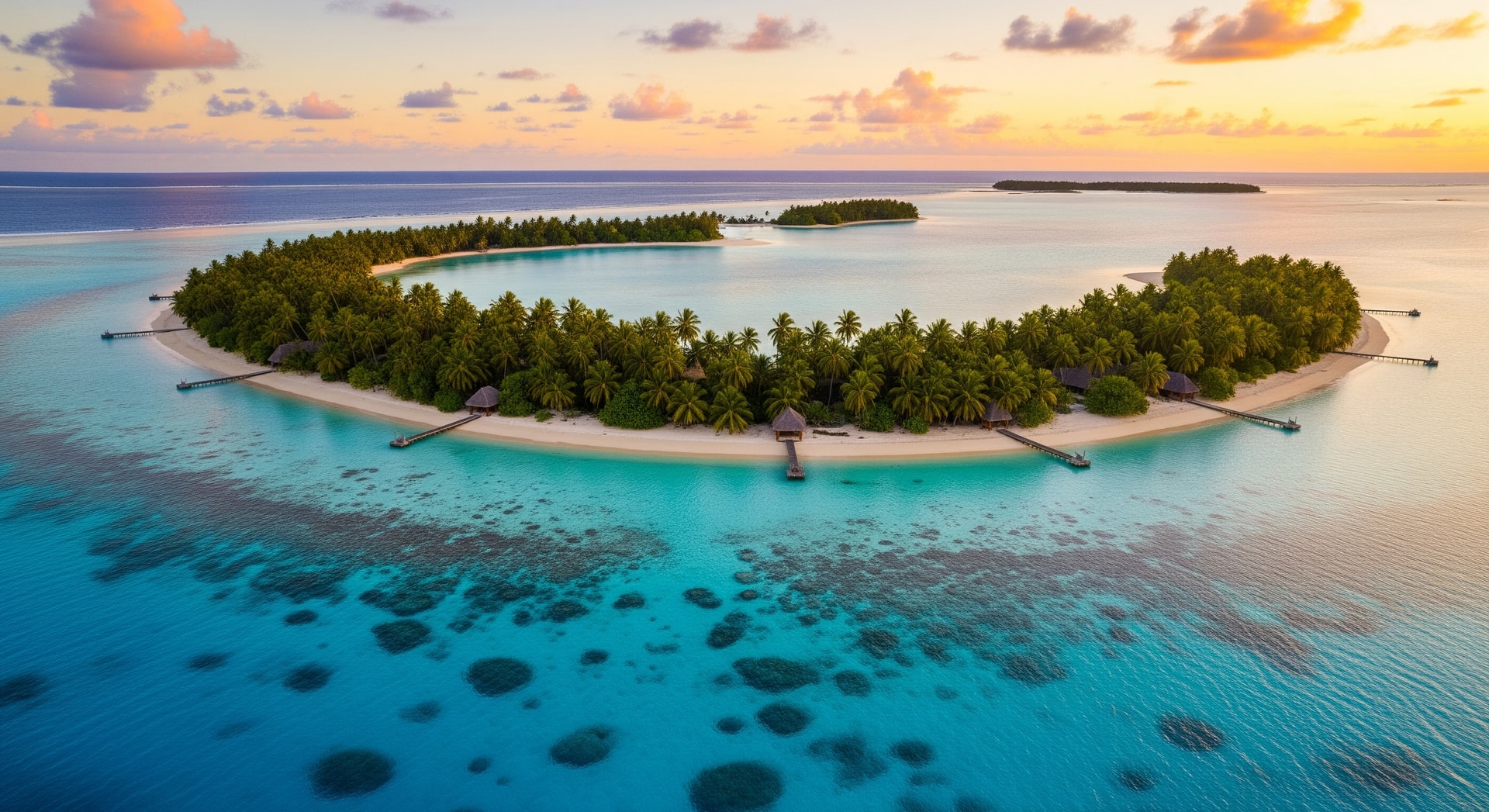
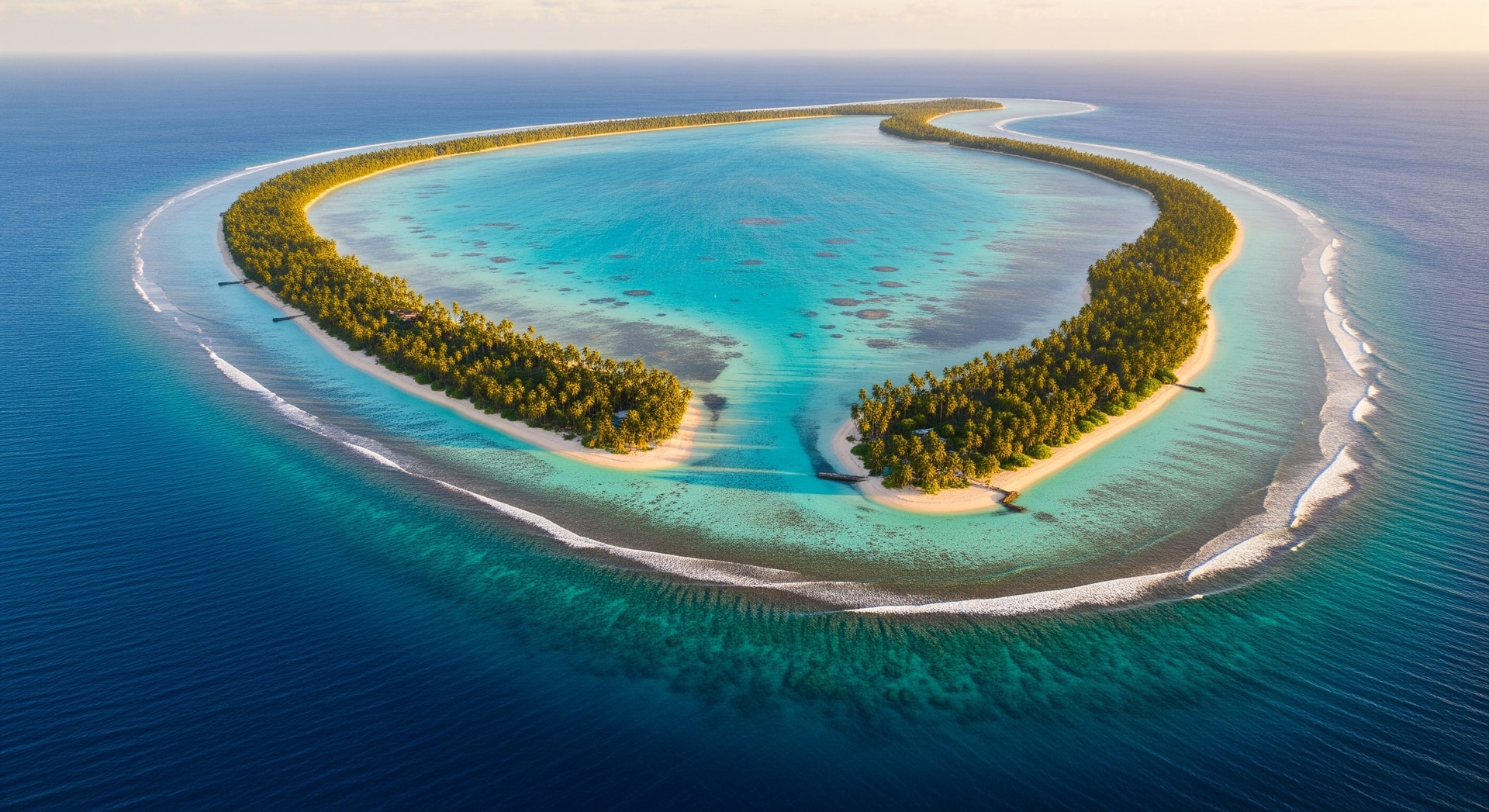
Funafuti Lagoon — The heart of Tuvalu's stunning atoll system
Work Permits & Extended Stays
Work Permit Requirements
Foreign nationals wishing to work in Tuvalu must obtain a work permit before commencing employment. Work permits require sponsorship from a Tuvaluan employer and approval from the Immigration Department in Funafuti. Given the small population of approximately 11,000, employment opportunities are limited primarily to government-funded projects, NGO positions related to climate change and development, and specialized technical roles.
Extended Stay Options
If you wish to stay beyond the initial 1-month visa, extensions can be requested at the Immigration Department in Funafuti. Extensions are granted at the discretion of immigration authorities and typically require proof of sufficient funds, valid accommodation arrangements, and a legitimate reason for the extended stay. Extensions of up to an additional 2 months are possible, allowing a maximum stay of 3 months on tourist status.
Research & Climate Study Visas
Tuvalu receives many researchers and journalists studying climate change impacts on low-lying island nations. Special arrangements may be made through the Tuvalu government for longer-term research stays, typically coordinated through the Ministry of Foreign Affairs or relevant research institutions.
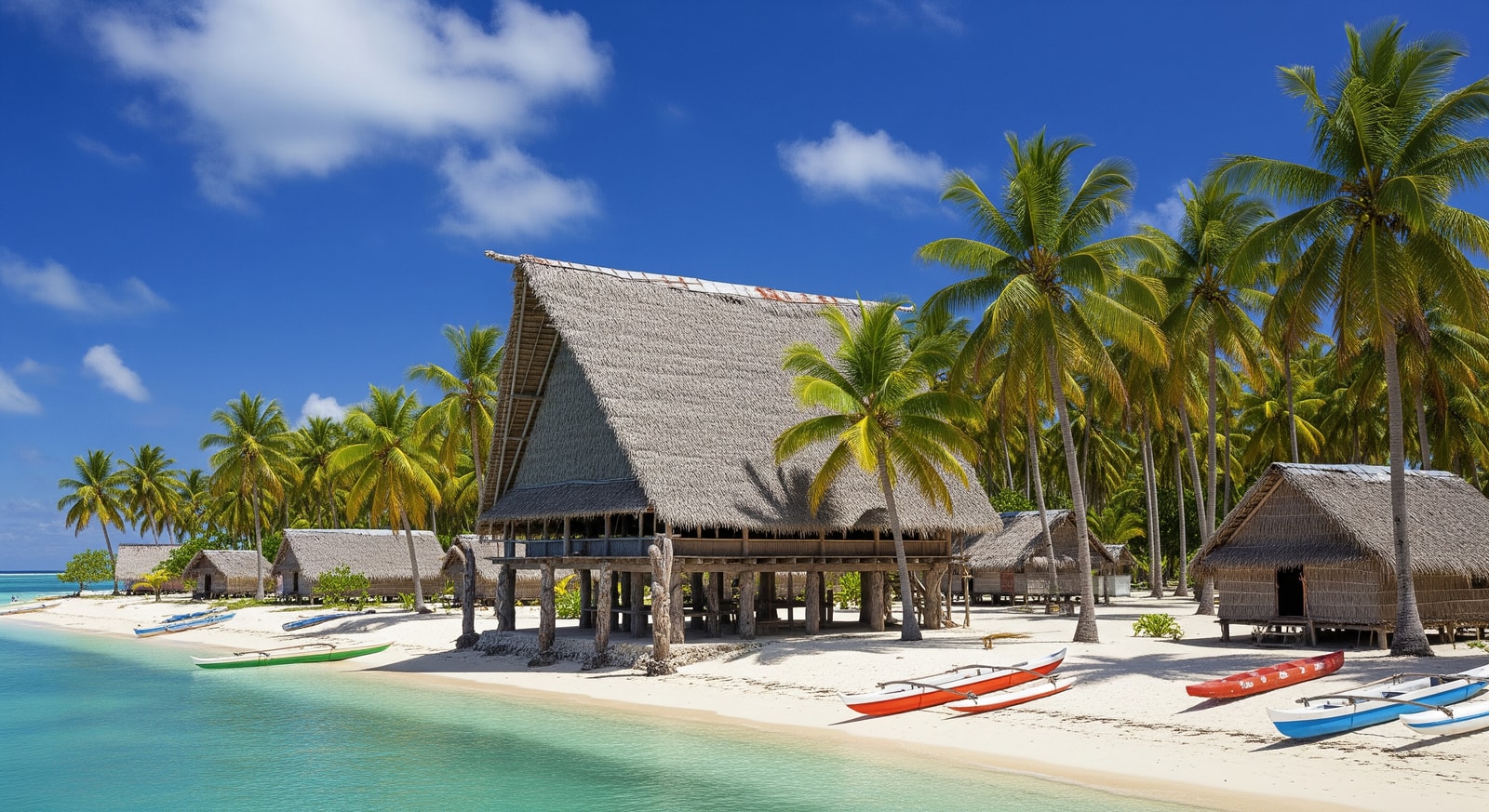
Traditional maneapa — Community gathering places central to Tuvaluan life
Entry Requirements & Practical Information
Essential Documentation
All visitors to Tuvalu must present the following at immigration:
• Valid passport: Minimum 6 months validity beyond your intended stay with at least 2 blank pages
• Return or onward ticket: Essential as Tuvalu has very limited flight connections
• Proof of accommodation: Hotel booking or invitation letter from a Tuvaluan host
• Sufficient funds: Approximately $100 AUD per day recommended given limited banking facilities
Visa Fees
The visa on arrival fee varies by duration:
• Up to 30 days: Approximately $50 AUD or equivalent
• Payment accepted in Australian Dollars (AUD), which is the official currency alongside the Tuvaluan Dollar
Health Requirements
No mandatory vaccinations are required for Tuvalu, but travelers should be up to date on routine vaccinations. Travel insurance with medical evacuation coverage is strongly recommended as Tuvalu has only one small hospital with limited facilities — serious medical cases require evacuation to Fiji or Australia.
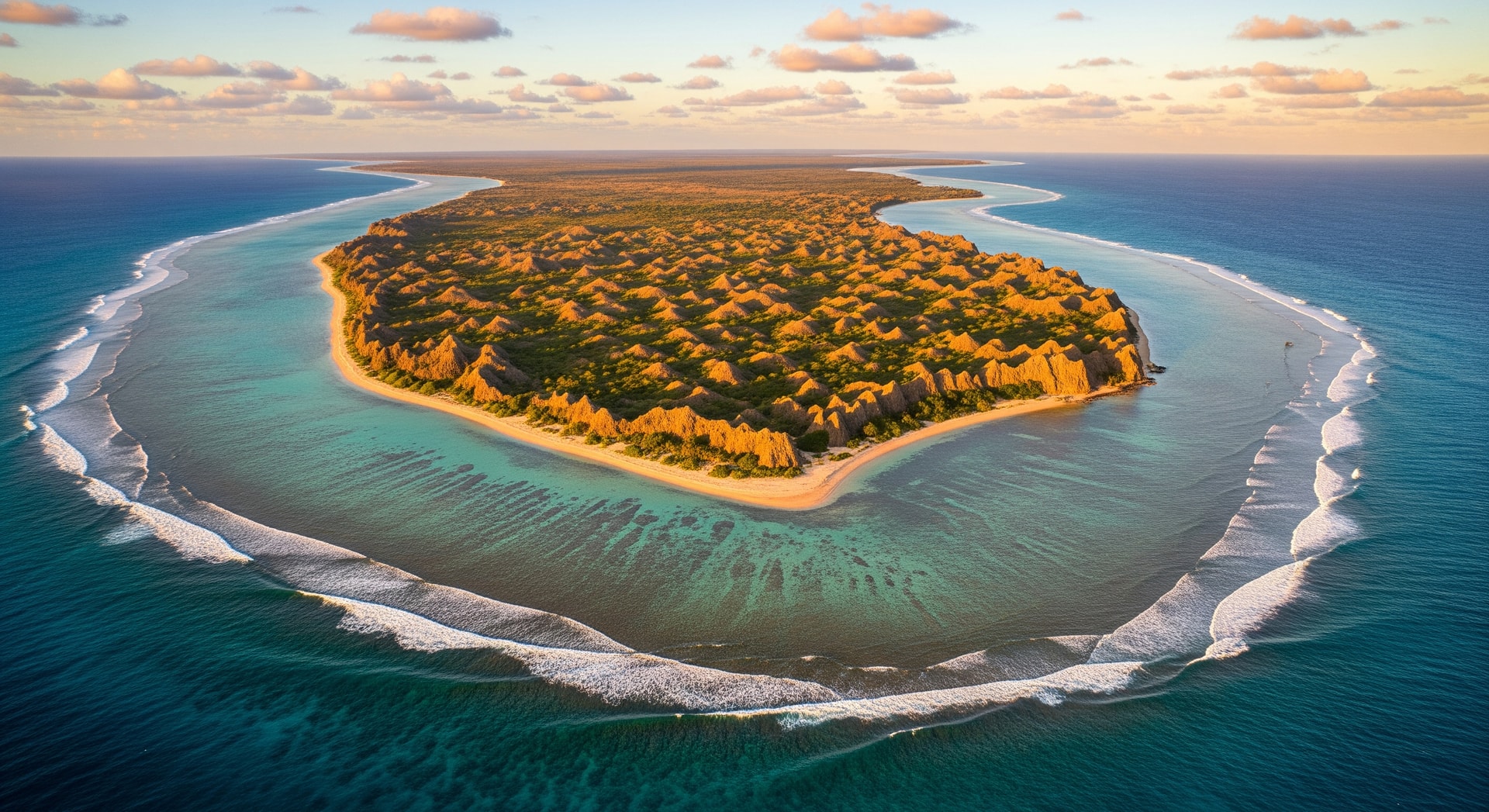
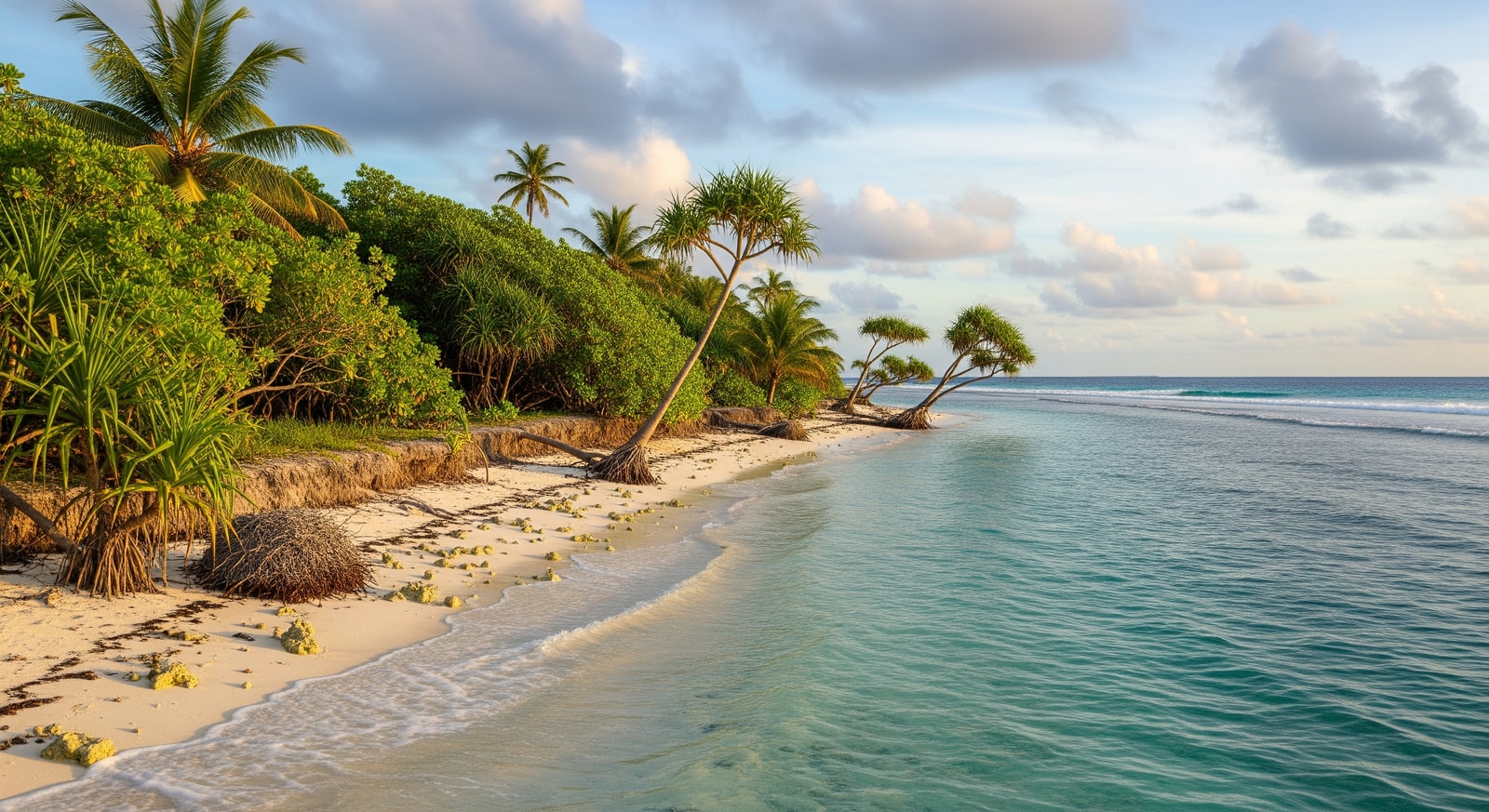
Tuvalu's coastline — One of the world's most climate-vulnerable nations
Getting to Tuvalu & Travel Tips
International Entry Point
Tuvalu has one international entry point:
• Funafuti International Airport (FUN): Located on Funafuti atoll, the capital. Fiji Airways operates the only international service, with 2-3 flights per week from Suva, Fiji (approximately 2.5 hours). Flights are frequently delayed or cancelled due to weather conditions and aircraft availability.
Inter-Island Travel
Travel between Tuvalu's nine atolls is challenging. The government vessel MV Nivaga makes scheduled voyages to outer islands, but schedules are irregular. Small boats and occasional light aircraft serve some islands. Your entry visa covers all islands.
Best Time to Visit
The dry season from April to October offers the most pleasant weather with lower humidity and reduced rainfall. The wet season (November-March) brings occasional cyclones and heavy rain. Trade winds provide cooling throughout the year. Sea conditions are calmest from May to September.
Important Considerations
Tuvalu is extremely remote with limited infrastructure. There are no ATMs — bring sufficient cash in AUD. Accommodation is limited to a handful of guesthouses. Internet connectivity is slow and expensive. However, this remoteness is precisely what makes Tuvalu a unique and rewarding destination for adventurous travelers.
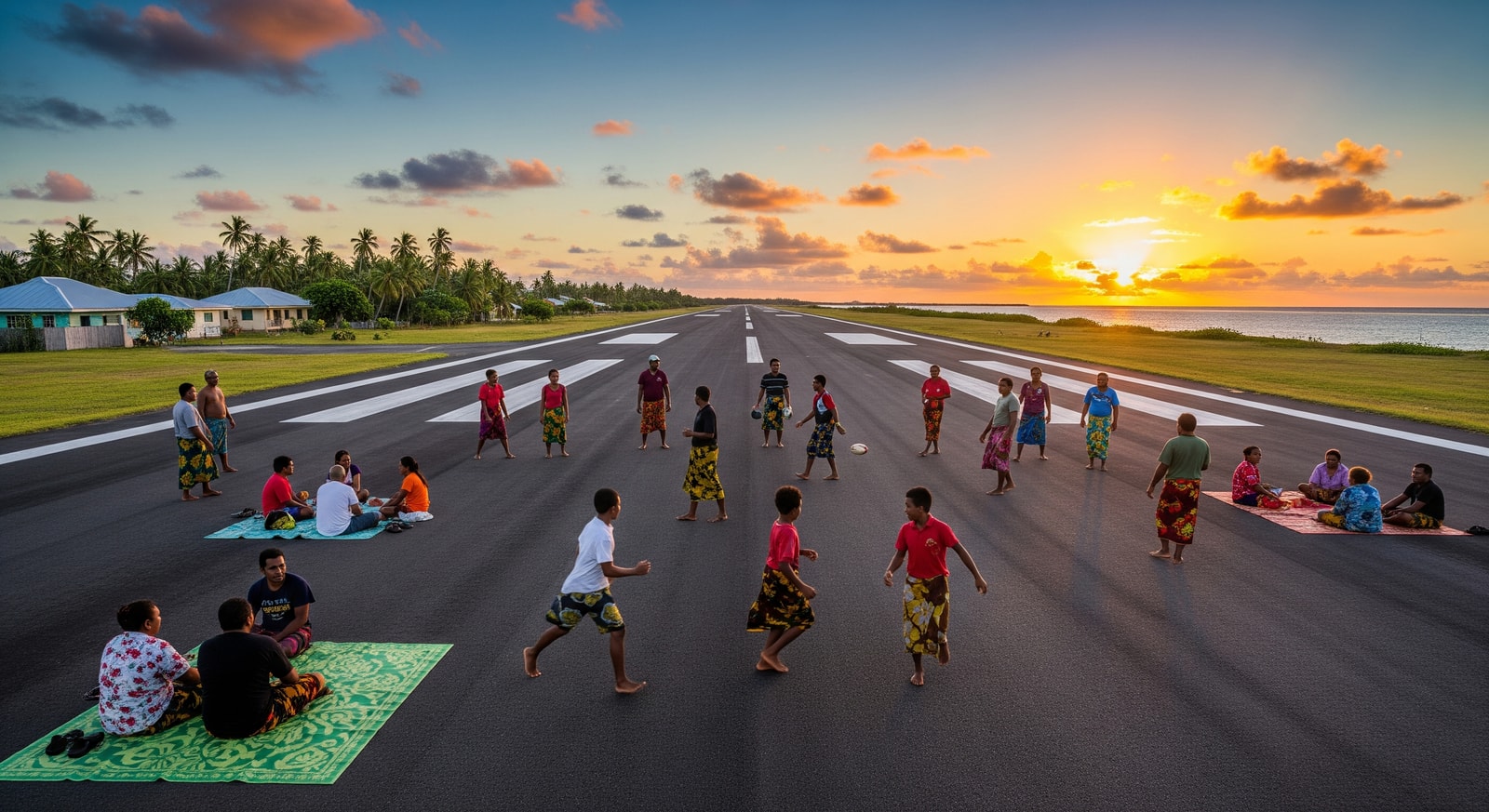
Funafuti Airport — The runway doubles as a community sports field
Why Choose DoVisa?
See the difference between applying yourself vs using our expert service
Travelers to Tuvalu rated this product 4.7 out of 5 based on 12 reviews.
4.7/ 5
Based on 12 verified reviews
Filter by rating
Michael T.Jan 15, 2026
"Incredible experience visiting one of the world's least-visited countries! DoVisa made the visa preparation seamless despite Tuvalu being so remote."
Sarah K.Jan 8, 2026
"The detailed arrival instructions were invaluable for such a remote destination. Immigration at Funafuti was smooth and friendly."
Henrik L.Dec 22, 2025
"Good service with helpful tips about what to expect. Tuvalu exceeded all expectations — truly off the beaten path."
Jennifer M.Dec 10, 2025
"Climate researcher visiting Tuvalu for fieldwork. DoVisa helped organize all documents perfectly. The islands are beautiful but the climate challenges are real."
David R.Nov 28, 2025
"Straightforward visa on arrival process. The guesthouse recommendations were spot on. Bring plenty of cash as there are no ATMs!"
Emma W.Nov 15, 2025
"Bucket list destination achieved! The Tuvaluan people are so welcoming. DoVisa's guidance on flight schedules and what to pack was very helpful."
Takeshi N.Oct 30, 2025
"Visited all 9 atolls over 3 weeks. DoVisa helped with the initial visa and extension information. Once-in-a-lifetime experience."
Anna B.Oct 18, 2025
"Remote and challenging but absolutely worth it. DoVisa provided excellent preparation documents for this unique destination."
Robert C.Sep 25, 2025
"Documentary filmmaker covering climate change in the Pacific. DoVisa arranged everything smoothly. The Tuvaluan story needs to be told."
Lisa H.Aug 12, 2025
"Country collector adding Tuvalu to my list. DoVisa made what could be complicated logistics quite manageable. Funafuti is unforgettable."
James P.Jun 20, 2025
"Helpful service for a tricky destination. The flight information and backup planning advice was particularly useful given irregular schedules."
Maria G.Apr 15, 2025
"Researching traditional Polynesian navigation. DoVisa helped with all visa documentation. The Tuvaluan maritime heritage is incredible."
Michael T.Jan 15, 2026
"Incredible experience visiting one of the world's least-visited countries! DoVisa made the visa preparation seamless despite Tuvalu being so remote."
Sarah K.Jan 8, 2026
"The detailed arrival instructions were invaluable for such a remote destination. Immigration at Funafuti was smooth and friendly."
Henrik L.Dec 22, 2025
"Good service with helpful tips about what to expect. Tuvalu exceeded all expectations — truly off the beaten path."
Tuvalu Visa FAQs
What types of visas are available for Tuvalu?
Tuvalu offers several visa categories for international visitors. Visa on Arrival is the primary option, available to all nationalities at Funafuti International Airport, permitting stays up to 1 month. Tourist visas cover leisure activities including cultural experiences, lagoon exploration, and community visits. Extended stay visas can be arranged through the Immigration Department for stays up to 3 months. Work permits require employer sponsorship and are processed through the Immigration Department for those with confirmed employment. Research visas are available for scientists, journalists, and researchers studying climate change and related topics, often arranged through government ministries.
Do I need a visa to visit Tuvalu?
Yes, all visitors require a visa, but Tuvalu offers visa on arrival to citizens of all countries, making entry accessible despite the nation's remoteness. Upon arrival at Funafuti International Airport, present your valid passport, proof of accommodation, return flight ticket, and sufficient funds. The visa fee is approximately $50 AUD and is payable in cash. Immigration officers issue the visa stamp directly into your passport, typically within 10-15 minutes. This universal visa on arrival policy reflects Tuvalu's welcoming approach despite receiving fewer than 2,000 tourists annually.
How long can I stay in Tuvalu with a tourist visa?
The standard Tuvalu visa on arrival permits stays of up to 1 month (30 days). This duration allows visitors to experience Funafuti thoroughly and potentially visit one or two outer islands via the government ship. Extensions: If you wish to stay longer, visa extensions can be requested at the Immigration Department in Funafuti before your initial visa expires. Extensions of up to 2 additional months may be granted, allowing a maximum total stay of 3 months. Extension approval depends on proof of funds, accommodation arrangements, and the immigration officer's discretion. Given limited facilities, longer stays require careful planning.
What documents do I need for Tuvalu entry?
Essential documents for Tuvalu entry: Valid passport with minimum 6 months validity and at least 2 blank pages; confirmed return or onward flight ticket (essential as flights are limited); proof of accommodation (guesthouse booking or invitation from Tuvaluan host); and sufficient funds for your stay (approximately $100 AUD per day recommended). Strongly recommended: Comprehensive travel insurance with medical evacuation coverage; copies of all documents stored separately; emergency contact information. For researchers: Letters of introduction from sponsoring institutions may facilitate longer stays and access to outer islands.
How do I get to Tuvalu?
Tuvalu is one of the most remote countries in the world, accessible only by air via Fiji Airways, which operates 2-3 flights weekly from Suva, Fiji (flight time approximately 2.5 hours). The only international airport is Funafuti International Airport (FUN). Important planning notes: Book flights well in advance as seats are limited; flights are frequently delayed or cancelled due to weather; build buffer days into your itinerary; the runway doubles as a community sports field and closes temporarily during flights. Alternative routing: Fly to Fiji, then connect to Tuvalu. There are no cruise ship ports or regular cargo ship passenger services.
Can I extend my Tuvalu visa?
Yes, Tuvalu visa extensions are possible through the Immigration Department located in Funafuti. How to apply: Visit the Immigration office before your current visa expires with your passport, proof of continued accommodation, evidence of sufficient funds, and your reason for extension. Duration: Extensions of up to 2 months additional can be granted, for a maximum total stay of 3 months. Processing: Usually completed within 1-2 days given the small volume of applications. Important: Apply at least 3-5 days before your visa expires to avoid complications. Overstaying without extension is treated seriously and may result in fines or deportation.
Can I work in Tuvalu with a tourist visa?
No, tourist visas and visa on arrival do not permit employment in Tuvalu. To work legally, you must obtain a work permit through employer sponsorship before commencing employment. Given Tuvalu's small population of approximately 11,000, job opportunities are limited primarily to: government and aid-funded development projects; NGO positions focused on climate change adaptation; technical specialists in areas like medicine, engineering, or education; and short-term consultancies. Work permit process: Requires a Tuvaluan employer to sponsor your application through the Immigration Department. Processing can take several weeks. Working without proper authorization risks deportation and future entry restrictions.
What currency is used in Tuvalu?
Tuvalu uses the Australian Dollar (AUD) as its official currency, alongside Tuvaluan coins that circulate at par with Australian coins. Critical information: There are no ATMs in Tuvalu and credit cards are not accepted anywhere. You must bring sufficient cash in AUD for your entire stay. Budget guidance: Accommodation costs $50-100 AUD per night; meals $10-20 AUD; local transport minimal. Recommendation: Bring at least $150 AUD per day plus contingency for flight delays. The National Bank of Tuvalu in Funafuti can sometimes exchange major currencies but services are limited. Some guesthouses may accept USD at unfavorable rates.
Is Tuvalu safe for tourists?
Tuvalu is extremely safe for tourists, with virtually no crime against visitors. The small, close-knit communities mean everyone knows each other, creating a secure environment. Main considerations: No safety concerns from crime or political instability. Health: Princess Margaret Hospital in Funafuti has limited facilities — serious medical cases require evacuation to Fiji (bring comprehensive travel insurance with evacuation coverage). Natural hazards: Tropical cyclones possible November-March; king tides can flood low-lying areas; strong currents in lagoon passages. Practical tips: Respect local customs; dress modestly; ask permission before photographing people; be mindful that you're visiting a country facing existential climate threats.
What is the best time to visit Tuvalu?
The best time to visit Tuvalu is during the dry season from April to October, offering lower humidity, less rainfall, and calmer seas for any boat travel to outer islands. Weather patterns: Temperatures remain consistent year-round (27-32 degrees Celsius); trade winds provide cooling May-September. Wet season (November-March): Higher rainfall and humidity; tropical cyclone risk; rough seas may disrupt inter-island travel. Special considerations: King tides in February-March can flood parts of Funafuti, demonstrating climate change impacts firsthand. Events: Independence Day (October 1) features traditional celebrations. Plan around flight schedules as they're the biggest logistical factor.
What is there to do in Tuvalu?
Tuvalu offers unique experiences for adventurous travelers seeking authentic Pacific island life. On Funafuti: Swim in the stunning turquoise lagoon; visit the Funafuti Conservation Area (uninhabited islets with excellent snorkeling); explore the capital Fongafale; see WWII relics; visit the Parliament building; attend church services with beautiful Polynesian singing; experience daily life on the iconic runway/sports field. Cultural experiences: Traditional dancing (fatele); community fetefete gatherings; learning about te aso (traditional fishing); handicraft making. Outer islands: If time permits, visit Vaitupu, Nukufetau, or other atolls via government ship for even more remote experiences. Understanding climate change: See firsthand the challenges facing this low-lying nation.
Do I need vaccinations for Tuvalu?
No mandatory vaccinations are required for entry to Tuvalu. However, health authorities recommend being up to date on: Hepatitis A and B; Typhoid; Tetanus-diphtheria; and routine vaccinations. Malaria: Not present in Tuvalu. Dengue fever: Occasional outbreaks occur — use mosquito repellent. Medical facilities: Princess Margaret Hospital in Funafuti has limited capabilities. There are no specialized medical services, limited medications available, and no facilities for serious emergencies. Essential: Comprehensive travel insurance with medical evacuation coverage to Fiji or Australia is strongly recommended. Bring any prescription medications you require as pharmacies are extremely limited.
What happens if my flight to Tuvalu is cancelled?
Flight disruptions are common for Tuvalu travel due to weather conditions, aircraft maintenance issues, and operational factors. Preparation strategies: Always book flexible tickets if possible; build 2-3 buffer days into your itinerary on both ends; have accommodation backup in Fiji; carry travel insurance covering delays. If cancelled in Fiji: Fiji Airways typically rebooks on next available flight; hotels near Suva airport accommodate stranded passengers. If cancelled in Tuvalu: Limited guesthouse capacity means you may need to extend your stay — immigration is understanding about delays. Communication: Internet in Tuvalu is slow and expensive; notify contacts about potential delays before arriving.
Can I visit the outer islands of Tuvalu?
Yes, visitors can explore Tuvalu's outer atolls, though logistics are challenging. MV Nivaga: The government vessel makes irregular voyages (roughly monthly) to outer islands including Vaitupu, Nukufetau, Nanumea, and others. Voyages take 2-5 days depending on route. Conditions are basic — bring food, water, and sleeping materials. Book through the Marine Department. Your visa: Covers all nine atolls as domestic travel within Tuvalu. Accommodation: Very limited or non-existent on outer islands — arrange homestays through contacts or the tourism office. Recommended islands: Nukufetau has a beautiful lagoon; Vaitupu has the nation's secondary school. Planning: Requires flexibility as schedules change frequently. Speak with locals in Funafuti for current information.
Why is Tuvalu famous for climate change?
Tuvalu is at the frontline of climate change impacts, making it internationally significant. Geographic vulnerability: Maximum elevation is only 4.6 meters above sea level; most land sits at 1-2 meters. Rising sea levels threaten the nation's very existence. Current impacts: Increasing coastal erosion; saltwater intrusion into freshwater supplies; more frequent king tide flooding; changing weather patterns affecting crops. International attention: Tuvalu has been vocal in climate negotiations; the government signed a treaty with Australia for climate migration; documentaries and media coverage highlight the situation. For visitors: Witnessing these challenges firsthand is profound. Many visitors are researchers, journalists, or those seeking to understand climate impacts. Respect local sensitivities around this existential issue.
What should I pack for Tuvalu?
Essential items for Tuvalu: Sufficient cash in Australian Dollars (no ATMs exist); reef-safe sunscreen; insect repellent; light, modest clothing (shorts and singlets acceptable but cover shoulders for churches); swimwear; sturdy water shoes for reef walking; snorkeling gear if desired (limited rental availability); basic first aid kit and all prescription medications. Practical items: Torch/flashlight (power outages occur); reusable water bottle; snacks and treats from Fiji (limited variety in Tuvalu); rain jacket; power bank (limited charging opportunities). Technology: Unlocked phone for local SIM (expensive data); offline maps; entertainment for potential flight delays. Documents: Multiple copies of passport, tickets, insurance, and accommodation confirmations.
Still have questions?
Our team is here to help 24/7
Get Visa Tips & Exclusive Deals
Join 1,000+ travelers. No spam, unsubscribe anytime.



 With DoVisa