Quick 4-step process — most travelers approved within 10-15 business days
1
Complete the online application
Fill out our streamlined application form with your travel details and personal information. Our intelligent validation system pre-checks every field against Estonian and Schengen visa requirements, catching errors before submission and ensuring your application is complete.
2
Upload your documents
Submit a clear passport scan (bio page with photo), recent digital photograph meeting Schengen specifications, travel insurance proof, and supporting documents. Our document specialists verify everything meets Estonian embassy standards, significantly reducing the risk of delays.
3
We process your visa
Your verified application is submitted through official channels. We coordinate with the Estonian embassy or consulate, track processing status continuously, and notify you immediately of any updates, decisions, or additional documentation requests via email and SMS.
4
Receive your visa
Your approved Schengen visa is affixed to your passport, granting access to Estonia and all 27 Schengen countries. Pack your bags for Tallinn — tere tulemast (welcome) to Estonia, the land of digital innovation and medieval charm!
Visa types needed for Estonia
Available visa products
ETIAS Travel Authorisation - 3 years, Multiple entry Most Popular
ETIAS Travel Authorisation - 3 years, Multiple entry
ETIAS is the upcoming EU travel authorisation for visa-exempt travellers visiting the Schengen area. It is not yet in operation: order now and we prepare your application and file it with the EU the moment the system launches. Once issued, ETIAS is valid for 3 years (or until your passport expires) and covers unlimited short stays across all ETIAS countries.
Applicants must submit the following documents:
🛂 Passport: Scan of your passport bio page, valid for your trip
💳 Payment: Credit or debit card for the fee
Important to know
Presale: ETIAS is not yet in operation — we file your application when the EU launches the system
For visa-exempt (visa waiver) nationalities only
One authorisation per traveller, linked to your passport
Estonia is a member of the European Union and the Schengen Area, meaning visa policies align with broader European regulations. Entry requirements depend entirely on your nationality — some travelers enjoy visa-free access while others need a Schengen visa.
Visa-Free Entry
Citizens of the European Union, European Economic Area (EEA), and Switzerland have unrestricted entry to Estonia with just a valid passport or national ID card. No visa, registration, or time limits apply for EU citizens. Additionally, nationals from approximately 60 visa-exempt countries — including the United States, United Kingdom, Canada, Australia, Japan, South Korea, and New Zealand — can enter Estonia visa-free for up to 90 days within any 180-day period. This 90/180 rule applies across the entire Schengen Area, not just Estonia. If you've spent 30 days in France and 40 days in Germany, you only have 20 Schengen days remaining.
Schengen Short-Stay Visa (Type C)
Travelers from countries not on the visa-exempt list — including citizens of China, India, Russia, South Africa, Philippines, Indonesia, and many others — must apply for a Schengen Short-Stay Visa before traveling to Estonia. This visa allows stays of up to 90 days within any 180-day period for tourism, business, visiting family, or attending events. The visa is valid for the entire Schengen Area, so you can combine your Estonia visit with trips to Finland, Latvia, or other Schengen countries on the same visa.
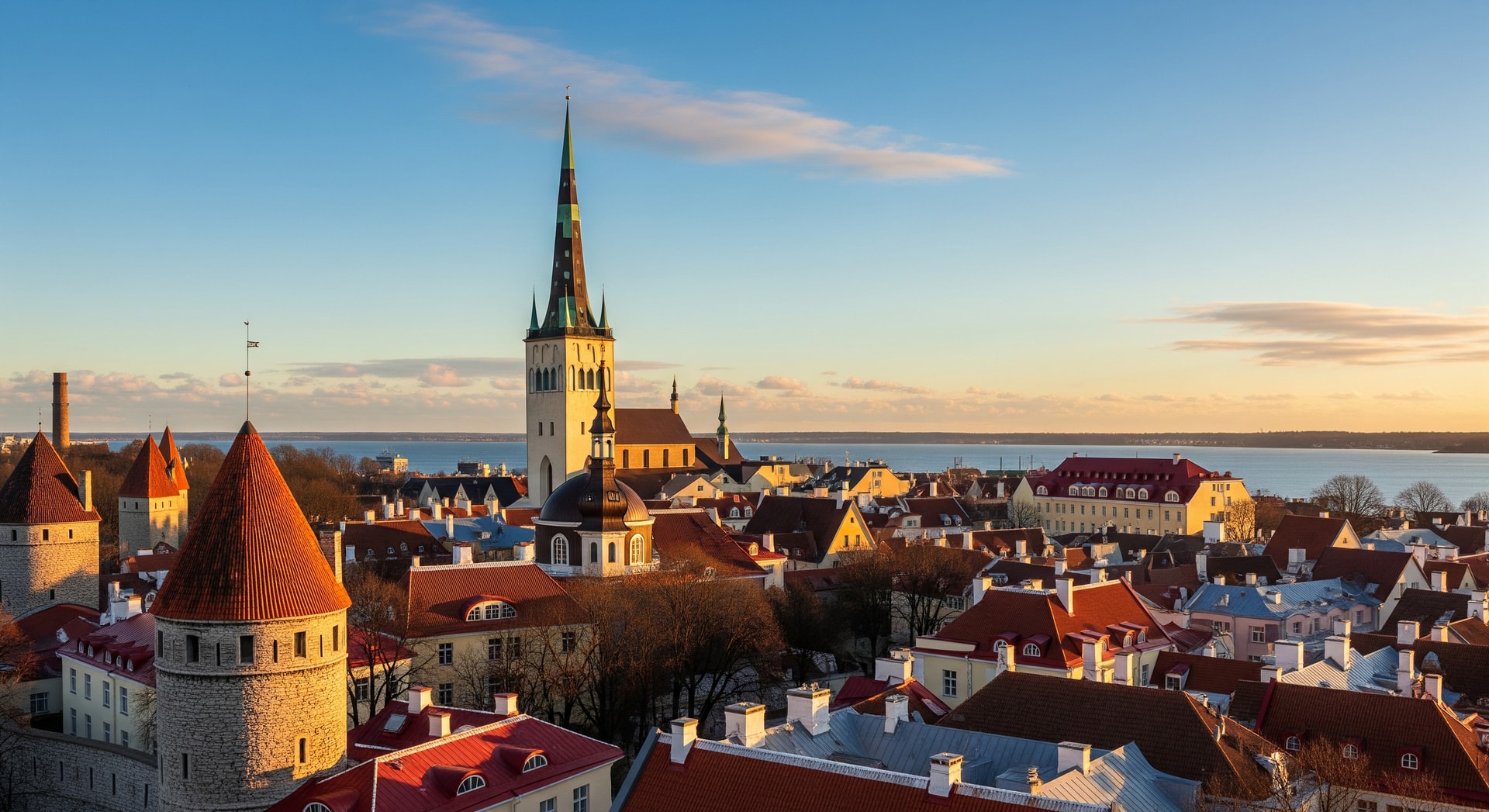
Tallinn Old Town — a UNESCO World Heritage Site and one of Europe's best-preserved medieval cities
Long-Stay & Work Visas
National Long-Stay Visa (Type D)
For stays exceeding 90 days, you need an Estonian National Visa (D-visa). This visa is required for employment, studying, family reunification, or extended business activities in Estonia. Unlike the Schengen short-stay visa, the D-visa is specific to Estonia and allows stays of up to 365 days. Processing typically takes 30-60 days and requires more extensive documentation than short-stay applications.
e-Residency
Estonia pioneered the world's first e-Residency program, offering a government-issued digital identity to non-residents. While e-Residency doesn't grant physical residency or visa rights, it allows entrepreneurs worldwide to establish and manage EU-based companies remotely using Estonian digital infrastructure. Over 100,000 e-residents from 170+ countries have joined since 2014.
Digital Nomad Visa
Estonia was among the first countries to introduce a Digital Nomad Visa in 2020. This allows remote workers to live in Estonia for up to one year while working for foreign employers or running location-independent businesses. Applicants must demonstrate a monthly income of at least EUR 4,500 (or EUR 3,504 after taxes) and prove their work is location-independent. This visa has made Estonia a hub for remote workers seeking European quality of life.
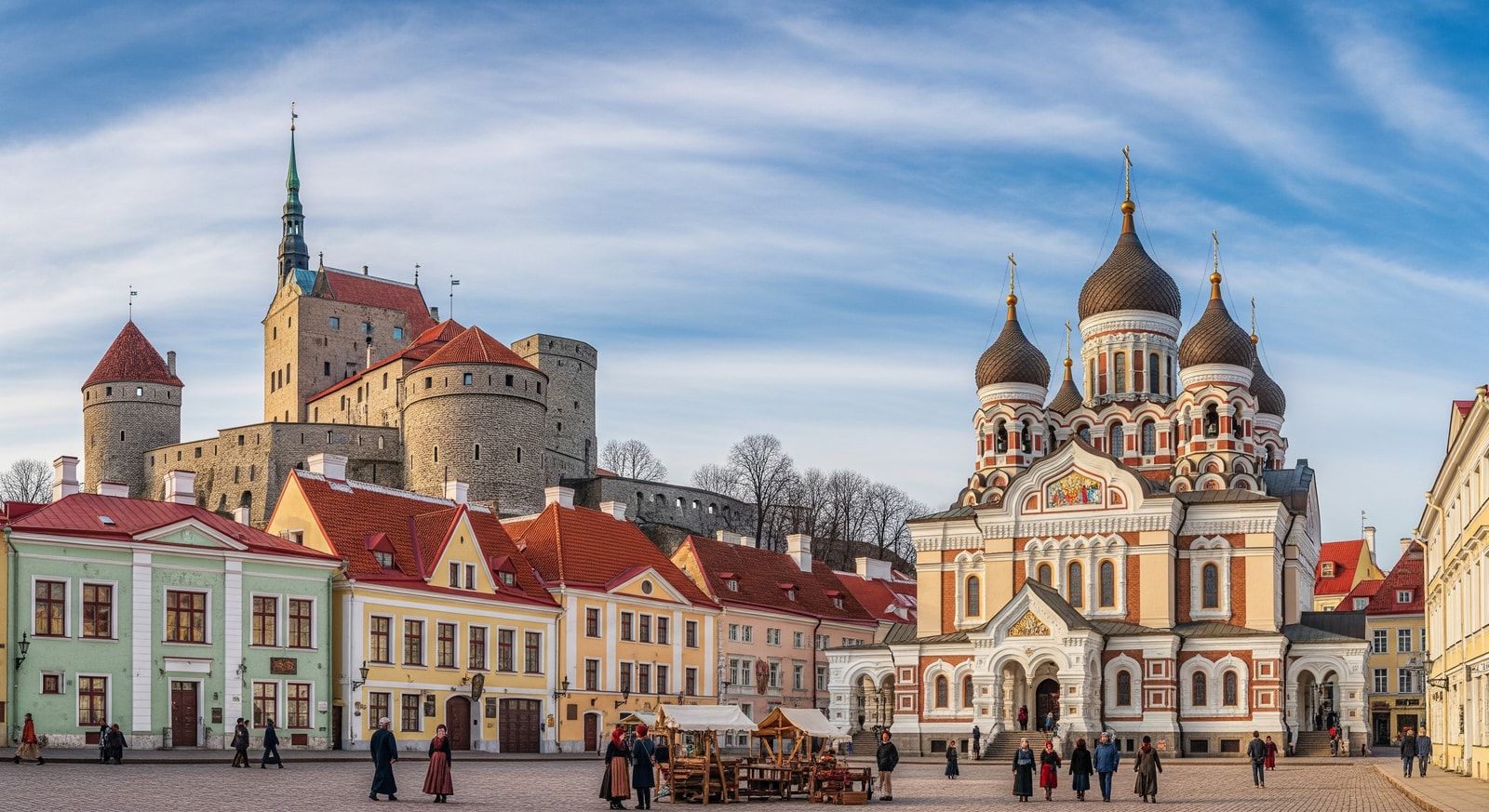
Estonia — the world's most digitally advanced society and a haven for remote workers
Application Process & Fees
Application Process
Schengen visa applications for Estonia must be submitted at an Estonian embassy, consulate, or authorized visa application center in your country of residence. The process typically involves:
• Scheduling an appointment: Book online through VFS Global or the embassy website
• Document preparation: Gather passport, photos, travel insurance, flight reservations, accommodation proof, financial statements, and purpose-specific documents
• Biometric enrollment: First-time applicants must provide fingerprints (stored for 5 years in VIS database)
• Interview: Some applicants may be called for an interview
• Processing time: Standard processing takes 10-15 calendar days; during peak season, allow up to 45 days
Visa Fees
The standard Schengen visa fee is EUR 90 for adults and EUR 45 for children aged 6-11. Children under 6 are exempt. Some nationalities benefit from reduced fees under bilateral agreements. Long-stay visa fees vary by category but typically range from EUR 80-100. Service center fees are additional.
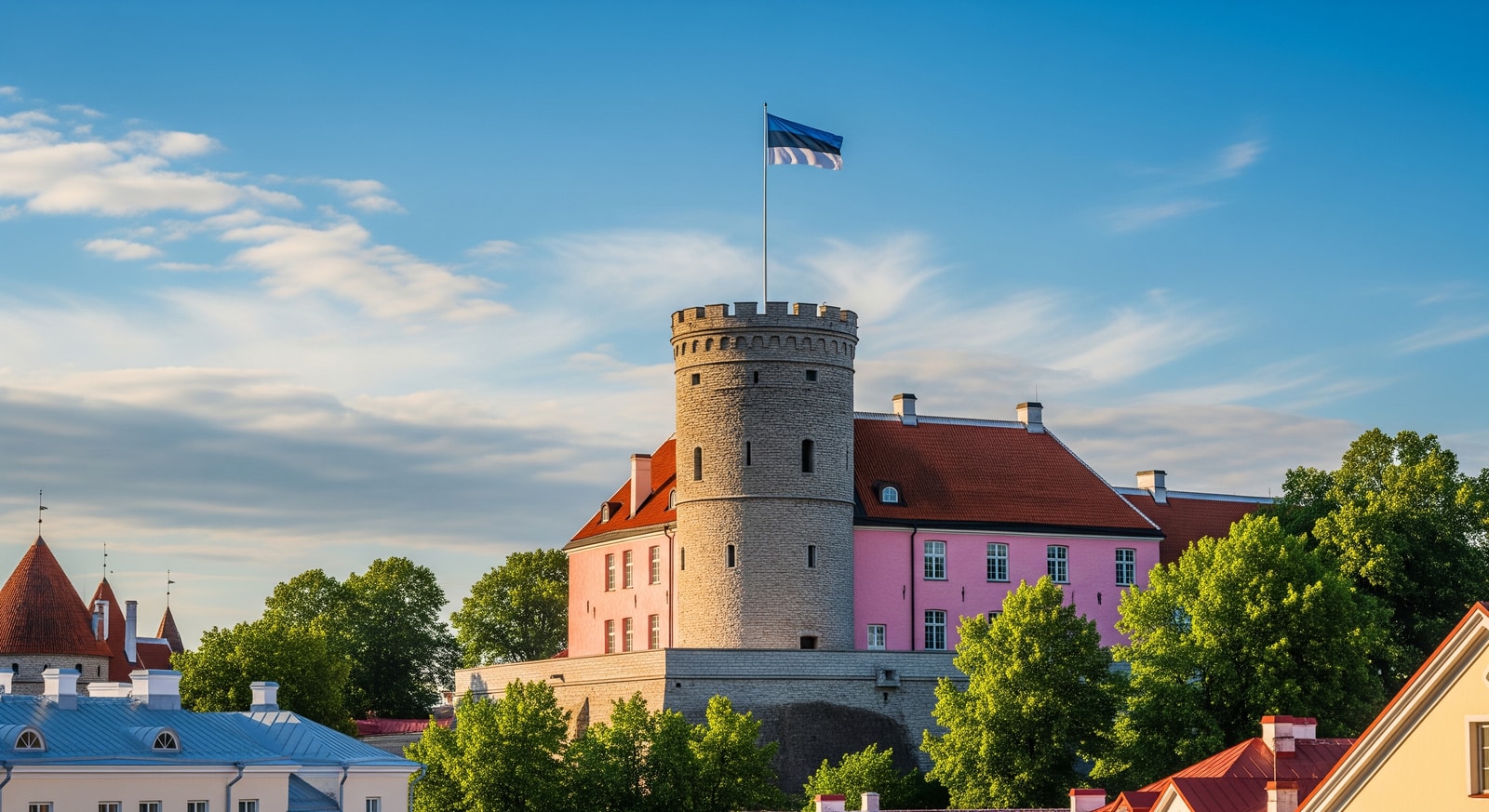
Toompea Castle — seat of the Estonian Parliament atop Tallinn's ancient limestone hill
Entry Points & Travel Tips
International Entry Points
Most international visitors arrive through Tallinn Airport (TLL), also known as Lennart Meri Tallinn Airport, located just 4 km from the city center. The modern terminal handles flights from across Europe and beyond. Port of Tallinn is a major ferry hub with daily connections to Helsinki (2 hours), Stockholm (overnight), and St. Petersburg. Land borders with Latvia (south) and Russia (east) offer crossing points, though Russian border crossings require appropriate Russian visas and may have longer wait times.
Border Control
As a Schengen member, Estonia has no border controls with other Schengen countries. Arriving from Finland, Latvia, Sweden, or other Schengen states means no passport checks. However, arriving from outside Schengen (including from Russia or on non-Schengen flights) requires full immigration processing.
Practical Tips
• Language: Estonian is the official language, but English is widely spoken, especially among younger generations
• Currency: Euro (EUR) — Estonia adopted the euro in 2011
• Digital services: Nearly everything is digital — from parking to prescriptions. Download Estonian ID apps for a smoother experience
• Weather: Summers are mild (15-25°C) with long days; winters are cold (-5 to -15°C) with short days
• Best time: June-August for warmest weather and White Nights; December for Christmas markets
Tallinn Airport — a compact, efficient gateway to Estonia just minutes from the Old Town
Why Choose DoVisa?
See the difference between applying yourself vs using our expert service
Travelers to Estonia rated this product 4.7 out of 5 based on 9 reviews.
4.7/ 5
Based on 9 verified reviews
Filter by rating
Marcus T.Jan 15, 2026
"Applied for my Estonia Schengen visa through DoVisa and the whole process was so smooth. They helped me prepare all documents and my visa was approved in 12 days. Tallinn was amazing!"
Priya S.Jan 8, 2026
"As an Indian passport holder, I was nervous about Schengen applications. DoVisa team guided me through every step and my Estonia visa came through without issues. Highly recommend!"
James K.Dec 22, 2025
"Good service overall. The document checklist was very helpful. Processing took about 2 weeks which was expected. Would use again for future Schengen trips."
Liu W.Dec 10, 2025
"Third Schengen visa through DoVisa, this time for Estonia. Always reliable service. The multiple-entry visa let me visit Finland and Latvia too on the same trip!"
Anna B.Nov 28, 2025
"DoVisa made the Estonian visa application much easier than I expected. Small delay with appointment booking but support team resolved it quickly. Visa approved!"
Robert M.Oct 15, 2025
"Business visa for tech conference in Tallinn approved without any issues. DoVisa prepared my invitation letter perfectly and the whole process was professional. Estonia's startup scene is incredible!"
Fatima A.Sep 20, 2025
"Family trip to Estonia and Baltic states. DoVisa handled all 4 applications together and everyone got approved. The Christmas markets in Tallinn were worth the effort!"
Thomas L.Aug 5, 2025
"Straightforward process. Had to submit additional bank statements but DoVisa notified me immediately. Got my visa in time for my summer trip to Estonia."
Chen Y.Jun 18, 2025
"Applied for Digital Nomad Visa through DoVisa. They knew exactly what documents were needed for the income proof. Now living my best life in Tallinn!"
Marcus T.Jan 15, 2026
"Applied for my Estonia Schengen visa through DoVisa and the whole process was so smooth. They helped me prepare all documents and my visa was approved in 12 days. Tallinn was amazing!"
Priya S.Jan 8, 2026
"As an Indian passport holder, I was nervous about Schengen applications. DoVisa team guided me through every step and my Estonia visa came through without issues. Highly recommend!"
James K.Dec 22, 2025
"Good service overall. The document checklist was very helpful. Processing took about 2 weeks which was expected. Would use again for future Schengen trips."
Estonia Visa FAQs
What types of visas are available for Estonia?
Estonia offers several visa categories aligned with European and Schengen regulations. Visa-free entry applies to EU/EEA citizens (unlimited) and nationals from approximately 60 visa-exempt countries (90 days in 180). Schengen Short-Stay Visa (Type C) allows up to 90 days within 180 days for tourism, business, family visits, or events — valid for all 27 Schengen countries. National Long-Stay Visa (Type D) is for stays exceeding 90 days, including employment, study, or family reunification. Transit Visa permits airport transit for nationals requiring it. Digital Nomad Visa allows remote workers to live in Estonia for up to one year. Additionally, Estonia's unique e-Residency program provides digital identity for entrepreneurs (not a physical visa). The right visa depends on your nationality, purpose of visit, and intended duration.
Do I need a visa to visit Estonia?
It depends on your nationality. No visa required for: EU/EEA/Swiss citizens (unlimited stay with ID card or passport); citizens of approximately 60 visa-exempt countries including the United States, United Kingdom, Canada, Australia, Japan, South Korea, and New Zealand (90 days within any 180-day period across the Schengen Area). Visa required for: Citizens of countries not on the exempt list, including China, India, Russia, South Africa, Philippines, Indonesia, and many others — you must apply for a Schengen visa before travel. Important: The 90/180 rule is cumulative across ALL Schengen countries. Time spent in France, Germany, or Italy counts against your 90 days for Estonia. Check your specific nationality's requirements before planning travel.
How do I apply for an Estonia Schengen visa?
The Schengen visa application process involves several steps. Step 1: Determine that Estonia should process your application (it should be your main destination or first Schengen entry point). Step 2: Book an appointment at the Estonian embassy, consulate, or authorized visa application center (VFS Global in many countries) in your country of residence. Step 3: Gather required documents — passport valid 3+ months beyond stay with 2 blank pages, completed application form, recent passport photo, travel insurance (EUR 30,000 minimum), flight reservations, accommodation proof, financial statements (EUR 100/day), and purpose-specific documents. Step 4: Attend your appointment, submit documents, pay fees (EUR 90 adult), and provide biometrics if required. Step 5: Wait 10-15 calendar days for processing (up to 45 days during peak periods). Step 6: Collect your passport with visa or receive notification of decision.
What documents do I need for an Estonia visa?
Standard documents for Schengen short-stay visa: Valid passport (3+ months validity beyond stay, 2 blank pages, issued within last 10 years); completed and signed visa application form; one recent passport photo (35x45mm, white background, specific requirements); travel medical insurance covering EUR 30,000 with repatriation; proof of accommodation (hotel bookings, invitation letter, rental agreement); flight reservations showing entry and exit; proof of financial means (bank statements from last 3-6 months, typically EUR 100/day). Purpose-specific documents: For tourism — travel itinerary; for business — invitation letter from Estonian company, proof of business relationship; for family visits — invitation letter, proof of relationship, host's residence permit. Additional requirements may include: Employment letter with salary; proof of leave approval; previous Schengen visas; travel history; cover letter explaining your trip. DoVisa provides personalized document checklists based on your specific situation.
How long can I stay in Estonia with a Schengen visa?
With a Schengen Short-Stay Visa (Type C), you can stay up to 90 days within any 180-day period. This is a rolling calculation — at any given day, you can stay 90 days within the preceding 180 days. Critical point: This 90/180 limit applies to the entire Schengen Area, not just Estonia. Days spent in any Schengen country count toward your total. If you spend 60 days in Germany and then go to Estonia, you only have 30 days remaining across all Schengen countries. Visa validity vs. allowed stay: Your visa may be valid for 6 months or longer with multiple entries, but each entry and total stay cannot exceed 90/180. For longer stays: You need an Estonian National Visa (Type D) for employment, study, or extended family visits — allowing stays up to 365 days. The Digital Nomad Visa also permits up to 12 months for eligible remote workers.
Can I extend my Estonia visa?
Visa extensions in Estonia are possible but limited. Schengen short-stay visa: Extensions are only granted in exceptional circumstances — force majeure (natural disasters, medical emergencies), humanitarian reasons, or serious personal situations that prevent departure. You must apply at the Estonian Police and Border Guard Board before your current visa expires. Extensions for tourism or simply wanting to stay longer are typically not approved. National visa (Type D): May be extended if the original purpose continues and you apply before expiry. Better alternatives: If you know you need more than 90 days, apply for a long-stay national visa from the start. Or plan your Schengen travel carefully — leave before 90 days, spend at least 90 days outside Schengen, then return. Overstaying consequences: Serious immigration violation resulting in fines, deportation, and multi-year Schengen entry bans. Always depart before your permitted stay expires.
Can I work in Estonia with a tourist visa?
No, the Schengen tourist visa does not permit any employment in Estonia. Permitted activities on a tourist/visitor visa: Sightseeing, visiting friends and family, attending conferences and events (as participant, not speaker for payment), business meetings and negotiations, market research, signing contracts. Not permitted: Any paid work, unpaid work benefiting an Estonian organization, freelancing for Estonian clients, or providing services. To work legally in Estonia, you need: A National Long-Stay Visa (Type D) for employment with a work permit and job offer from an Estonian employer; the Digital Nomad Visa for remote work for foreign employers (requires EUR 4,500/month income); or EU/EEA citizenship which grants automatic work rights. Estonia has simplified processes for highly-skilled workers and IT specialists through its startup visa and fast-track skilled worker programs. Penalty: Working illegally can result in deportation, fines, and Schengen-wide entry bans affecting future travel to all 27 countries.
What is Estonia's Digital Nomad Visa?
Estonia launched one of the world's first Digital Nomad Visas (DNV) in August 2020, designed for location-independent workers. Eligibility: You must work remotely for a foreign employer, run a location-independent business, or freelance for foreign clients. Income requirement is EUR 4,500 gross monthly (approximately EUR 3,504 net) demonstrated over the last 6 months. You must have valid health insurance. Duration: Up to 12 months, significantly longer than the 90-day Schengen tourist limit. Benefits: Live legally in Estonia while continuing remote work; access to Estonia's digital infrastructure and e-services; Schengen Area travel during validity; potential pathway to longer-term residence. Application: Through Estonian embassies or online through DoVisa assistance. Processing takes approximately 30 days. Cost: EUR 80-100 visa fee plus service fees. Popular with: Tech workers, freelancers, startup founders, and digital entrepreneurs attracted to Tallinn's startup ecosystem and high quality of life.
What is Estonia's e-Residency program?
Estonia's e-Residency is a pioneering government-issued digital identity for non-residents, launched in 2014. What it is: A digital ID card allowing secure access to Estonian digital services — online business registration, digital document signing, banking access, tax filing. What it's NOT: It does not provide citizenship, residency, visa rights, or permission to live or work in Estonia. e-Residency is purely digital. Benefits: Establish and manage an EU-based company entirely online; access Estonian digital signatures recognized across the EU; operate in euros with EU banking; minimal bureaucracy and paperless administration. Who uses it: Over 100,000 e-residents from 170+ countries — entrepreneurs, freelancers, startups wanting EU business presence. Application: Online application, EUR 100-120 fee, background check, then collect your digital ID card from an Estonian embassy or pickup point. Relationship to visas: e-Residency holders still need appropriate visas to physically visit Estonia based on their nationality.
How long does Estonia visa processing take?
Processing times vary by visa type and season. Schengen Short-Stay Visa (Type C): Standard processing takes 10-15 calendar days from application submission. During peak summer season (June-August) and holiday periods, processing can extend to 30-45 days. Applications may be decided in as few as 5 days for straightforward cases. National Long-Stay Visa (Type D): Typically 30-60 days due to additional verification requirements for employment, study, or residence purposes. Digital Nomad Visa: Approximately 30 days. Factors affecting timing: Completeness of documentation, need for additional verification, embassy workload, nationality-specific checks, and peak travel seasons. Recommendations: Apply at least 3-4 weeks before planned travel for short-stay visas; 2-3 months for long-stay visas. You can apply up to 6 months before your intended travel date. DoVisa helps ensure complete applications to minimize delays.
Do I need to print my Estonia visa?
Unlike some countries with electronic travel authorizations, the Schengen visa is a physical visa sticker affixed to your passport. You don't need to print anything — the visa label is placed in your passport by the Estonian embassy or consulate when your application is approved. Important: You must have your passport with you when traveling — the physical visa sticker must be presented at check-in and border control. What to keep digitally: Save a photo/scan of your visa sticker for backup; keep the visa decision letter; store copies of supporting documents. Border control: Officers verify the visa sticker in your passport and may ask questions about your trip purpose, accommodation, and return plans. Have supporting documents accessible. Multiple-entry visas: If you receive a multiple-entry Schengen visa, the same sticker covers all entries within its validity period — no new stickers needed for subsequent trips.
What if my Estonia visa application is rejected?
Schengen visa rejections do occur, but understanding reasons helps prevent them. Common rejection reasons: Insufficient proof of financial means; inadequate travel insurance; lack of strong ties to home country (suggesting immigration risk); incomplete or inconsistent documentation; previous Schengen violations or overstays; inability to justify trip purpose; insufficient accommodation proof. If rejected: You receive a standard form letter indicating rejection reason(s) using coded categories (1-11). You have the right to appeal within 30 days to the Estonian Ministry of Foreign Affairs or administrative court. You can also address the deficiencies and reapply immediately — there's no waiting period, though the same deficiencies will result in another rejection. Prevention: Provide thorough documentation demonstrating genuine travel purpose, strong home ties (employment, property, family), and clear financial means. DoVisa's document review significantly reduces rejection rates. Our guarantee: Full service fee refund if rejection results from our documentation error.
When is the best time to visit Estonia?
June to August (Summer): Peak season with warmest weather (15-25°C), longest days including the magical White Nights around midsummer when the sun barely sets. Perfect for outdoor activities, island hopping (Saaremaa, Hiiumaa), beach time at Pärnu, and festivals. Most tourists, highest prices. December to February (Winter): Cold (-5 to -15°C) but magical. Tallinn's Christmas Market in Town Hall Square is one of Europe's most beautiful. Snow-covered Old Town, cozy cafés, and winter activities. Short days but atmospheric. April to May (Spring): Nature awakens, bog walks become accessible, migratory birds arrive at Matsalu. Shoulder season with fewer crowds and lower prices. Temperatures 5-15°C. September to October (Autumn): Beautiful fall colors in forests and bogs, harvest festivals, still comfortable temperatures (8-15°C). Great for nature photography and cultural events. Year-round appeal: Tallinn's Old Town, museums, digital attractions, and culinary scene are always accessible. Estonia's sauna culture is perfect for winter visits.
Can I visit other Schengen countries with my Estonia visa?
Yes, the Schengen visa issued by Estonia is valid for all 27 Schengen Area countries: Austria, Belgium, Croatia, Czech Republic, Denmark, Estonia, Finland, France, Germany, Greece, Hungary, Iceland, Italy, Latvia, Liechtenstein, Lithuania, Luxembourg, Malta, Netherlands, Norway, Poland, Portugal, Slovakia, Slovenia, Spain, Sweden, and Switzerland. Key conditions: Your main destination or first point of entry should be Estonia (the country that issued your visa). The 90/180-day limit applies across ALL countries combined — not 90 days per country. Practical implications: Plan a Baltic trip combining Estonia, Latvia, and Lithuania on one visa. Take a ferry to Helsinki, Finland for a day trip. Your Estonia Schengen visa is your pass to explore continental Europe. Non-Schengen EU: Ireland and Cyprus are EU but not Schengen — different visa requirements apply. Bulgaria and Romania are joining Schengen progressively.
Still have questions?
Our team is here to help 24/7
Get Visa Tips & Exclusive Deals
Join 1,000+ travelers. No spam, unsubscribe anytime.





 With DoVisa