Certified Shona & Ndebele Document Translation
Professional translation of Zimbabwean documents with consular legalization coordination. Certified translations accepted by USCIS, UKVI, IRCC, and authorities worldwide.
TrustpilotSelect Languages
Drag & drop your documents here
or
PDF, JPEG, PNG, WebP — Max 10MB per file. Word documents: please save as PDF first.
Certified translators · Accepted by governments, courts & universities worldwide · View sample
Select a destination country to view pricing
How Zimbabwean Certified Translation Works
Submit Your Documents Securely
Upload clear scans of your Zimbabwean documents through our encrypted portal. We accept PDF, JPEG, and PNG formats. Our intake specialists review each upload for legibility and identify the document type — whether it is a Registrar General's Office civil status certificate, a court document from the High Court, or an academic credential from a Zimbabwean university.
Translator Assignment
Your documents are matched with a translator experienced in Zimbabwean administrative English, Shona, and Ndebele, including terminology used by the Registrar General's Office, the Zimbabwe Republic Police (ZRP), and the Ministry of Home Affairs and Cultural Heritage. Translators handle all 16 constitutionally recognized languages.
Translation & Certification
The translator produces your certified translation with a signed certification statement. For documents requiring authentication, DoVisa coordinates with notaries public registered with the High Court of Zimbabwe under the Legal Practitioners Act (Chapter 27:07). Each translation accurately preserves Zimbabwean name conventions and document formatting.
Delivery with Full Certification
Receive your certified translation as a high-resolution PDF via email, suitable for immediate submission to authorities worldwide. Physical copies shipped via tracked courier. For international authentication, DoVisa coordinates the consular legalization chain: High Court authentication, Ministry of Foreign Affairs and International Trade verification, and destination embassy legalization.
Zimbabwe Translation Service Specifications
Popular Language Pairs
We support all languages — 100+ language pairs available for Zimbabwean documents including Shona and Ndebele paired with European, Asian, and African languages.
Common Documents
- Birth certificates — gwaro rekuzvarwa (Shona)
- Death certificates — gwaro rekufa (Shona)
- Marriage certificates
- Divorce decrees and court orders
- Police clearance certificates — ZRP clearance
- Academic certificates and transcripts
- O-Level and A-Level certificates (ZIMSEC)
- Employment references and contracts
- National identity documents — chitupa
- Customary marriage certificates
Turnaround Time
Certification Details
Zimbabwe Translation Requirements & Regulatory Framework
Embassy Acceptance
Notarization Process
Apostille Information
Legal Framework
Common Scenarios for Zimbabwean Document Translation
Immigration & Visa Applications
Zimbabwean nationals applying for US diversity visas, UK settlement visas, Canadian PR, Australian skilled migration, or South African work permits need certified English translations of Shona or Ndebele documents, police clearance certificates from the Zimbabwe Republic Police (ZRP), and academic credentials. DoVisa's certified translations meet all USCIS, UKVI, IRCC, and DHA requirements.
Marriage & Family Documents
Zimbabwe recognizes both civil and customary marriages under the consolidated <strong>Marriages Act, 2022 (Chapter 5:15)</strong>. Marriage certificates, divorce decrees, and birth certificates from the Registrar General's Office need certified translation for spousal visa applications, family reunification, and cross-border family law proceedings.
Academic Credential Evaluation
Zimbabwean ZIMSEC O-Level and A-Level certificates, university degrees, and professional qualifications require certified translation for WES, ECE, SAQA (South Africa), and other credential evaluation agencies. DoVisa accurately renders the Zimbabwean grading system and academic terminology for international evaluators.
Business & Corporate Documents
Companies operating in Zimbabwe's mining, agriculture, and financial sectors need certified translations of commercial registrations, tax clearance certificates, corporate charters, and investment agreements. DoVisa handles the legal and commercial terminology specific to Zimbabwe's regulatory framework.
Legal Proceedings
Zimbabwean High Court judgments, magistrate court orders, powers of attorney, and legal affidavits require certified translation for international legal proceedings. DoVisa translators handle the common law legal terminology used in Zimbabwe's judicial system, including documents in Shona or Ndebele with English legal terms.
Zimbabwe's 16 Official Languages: Translation Across a Multilingual Nation
The Constitution of Zimbabwe (2013), Section 6 recognizes 16 official languages: Chewa, Chibarwe, English, Kalanga, Koisan, Nambya, Ndau, Ndebele, Shangani, Shona, Sign language, Sotho, Tonga, Tswana, Venda, and Xhosa. This makes Zimbabwe one of the most linguistically diverse nations in southern Africa.
In practice, English serves as the primary administrative language for government and legal documents, with Shona (spoken by approximately 70% of the population) and Ndebele (approximately 20%) as the other major languages. Official documents from the Registrar General's Office are typically issued in English, but customary marriage certificates, traditional court records, and community-level documents may be in Shona or Ndebele.
DoVisa provides certified translation for documents in any of Zimbabwe's official languages. Shona documents use distinctive terminology — gwaro (document/certificate), chitupa (identity card), runyararo (peace/clearance) — that requires specialized translation knowledge. For Ndebele documents, which use different terminology for the same concepts, our translators ensure accurate cross-linguistic rendering while maintaining consistency with the English-language versions of the same records.
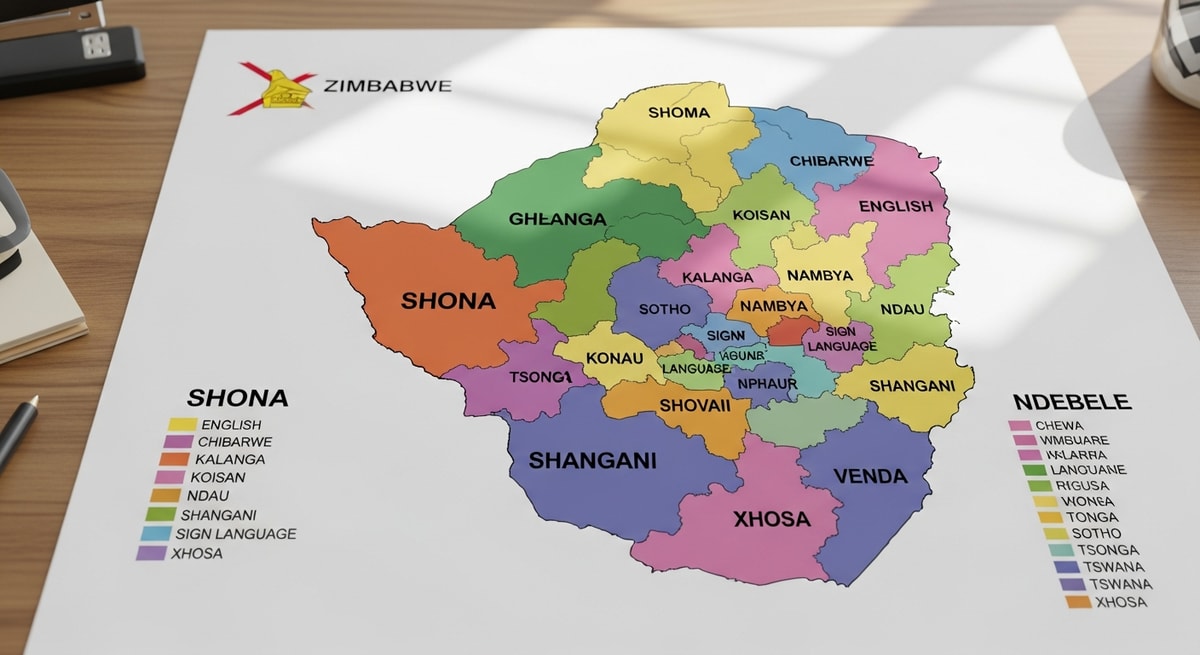
Zimbabwe's Constitution recognizes 16 official languages, with Shona, Ndebele, and English being the most widely used
Consular Legalization: Getting Zimbabwean Documents Accepted Abroad
Since Zimbabwe is not a member of the Hague Apostille Convention, Zimbabwean documents intended for use in foreign countries must undergo the traditional consular legalization process. This multi-step chain ensures that the document's authenticity is verified by each authority in sequence.
The legalization process for Zimbabwean documents follows these steps: (1) the document is notarized by a notary public registered with the High Court under the Legal Practitioners Act (Chapter 27:07); (2) the notarized document is verified by the Ministry of Foreign Affairs and International Trade in Harare; (3) the verified document is legalized by the destination country's embassy or consulate. The British High Commission, US Embassy, South African High Commission, and Australian High Commission in Harare are among the most frequently used consular offices for this process.
DoVisa coordinates the complete consular legalization chain for Zimbabwean documents. The process typically takes 10–15 business days depending on the destination country's embassy processing times. For countries that do accept apostilles, DoVisa advises clients on whether the destination country has specific bilateral agreements with Zimbabwe that may simplify the authentication process.
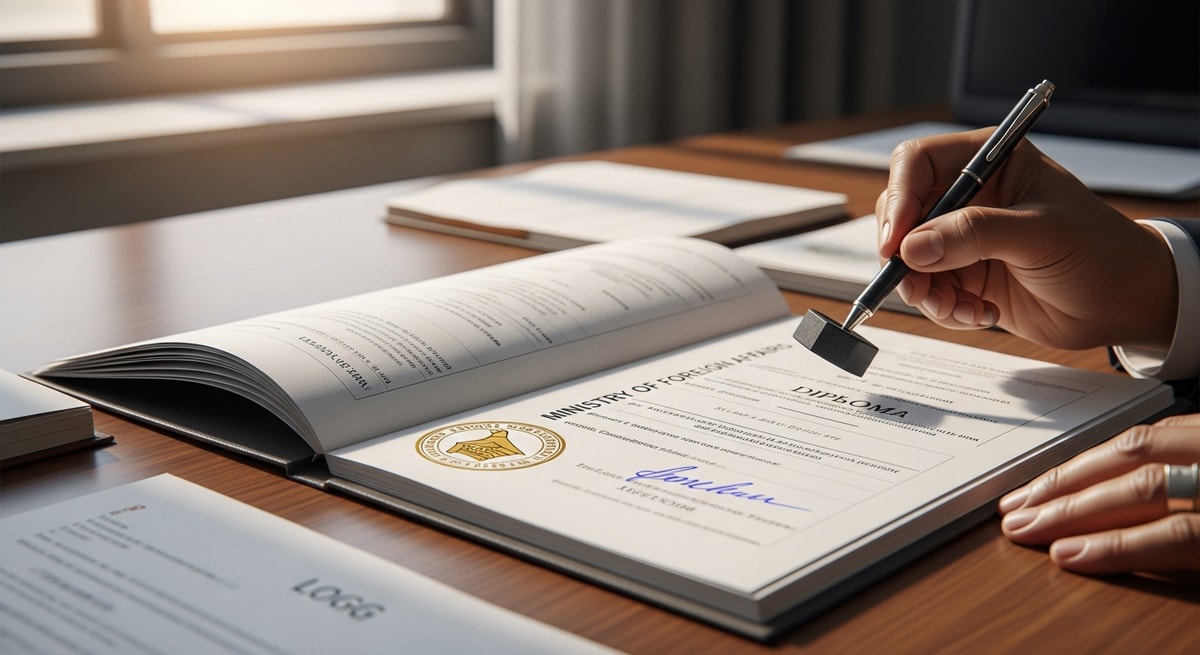
Zimbabwe requires consular legalization through the Ministry of Foreign Affairs and the destination country's embassy
"Zimbabwean birth certificate and ZRP police clearance translated for USCIS diversity visa. Both accepted without issues — the Registrar General's stamps and formatting were handled accurately."
"Ndebele customary marriage certificate translated to English for a UK spouse visa. UKVI accepted the certified translation on first submission. The cultural terminology was rendered expertly."
"ZIMSEC O-Level and A-Level certificates translated for WES credential evaluation. WES processed my evaluation without corrections. Good quality rendering of the Zimbabwean grading system."
"Shona-language court order translated for a South African family law proceeding. The legal terminology was accurately rendered in English. SAQA accepted the accompanying academic transcripts as well."
"Employment records and police clearance translated for Australian skilled migration. Department of Home Affairs accepted both. The consular legalization coordination was helpful for my particular case."
"Zimbabwean divorce decree translated for a Canadian family court proceeding. IRCC accepted the certified translation. The legal terms from the High Court judgment were handled with precision."
"Birth certificates for my two children translated from the Registrar General's Office format. USCIS accepted them. Patronymic names were transliterated consistently across all documents in my set."
"Zimbabwean university degree and transcript translated for a UK employer credential check. Professional formatting and accurate rendering of my BSc classification. Very satisfied with the service."
"Power of attorney and commercial registration translated for a cross-border business transaction. Clear formatting and proper legal vocabulary. Useful for dealing with multiple jurisdictions."
"Shona birth certificate translated for Immigration New Zealand. Final translation was accurate, but the first draft had a minor inconsistency in my totem name spelling that needed one revision."
"Zimbabwean birth certificate and ZRP police clearance translated for USCIS diversity visa. Both accepted without issues — the Registrar General's stamps and formatting were handled accurately."
"Ndebele customary marriage certificate translated to English for a UK spouse visa. UKVI accepted the certified translation on first submission. The cultural terminology was rendered expertly."
"ZIMSEC O-Level and A-Level certificates translated for WES credential evaluation. WES processed my evaluation without corrections. Good quality rendering of the Zimbabwean grading system."
Zimbabwe Document Translation FAQs
What types of Zimbabwean documents can be translated?
Are your Zimbabwe translations certified?
How long does Zimbabwean document translation take?
What languages do you translate Zimbabwean documents to and from?
Will my translated Zimbabwean documents be accepted by immigration authorities?
Do I need notarization with my Zimbabwe translation?
Can Zimbabwean documents get an apostille?
How much does certified Zimbabwean document translation cost?
Can you translate handwritten Zimbabwean documents?
What format will I receive my translated Zimbabwean document in?
Can you translate customary marriage certificates from Zimbabwe?
Do you handle documents in all 16 official Zimbabwean languages?
Get Your Zimbabwean Documents Translated Today
Professional certified translations with consular legalization coordination — accepted worldwide