The Cat Lai Bridge will transform regional travel: the 11.6 km crossing between Ho Chi Minh City and Dong Nai aims to ease congestion and link to Long Thanh International Airport.
Summary: The Cat Lai Bridge is an 11.6 km, eight-lane crossing linking Nguyen Thi Dinh Street in Ho Chi Minh City's Cat Lai Ward to Dai Phuoc Commune in Dong Nai. Approved by Dong Nai's People's Committee and designed by TEDI, the VND 20.6 trillion project aims to relieve congestion and improve access to Long Thanh International Airport.
The Cat Lai Bridge will be a major new transport link connecting Ho Chi Minh City and Dong Nai Province. The Cat Lai Bridge is designed to reduce chronic traffic jams on existing routes, provide a direct connection to Long Thanh International Airport and improve access between industrial zones, seaports and urban centres.
Project overview and approval
The design by Transport Engineering Design Incorporated (TEDI) won first prize in a design competition and has been approved by the Dong Nai provincial People's Committee. Groundwork began in mid-January, and officials expect the bridge to be completed soon.
Design, scale and funding
Planned to span about 11.6 kilometres with a main span of roughly 3 kilometres, the Cat Lai Bridge will run from Nguyen Thi Dinh Street in Cat Lai Ward, Ho Chi Minh City, to Dai Phuoc Commune in Dong Nai Province. The estimated investment is VND 20.6 trillion (around $794 million).
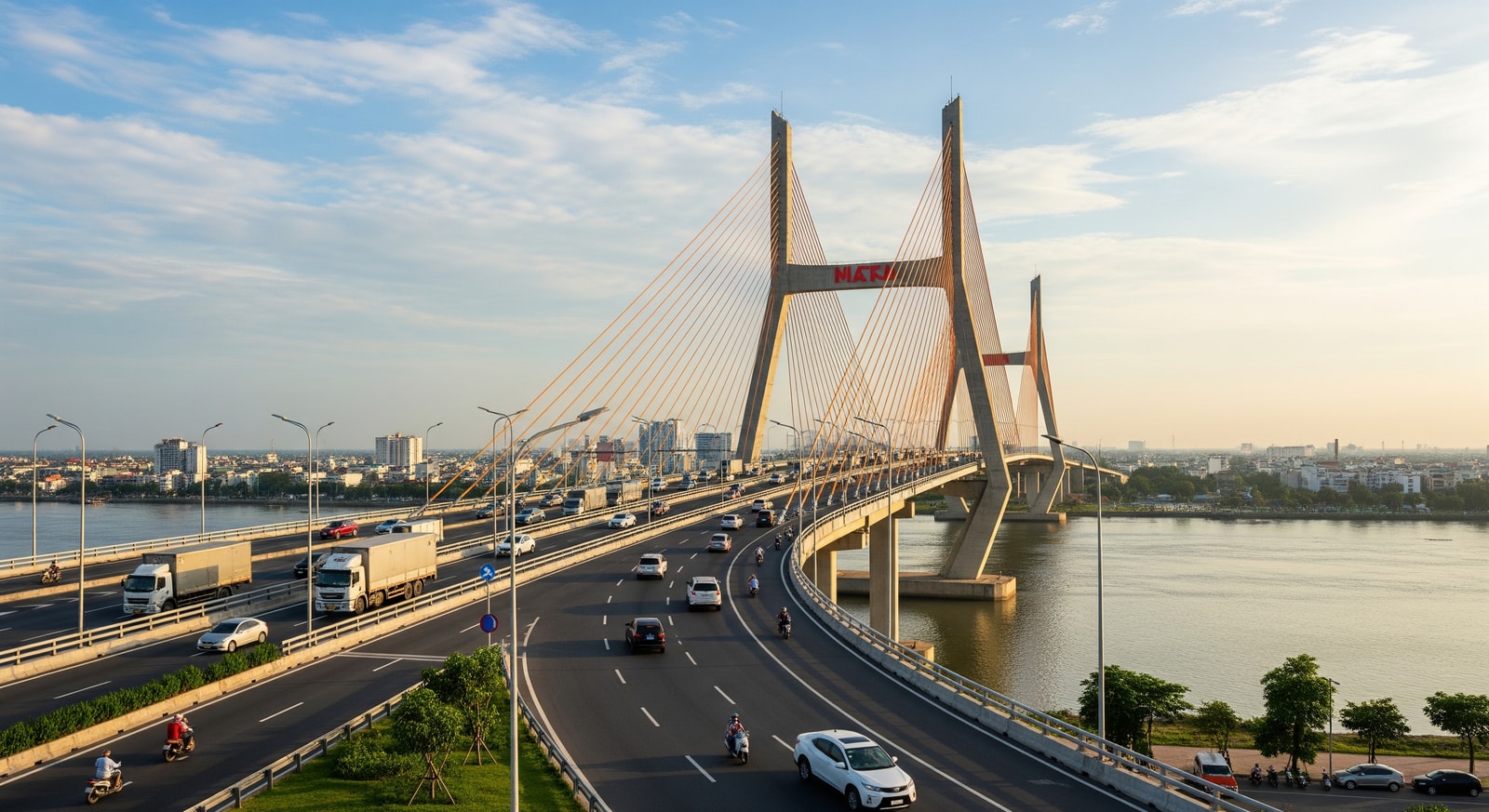
The project will be delivered through a public–private partnership (PPP) under a build-transfer (BT) contract. TEDI’s proposal features two prominently sculpted pylons and an integrated lighting scheme intended to make the crossing a local landmark as well as an infrastructure asset.
Capacity, speed and multimodal use
- Eight traffic lanes designed for speeds up to 80 kilometres per hour
- Dedicated lanes for motorcycles and non-motorised vehicles
- 3 km main span within an 11.6 km total crossing
Transport benefits and regional impact
Once open, the bridge will provide a direct corridor between northern and northeastern Ho Chi Minh City and Dong Nai Province. It is expected to relieve pressure on National Highways 1 and 51 and the HCMC-Long Thanh-Dau Giay Expressway, particularly during peak holiday periods such as the Lunar New Year.
By improving links to Long Thanh International Airport, seaports and industrial parks, the Cat Lai Bridge should support smoother freight movement, expand commuter options and stimulate commercial and urban development along the corridor.
Environmental design and urban integration
Project plans include green spaces and routes that offer scenic views for drivers and passengers. The designers have emphasised harmonising the structure with the local landscape while using lighting to highlight the twin pylons at night, creating both functional and aesthetic value.
How the Cat Lai Bridge fits into wider networks
The Cat Lai Bridge complements other recent and ongoing projects in the area, including the Long Hung and Phu My 2 bridges and the recently opened Nhon Trach Bridge linking Ring Road 3. Together, these crossings form a growing network intended to reduce travel times and boost regional connectivity.
Why this matters: For commuters, freight operators and travellers using Long Thanh International Airport, the Cat Lai Bridge promises shorter, more reliable journeys and reduced congestion on existing routes—benefits that should support both daily life and broader economic activity in the region.
Sources