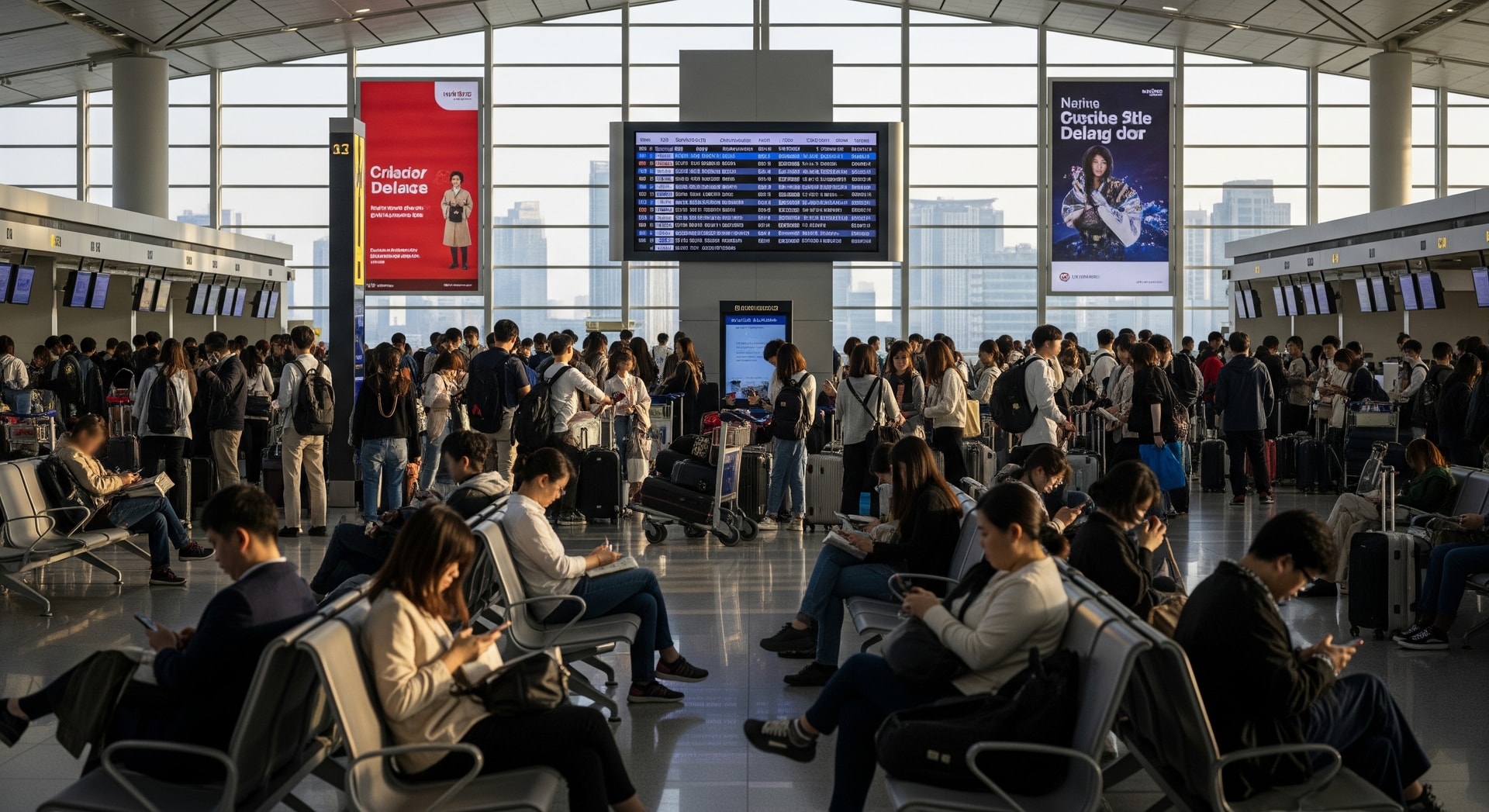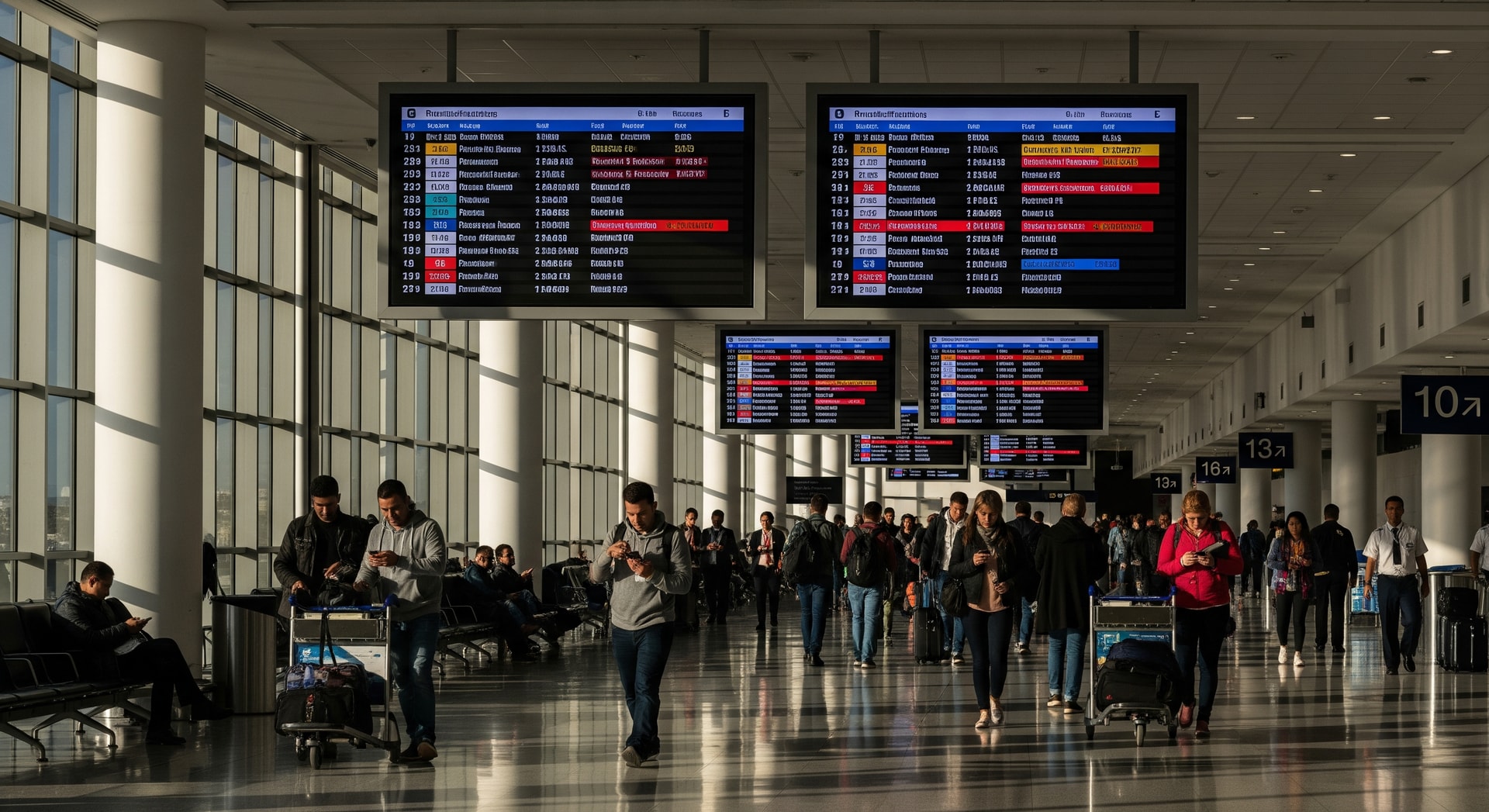
Asia flight delays left thousands of passengers stranded today as 4,216 delays and 62 cancellations were recorded across airports in Asia and the Middle East.
Summary: Asia flight delays left thousands stranded today — 4,216 delays and 62 cancellations were recorded across airports in China, India, Indonesia, Malaysia, Thailand, Japan, Saudi Arabia and Hong Kong.
A major wave of operational disruption swept through Asia and parts of the Middle East today, with 4,216 flight delays and 62 cancellations logged across multiple countries. The ripple effects left large numbers of passengers stranded at airports including Jakarta, Kuala Lumpur, Mumbai, Delhi, Bangkok and several Chinese hubs.
Overall scale and hardest-hit cities
Flight data compiled for today shows that disruptions were widespread: Jakarta recorded the single highest volume of delays, while Chinese airports collectively accounted for more than a thousand delayed flights. Other major hubs across South and Southeast Asia also posted hundreds of affected movements.
- Jakarta Soekarno-Hatta: 521 delays, 5 cancellations
- Kuala Lumpur International: 475 delays, 4 cancellations
- Chhatrapati Shivaji Maharaj (Mumbai): 452 delays, 1 cancellation
- Indira Gandhi (Delhi): 427 delays, 1 cancellation
- Suvarnabhumi (Bangkok): 350 delays, 2 cancellations
Airlines most affected by volume
A mix of low-cost and network carriers experienced the largest share of delays and cancellations. Carriers operating dense regional networks — and those concentrated at the busiest hubs — show the highest disruption counts in today's dataset.
- IndiGo: 378 delays, 2 cancellations
- China Eastern: 359 delays
- Air India: 268 delays
- Air China: 181 delays, 13 cancellations
- AirAsia: 247 delays
- Batik Air: 104 delays, 5 cancellations
- Sichuan Airlines: 97 delays, 4 cancellations
- Cathay Pacific: 97 delays
- Malaysia Airlines: 65 delays, 4 cancellations
- Thai Airways: 78 delays
- Saudia: 64 delays
- Garuda Indonesia: 68 delays
- SpiceJet: 70 delays
- United: 2 delays, 1 cancellation (Hong Kong)
Regional airport breakdown and notable figures
Beyond the top five hubs, several Chinese and regional airports posted significant disruption totals. Beijing's two major airports, Chengdu and Nanjing were among those with multiple cancellations recorded.
- Beijing Capital: 213 delays, 7 cancellations
- Beijing Daxing: 238 delays, 5 cancellations
- Chengdu Tianfu: 273 delays, 7 cancellations
- Kunming Changshui: 248 delays, 2 cancellations
- Nanjing Lukou: 274 delays, 3 cancellations
- Hong Kong International: 258 delays, 1 cancellation
- King Abdulaziz (Jeddah): 170 delays, 4 cancellations
- Guiyang Longdongbao: 108 delays, 6 cancellations
- Phuket International: 141 delays (0 cancellations)
- Lokpriya Gopinath Bordoloi (Guwahati): 32 delays, 3 cancellations
- Kashgar (Kashi): 28 delays, 5 cancellations
- Okadama (Sapporo Airfield): 8 delays, 6 cancellations
What impacted passengers can do
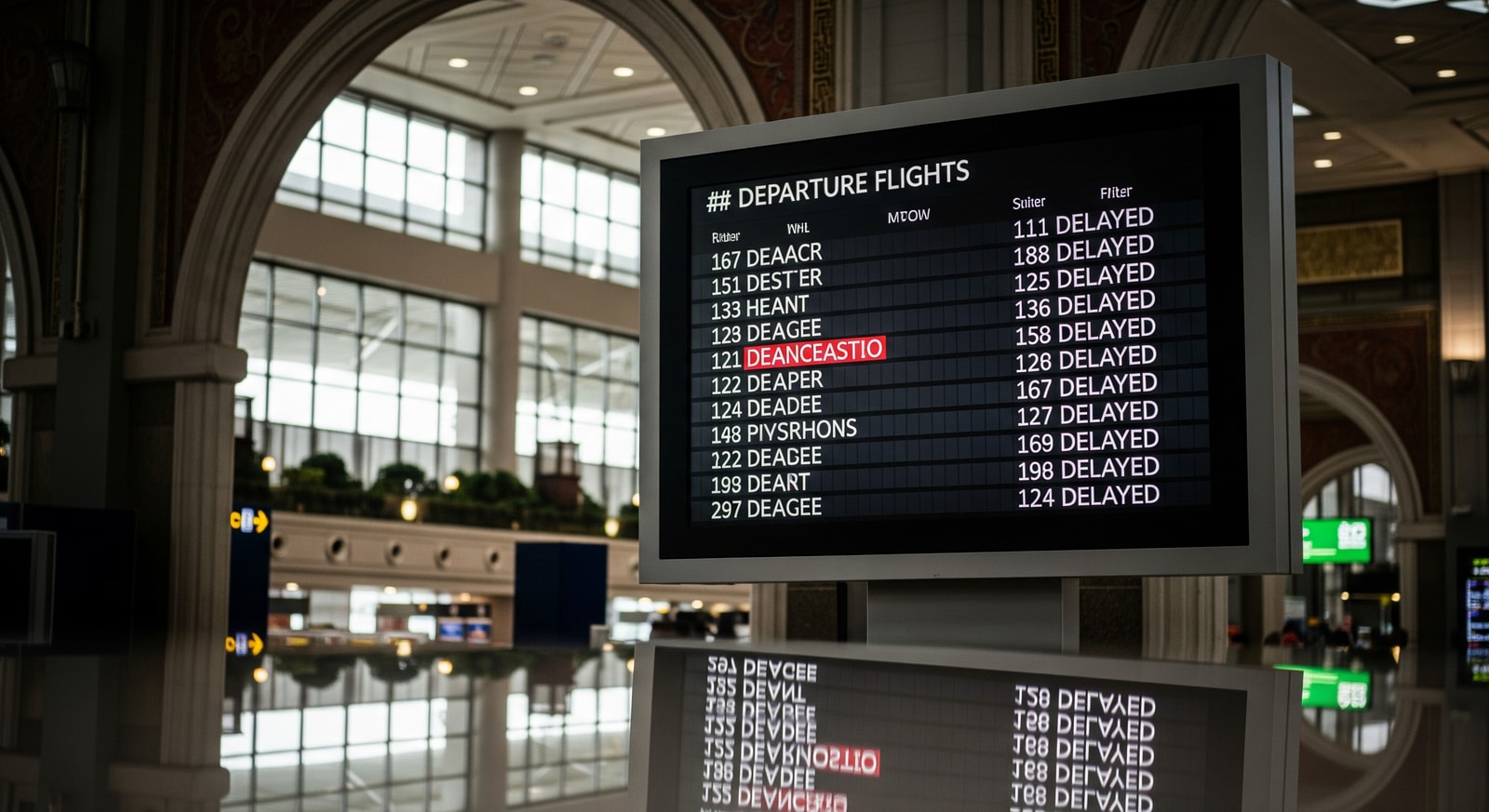
Passengers affected by these delays and cancellations should monitor official airline and airport channels for real-time updates and follow carrier guidance on rebooking and compensation. Keeping travel documents and receipts will help with any reimbursement claims.
- Check flight status on airline and airport websites or apps
- Look for automatic rebooking or alternate routings in airline apps
- Contact airline customer service early for options
- Keep boarding passes and receipts for compensation claims
- Allow extra time for connections and onward travel
Why this matters to travellers and the industry
The volume of today’s disruptions — 4,216 delays and 62 cancellations across 17 airports — highlights the operational strain on carriers and airport systems in the region. While the dataset does not attribute causes to a single factor, the concentrated impact at major hubs means knock-on effects for connecting services and downstream schedules across Asia and beyond.
So what? Travellers should expect possible longer wait times, tighter connection windows and the need to be proactive about rebooking and compensation. For the aviation industry, today's widespread delays underline the importance of contingency planning and communications to reduce passenger disruption and manage operational recovery.
Sources