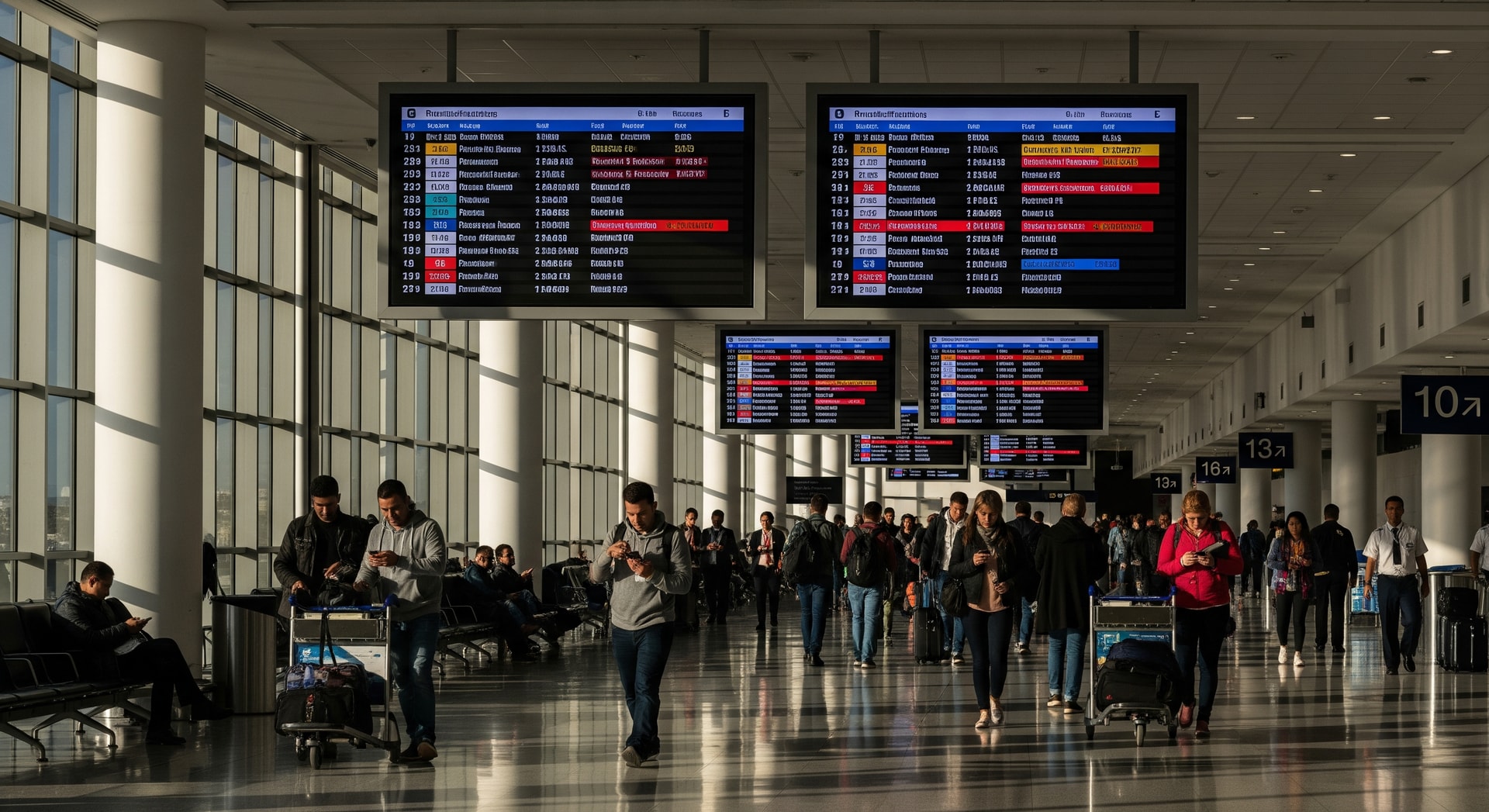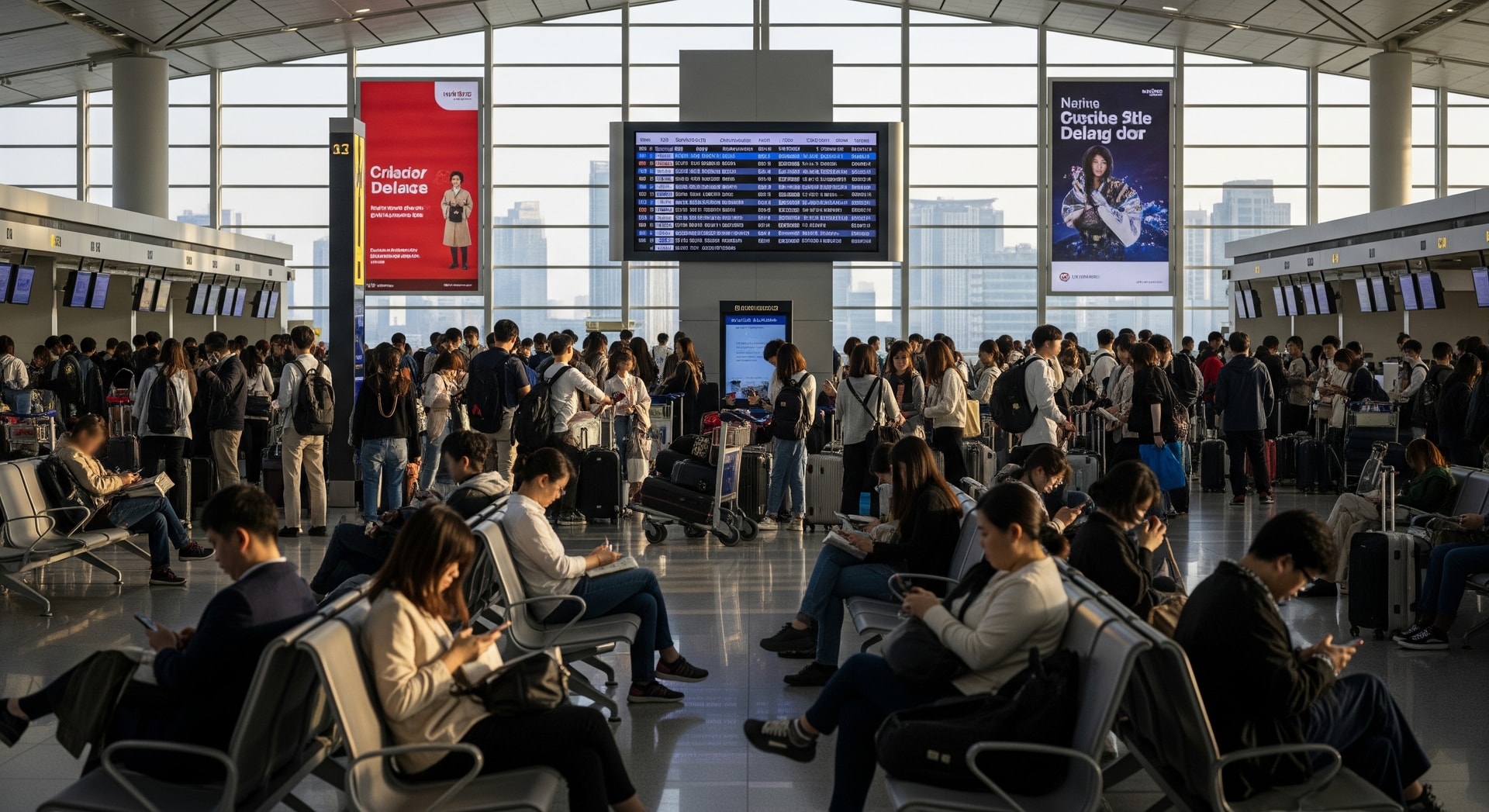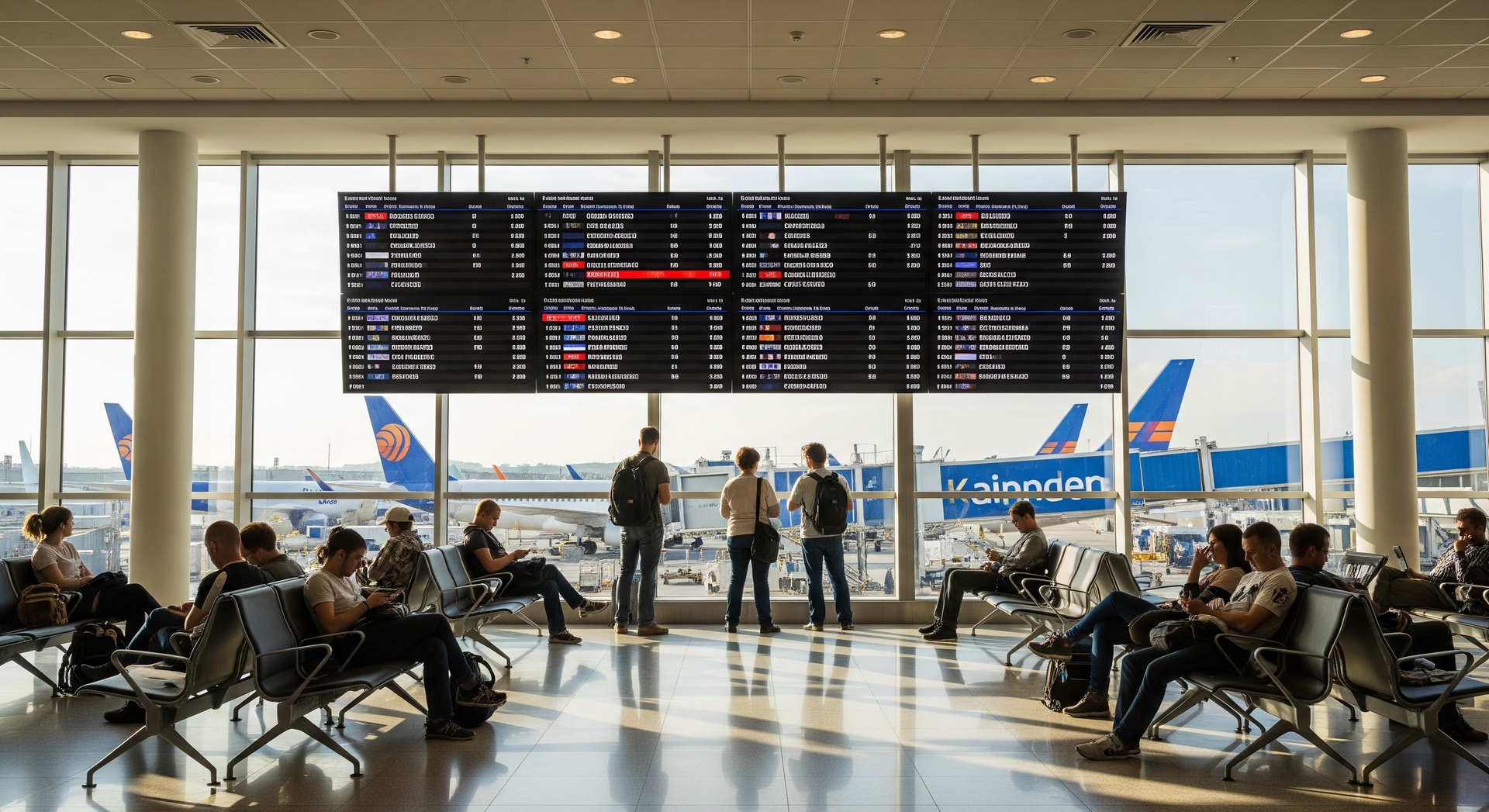
Asia flight delays and cancellations left thousands of travellers stranded after 3,416 disruptions across airports in Thailand, Singapore, India, Malaysia, Indonesia and China.
Summary: Asia flight delays and cancellations disrupted 3,416 services today, including 3,361 delays and 55 cancellations across 15 major airports — leaving thousands of travellers affected.
Thousands of passengers across Asia were left stranded after a wave of operational disruption produced 3,416 flight delays and cancellations across multiple countries. The disturbance — recorded across 15 airports — included 3,361 delays and 55 cancellations, affecting major hubs in Thailand, Singapore, India, Malaysia, Indonesia and China.
Scope of the disruption
Updated tallies show 3,361 delays and 55 cancellations were recorded across the monitored airports. Southeast Asian hubs produced the biggest share of delays, while cancellation spikes were concentrated in parts of Indonesia and select Chinese airports.
- Total disruptions: 3,416 (3,361 delays; 55 cancellations)
- Airports analysed: 15 major Asian airports
- Southeast Asia contributed the largest share of delays
Airports that saw the most disruption
- Kuala Lumpur International Airport: 667 delays, 0 cancellations (AirAsia accounted for 293 delays)
- Soekarno–Hatta International Airport (Jakarta): 407 delays, 11 cancellations (Batik Air responsible for the 11 cancellations)
- Singapore Changi Airport: 346 delays (Singapore Airlines 87 delays; Scoot 71 delays)
- Indira Gandhi International Airport (Delhi): 315 delays, 2 cancellations (IndiGo 109 delays; Air India 105 delays)
- Suvarnabhumi Airport (Bangkok): 280 delays, 0 cancellations
- Beijing Capital International Airport: 214 delays, 3 cancellations (Air China 136 delays, 3 cancellations)
- Chongqing Jiangbei International Airport: 211 delays, 3 cancellations
- Zhengzhou Xinzheng International Airport: 185 delays, 7 cancellations
- Sultan Hasanuddin International Airport: 164 delays, 6 cancellations
- Changsha Huanghua: 134 delays, 4 cancellations
- Wuhan Tianhe: 125 delays, 4 cancellations
- Shanghai Hongqiao: 118 delays, 3 cancellations
- Fuzhou Changle: 105 delays, 5 cancellations
- Chennai International: 62 delays, 3 cancellations
- Taipei Songshan: 28 delays, 4 cancellations
Airlines most affected
- AirAsia: 327 delays (largest total delay count across analysed networks)
- Air China: 195 delays, 5 cancellations
- China Eastern: 159 delays, 5 cancellations
- Malaysia Airlines: 156 delays
- Lion Air: 142 delays
- Batik Air: 135 delays, 17 cancellations (highest cancellations by airline)
- IndiGo: 129 delays, 4 cancellations
- Air India: 114 delays
- Singapore Airlines: 97 delays

Advice for impacted passengers
- Check live departure boards and airline apps before leaving for the airport
- Arrive earlier than usual if travelling on heavily affected routes
- Keep booking confirmations and receipts for rebooking or compensation claims
- Monitor airline notifications and customer-service channels for rebooking options
- Allow extra connection time when planning onward travel during disruption periods
Regional pattern and operational context
The disruption pattern shows concentrated delay volumes in Southeast Asian mega-hubs — Kuala Lumpur, Jakarta, Singapore and Bangkok together accounted for more than half of the 3,361 recorded delays. Cancellation pressure was highest in parts of Indonesia and at particular Chinese airports, while both low-cost and full-service carriers experienced significant network exposure.
What this means for travellers and the industry
Widespread delays at major regional hubs can ripple through schedules for days, complicating itineraries for international and domestic travellers alike. Airlines and airports may need to deploy recovery measures, reallocate aircraft and staff, and assist passengers with rebookings — measures that can affect capacity and travel costs in the short term.
So what? Travellers should expect longer waits and potential rebooking when flying through the most affected hubs. Those planning trips via Kuala Lumpur, Jakarta, Singapore, Delhi, Bangkok or key Chinese airports should build in extra connection time, stay alert to airline communications and consider flexible tickets where possible.
Sources