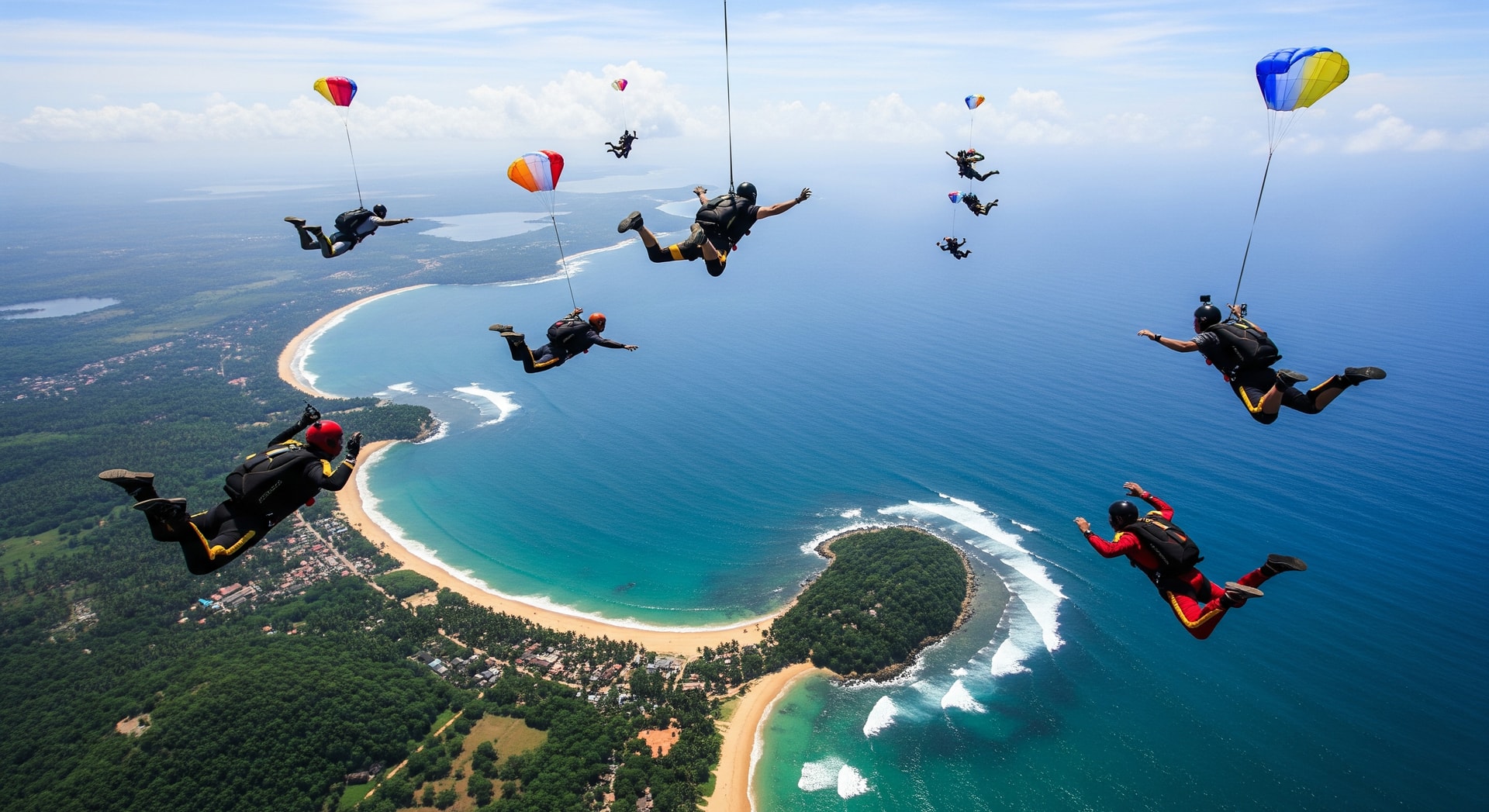
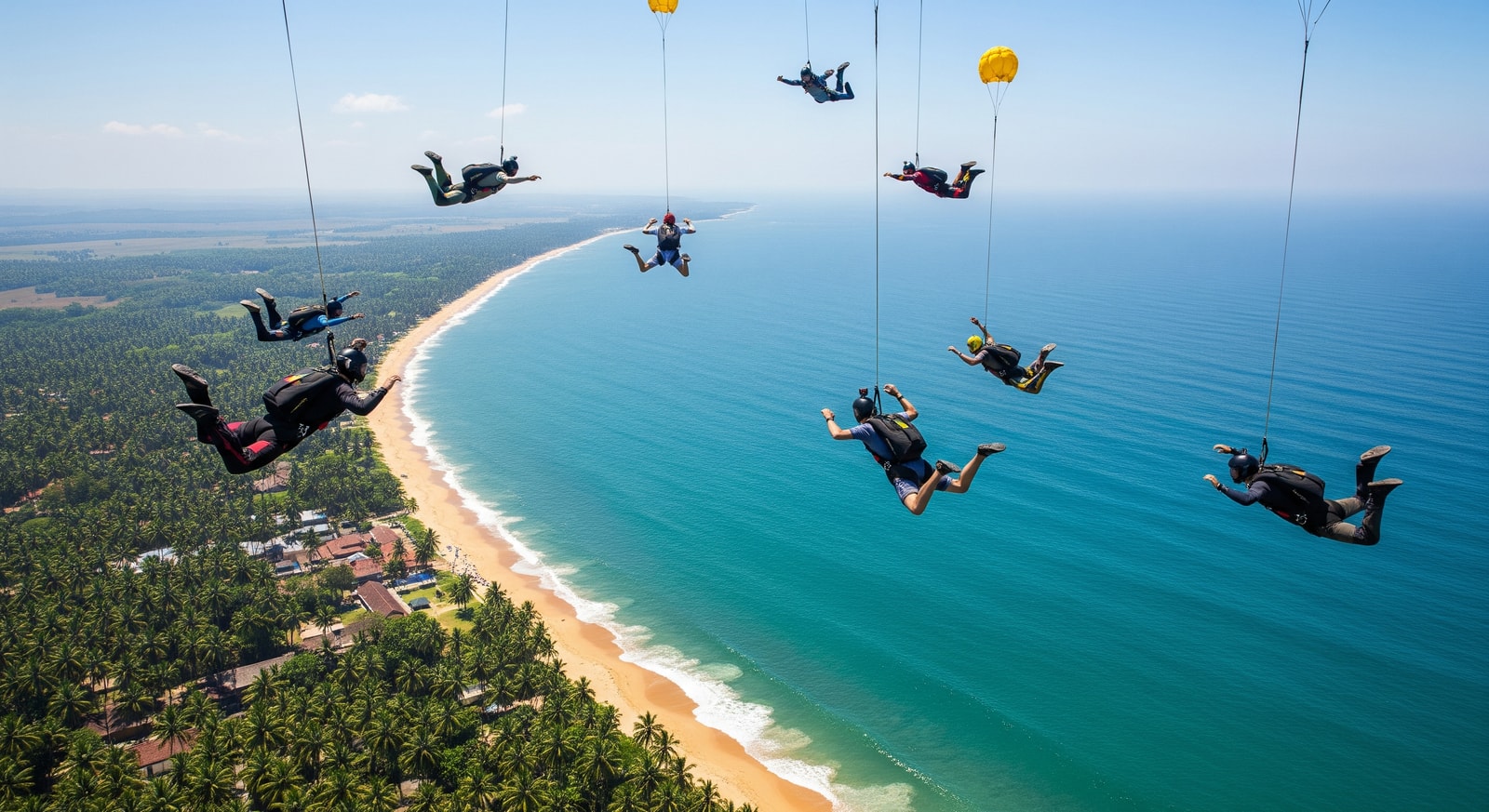
Skydiving in Sri Lanka is being assessed by the Ministry of Defence as officials evaluate whether aerial adventure sports can help attract more visitors and diversify tourism offerings.
Summary: Skydiving in Sri Lanka is under formal review by the Ministry of Defence. Agencies including the Civil Aviation Authority and SLTDA have been tasked to assess safety, regulatory and infrastructure requirements as part of a broader plan to diversify tourism and target three million visitors by the end of 2026.
Skydiving in Sri Lanka has moved from concept to formal consideration after a high-level meeting at the Ministry of Defence examined whether the activity could become a new draw for international adventure tourists while supporting the government's target of three million visitors by the end of 2026.
A Strategic Vision for Vertical Adventure
The session was led by Defence Secretary Air Vice Marshal Sampath Thuyacontha (Retd). Representatives from the private operator Skydive Sri Lanka delivered a detailed presentation outlining how organised skydiving could add a new experiential layer to the island’s tourism product, appealing to travellers seeking adrenaline-based experiences rather than only heritage or beach leisure.
Officials discussed the potential for positioning Sri Lanka as a leading extreme-sports destination in South Asia, citing growing global demand for experiential travel that pairs unique settings with high-adrenaline activities.
Navigating Regulatory and Safety Landscapes
Throughout the discussion the Defence Secretary stressed the need for a thorough evaluation of regulatory, safety and operational frameworks before any permissions are granted. The review will prioritise identifying potential bottlenecks and ensuring international safety standards are met or exceeded.
- Civil Aviation Authority (CAA): to assess airspace management and aircraft certification
- Sri Lanka Tourism Development Authority (SLTDA): to review tourism licensing and infrastructure needs
- Other assessments: instructor licensing, emergency response, and ground logistics at drop zones
Collaborative Governance and Multi-Agency Support
The feasibility meeting brought together a range of ministries and agencies beyond defence and aviation, including senior officials from the Ministry of Foreign Affairs, the Ministry of Foreign Employment, and the Ministry of Tourism. This cross-ministerial participation reflects an intention to coordinate policy, regulation and marketing from the outset.
Preliminary findings are to be compiled and presented for further consideration in the coming months, following a phased approach designed to align operational planning with promotional strategies aimed at European and Asian source markets.
Boosting the 2026 Tourism Targets
Officials framed skydiving as one element of a broader effort to diversify the tourism mix and encourage longer stays and higher visitor spending. The SLTDA’s projection for a substantial rise in arrivals underpins interest in niche offerings that can command premium pricing.
- Economic benefits: higher spending from niche adventure tourists
- Employment: new roles in tandem instruction, aerial photography and aviation maintenance
- Long-term growth: adventure tourism projected to become a multi-billion-dollar industry by the mid-2030s, with skydiving seen as a “signature activity”
The Road Ahead: Feasibility and Implementation
While there is clear enthusiasm for introducing skydiving, implementation will follow a cautious timetable. The feasibility study will determine suitable locations, integration with existing tourism zones and how operations—potentially up to jumps from around 13,000 feet—can be safely and sustainably managed.
As the Ministry of Defence and the Civil Aviation Authority complete their reviews, the travel industry is watching closely to see whether Sri Lanka, long celebrated for its hospitality on land and sea, will embrace the sky as its next major attraction—aiming to further enhance the country’s identity as the “Pearl of the Indian Ocean.”
Why this matters: For travellers, a formalised skydiving sector would create new high-adrenaline experiences and could influence trip planning for adventure-seeking visitors. For the industry, properly regulated skydiving could open new revenue streams, stimulate specialised employment and strengthen Sri Lanka’s appeal in competitive source markets.
Sources