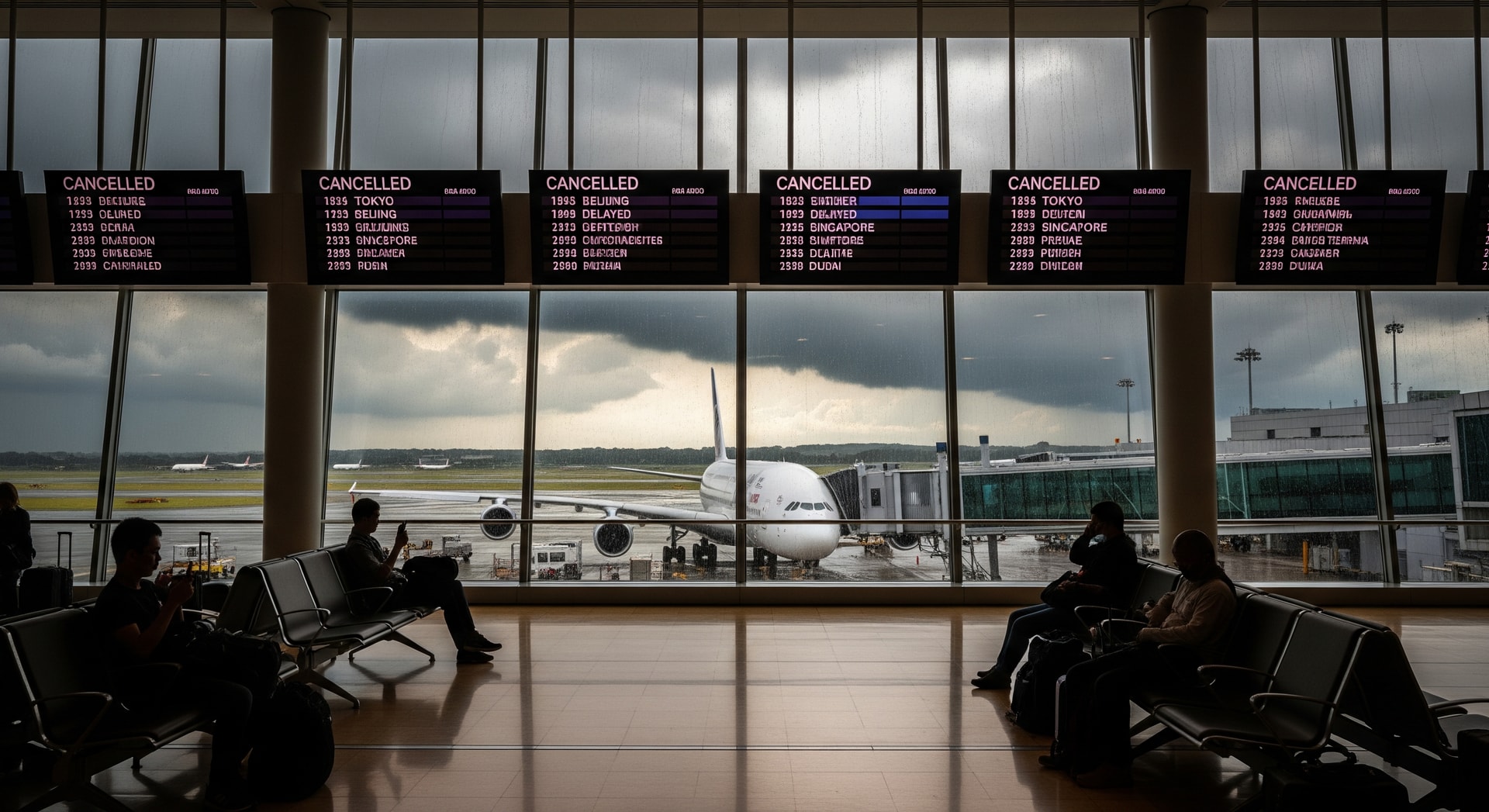
Severe weather has caused flight cancellations across Asia and forced 1,336 delays, leaving passengers stranded in cities including Shanghai, Mumbai, Tokyo and Shenzhen.
Summary: Severe weather across Asia grounded at least 10 flights and produced 1,336 delays, affecting Air China, Air India, Shenzhen Airlines and Japan Airlines and leaving travellers stranded in major hubs such as Shanghai, Mumbai, Tokyo and Shenzhen.
A series of extreme weather events across Asia has led to widespread flight cancellations and disruption to schedules for several major carriers. Airlines including Air China, Air India, Shenzhen Airlines and Japan Airlines reported grounded services and long delays, with hotspots of disruption in Shanghai, Mumbai, Tokyo and Shenzhen.
Scope of the disruption
Combined, airlines recorded 1,336 delayed flights and at least 10 cancelled services as adverse weather conditions made operations unsafe or unworkable across multiple airports. The cancellations affected a mix of domestic and international routes and created knock-on delays at several major regional hubs.
Air China: key cancellations and affected airports
Air China reported multiple cancellations on important domestic segments as storms and shifting weather patterns hit central and northern routes. These disruptions left passengers at a number of airports seeking alternatives.
- Hangzhou (HGH) to Chongqing (CKG) – Flight: CCA4578 (Fri 08:20 PM CST)
- Hohhot (HET) to Ulanhot (HLH) – Flight: CCA8169 (Sat 04:05 PM CST)
- Ulanhot (HLH) to Hohhot (HET) – Flight: CCA8170 (Sat 07:00 PM CST)
Air India: international and domestic routes affected
- Vienna (VIE) to Mumbai (BOM) – Flight: AIC180 (Fri 02:05 PM CET)
- Mumbai (BOM) to New Delhi (DEL) – Flight: AIC179 (Sat 08:10 AM IST)
- New Delhi (DEL) to San Francisco (KSFO) – Flight: AIC179 (Sat 12:40 PM IST)
Shenzhen Airlines: southern China connections disrupted
- Shanghai Pudong (PVG) to Shenzhen (SZX) – Flight: CSZ9522 (Fri 07:20 PM CST)
Japan Airlines: regional routes affected
- Hanamaki (HNA) to Osaka (ITM) – Flight: JAL2190 (Fri 06:45 PM JST)
- Tokyo (HND) to Izumo (IZO) – Flight: JAL287 (Sat 06:20 PM JST)
- Izumo (IZO) to Tokyo (HND) – Flight: JAL276 (Sun 07:50 AM JST)
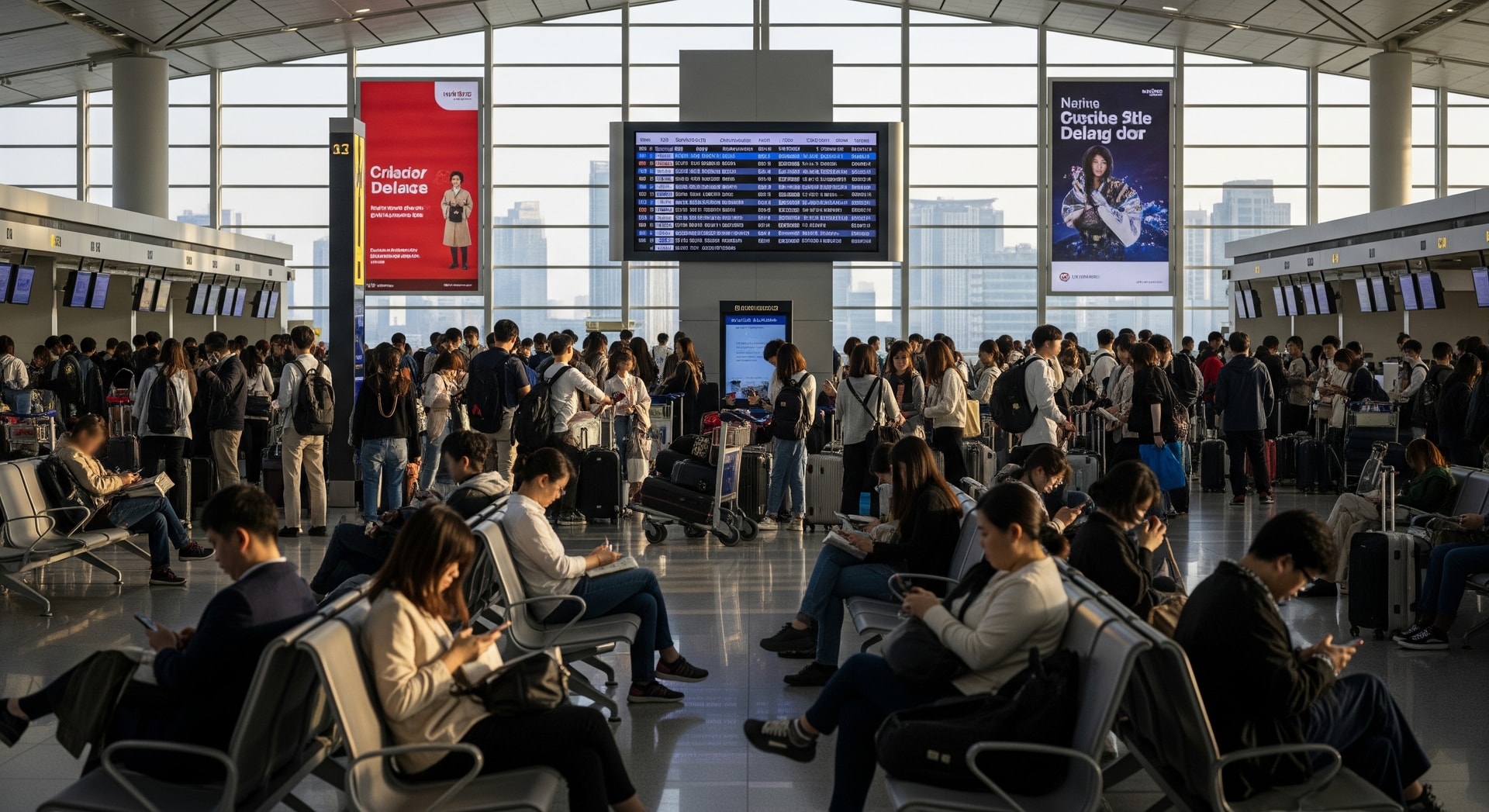
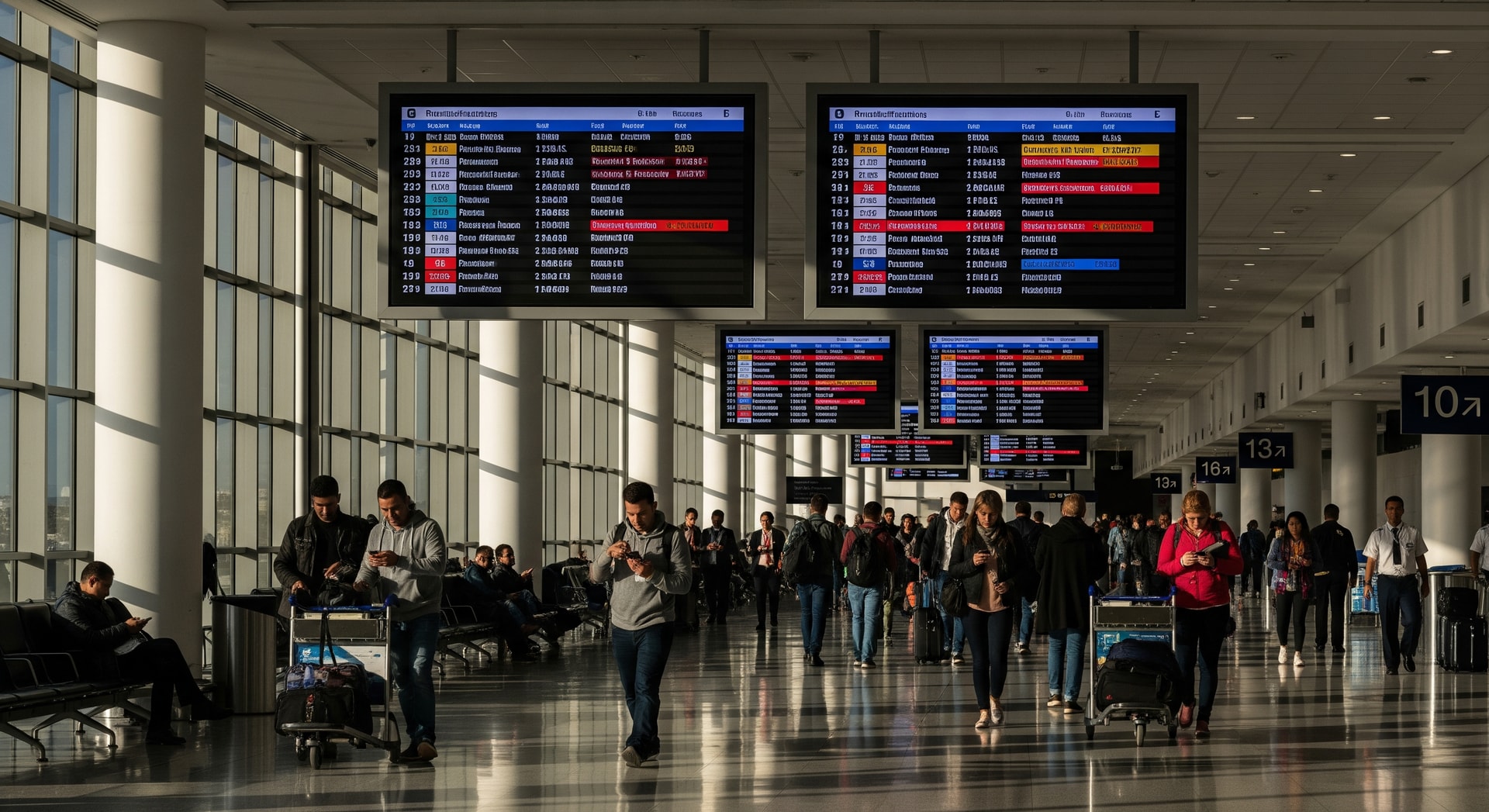
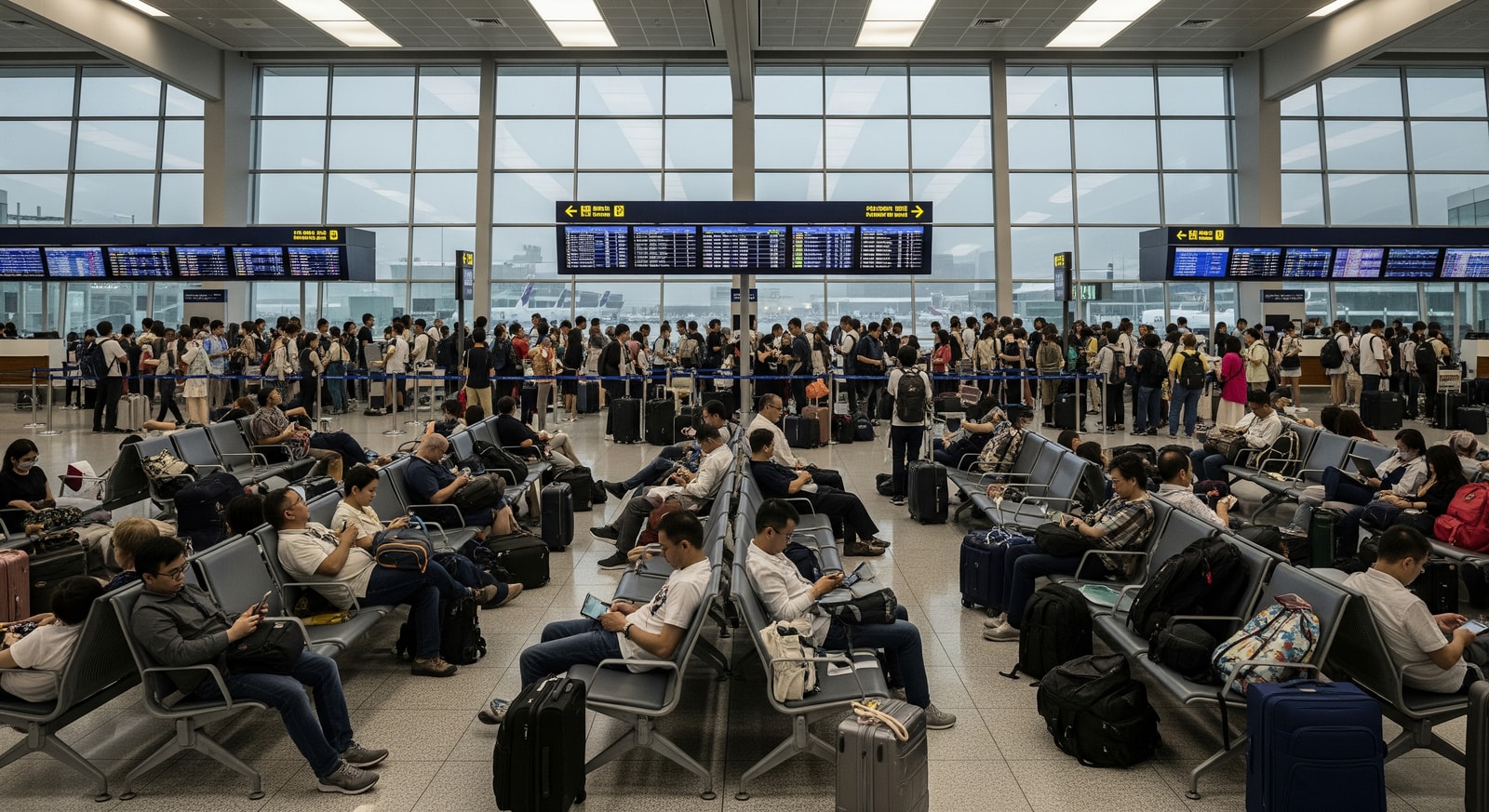
Thousands of passengers faced uncertainty at terminals as many were rebooked onto later flights, while others sought alternative ground transport. Crowded airports and long queues were widely reported as staff worked to reschedule travellers and manage the sudden surge in demand for assistance.
Impact on local tourism and businesses
The ripple effects of the cancellations have been felt beyond airports. Cities that depend on incoming travellers — particularly Shanghai, Mumbai, Tokyo and Shenzhen — reported declines in footfall at hotels, restaurants and attractions as visitors missed connections or postponed plans.
How passengers are coping
- Many travellers were rebooked on later flights by airlines.
- Some passengers opted for trains or buses to reach destinations when flights were unavailable.
- Last-minute accommodation was arranged for those unable to leave the airport the same day.
- Delayed travellers faced extended wait times and uncertainty at busy terminals.
Looking ahead: resilience and lessons for the industry
Industry observers note that these disruptions highlight the need for improved weather preparedness and clearer communication between airlines, airports and passengers. The tourism and aviation sectors can reduce future impacts by enhancing real-time updates, better contingency planning and adopting more flexible cancellation policies.
Why this matters: For travellers, the recent chaos underscores that severe weather can rapidly upend travel plans. Expect possible rebookings, longer waits and the need to consider alternative transport or accommodation when planning trips in affected regions. For the industry, the disruptions present an impetus to strengthen operational resilience and passenger communications so future weather events cause less widespread disruption.
Sources