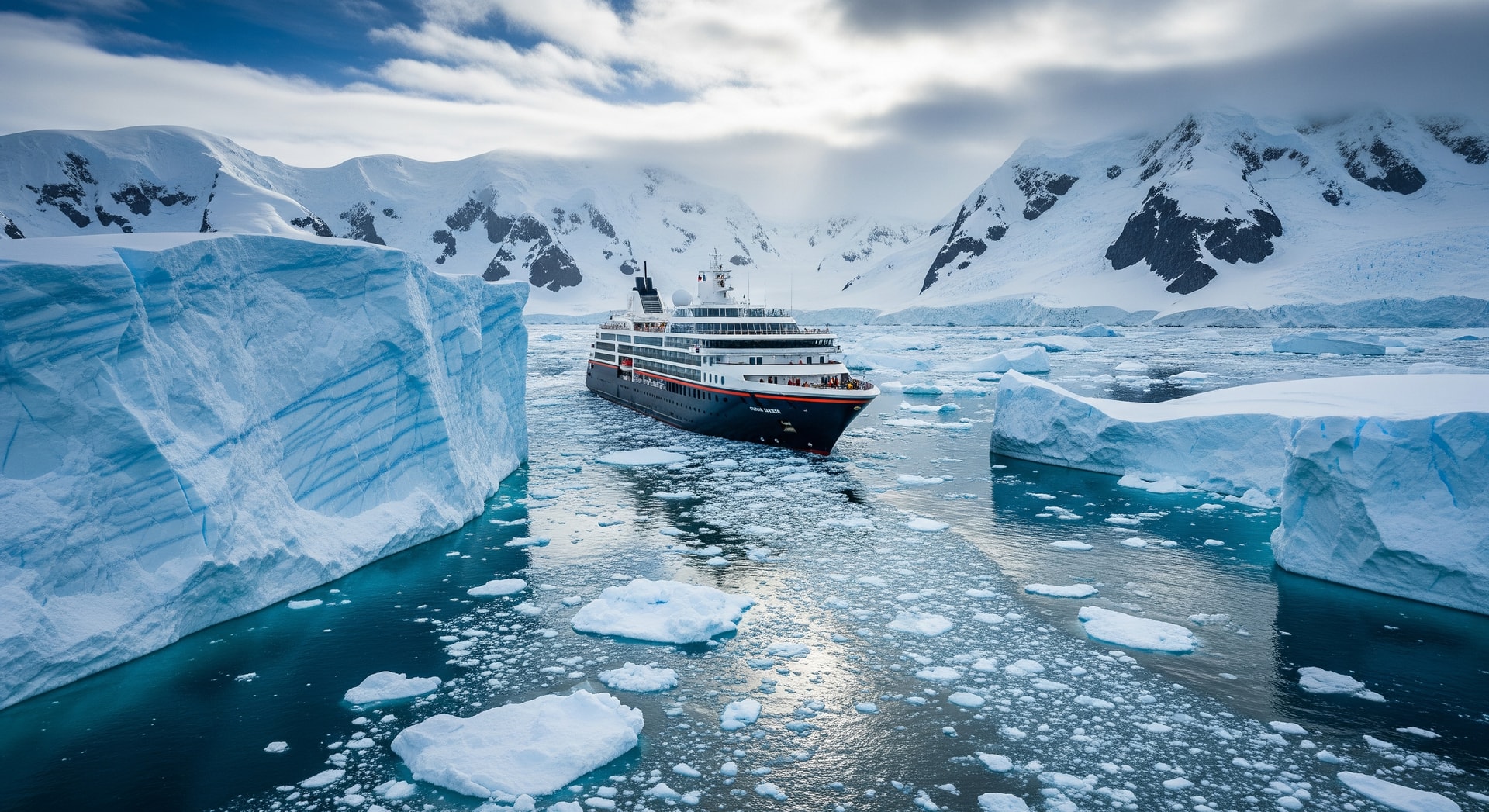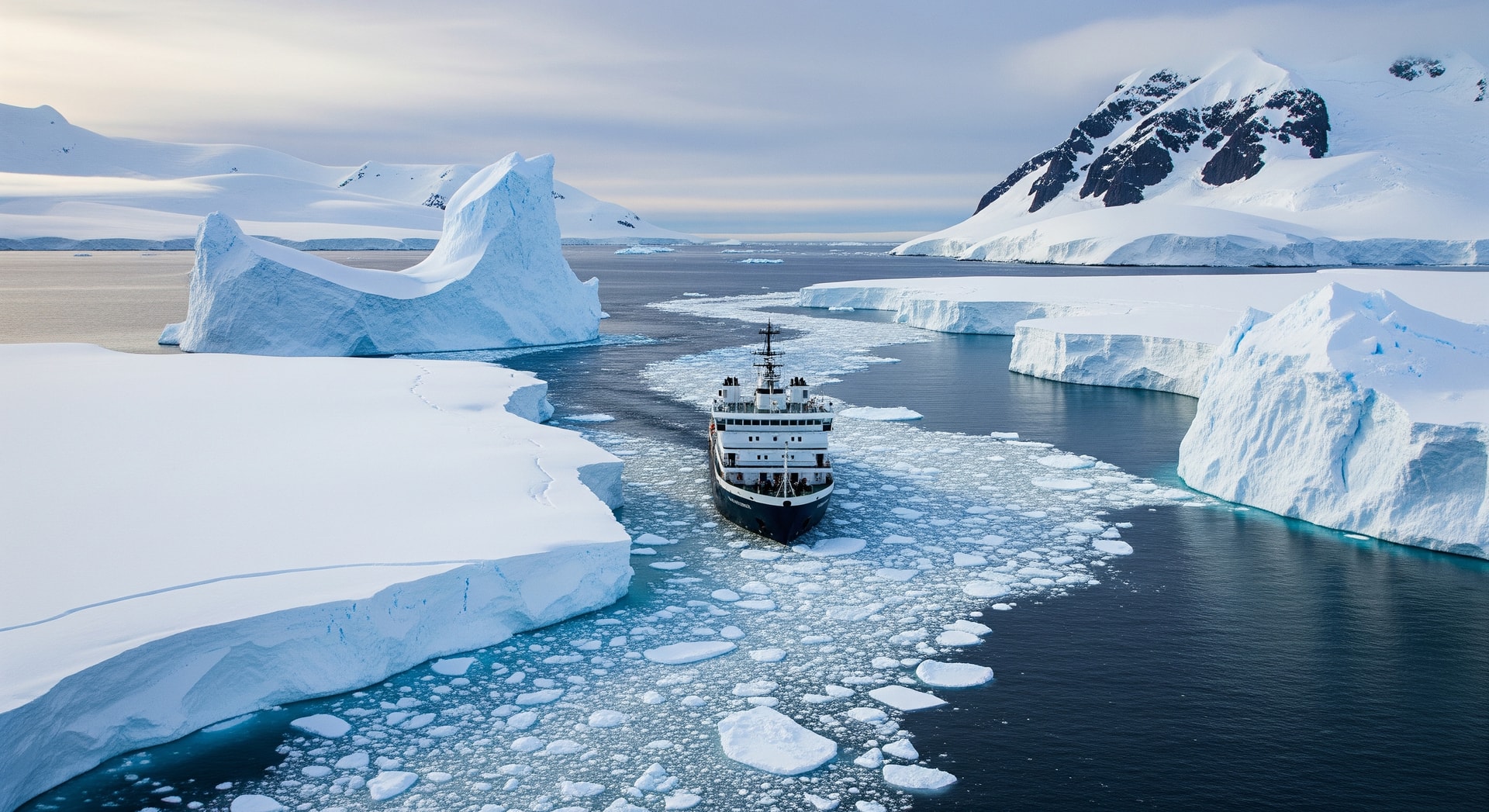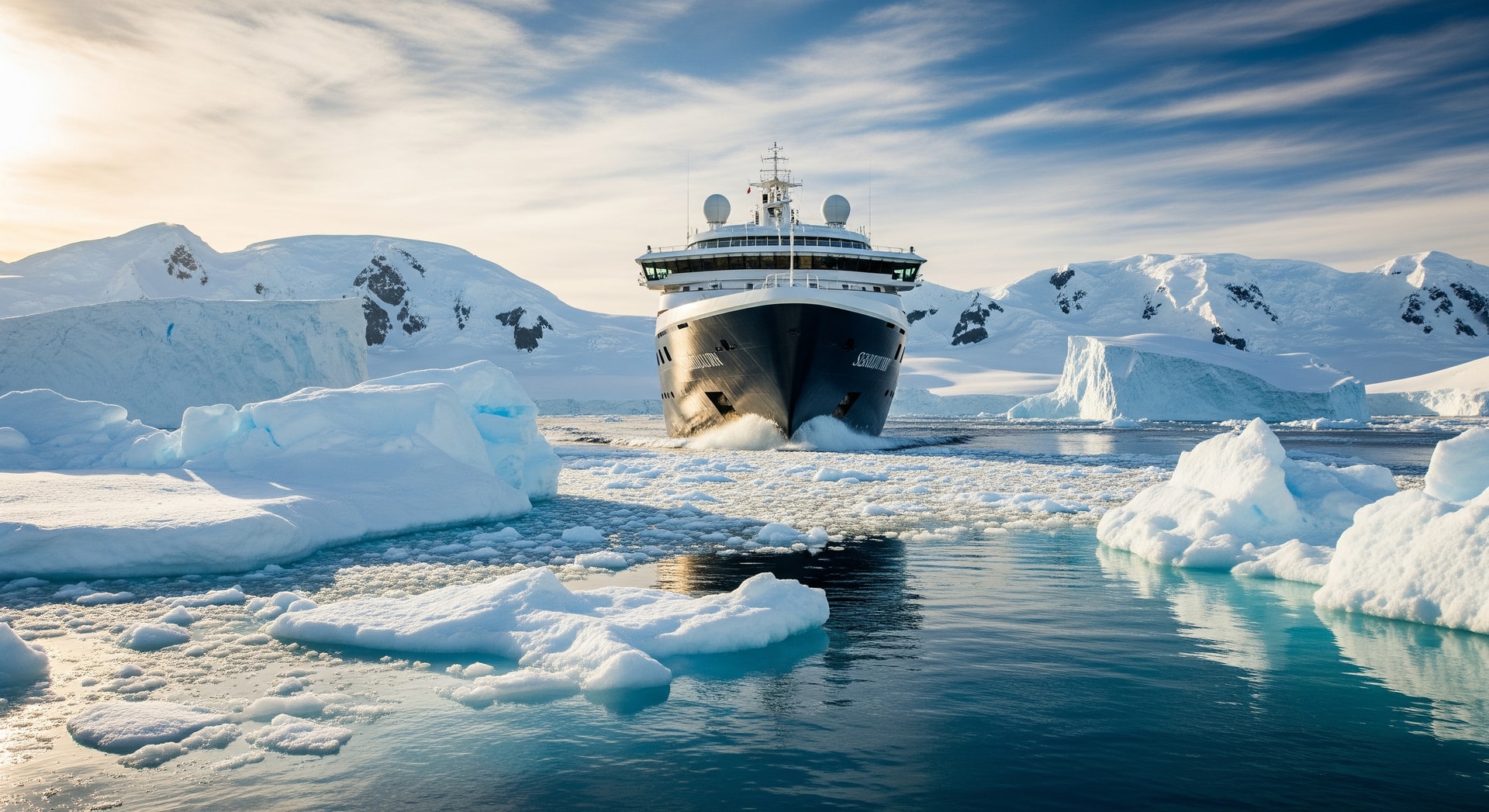
Seabourn Venture reached the farthest south point ever recorded by Seabourn—or any Carnival Corporation ship—sailing to 70°S on a 12-day Antarctic expedition.
Summary: On a 12-day voyage from 28 January to 9 February 2026, Seabourn Venture reached 70°S—the furthest south any Seabourn or Carnival Corporation ship has sailed—venturing into George VI Sound and visiting historic Base E on Stonington Island.
Seabourn Venture reached a record southern latitude during a 12-day Antarctic expedition between 28 January and 9 February 2026. The ship sailed to 70 degrees south, the most southerly point ever achieved by any Seabourn vessel or by a ship within the Carnival Corporation fleet, marking a landmark moment for luxury polar travel.
Pushing Beyond Traditional Routes
The expedition deviated from standard Antarctic itineraries, crossing the Antarctic Circle and becoming the most southerly ship to navigate the Antarctic Peninsula. This permitted access to remote sectors of the continent seldom reached by commercial expedition ships.
Exploring George VI Sound
The voyage included navigation into George VI Sound, a remote channel stretching roughly 300 miles and notable for its expansive ice shelf. The sound separates Alexander Island from Palmer Land and has been largely untouched by modern cruise traffic.
Seabourn’s penetration of these waters represented the first time a vessel from the line had sailed there, underscoring the company’s growing role in deep-polar expedition cruising and its capability to reach isolated geographic features.
A Champagne Toast on the Sea Ice
At 69.5 degrees south, guests were invited onto the Antarctic sea ice for a commemorative champagne toast. The moment combined luxury service with the stark grandeur of the polar environment, creating a rare experiential highlight for passengers.
Visiting Historic Base E on Stonington Island
The itinerary included a call at Base E on Stonington Island, a former British research station established in 1946 and rebuilt in 1960. Located at about 68°11′S, Base E is among the southernmost historic sites on the Antarctic Peninsula and offers insight into mid-20th century scientific endeavours.
Passengers were able to explore the remains of the station and learn about its past contributions to geology, meteorology and biology, adding an educational and historical dimension to the voyage.
Zodiac Landings and Close Encounters with Wildlife
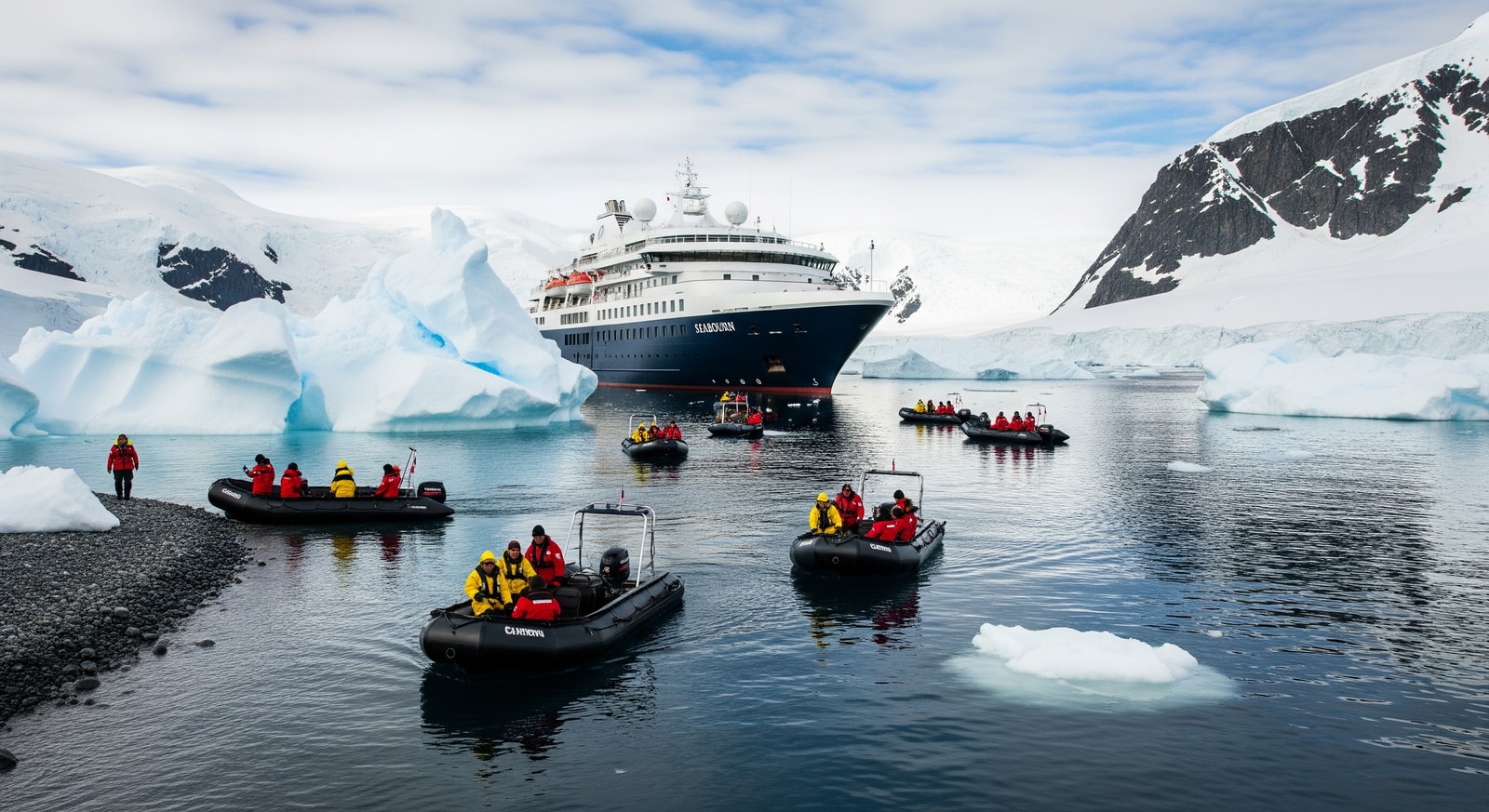
The expedition made extensive use of Zodiac boats to enable intimate landings along icebound coasts. These small craft allowed passengers to approach dramatic ice formations and observe native wildlife—including penguins and seals—under the guidance of expert naturalists.
Luxury Meets Responsible Exploration
The voyage showcased Seabourn’s approach to combining high-end hospitality with serious expedition capabilities. The line emphasised guest education and environmental stewardship while providing comfort and service typical of luxury cruising.
Seabourn has indicated that sustainability and minimal environmental impact are priorities as it expands polar offerings, seeking to balance visitor access with conservation of Antarctica’s fragile ecosystems.
Why This Matters to Travelers and the Industry
Seabourn Venture’s achievement signals growing demand for deeper, more remote polar experiences and demonstrates that luxury lines can safely operate in challenging environments. For travellers, it expands the range of high-end expedition options; for the cruise industry, it sets a new operational benchmark for reaching remote Antarctic locations.
So what? If you are considering polar travel, this voyage illustrates that operators are increasingly able to offer immersive, responsibly managed itineraries to seldom-visited Antarctic sites—combining education, wildlife viewing, and unique shore experiences with luxury onboard amenities.
Sources