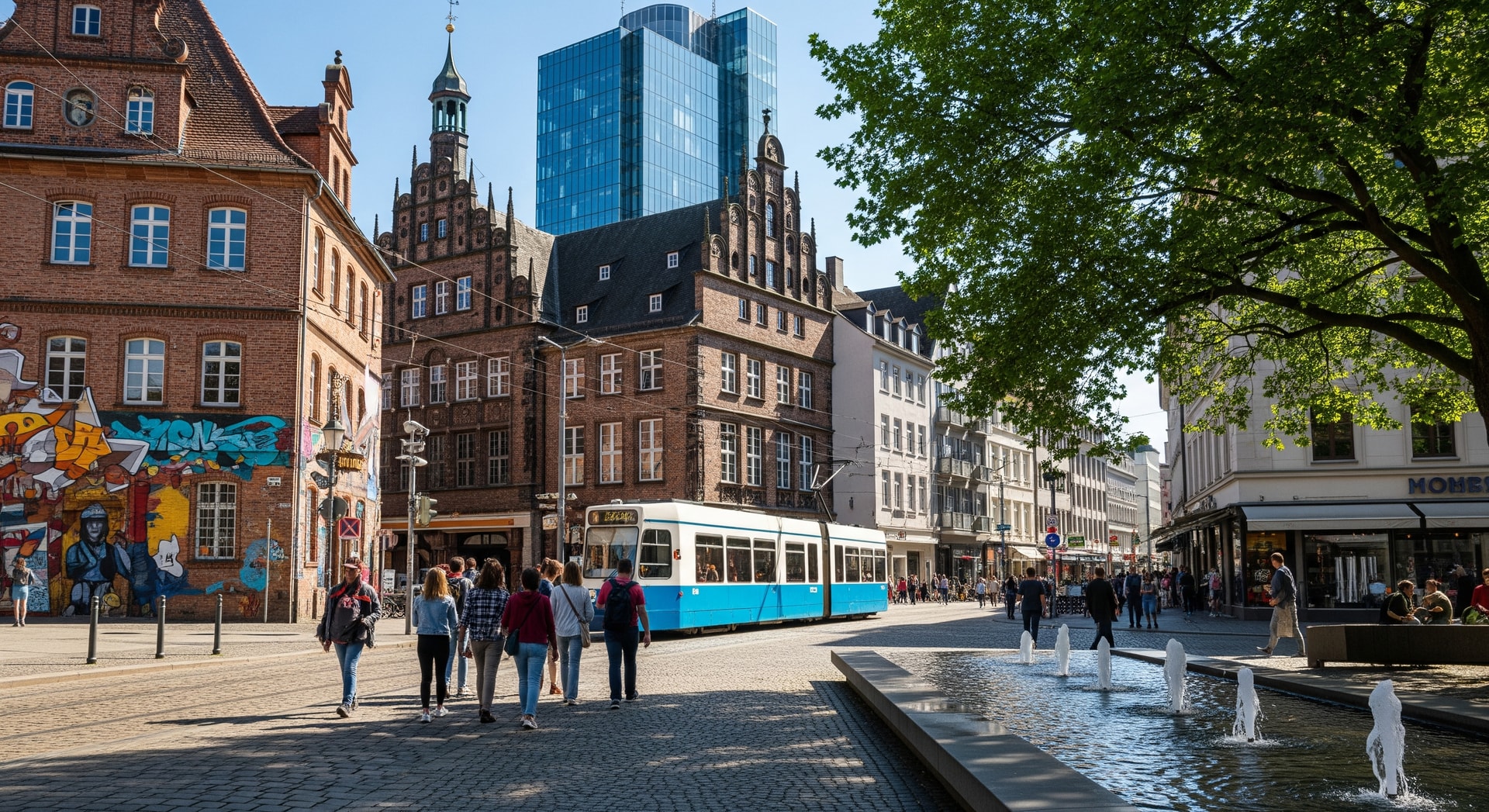
Germany tourism crisis deepened in 2025 as international arrivals fell, joining Iceland and Ireland in a year of sharp declines; Hamburg, however, recorded growth and rising international nights.
Summary: The Germany tourism crisis widened in 2025 as foreign arrivals fell, aligning the country with downturns seen in Iceland and Ireland. Yet Hamburg bucked the trend with higher guest numbers and growing international nights.
In 2025 Germany joined Iceland and Ireland in what observers are calling the tourism crisis of the decade. While headline figures showed nearly 497.5 million guest nights across Germany, closer inspection reveals a fragile picture: the overall rise was just 0.3 percent and foreign guest stays fell by 1.8 percent to 83.8 million, underscoring a growing Germany tourism crisis driven by falling international arrivals.
Germany’s 2025 snapshot
Although total overnight stays reached almost 497.5 million in 2025, that figure masks a shift toward domestic travel. The share of foreign visitors slipped from 17.2 percent to 16.8 percent, reflecting fewer overseas arrivals and greater reliance on local demand to sustain room nights.
Why international arrivals fell
Multiple pressures combined to reduce cross-border travel to Europe in 2025: inflation and higher energy prices raised costs for visitors, airlines passed on fuel surcharges, hospitality VAT increases pushed up prices, and geopolitical tensions—especially the ongoing conflict in Eastern Europe—deterred long-haul travellers from markets such as the United States and the United Kingdom.
Berlin’s struggle
Berlin, long a major draw for international culture and nightlife, recorded 11.37 million overnight stays between January and November 2025—a three percent decline from 2024. November figures showed a 0.1 percent dip in guest numbers and a 2.4 percent fall in overnight stays. High prices and safety concerns were cited as factors reducing trips from Berlin’s key markets, including the United Kingdom, the Netherlands and Spain.
Hamburg bucks the trend
Contrary to the national pattern, Hamburg posted growth in 2025. According to Statistics Office North, accommodation providers in Hamburg welcomed 652,504 guests in November 2025, a 4.4 percent increase year-on-year, while overnight stays rose 0.4 percent. Nights by domestic guests slipped 0.3 percent, but nights by international visitors grew 3.1 percent, with foreign tourists making up almost 20 percent of overnight stays in the city.
- Hamburg guests (Nov 2025): 652,504 (up 4.4%)
- Overnight stays in Hamburg (Nov 2025): +0.4%
- International nights in Hamburg (Nov 2025): +3.1% (nearly 20% share)

Iceland: boom slows to stagnation
Iceland’s rapid tourism expansion cooled in 2025. Keflavík Airport handled 8.1 million passengers—two percent fewer than in 2024—and departures by foreign tourists fell 0.4 percent. While Iceland remained popular (almost 2.3 million foreign visitors in 2024), the pace of growth has clearly moderated.
Regional contrasts in Iceland
Reykjavík experienced sharper declines than the national average: hotel overnight stays in the capital fell 16.4 percent in December 2025 versus an 11.4 percent national drop, and occupancy plunged by 12.4 percentage points in the city. By contrast, other regions showed resilience—hotel nights in North Iceland rose 11.2 percent in December, while the Southwest, home to the Blue Lagoon and Golden Circle, increased 9.6 percent, showing how regional offerings can offset capital losses.
Ireland’s setback and partial rebound
Ireland faced a sharp drop early in 2025: the Central Statistics Office reported a 15 percent fall in foreign visitors in March year-on-year, accompanied by a 22 percent reduction in visitor spending and an 8 percent decline in visitor nights. Operational issues at Dublin Airport, high inflation and severe storms contributed to the slump. Later in the year some recovery emerged—October recorded a 4 percent increase in foreign arrivals, November improved by 13 percent year-on-year, and December surged 34 percent versus December 2024—yet the cumulative year-to-October total remained 6.4 percent below 2024 and the full-year total still finished about 3 percent down.
Barcelona, wider Europe and lessons learned
Catalonia faced year-end weakness: Idescat recorded a 7.3 percent drop in foreign arrivals to Barcelona in December 2025. Across Europe, international arrivals showed only marginal growth in 2025, with cities dependent on overseas visitors—such as Berlin, Reykjavík and Barcelona—most affected. Regions that diversified markets or leaned on domestic travel tended to fare better, as Hamburg and parts of Iceland demonstrated.
- Invest in value and safety to reassure travellers
- Diversify source markets beyond traditional feeders
- Support domestic tourism to stabilise occupancy
- Manage taxation and costs to remain price-competitive
What this means for travellers and the industry
So what? For travellers, the 2025 downturn may bring more targeted offers, regional promotions and flexible options as destinations seek to attract visitors. For the industry, the year is a warning: overreliance on a narrow set of markets and high operating costs leave destinations exposed. Cities and countries that broaden market reach, prioritise value, and promote regional diversity—examples shown by Hamburg and parts of Iceland—are best placed to navigate the current crisis and support a sustainable recovery.
Sources