A new Booking.com for Business report says Gen Z and Alpha are reshaping corporate travel policies, as employers respond to rising expectations for flexibility, digital booking tools, and purpose-led work travel.
Summary: A Booking.com for Business report says Gen Z and Alpha will make up 49% of the global workforce by 2034, pushing companies to update travel policies around flexibility, digital booking, and “bleisure” extensions. The report also highlights demand for seamless, personalised booking experiences and growing comfort with AI-enabled travel services.
Gen Z and Alpha are reshaping corporate travel policies, according to a new report from Booking.com for Business that links shifting workforce demographics to changing expectations around work trips. The report argues that younger employees are increasingly influencing how companies design, book, and manage business travel.
Workforce demographics are changing business travel demand
Booking.com for Business projects that Gen Z and Alpha will represent 49% of the global workforce by 2034. In the report’s view, that shift has direct implications for corporate travel because these cohorts are emerging as major drivers of demand for work-related trips.
The report also estimates that Gen Z alone will account for 34% of the global workforce by 2034, which would make it the largest generational group in employment. As this group grows, the report suggests that travel opportunities are becoming a more visible part of what employees look for in a role.
Travel is part of job appeal for younger employees
Among Gen Z respondents highlighted in the findings, 57% said roles that offer exposure to other cultures are attractive. Separately, 70% reported that they look forward to travelling for work, reinforcing the idea that business travel can be viewed as a benefit rather than only a requirement.
- Gen Z and Alpha projected share of global workforce by 2034: 49%
- Gen Z projected share of global workforce by 2034: 34%
- Gen Z who find roles with exposure to other cultures attractive: 57%
- Gen Z who look forward to travelling for work: 70%
Digital-first expectations and comfort with AI-enabled travel services
The report describes Gen Z as digital natives who are used to booking through online and mobile channels. It says this familiarity translates into expectations for smooth booking flows and tailored suggestions, and it notes a high level of comfort with AI-enabled travel services.
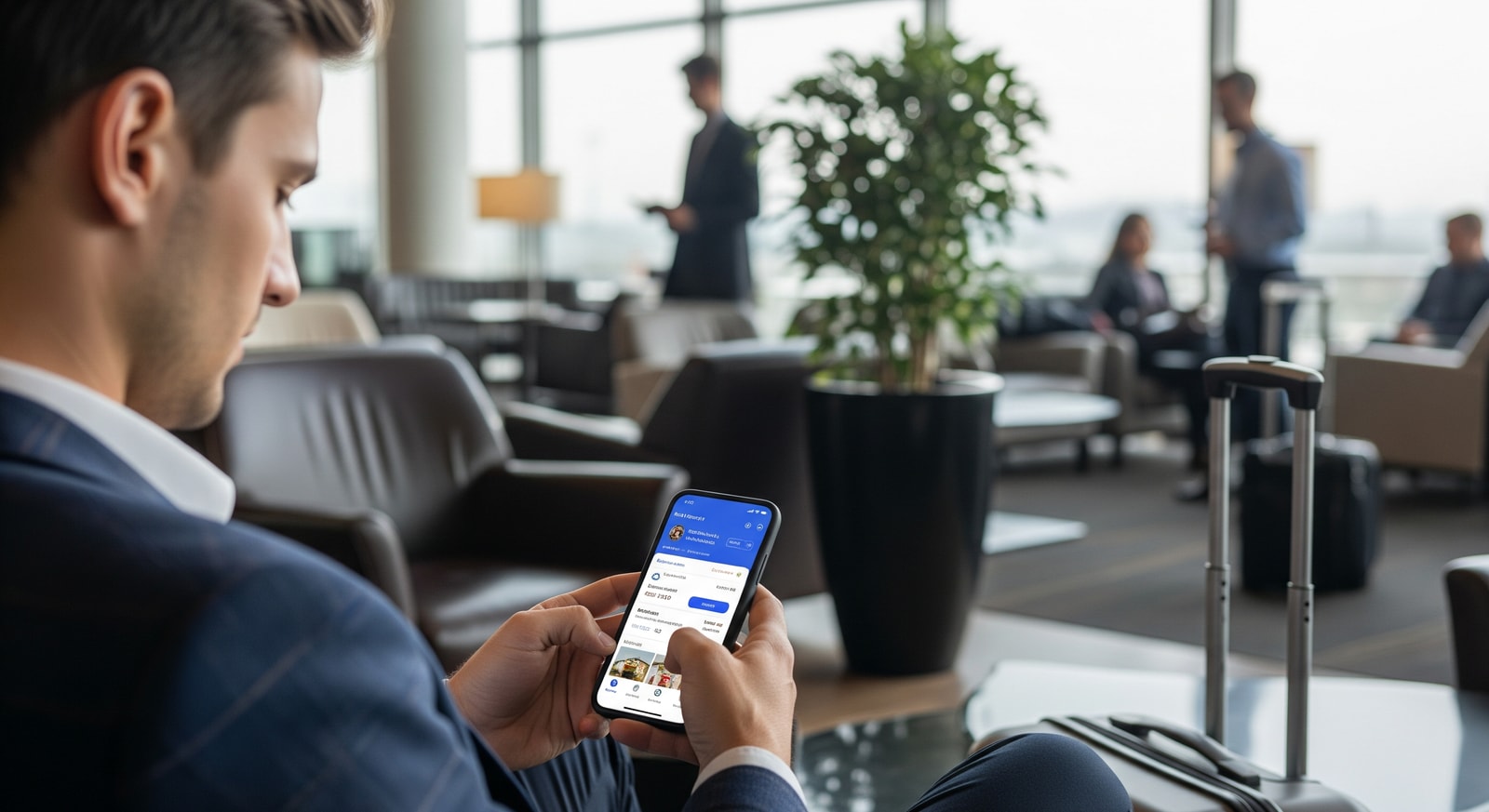
Beyond convenience, the findings frame business travel for Gen Z as tied to productivity, personal development, and a broader sense of purpose. This combination, the report suggests, is influencing how companies think about the value of travel and the experience they provide to employees on the road.
Flexibility and “bleisure” travel are becoming policy priorities
Workplace flexibility is another theme emphasised in the report. It says Gen Z and Millennials rank flexibility as the top reason for staying in a job, and it connects that preference to corporate travel rules that allow more adaptable itineraries.
In travel terms, the report points to the growing practice of extending work trips for leisure—often called “bleisure” travel. It argues that clearer boundaries and more flexible approaches to these extensions are becoming increasingly relevant for employers updating travel policies.
Corporate travel platforms aim to balance autonomy and oversight
The report also highlights the role of corporate travel platforms in enabling what it describes as “controlled flexibility.” In this model, employees can manage their own bookings while organisations retain oversight—positioned as a way to support traveller choice without losing control of budgets and compliance.
“We believe successful business travel combines consumer-level simplicity, ease, and rewards with financial discipline: Clear policies, flexible options, and technology that removes friction. When you design trips that respect employee time, company budget, and traveller wellbeing, you can transform business from a cost centre into a growth channel for generating revenue and building stronger teams. That’s the opportunity this trend report points to, and it’s within reach for every SME.”
The comments were made by Joshua Wood, Director at Booking.com for Business, who linked policy clarity and flexible options with technology designed to reduce friction in the booking and travel process.
What this means for business travelers and the travel industry
For travelers, the report’s findings point to a workplace environment where business trips may come with more self-service booking, more personalised digital support, and clearer rules for mixing work and leisure time. For companies and travel providers, it signals that policy design and travel tech choices will increasingly need to meet consumer-style expectations while still enforcing budget and duty-of-care requirements.
Why this matters: as younger generations become a larger share of the workforce, travel programmes that are easy to use, transparent about what’s allowed, and flexible enough to accommodate modern work patterns are likely to be more competitive—both for attracting talent and for keeping business travel efficient and compliant.
Sources