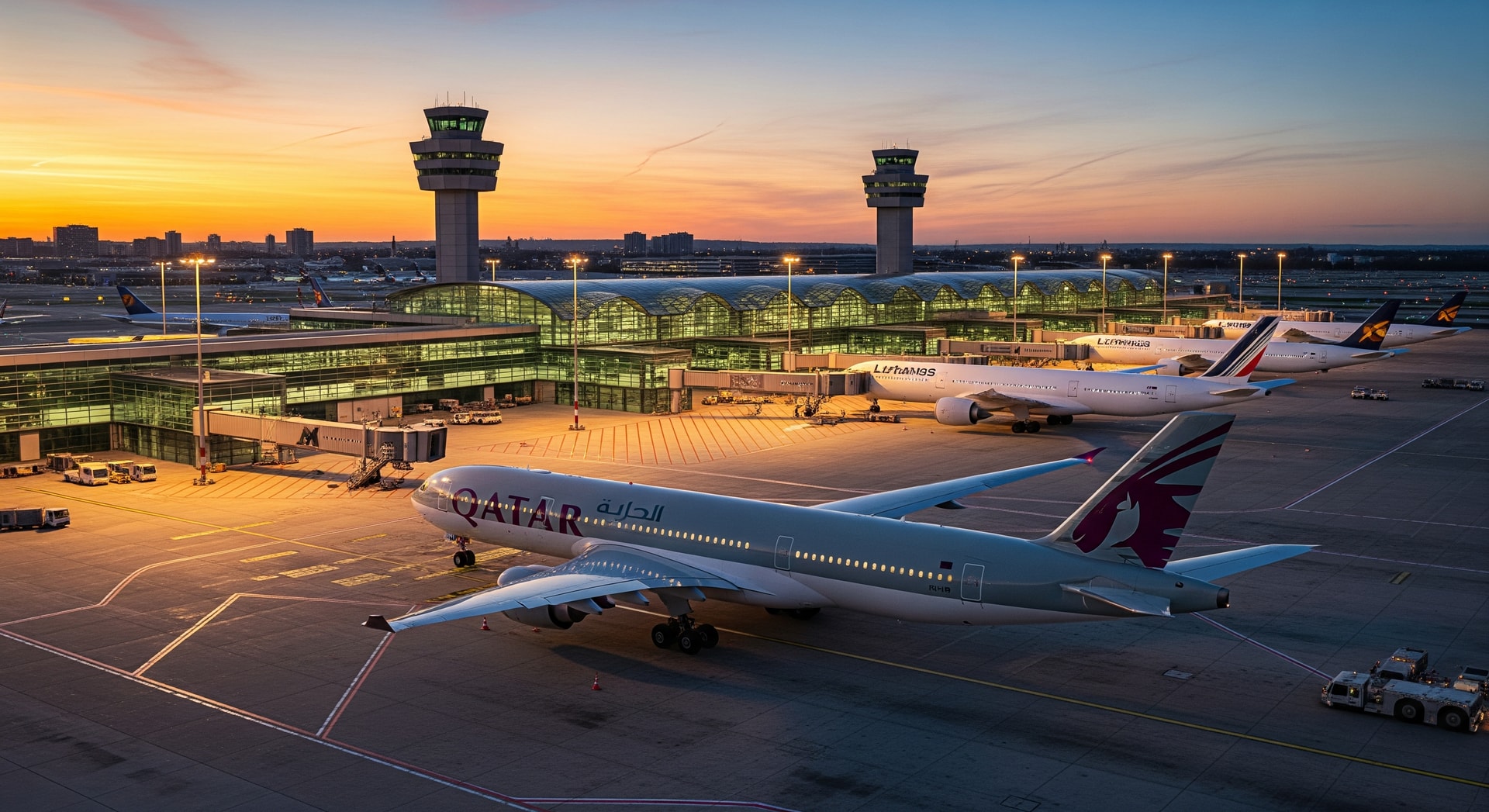
Calls to suspend the EU–Qatar aviation agreement have prompted Europe’s airports to warn the move would weaken connectivity, reduce consumer choice and harm the EU’s credibility.
Summary: Europe’s airports warned that proposals to suspend the EU–Qatar aviation agreement would undermine air connectivity, limit consumer choice and damage the EU’s international standing, while noting no evidence of Qatar Airways holding an unfair dominant position.
Brussels-based airport organisations have voiced strong opposition to recent calls to suspend the EU–Qatar aviation agreement, saying such a step would weaken international linkages, reduce options for travellers and risk the EU’s credibility on the world stage.
Airports warn suspension would harm connectivity
Representatives of Europe’s airport community argue that withdrawing from the Comprehensive Aviation Agreement with Qatar would set back progress on open market access and hurt local communities, passengers and businesses that rely on diverse international links.
Airports point out that the deal was negotiated by the European Commission at the request of EU Member States, overseen by those states and approved by them, and that it aligns with the EU’s External Aviation Policy — which emphasises open access, regular consultations and regulatory convergence.
- The agreement has helped airports broaden their international connectivity.
- Airports say there is no clear evidence the deal enabled Qatar Airways to gain an unfair market dominance.
- Qatar Airways’ seat capacity in Europe for the IATA Winter season (Oct 2025–Mar 2026) remains about 10% below its pre-pandemic 2019 level.
ACI Europe calls for an aviation policy reset
Olivier Jankovec, Director General of ACI Europe, responded to the debate by warning about the broader consequences of rolling back existing agreements and urging a strategic rethink of EU aviation policy.
There is no question that suspending an existing EU aviation agreement would be damaging for Europe’s airports, and the communities and consumers they serve. Debates over the strategy and position of airlines from the Middle East have been dragging on for years and tend to be rather sterile. In fact, the widening competitive gap between European airlines and their competitors in other World regions is mainly of the EU’s own making. It is due to inadequate and damaging policies and regulations – ranging from taxation and insufficient support for decarbonisation to the failure to deliver the Single European Sky and airport capacity limitations. This only reinforces our call for an EU Aviation Strategy that delivers a much-needed aviation policy reset and ensures aviation is recognised and positioned within the EU’s competitiveness agenda.
Jankovec said such unilateral reversals could also harm Europe’s international credibility and reverse decades of liberalisation.
Rolling back an existing EU Comprehensive Aviation Agreement would also harm the EU’s standing internationally. Such a step would potentially take Europe back to the restrictive and anti-competitive aviation framework of the 1950s – directly contradicting the EU’s own agenda for competitiveness and global positioning.
Why airports say stability is essential
The airport community stresses that predictable international agreements protect connectivity and help sustain economic activity. They say abrupt policy shifts would create uncertainty for route planning, investment and airlines' commercial strategies.
What this means for travellers and the industry
If an agreement were suspended, passengers could face fewer route options and possibly higher fares as networks adjust. Airports and local economies that depend on international connections could see diminished inbound traffic and investment, while regulatory unpredictability may deter long-term infrastructure projects.
- Reduced connectivity on some long-haul or transfer routes.
- Potential loss of consumer choice and competitive pricing.
- Greater uncertainty for airport and airline investment decisions.
So what? Maintaining stable, predictable aviation agreements helps ensure passengers keep broad travel options and supports the economic roles airports play in their regions. For policymakers, the debate highlights the need for a coordinated EU strategy that addresses competitiveness, infrastructure limits and decarbonisation support rather than dismantling existing frameworks.
Sources