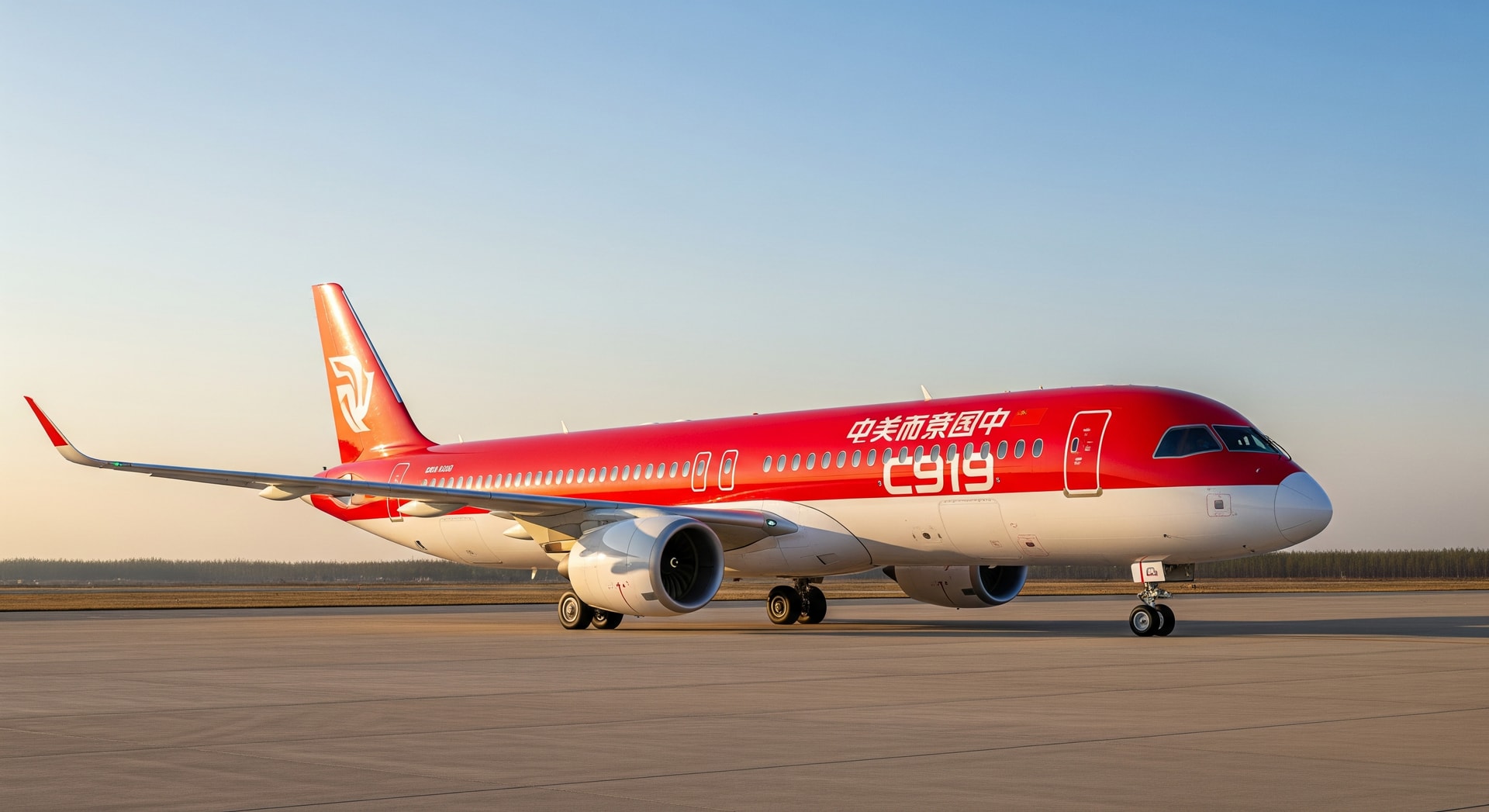
COMAC C919's introduction by Air China, China Eastern and Flydubai could broaden route networks and lower fares, with implications for airlines and the hospitality sector.
Summary: The COMAC C919 — China’s domestically produced narrow-body jet — is being prepared for operation by Air China, China Eastern and Flydubai. The aircraft promises competitive pricing, fuel efficiency and a 4,000–5,500 km range with up to 168 seats, potentially expanding routes and lowering fares while affecting global airline and hospitality markets.
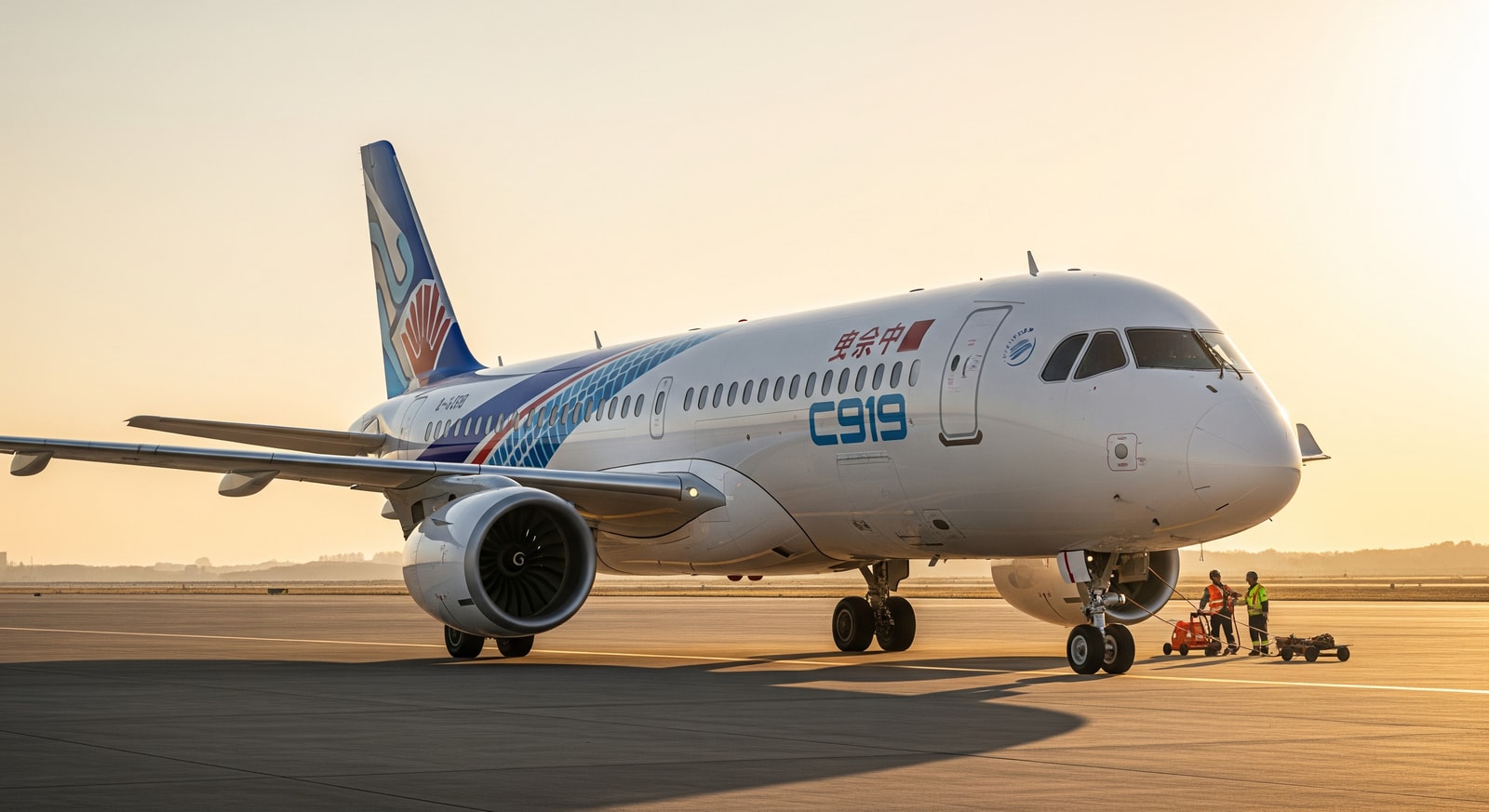
The COMAC C919 is set to enter service with carriers including Air China, China Eastern and Flydubai, a development that could challenge the longstanding duopoly of Boeing and Airbus on narrow-body jets. The C919 — which first flew in 2017 and offers an estimated range of around 4,000–5,500 km and seating for up to 168 passengers — aims to provide airlines a lower-cost, fuel-efficient alternative for short- and medium-haul routes.
What the C919 brings to the market
Designed to compete directly with best-selling models such as the Airbus A320 and Boeing 737 MAX, the C919 combines modern systems and claims of improved fuel economy with a competitive purchase price. COMAC positions the jet as a practical choice for the dense short- and medium-haul sectors that form the backbone of global air travel.
- First flight: 2017
- Range: around 4,000–5,500 km
- Seating: up to 168 passengers
- Target market: short- and medium-haul routes
Why airlines are adopting the C919
For carriers such as Air China, China Eastern and Flydubai, the C919 offers a path to diversify suppliers and potentially lower acquisition and operational expenses. COMAC’s home-market production and cost positioning are appealing factors for airlines seeking to grow networks without the premium pricing associated with long-established Western manufacturers.
- Reduced reliance on Airbus and Boeing
- Potentially lower purchase and operating costs
- Fleet commonality for domestic expansion in China
- Suitability for low-cost and full-service operations alike
Tourism and hospitality implications
Beyond fleet strategy, the C919’s wider adoption could influence travel patterns by enabling more frequent services, supporting new direct routes and lowering fares. Increased capacity and competition tend to stimulate demand, which in turn benefits hotels, tour operators and local economies in both established and emerging destinations.
- More direct connections between underserved city pairs
- Lower airfares from increased competition
- Higher hotel occupancy and broader tourist flows
- Expanded market access for destinations across Asia, the Middle East and Africa
Early adopters and regional impacts
Flydubai is positioned to be an early user of the C919 in the Middle East, leveraging Dubai’s hub status to connect Asia, Africa and Europe. Meanwhile, the two large Chinese carriers — Air China and China Eastern — plan to operate the jet domestically and, as certifications permit, on international routes to increase connectivity and affordability for travellers.
Markets likely to feel immediate effects include China and nearby tourism hubs in Southeast Asia (Vietnam, Thailand, Indonesia, Cambodia), South Asia (India) and parts of Africa (Nigeria). The Middle East — particularly the United Arab Emirates through Flydubai’s network — may also see new point-to-point options that attract budget-conscious visitors.
What travellers should expect
As the C919 gains international certification and wider deployment, passengers can anticipate lower ticket prices driven by greater competition, more direct routing options to previously underserved destinations, and modern in-flight systems as airlines add the new type to their short- and medium-haul fleets.
So what? For travellers and the travel industry, the arrival of COMAC’s C919 means potentially cheaper fares, expanded route choices and improved connectivity to emerging destinations — outcomes that could reshape booking patterns, hotel demand and regional tourism development.
Sources