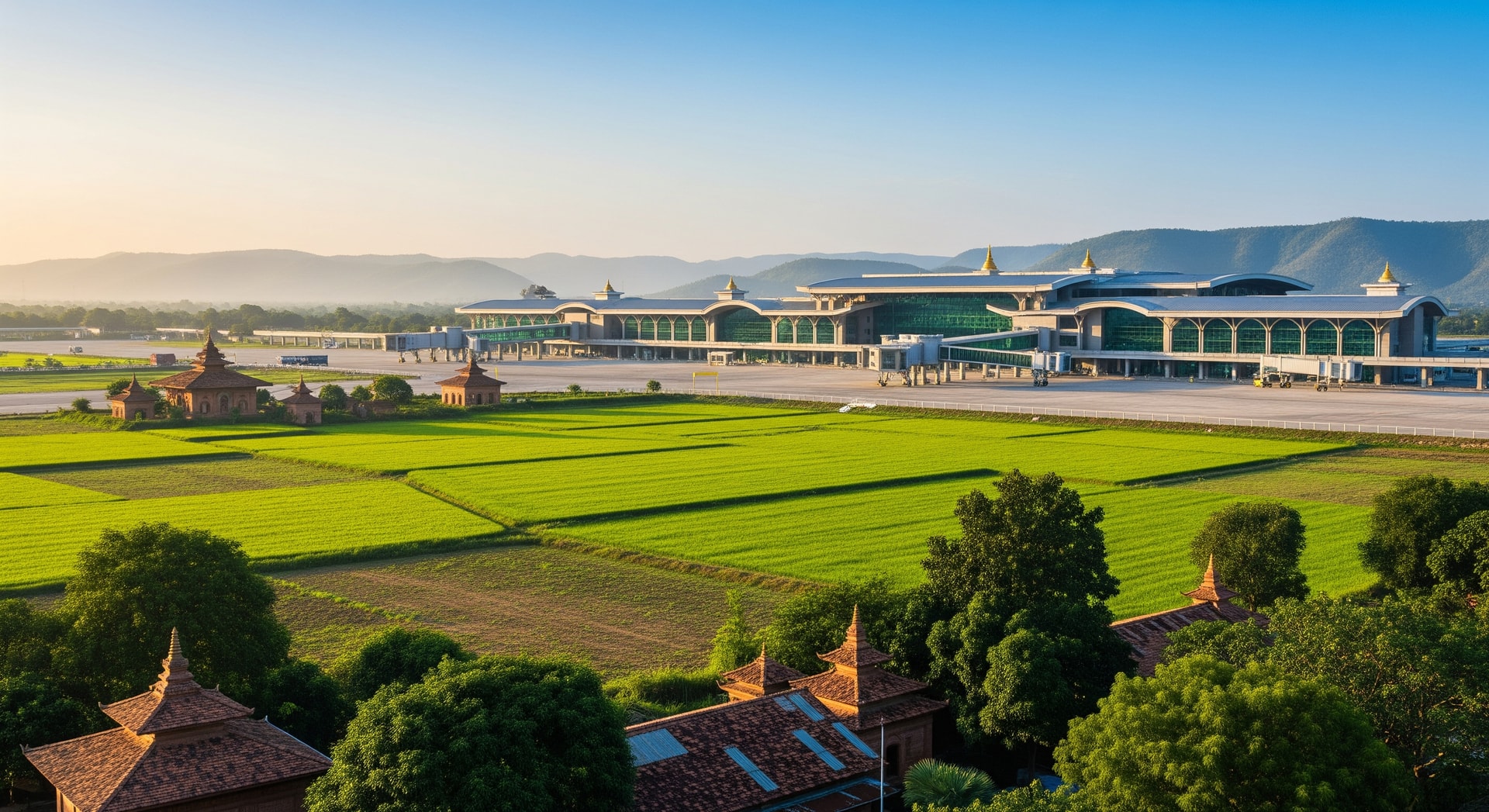
Bhairahawa Airport has unveiled a tourism growth plan to increase international arrivals and secure regular Thailand–Nepal flight connections by promoting Lumbini and regional attractions.
Summary: Bhairahawa Airport has rolled out a tourism growth plan to boost international passenger traffic, focusing on regular Thailand–Nepal connections and promotion of Lumbini to ensure sustainable flight services.
Bhairahawa Airport, officially known as Gautam Buddha International Airport and serving Lumbini — the birthplace of Buddha — has introduced a coordinated tourism growth plan to revive international flight activity. The strategy places special emphasis on restoring and sustaining regular air links between Thailand and Nepal by increasing foreign visitor arrivals to the region.
Why the Plan Was Needed
Since its opening nearly four years ago, Gautam Buddha International Airport has struggled to keep international routes operating on a regular basis. Although several international services have been launched in the airport’s early years, inconsistent passenger numbers — particularly from overseas tourists — have prevented airlines from committing to steady schedules.
A Collaborative Strategy Focused on Lumbini
Airport management has worked with local business owners, industrialists and travel associations in Rupandehi and Lumbini Province to design a multi-pronged approach. The plan seeks to raise the profile of Lumbini and nearby sites, using the area’s cultural and religious importance to draw more international visitors and fill seats on international services.
- Promote Lumbini and regional attractions to international markets
- Improve local tourism infrastructure — accommodations, transport and visitor services
- Engage airlines by demonstrating consistent passenger demand
- Coordinate with national and international tourism agencies for promotion
A key premise of the initiative is straightforward: airlines will be more likely to operate regular international routes if there is a reliable, sustained flow of passengers. To achieve that, the plan pairs targeted marketing with improvements to the visitor experience so that travellers stay longer and explore beyond Lumbini.
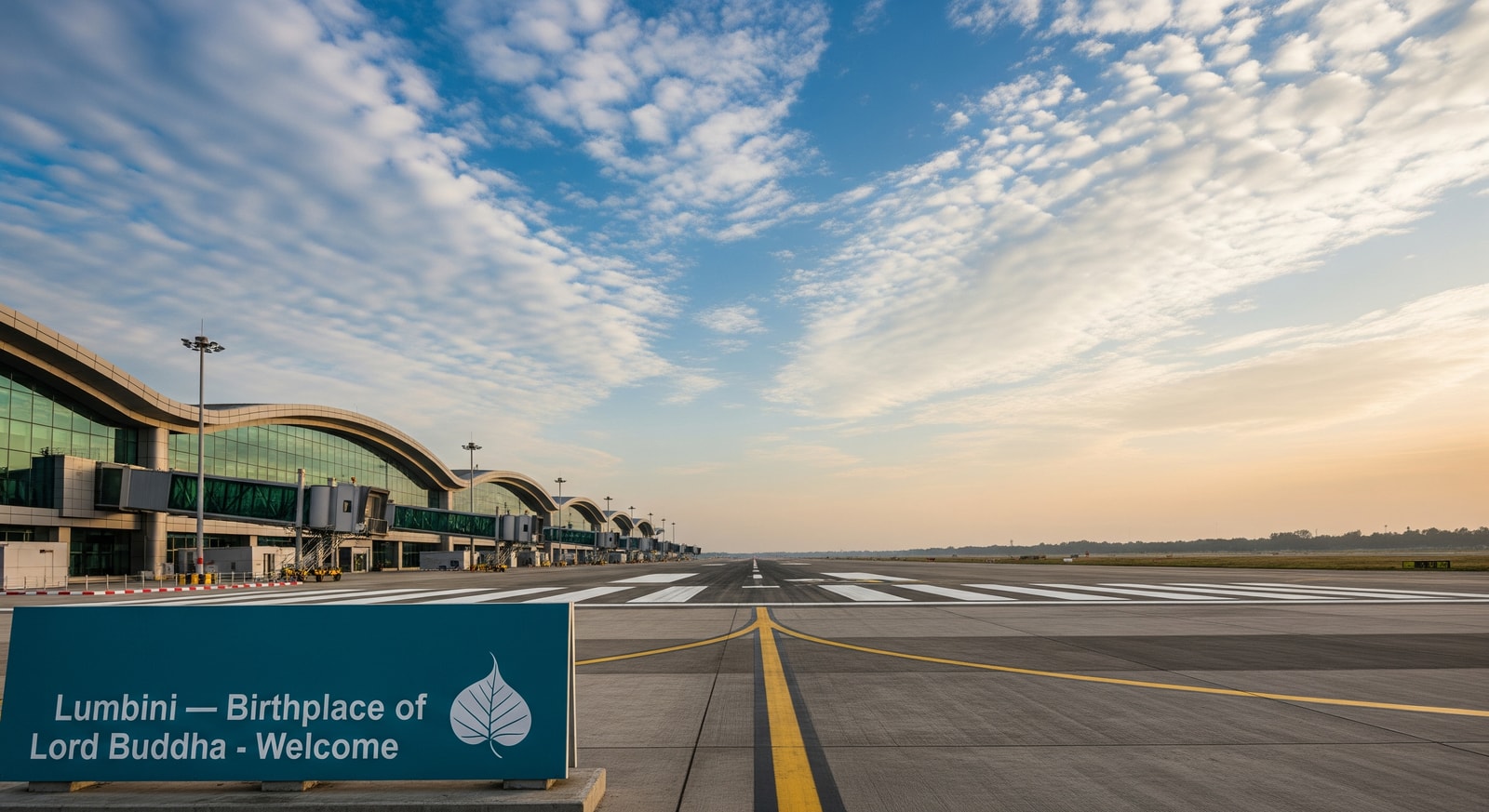
Infrastructure and Experience Upgrades
The growth plan includes steps to boost on-the-ground infrastructure: better lodging options, easier local transport links and enhancements to visitor services. The goal is to create smoother, more comfortable trips that encourage tourists to extend their stays and visit additional parts of Nepal beyond Lumbini.
Stakeholder Engagement and Promotion
Local tour operators and business leaders helped shape the strategy because of their direct knowledge of market demand and operational challenges. The airport has also reached out to bodies such as the Nepal Tourism Board and international tourism promotion agencies to elevate the region’s visibility to potential visitors.
Airport authorities believe that once marketing activities translate into stronger passenger flows, airlines will have a clearer commercial case to operate regular international services, including targeted links between Thailand and Nepal.
Proving the Case: High‑Profile Visits
An illustrative moment for the airport came when a member of the Thai royal family visited Lumbini: she transited through India, stayed at the Royal Thai Monastery in Lumbini, and departed on a chartered flight from Gautam Buddha International Airport. Officials point to this episode as evidence that, with the right promotion, the airport can handle notable international traffic.
If the strategy succeeds, Bhairahawa could develop into a dependable gateway for pilgrims, cultural tourists and other international visitors — supporting broader economic benefits across Rupandehi and Lumbini Province.
What This Means for Travelers and the Industry
For travellers, a sustained programme to boost arrivals could translate into more direct flight options between Thailand and Nepal, improved local services and easier access to Lumbini. For airlines and tourism operators, the initiative offers a framework to assess route viability by combining destination promotion with infrastructure improvements and stakeholder buy‑in.
So what? The plan matters because it addresses the core barrier to regular international services — passenger demand. If it works, travellers can expect more predictable connectivity and the region could see a durable uplift in tourism-driven economic activity.
Sources