Simple 4-step process — most applications approved within 3-5 business days
1
Complete the online application
Fill out our streamlined application form with your personal details, travel plans, and intended activities in the Mountain Kingdom. Our intelligent validation system guides you through each section, ensuring your application meets Lesotho immigration requirements for highland adventures.
2
Upload your documents
Submit your passport scan (bio page clearly visible), a recent passport-sized photograph, and proof of accommodation. Our visa specialists review every document against Lesotho Immigration standards before submission, significantly reducing the risk of rejection or delays.
3
We process your visa
Your verified application is submitted to Lesotho immigration authorities. We monitor processing status and proactively communicate any updates, requests for additional documentation, or status changes via email and SMS throughout the process.
4
Receive your visa electronically
Your approved Lesotho visa arrives as a PDF document. Print it clearly on A4 paper and present it at Lesotho immigration along with your passport. Khotso — welcome to the Kingdom in the Sky!
Lesotho, the only country in the world entirely above 1,000 meters elevation, welcomes visitors to experience its breathtaking mountain landscapes and rich Basotho culture. The Mountain Kingdom offers relatively straightforward entry for most travelers.
Visa-Free Entry
Citizens of many countries enjoy visa-free access to Lesotho for tourism purposes. Nationals from the European Union, United States, Canada, Australia, New Zealand, and most Commonwealth countries can enter visa-free for stays up to 30-90 days depending on nationality. South African citizens enjoy unrestricted entry due to the close relationship between the two nations.
Tourist Visa
For nationalities requiring a visa, the Lesotho tourist visa allows single entry with stays up to 30 days — ideal for exploring the dramatic highlands, experiencing traditional Basotho villages, and adventure activities like pony trekking and skiing at Afriski. The visa can be extended at the Department of Immigration in Maseru for an additional 30 days. Tourist visas permit activities including sightseeing, visiting cultural sites, hiking, adventure sports, and visiting friends and family.
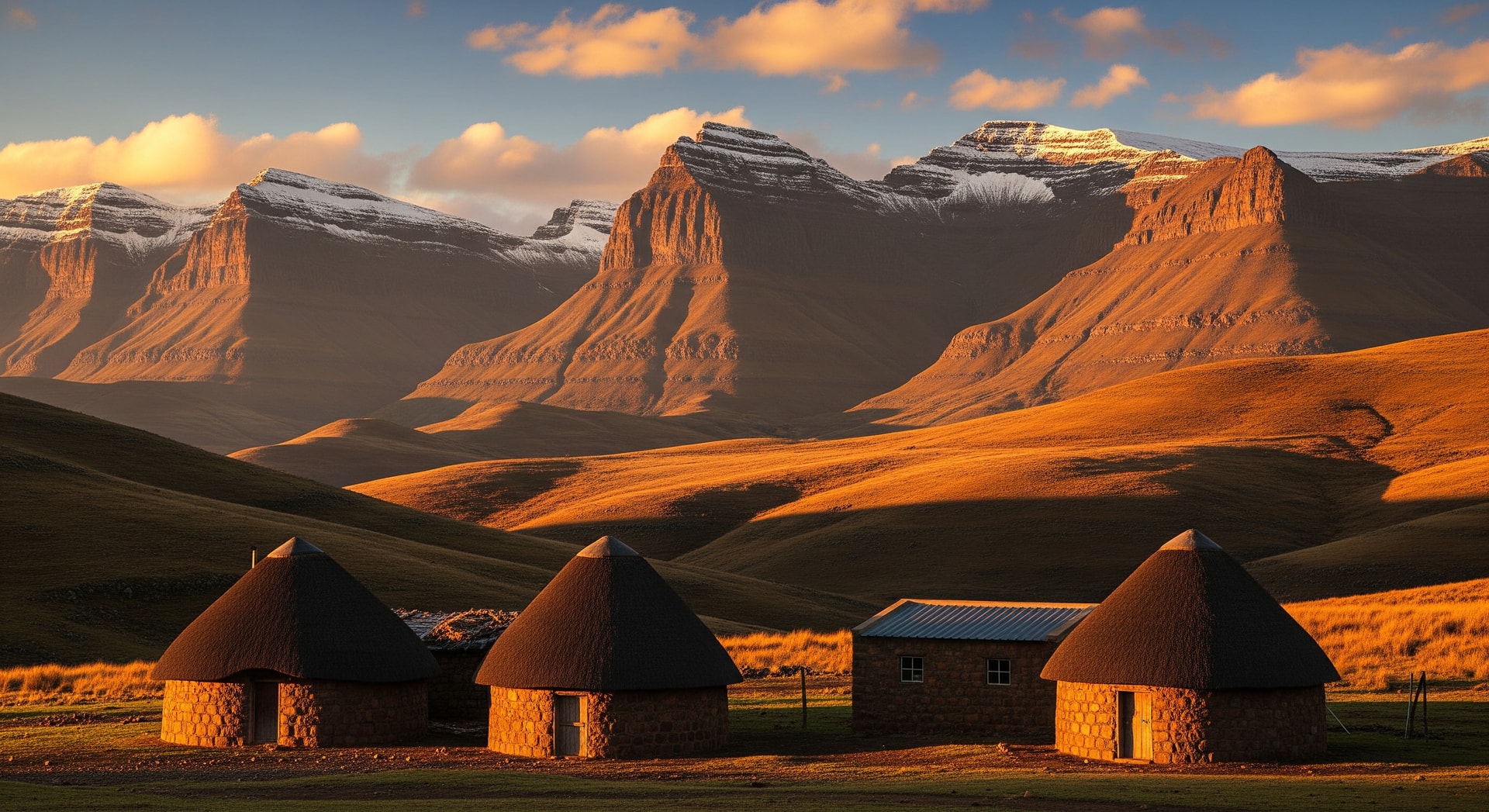
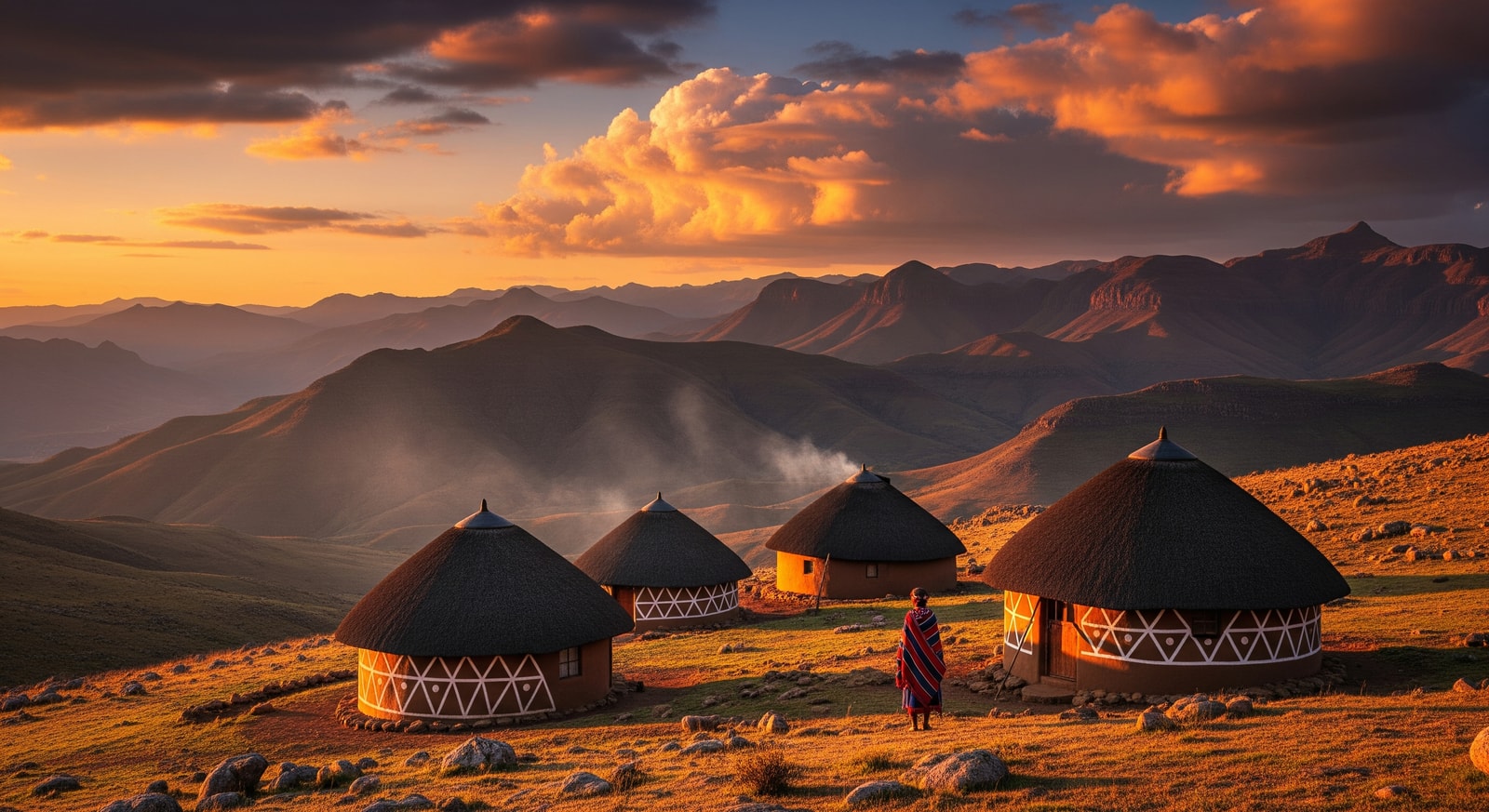
Maluti Mountains — The spectacular highlands of the Mountain Kingdom
Business & Special Visas
Business Visa
The Lesotho business visa caters to professionals conducting commercial activities within the kingdom. This includes attending business meetings, exploring investment opportunities in sectors like textiles and manufacturing, establishing trade contacts, and negotiating contracts. Business visas allow stays up to 30 days and require an invitation letter from a Lesotho company.
Work Permits & Extended Stays
Foreign nationals seeking employment in Lesotho must obtain a work permit through the Ministry of Labour. This is separate from visa requirements and involves employer sponsorship. Lesotho has a growing textile industry and opportunities in education, healthcare, and development sectors. The process requires proof that the position cannot be filled by a Lesotho citizen.
Student Visas
Students enrolled at Lesotho institutions, including the National University of Lesotho, require a student visa for stays exceeding the tourist period. Applications require acceptance letters from recognized educational institutions, proof of financial support, and accommodation arrangements.
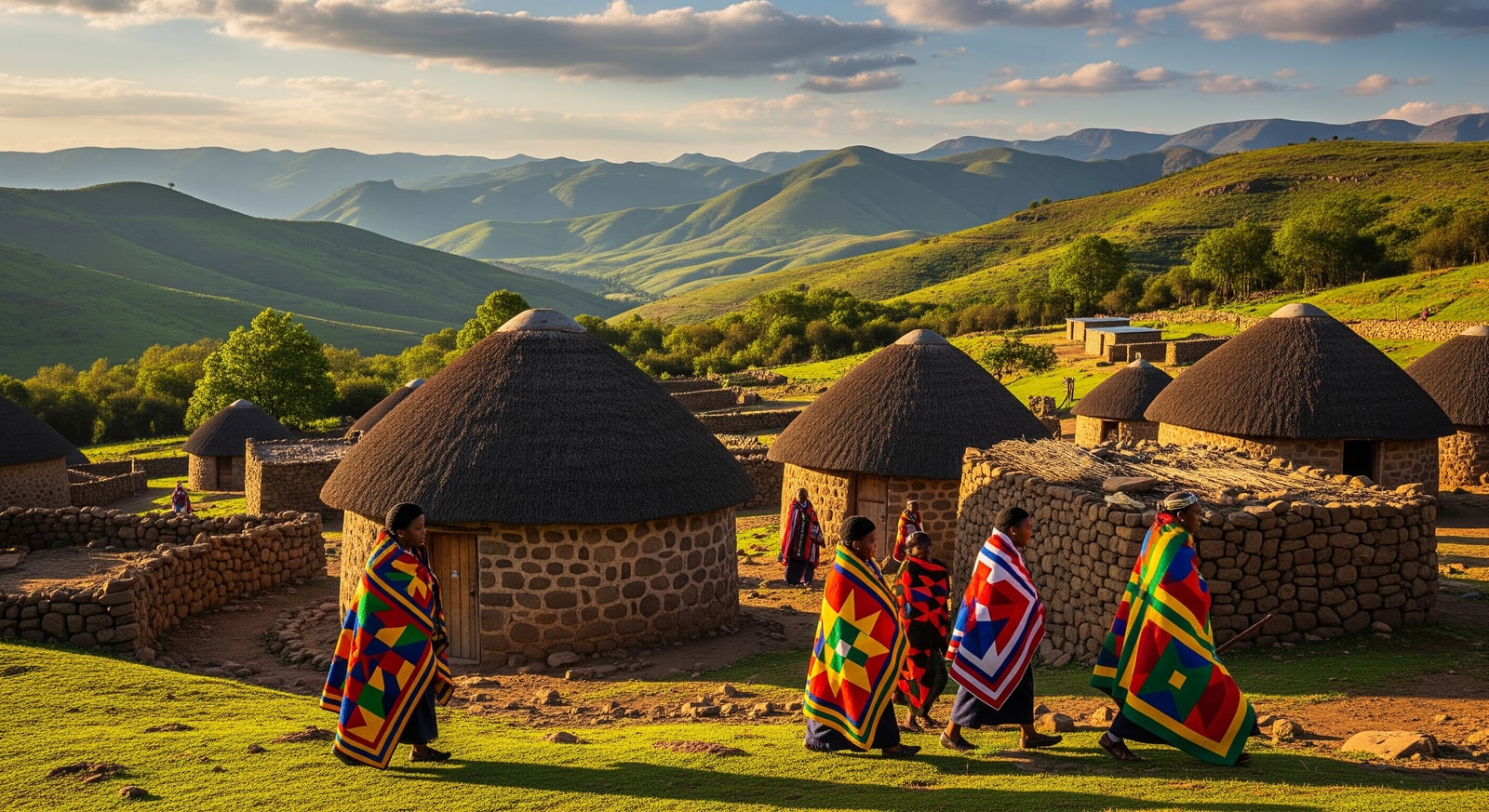
Basotho Culture — Experience authentic village life in the highlands
Entry Requirements & Documentation
Essential Requirements
All visitors to Lesotho must meet these fundamental requirements:
• Passport validity: Minimum 6 months beyond your intended departure date with at least two blank pages for entry and exit stamps
• Photograph: Recent passport-sized photo (35x45mm) with white background for visa applications
• Accommodation proof: Hotel booking confirmation, lodge reservations, or invitation letter if staying with friends/family
• Travel itinerary: Details of your planned activities and duration of stay
• Sufficient funds: Evidence of financial means to support your stay (approximately $50-100 per day recommended)
• Return or onward travel: Proof of departure from Lesotho
Health Requirements
No mandatory vaccinations are required for Lesotho entry. However, hepatitis A and typhoid vaccinations are recommended. Lesotho is malaria-free due to its high altitude, making it one of the few African countries where malaria prophylaxis is unnecessary. Travel insurance covering mountain activities is strongly advised given the terrain.
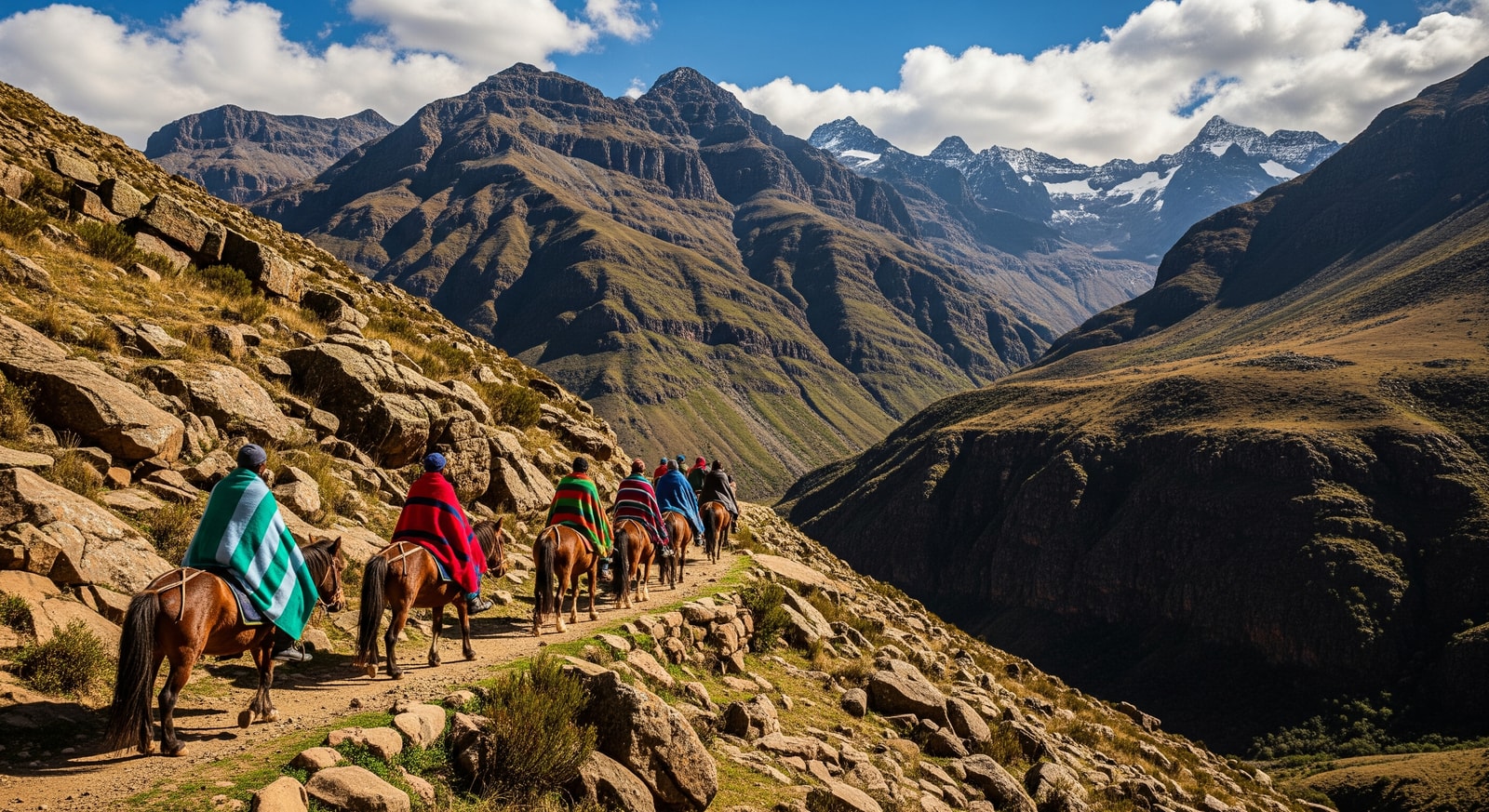
Pony Trekking — Explore remote highlands on sure-footed Basotho ponies
Entry Points & Processing
Entry Points & Immigration
Lesotho is entirely surrounded by South Africa, making land border crossings the primary entry method:
• Maseru Bridge: The main border crossing connecting Maseru to Ladybrand, South Africa — busiest and most accessible
• Caledonspoort: Northern border near Butha-Buthe, gateway to Afriski Mountain Resort
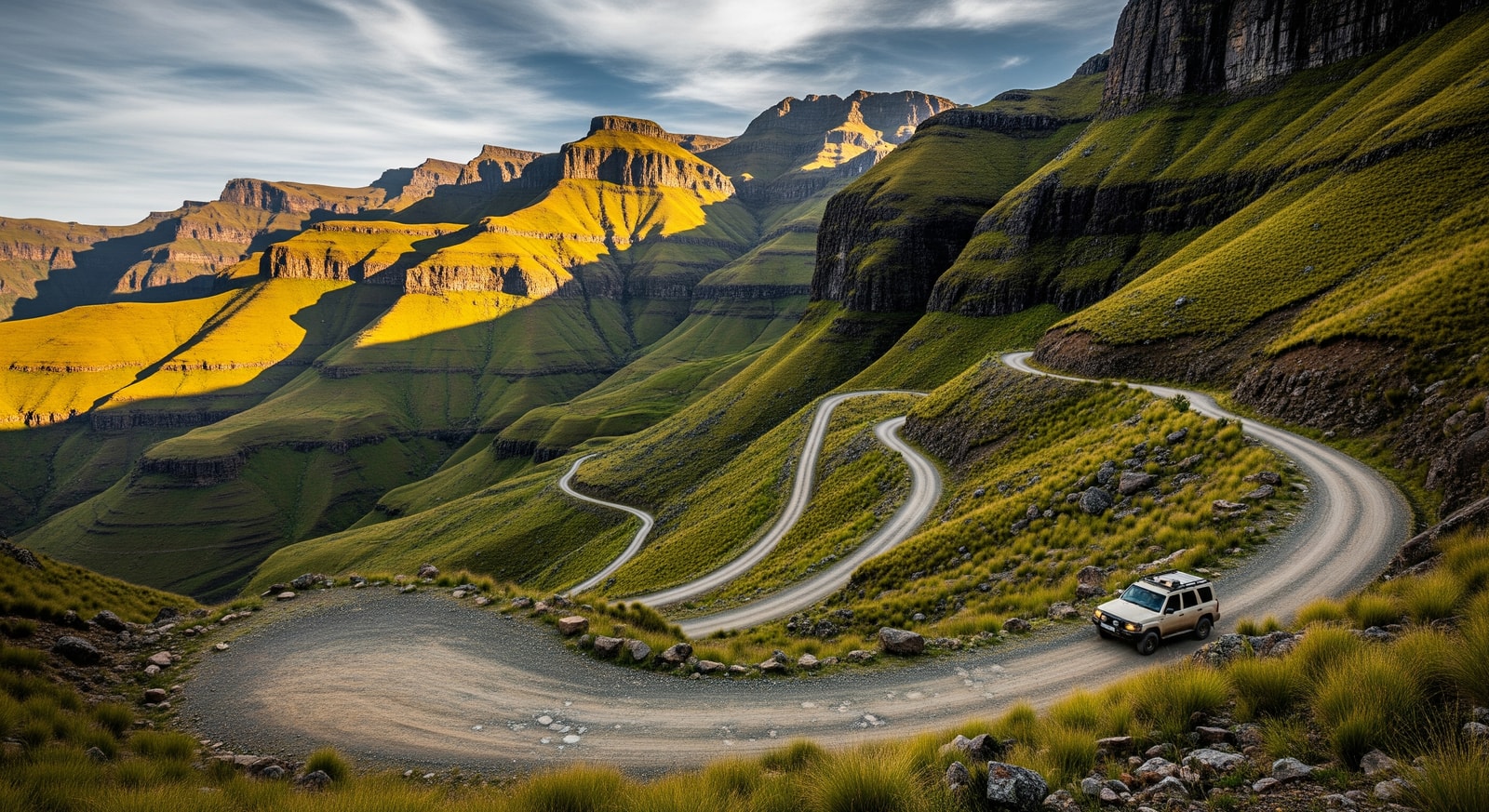
• Sani Pass: Legendary 4x4-only mountain pass connecting KwaZulu-Natal to Mokhotlong — requires high-clearance vehicle
• Van Rooyens Gate: Southern border near Quthing
• Qacha's Nek: Eastern border access point
• Moshoeshoe I International Airport (MSU): Located near Maseru, serving limited regional flights from Johannesburg
Processing Times & Recommendations
Visa-free visitors receive entry stamps at the border with processing typically taking 15-30 minutes. For visa-required nationalities, apply at least 2-3 weeks before travel. Border posts operate from 6:00 AM to 10:00 PM; Maseru Bridge has extended hours. Ensure you have all documentation ready as border officials may request proof of accommodation and sufficient funds.
Sani Pass — Africa's highest border crossing at 2,876 meters
Why Choose DoVisa?
See the difference between applying yourself vs using our expert service
Travelers to Lesotho rated this product 4.7 out of 5 based on 10 reviews.
4.7/ 5
Based on 10 verified reviews
Filter by rating
Michael T.Jan 18, 2026
"Incredible experience at Sani Pass! DoVisa helped me understand the entry requirements perfectly. The border crossing was smooth with all my documents in order."
Emma S.Jan 12, 2026
"Planned a pony trekking adventure in Lesotho and needed clarity on visa requirements. DoVisa's team was super helpful and confirmed I could enter visa-free from the UK."
David R.Jan 5, 2026
"Great service for our ski trip to Afriski. The support team provided excellent advice about the Caledonspoort border crossing and what to expect."
Lisa M.Dec 28, 2025
"The Mountain Kingdom exceeded all expectations! DoVisa made sure I had everything needed for entry. The dinosaur footprints at Quthing were amazing!"
James K.Dec 20, 2025
"Business trip to Maseru went perfectly. DoVisa helped me understand the documentation needed and the invitation letter requirements. Highly professional service."
Sophie W.Dec 15, 2025
"Loved learning about Lesotho's unique visa-free policy. The team answered all my questions about combining my trip with South Africa travel. Very helpful!"
Robert H.Dec 8, 2025
"Adventure trip of a lifetime! From the highest pub in Africa to traditional Basotho villages, DoVisa ensured I was prepared for this incredible journey."
Anna C.Dec 1, 2025
"Excellent guidance for our family trip. DoVisa explained everything about traveling with children to Lesotho and what documentation we needed at the border."
Peter G.Nov 22, 2025
"The Mountain Kingdom is a hidden gem! Thanks to DoVisa for the clear information about entry requirements. Will definitely return for more hiking adventures."
Caroline B.Nov 15, 2025
"Planned a photography expedition to capture Lesotho's stunning landscapes. DoVisa's support made the visa process completely stress-free. Breathtaking country!"
Michael T.Jan 18, 2026
"Incredible experience at Sani Pass! DoVisa helped me understand the entry requirements perfectly. The border crossing was smooth with all my documents in order."
Emma S.Jan 12, 2026
"Planned a pony trekking adventure in Lesotho and needed clarity on visa requirements. DoVisa's team was super helpful and confirmed I could enter visa-free from the UK."
David R.Jan 5, 2026
"Great service for our ski trip to Afriski. The support team provided excellent advice about the Caledonspoort border crossing and what to expect."
Lesotho Visa FAQs
What types of visas are available for Lesotho?
Lesotho offers several entry options depending on your nationality and purpose of visit. Visa-free entry is available for citizens of many countries including EU members, USA, UK, Canada, Australia, and most Commonwealth nations for stays of 30-90 days. Tourist visa allows single entry for up to 30 days for sightseeing, mountain adventures, and cultural experiences. Business visa permits commercial activities including meetings and trade exploration for up to 30 days. Transit visa allows passage through Lesotho for up to 72 hours. Work permits and student visas are available for longer-term stays requiring employment or education. The appropriate visa depends on your nationality, travel purpose, and intended duration of stay.
Do I need a visa to visit Lesotho?
Many nationalities can enter Lesotho visa-free for tourism purposes. Citizens of the European Union, United States, United Kingdom, Canada, Australia, New Zealand, and most Commonwealth countries typically receive visa-free entry for 30-90 days. South African citizens enjoy unrestricted access due to special bilateral agreements. Nationals requiring visas typically include citizens from certain Asian, Middle Eastern, and African countries. We recommend checking current requirements for your specific nationality as policies can change. Even visa-free visitors must meet entry requirements including valid passport (6+ months), proof of accommodation, and sufficient funds. DoVisa can confirm your exact requirements and assist with visa applications if needed.
What documents do I need to enter Lesotho?
Essential documents for all visitors: Passport valid for at least 6 months beyond departure date with minimum two blank pages; proof of accommodation (hotel booking, lodge reservation, or invitation letter); return or onward travel itinerary; and evidence of sufficient funds for your stay. For visa applications: Completed application form; recent passport-sized photograph (35x45mm, white background); travel itinerary with planned activities; and for business visas, an invitation letter from a Lesotho company. Recommended additions: Travel insurance covering mountain activities and medical evacuation (highly advised given terrain); vehicle documentation if self-driving; and 4x4 rental confirmation if planning Sani Pass crossing. At the border: Officials may ask about your travel plans, duration of stay, and accommodation details. Having printed confirmations speeds the process.
How long can I stay in Lesotho?
Stay duration depends on your entry category. Visa-free visitors typically receive 30-90 days depending on nationality — EU, US, UK, and Commonwealth citizens usually get 30 days initially. Tourist visa holders are granted up to 30 days single entry. Business visa permits stays up to 30 days. Extensions: Tourist and visa-free stays can be extended for an additional 30 days at the Department of Immigration in Maseru. Maximum total stay on tourism basis is typically 90 days within a 12-month period. Longer stays require appropriate visas such as work permits or residence permits. Important: Overstaying is taken seriously and can result in fines, detention, or future entry bans. Always depart before your authorized stay expires or apply for extension before expiry.
Can I extend my Lesotho visa?
Yes, visa extensions are possible for both visa-free visitors and visa holders. Where to apply: Department of Immigration and Passport Services in Maseru, the capital. Extension period: Typically 30 additional days, with maximum total stay of 90 days on tourist status. Requirements: Valid passport, current entry stamp or visa, proof of sufficient funds for extended stay, accommodation confirmation, and good reason for extension. Processing time: Usually 1-5 working days. Fees: Extension fees are relatively modest, payable in Lesotho Loti or South African Rand. Important tips: Apply before your current authorization expires — late applications may face penalties. Extensions are discretionary and may be refused. For stays beyond 90 days, you'll need to apply for an appropriate long-term visa. Consider your travel plans carefully and apply for adequate initial duration when possible.
Can I work in Lesotho with a tourist visa?
No, tourist visas and visa-free entry do not permit employment in Lesotho. Tourist status is strictly for leisure activities including sightseeing, adventure tourism, cultural experiences, visiting friends and family, and attending non-commercial events. Business visas allow commercial activities like meetings and negotiations but not paid employment or working for a Lesotho employer. Legal employment requires a work permit obtained through the Ministry of Labour before beginning work. This involves: employer sponsorship by a registered Lesotho company; proof the position cannot be filled locally; and extensive documentation. Key industries: Lesotho has opportunities in textile manufacturing, education, healthcare, and development sectors. Volunteer work: May be permitted with proper documentation from registered NGOs. Penalties: Working illegally can result in fines, deportation, and future entry bans.
What are the main entry points into Lesotho?
Lesotho is entirely surrounded by South Africa, with all entry points being border crossings from South Africa. Main border posts: Maseru Bridge — the busiest crossing, connecting capital Maseru to Ladybrand; ideal for most visitors. Caledonspoort — northern border near Butha-Buthe, gateway to Afriski ski resort. Sani Pass — legendary mountain crossing requiring 4x4 vehicles, connects KwaZulu-Natal to Mokhotlong at 2,876m elevation. Van Rooyens Gate — southern access near Quthing, convenient for dinosaur footprint sites. Qacha's Nek — eastern border for accessing remote highland areas. Ficksburg Bridge — alternative crossing near Maputsoe. Airport: Moshoeshoe I International (MSU) near Maseru has limited flights from Johannesburg. Border hours: Most operate 6AM-10PM; Maseru Bridge has extended hours. Always check current hours before travel.
Do I need a 4x4 vehicle for Sani Pass?
Yes, Sani Pass requires a 4x4 vehicle — this is strictly enforced by both South African and Lesotho border officials. Why: The pass features extremely steep gradients (up to 1:3), loose gravel, hairpin bends, and no safety barriers. In winter, ice and snow add additional challenges. Options: Rent a proper 4x4 (not just AWD crossover); or join organized Sani Pass tours operating from Underberg or Himeville in South Africa with experienced drivers. At the border: Officials will inspect your vehicle before allowing passage. Standard 2WD vehicles and low-clearance SUVs are refused entry. Alternative routes: If you don't have a 4x4, enter Lesotho via Maseru Bridge or other paved border crossings, then explore the highlands by alternative means. Worth it: Despite the challenges, Sani Pass offers unforgettable scenery and access to the highest pub in Africa at the top.
Is Lesotho safe for tourists?
Lesotho is generally safe for tourists in popular areas, though standard precautions apply. Safe areas: Maseru city center (daytime), tourist lodges, Afriski resort, established pony trekking routes, and guided cultural village visits. The highland areas are generally peaceful with friendly local communities. Precautions: Avoid walking alone at night in urban areas; don't display expensive items; secure valuables in vehicles; use reputable tour operators for remote areas. Road safety: Mountain roads can be challenging with poor conditions, livestock on roads, and limited signage. 4x4 recommended for many routes. Health & environment: High altitude (1,400-3,482m) requires acclimatization; UV exposure is intense; weather changes rapidly. Medical facilities: Limited outside Maseru; comprehensive travel insurance with medical evacuation coverage is essential. Emergency contacts: Police 123/124; Ambulance 121. Overall, Lesotho offers a welcoming, authentic experience for prepared travelers.
What is the best time to visit Lesotho?
Lesotho offers distinct experiences across seasons. Dry Season (May-September): Clear skies and excellent visibility for mountain scenery and photography. Cold temperatures, especially at altitude — expect freezing nights. Winter (June-August) brings snow to highlands, perfect for skiing at Afriski (Africa's only ski resort south of the equator). Summer (October-April): Warmer temperatures ideal for hiking and pony trekking. Green landscapes and wildflowers. Afternoon thunderstorms common; roads can become muddy. Best for activities: Skiing — June to August; Hiking — September to November, March to May; Pony trekking — Year-round but most comfortable September to April; Wildlife viewing — Dry season when animals gather at water sources. Peak tourist season: December-January (South African holidays) and ski season (June-August). Avoid: Heavy rain periods January-February can make mountain roads impassable.
What currency is used in Lesotho?
Lesotho's official currency is the Lesotho Loti (LSL), plural Maloti. Key fact: The Loti is pegged 1:1 to the South African Rand, and South African Rand (ZAR) is accepted everywhere in Lesotho at equal value. Most tourists use Rand without needing to exchange for Maloti. Cash is essential: Outside Maseru, cash is the primary payment method. ATMs exist in major towns (Maseru, Leribe, Butha-Buthe) but are scarce in rural areas. Card acceptance: Limited to larger hotels and some restaurants in Maseru; don't rely on cards for lodges or activities. Recommendations: Bring sufficient South African Rand for your entire trip; exchange some currency before remote area travel; small denominations useful for tips and village purchases. Tipping: Expected for guides (approximately 10%), pony trek handlers, and lodge staff.
What are Lesotho's main attractions?
Lesotho offers unique experiences found nowhere else in Africa. Natural wonders: Sani Pass — dramatic 4x4 mountain crossing with highest pub in Africa; Maletsunyane Falls — one of Africa's highest single-drop waterfalls at 192m; Maluti Mountains — stunning highland scenery throughout the country. Adventure activities: Pony trekking on sure-footed Basotho ponies through remote villages; skiing and snowboarding at Afriski Mountain Resort (June-August); hiking and mountaineering in pristine wilderness; abseiling at Maletsunyane Falls. Cultural experiences: Traditional Basotho village visits; learning about the famous Basotho blankets; prehistoric dinosaur footprints at Quthing and Moyeni; Ha Kome Cave Houses — dwellings carved into cliff faces still inhabited today. Unique claims: The only country entirely above 1,000m; Africa's only southern hemisphere ski resort; one of the highest countries in the world by lowest elevation.
Do I need a South African visa to reach Lesotho?
Since Lesotho is completely surrounded by South Africa, most visitors must transit through South Africa to reach Lesotho. Check South African requirements: You need either visa-free access or a valid South African visa (transit or tourist) depending on your nationality. If flying into Johannesburg then traveling overland to Lesotho, you'll pass through South African immigration. Multiple entry consideration: If you plan to exit and re-enter South Africa after visiting Lesotho (common for Sani Pass crossings returning to KwaZulu-Natal), ensure you have multiple-entry permission or visa. Combined trip planning: Many visitors combine Lesotho with South African destinations like the Drakensberg, Cape Town, or Kruger. Plan visa requirements for both countries accordingly. Direct flights: Limited flights from Johannesburg to Maseru avoid land border crossings but still require South African immigration clearance. DoVisa can assist with both South African and Lesotho visa requirements.
What is pony trekking in Lesotho?
Pony trekking is Lesotho's signature activity, using the famous Basotho pony to explore remote mountain areas inaccessible by vehicle. The Basotho pony: A hardy breed developed over centuries in Lesotho's harsh highland environment, these sure-footed ponies navigate steep terrain and rocky paths with remarkable confidence. Experience levels: No prior riding experience required — ponies are calm and guides lead the way. Routes range from 2-hour village visits to multi-day expeditions. What you'll see: Remote villages maintaining traditional lifestyles; shepherds' huts in high pastures; stunning mountain scenery inaccessible any other way; authentic cultural interactions with friendly locals. Popular routes: Malealea Lodge, Semonkong Lodge, and Roma Trading Post offer excellent treks ranging from day rides to week-long adventures. What to bring: Warm layers (it's cold at altitude), rain gear, sunscreen, and camera. Cost: Very affordable compared to similar activities elsewhere; often includes guide, pony, and meals on longer treks.
Are there dinosaur footprints in Lesotho?
Yes, Lesotho has remarkable dinosaur footprint sites dating back approximately 200 million years to the Early Jurassic period. Main sites: Moyeni (Quthing) — most accessible site with well-preserved three-toed theropod prints along the riverbank; local guides available. Subeng River near Leribe — extensive trackways. Morija — prints near the museum with excellent historical context. Why Lesotho? The kingdom's ancient sandstone formations perfectly preserved footprints from when dinosaurs roamed what was then a very different landscape. Types of prints: Mostly theropod (carnivorous) dinosaurs, including early ancestors of the great predators. Some herbivore prints and even prehistoric swim tracks exist. Visiting: Sites are informal with local community guides who provide context and history. Small fees support local conservation efforts. Combine with: The Morija Museum and Archives for deeper historical understanding of Lesotho's paleontological significance.
What should I pack for Lesotho?
Lesotho's high altitude and variable weather require careful packing. Clothing essentials: Layering system — temperatures can range 30+ degrees in a single day; warm fleece or down jacket (essential year-round at altitude); waterproof outer layer; comfortable hiking boots with good ankle support; hat, sunglasses, and high-SPF sunscreen (UV intense at altitude); warm hat and gloves for highlands (winter essential). Practical items: Cash in South African Rand (ATMs scarce); torch/headlamp (power outages occur); basic first aid kit; prescription medications (limited pharmacies); motion sickness remedies (mountain roads are winding). For activities: Comfortable pants for pony trekking; camera with extra batteries (cold drains them fast); binoculars for wildlife and scenery. Altitude consideration: Most of Lesotho sits above 1,800m; hydrate well and allow time to acclimatize. Skip: Heavy formal clothing; excessive electronics (limited charging in remote areas).
Still have questions?
Our team is here to help 24/7
Get Visa Tips & Exclusive Deals
Join 1,000+ travelers. No spam, unsubscribe anytime.

 With DoVisa