Simple 4-step process — most travelers receive approval within 48-72 hours
1
Complete the online application
Fill out our streamlined visa application form with your personal details, travel dates, and accommodation plans. Our system validates your information against French Polynesia entry requirements and guides you through each section to ensure accuracy.
2
Upload your documents
Submit your valid passport scan (bio page clearly visible), recent passport photo, proof of accommodation in French Polynesia, return flight itinerary, and travel insurance documentation. Our visa specialists review all documents before submission.
3
We process your visa application
Your verified application is submitted to French Polynesia immigration authorities. We monitor processing status in real-time and communicate any updates, requests for additional documentation, or status changes via email and SMS.
4
Receive your visa electronically
Your approved French Polynesia visa arrives as a PDF document. Print it clearly on A4 paper and present it at immigration upon arrival at Faa'a International Airport. Paradise awaits — Bora Bora and Tahiti are calling!
0+Happy Travelers
0/7Expert Support
0%+Approval Rate
0Customer Rating
French Polynesia Visa Requirements & Entry Information
French Polynesia, while an overseas collectivity of France, has its own distinct visa regulations separate from the Schengen Area. This means a Schengen visa does NOT provide entry to French Polynesia — you need specific authorization for this Pacific paradise.
Visa-Free Entry
Citizens of the European Union, United States, Canada, Australia, New Zealand, Japan, and approximately 60 other countries can enter French Polynesia visa-free for up to 90 days within any 180-day period. This generous policy makes the islands accessible for honeymoons, diving holidays, and tropical getaways.
ETIS Registration — Mandatory
All visitors, including visa-exempt travelers, must complete the Electronic Travel Information System (ETIS) registration before arrival. This online declaration collects health and travel information and must be completed at least 6 days before departure. ETIS approval is verified at check-in.
Important Distinction
French Polynesia follows French visa rules but operates independently from mainland France and the Schengen zone. The territory issues its own specific visas through French embassies and consulates, with "French Polynesia" clearly indicated on the visa sticker.
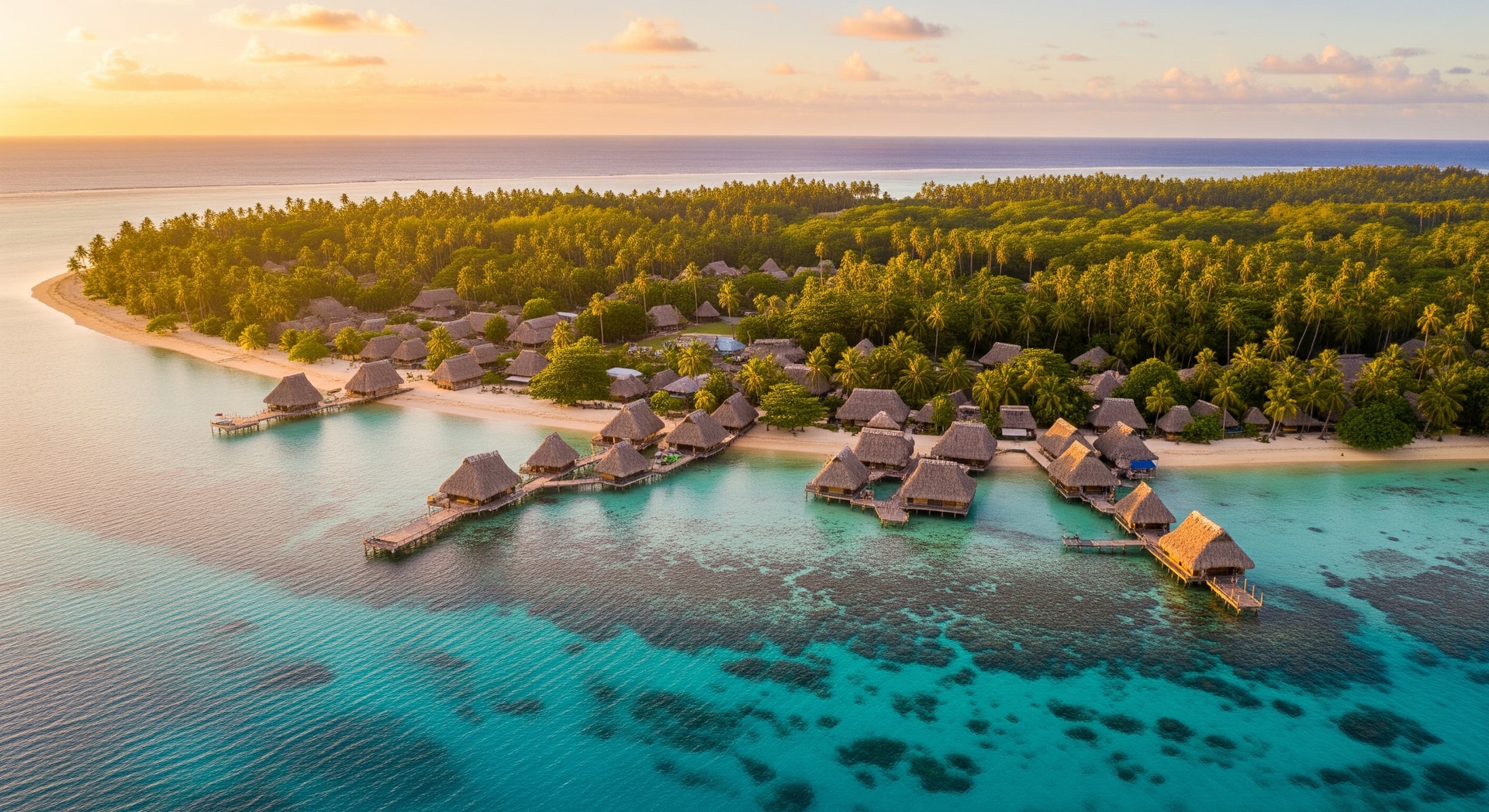
Moorea Lagoon — Sister island to Tahiti with world-class snorkeling
Work & Long-Stay Visas
Long-Stay Visa (Visa de Long Séjour)
Stays exceeding 90 days require a long-stay visa obtained before travel. This applies to those planning extended holidays, work assignments, or family visits. The long-stay visa must be applied for at a French embassy or consulate in your home country and specifically endorsed for French Polynesia.
Work Authorization
Working in French Polynesia requires both a long-stay visa with work authorization and a work permit (autorisation de travail) issued by local authorities. Employers typically sponsor work permits, and the process involves demonstrating that the position cannot be filled by local residents. Industries like tourism, pearl farming, and hospitality often recruit internationally.
Carte de Séjour
Those staying longer than 3 months must apply for a residence card (carte de séjour) within 2 months of arrival. This is processed at the Haut-Commissariat in Papeete and requires proof of accommodation, financial means, and the purpose of extended stay.
Digital Nomad Considerations
French Polynesia does not have a specific digital nomad visa. Remote workers must comply with standard visa rules — working for foreign employers while on a tourist stay occupies a legal gray area and extended stays require appropriate long-stay documentation.
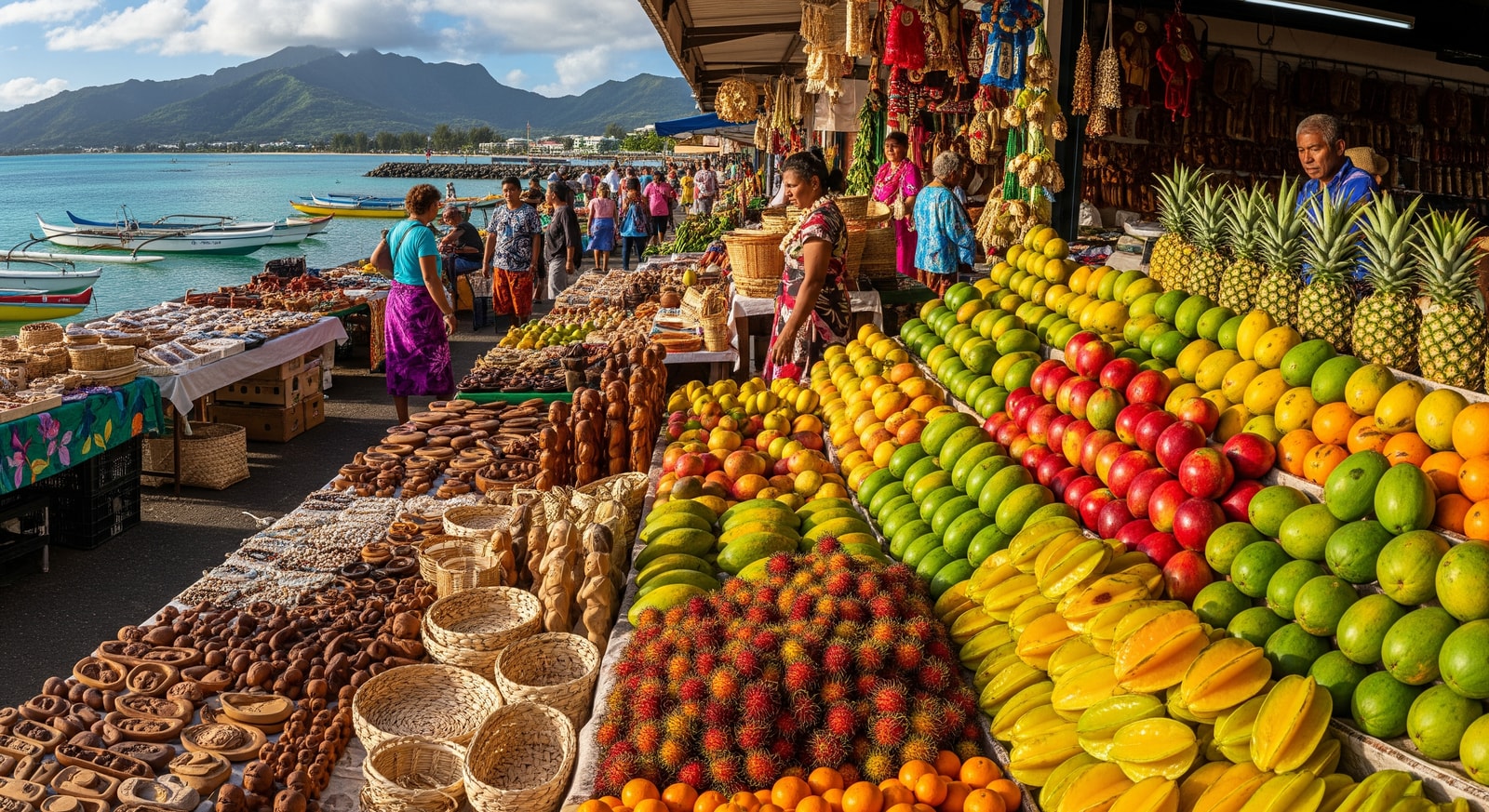
Papeete Market — Heart of Tahitian culture and commerce
Entry Requirements & Documentation
Document Checklist
• Valid passport: Must be valid for at least 3 months beyond your intended departure from French Polynesia with 2 blank pages
• ETIS registration: Completed online at least 6 days before departure
• Return or onward ticket: Confirmed flight departing French Polynesia
• Accommodation proof: Hotel reservations, resort booking, or invitation from host
• Travel insurance: Medical coverage including repatriation is required
• Financial proof: Bank statements or credit cards showing sufficient funds
Visa Application Requirements (if applicable)
Nationalities requiring visas must submit: completed visa application form, passport photos meeting French specifications, proof of travel purpose, accommodation confirmation, travel insurance certificate, and visa fee payment. Applications are processed at French embassies/consulates.
Health Requirements
No mandatory vaccinations for entry, though hepatitis A, typhoid, and routine vaccinations are recommended. French Polynesia is free from malaria. COVID-19 requirements have been lifted but ETIS may include health declarations.
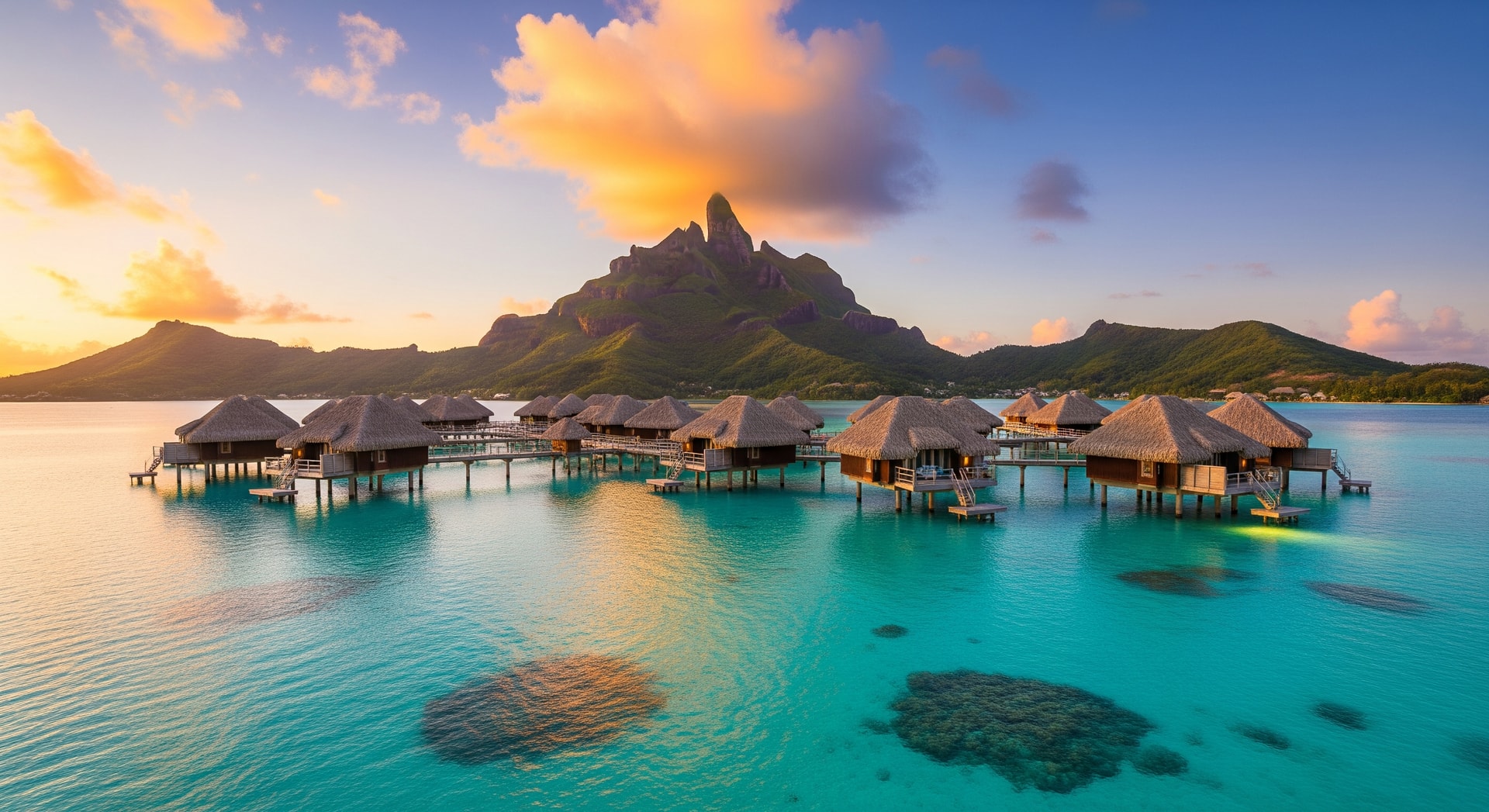
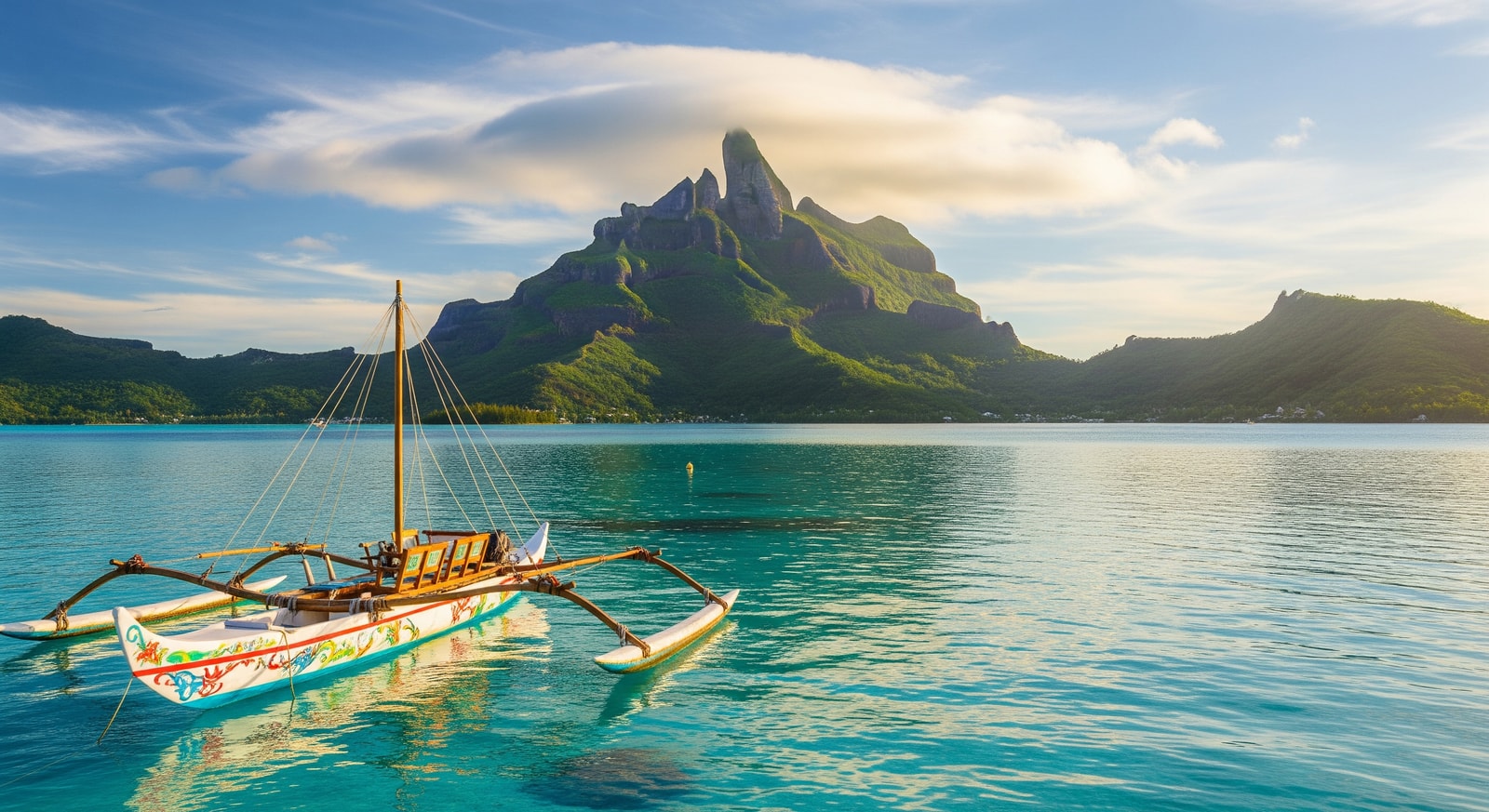
Mount Otemanu — The iconic volcanic peak of Bora Bora
Arrival & Practical Information
Faa'a International Airport (PPT)
Nearly all international visitors arrive at Faa'a International Airport on Tahiti, the main island. Direct flights connect from Los Angeles, San Francisco, Auckland, Tokyo, Paris (via stopover), and other Pacific destinations. Air Tahiti Nui and French Bee are the primary carriers.
Inter-Island Travel
From Tahiti, reaching other islands requires:
• Air Tahiti: Domestic airline connecting 47 islands across 5 archipelagos. Book early for popular routes to Bora Bora and Moorea
• Ferries: Aremiti and Terevau operate fast ferries from Tahiti to Moorea (30-45 minutes)
• Private transfers: Helicopter and seaplane charters available for luxury transfers to remote motus
Practical Information
• Currency: CFP Franc (XPF), pegged to the Euro. Euros widely accepted at resorts. Credit cards accepted at major establishments
• Language: French and Tahitian are official languages. English is widely spoken in tourist areas
• Time Zone: Tahiti Time (TAHT), UTC-10
• Electricity: 220V, European-style plugs
• Best time to visit: May to October (dry season) offers the best weather for overwater bungalow experiences
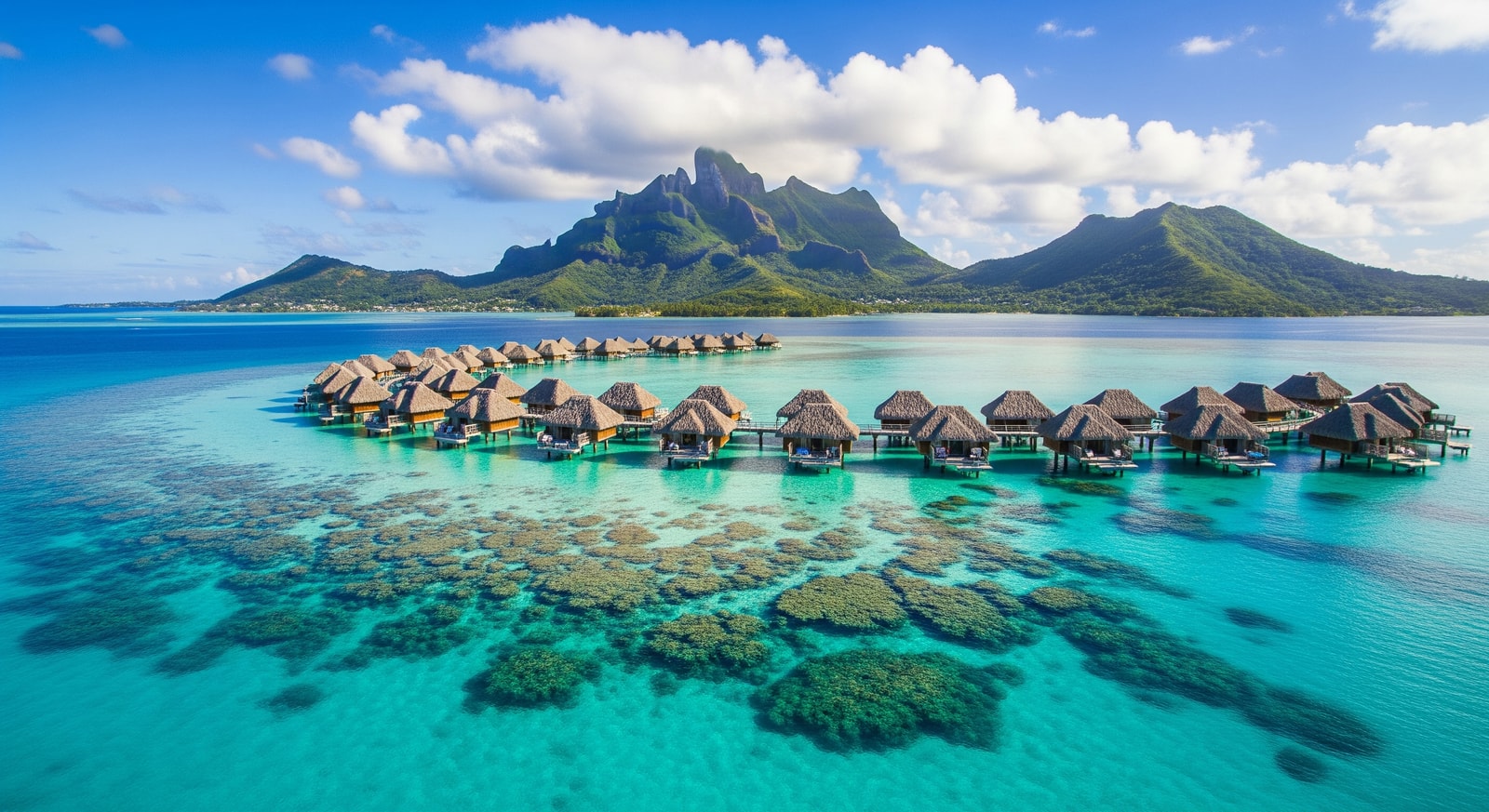
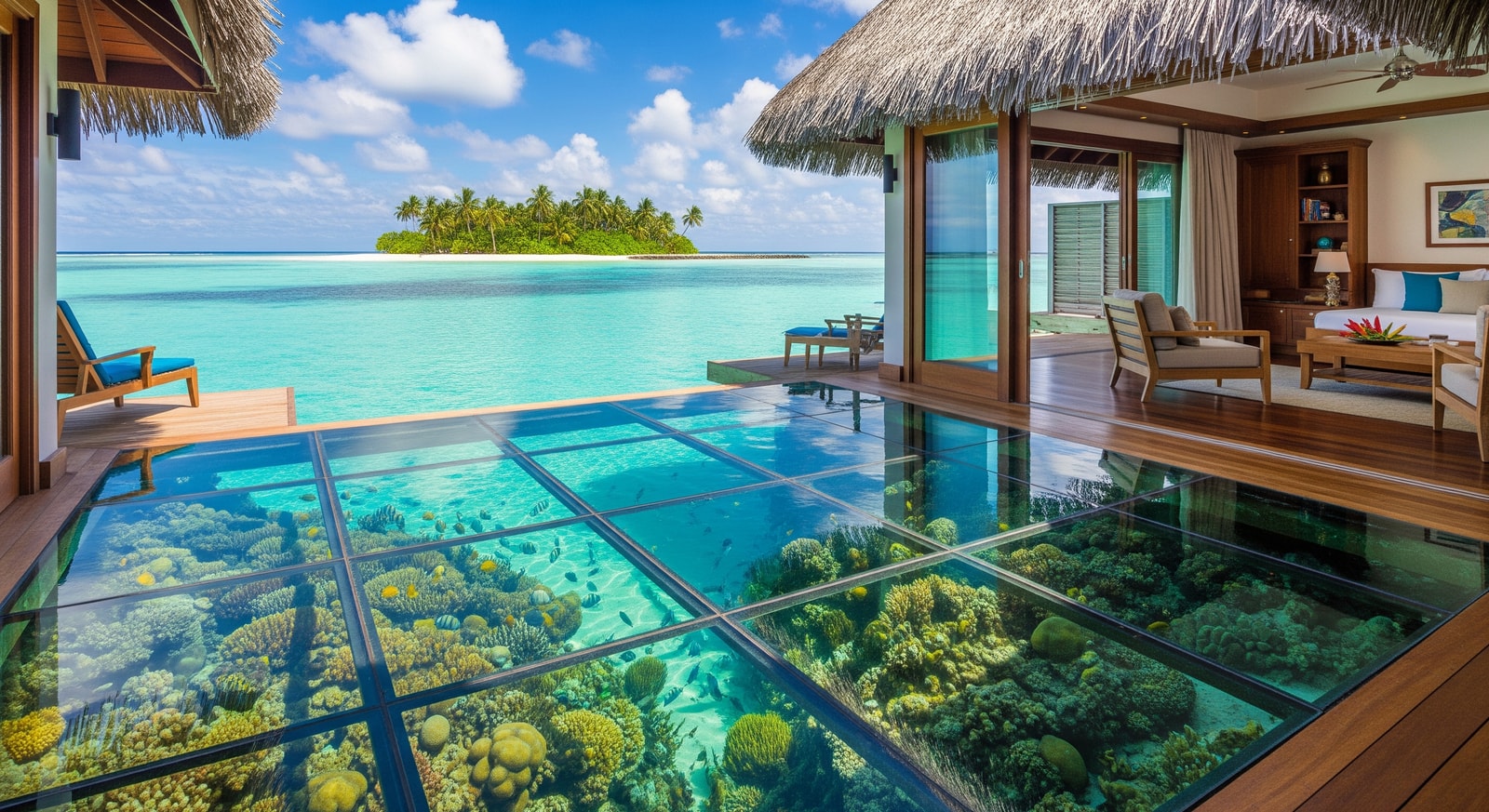
Overwater Bungalow — French Polynesia's iconic accommodation experience
Why Choose DoVisa?
See the difference between applying yourself vs using our expert service
Travelers to French Polynesia rated this product 4.7 out of 5 based on 12 reviews.
4.7/ 5
Based on 12 verified reviews
Filter by rating
Sarah M.Jan 15, 2026
"Honeymoon in Bora Bora was absolutely magical! DoVisa made the ETIS registration and visa process so simple. The overwater bungalow exceeded our dreams."
James T.Jan 8, 2026
"Was confused about the difference between Schengen and French Polynesia visas. DoVisa team explained everything perfectly. Moorea was paradise!"
Emily R.Dec 22, 2025
"Quick processing for our anniversary trip to Tahiti. Staff was helpful when we had questions about the ETIS system. Highly recommend!"
Michael K.Dec 10, 2025
"Diving trip to Rangiroa was incredible. DoVisa handled our documentation flawlessly. The drift dive through Tiputa Pass was life-changing!"
Amanda L.Nov 28, 2025
"Third time using DoVisa, this time for French Polynesia. Consistent excellent service. The pearl farms in Tahiti were fascinating!"
Robert H.Nov 15, 2025
"Business meeting in Papeete went smoothly. DoVisa ensured all my documents were in order. Appreciated the French language support."
Jennifer B.Oct 20, 2025
"Family vacation of a lifetime! Four applications processed together without issues. Kids loved swimming with stingrays in Bora Bora lagoon."
David C.Sep 18, 2025
"The Polynesian culture in Tahiti is incredible. Thanks to DoVisa for the smooth visa process. Already planning our return trip!"
Lisa P.Aug 25, 2025
"Sunset sailing in Raiatea was unforgettable. DoVisa customer service answered all my questions about entry requirements promptly."
Chris W.Jul 12, 2025
"Proposed to my girlfriend at a resort in Bora Bora - she said yes! DoVisa made sure nothing could go wrong with our travel documents."
Nicole F.May 30, 2025
"Photography trip to the Marquesas Islands. DoVisa helped with the complex inter-island documentation. The landscapes were breathtaking!"
Peter G.Apr 8, 2025
"Reliable service for our island-hopping adventure. Good communication throughout the process. French Polynesia is truly paradise on Earth."
Sarah M.Jan 15, 2026
"Honeymoon in Bora Bora was absolutely magical! DoVisa made the ETIS registration and visa process so simple. The overwater bungalow exceeded our dreams."
James T.Jan 8, 2026
"Was confused about the difference between Schengen and French Polynesia visas. DoVisa team explained everything perfectly. Moorea was paradise!"
Emily R.Dec 22, 2025
"Quick processing for our anniversary trip to Tahiti. Staff was helpful when we had questions about the ETIS system. Highly recommend!"
French Polynesia Visa FAQs
What types of visas are available for French Polynesia?
French Polynesia offers several visa categories based on your travel purpose. Short-stay visas (up to 90 days) cover tourism, business visits, and family visits. Long-stay visas (over 90 days) are required for extended stays, work, study, or family reunification. Transit visas are available for those stopping briefly en route to other Pacific destinations. Additionally, many nationalities benefit from visa-free entry for stays up to 90 days — including EU citizens, Americans, Canadians, Australians, and citizens of approximately 60 other countries. All visitors must complete ETIS registration regardless of visa status.
Is a Schengen visa valid for French Polynesia?
No, a Schengen visa is NOT valid for French Polynesia. This is one of the most common misconceptions about visiting the islands. While French Polynesia is an overseas collectivity of France, it lies outside the Schengen Area and has its own separate visa regime. Visitors requiring visas must obtain one specifically endorsed for "French Polynesia" or "Collectivités d'outre-mer" from a French embassy or consulate. Similarly, a French Polynesia visa does not grant access to Schengen countries. Each destination requires its own authorization.
Who needs a visa for French Polynesia?
Citizens of the European Union, European Economic Area, and Switzerland do not need visas for any length of stay. Visa-free entry for up to 90 days applies to citizens of: United States, Canada, Australia, New Zealand, Japan, South Korea, Brazil, Argentina, and approximately 50 other countries. Visas are required for citizens of most African countries, many Asian countries (including China, India, Indonesia, Philippines), and several others. Even visa-exempt travelers must register through ETIS before arrival. Check with a French embassy for your specific nationality's requirements.
What is ETIS and how do I register?
The Electronic Travel Information System (ETIS) is a mandatory pre-registration requirement for all travelers to French Polynesia, regardless of nationality or visa status. What it does: ETIS collects health declarations, travel details, accommodation information, and contact details. When to register: Complete ETIS at least 6 days before departure. How to apply: Visit the official ETIS website or use DoVisa's assisted registration service. Provide passport details, flight information, accommodation addresses, and emergency contacts. Approval: Registration is typically confirmed within 24-72 hours via email. At check-in: Airlines verify ETIS approval before boarding — have your confirmation ready.
What documents are required for French Polynesia?
All visitors need: • Valid passport: At least 3 months validity beyond your planned departure date with 2 blank pages • ETIS confirmation: Completed online before travel • Return/onward ticket: Confirmed flight departing French Polynesia • Accommodation proof: Hotel reservation, resort booking, or invitation letter • Travel insurance: Coverage including medical expenses and repatriation • Proof of funds: Bank statements, credit cards, or cash showing sufficient financial means. Additional for visa applicants: Completed visa application form, passport photos (French specifications), visa fee payment, and supporting documents specific to your visa category.
How long can I stay in French Polynesia?
Visa-free travelers can stay up to 90 days within any 180-day period. This is calculated across all French overseas territories combined — time spent in New Caledonia, Wallis and Futuna, or other French Pacific territories counts toward your 90 days. Short-stay visa holders may stay for the duration specified on their visa, up to 90 days. Long-stay visa holders can remain beyond 90 days according to their visa validity and must apply for a carte de séjour (residence card) within 2 months of arrival if staying longer than 3 months. Extensions: Extending tourist stays is difficult; travelers should plan their duration before arrival.
Can I extend my stay in French Polynesia?
Extending a tourist stay in French Polynesia is generally difficult and not guaranteed. The 90-day limit within 180 days is strictly enforced. For short-stay visitors: Extensions may be considered for exceptional circumstances (medical emergencies, flight cancellations) but require application at the Haut-Commissariat in Papeete before your authorized stay expires. For long-stay visa holders: Extensions are processed through immigration authorities and require proof of continued accommodation, financial means, and valid reasons. Planning tip: If you think you might want to stay longer, apply for a long-stay visa before departure rather than planning to extend. Overstaying can result in fines, deportation, and future entry bans.
Can I work in French Polynesia with a tourist visa?
No, tourist visas and visa-free entry do not permit any form of employment. Working without authorization is illegal and can result in deportation and entry bans. Legal work requirements: You need a long-stay visa with work authorization obtained before travel, plus an autorisation de travail (work permit) issued by French Polynesian authorities. Process: Employers must demonstrate the position cannot be filled locally, submit work permit applications, and sponsor visa applications. Industries: Tourism, hospitality, pearl farming, and marine industries commonly employ international workers. Remote work gray area: Working remotely for foreign employers while on tourist status is not explicitly addressed but extended stays require appropriate long-stay documentation.
Do I need to print my visa?
Yes, if you require a visa, you should print the visa approval and carry a physical copy. French visa stickers are typically affixed to your passport at the issuing embassy/consulate, so ensure you collect your passport with the visa before travel. For ETIS: While digital confirmation on your phone may be accepted, carrying a printed copy is strongly recommended as backup, especially given variable internet connectivity on remote islands. At immigration: Officers at Faa'a International Airport will verify your visa (if applicable), ETIS registration, return ticket, and accommodation proof. Having all documents printed and organized speeds up the process significantly.
How long does French Polynesia visa processing take?
ETIS registration: 24-72 hours (apply at least 6 days before departure). Short-stay visa: Typically 10-15 working days, though this can vary by embassy and season. Peak travel periods (June-August, December) may experience longer processing times. Long-stay visa: 2-4 weeks or longer, as these require additional verification and sometimes consultation with authorities in French Polynesia. DoVisa recommendation: Begin visa applications at least 4-6 weeks before travel to allow for any delays or additional document requests. Expedited processing: Some embassies offer faster processing for additional fees — check with your local French embassy.
What happens if my visa application is rejected?
If refused, you will receive written notification stating the reasons for rejection. Common rejection reasons: Incomplete documentation, insufficient financial proof, unclear travel purpose, previous immigration violations, or doubts about intent to leave. Appeal options: You may appeal the decision to the appeals commission (Commission de recours contre les décisions de refus de visa) within 2 months of notification. Alternatively, address the deficiencies and submit a new application. DoVisa support: Our document review process significantly reduces rejection risk. If your application is rejected despite using our service, our money-back guarantee applies. Prevention: Ensure all documents are complete, accurate, and clearly demonstrate your travel purpose and ties to your home country.
When is the best time to visit French Polynesia?
French Polynesia enjoys a pleasant tropical climate year-round, but timing affects your experience. Dry Season (May-October): Ideal weather with lower humidity, less rainfall, comfortable temperatures of 24-28°C. Best for: overwater bungalows, diving, outdoor activities. Peak season with higher prices. Wet Season (November-April): Warmer and more humid with occasional tropical showers. Temperatures reach 27-32°C. Still beautiful but afternoon rain is common. Whale watching: Humpback whales visit July-November. Cultural events: Heiva festival in July celebrates Polynesian culture with dance competitions and traditional sports. Diving: Year-round excellent, with manta ray season December-March in Bora Bora and shark encounters best in Fakarava lagoon.
What are the main entry points for French Polynesia?
Faa'a International Airport (PPT) on Tahiti is the only international gateway to French Polynesia. All international flights arrive here before passengers connect to other islands. Direct international routes: Los Angeles (8 hours), San Francisco, Auckland (5 hours), Tokyo, Paris (via Los Angeles or stopover), Santiago. Airlines: Air Tahiti Nui (national carrier), French Bee, Air France, LATAM, United, Air New Zealand. Inter-island connections: From Tahiti, Air Tahiti operates domestic flights to 47 islands across the Society, Tuamotu, Marquesas, Gambier, and Austral archipelagos. Ferries: Aremiti and Terevau connect Tahiti to Moorea (30-45 minutes). Immigration: All formalities completed at Faa'a — no immigration checks on domestic flights.
How much does a French Polynesia visa cost?
Visa-free travelers: No visa fee, but ETIS registration fee applies (approximately €5-10). Short-stay visa (Schengen-type for overseas territories): €80 for adults, €40 for children aged 6-12, free for children under 6. Long-stay visa: €99 standard fee. Additional costs: Some embassies charge service fees, and visa facilitation centers may add handling fees. DoVisa service fee: Covers application assistance, document review, ETIS registration support, and 24/7 customer service. Payment: Visa fees typically paid by card or bank transfer at the embassy/consulate. Note: Fees are non-refundable even if the visa is denied.
Do I need travel insurance for French Polynesia?
Yes, travel insurance with medical coverage is required for entry to French Polynesia. Immigration may request proof of insurance at border control. Minimum coverage required: Medical expenses including emergency evacuation and repatriation. Recommended coverage: Medical expenses minimum €30,000, trip cancellation (French Polynesia is an expensive destination), luggage loss/delay, diving and water sports coverage (if applicable). Why it matters: Medical facilities in French Polynesia are limited — serious emergencies may require evacuation to Tahiti or even New Zealand/Australia at significant cost. DoVisa recommendation: Obtain comprehensive coverage given the remote Pacific location and high cost of travel. Ensure your policy covers any adventure activities planned.
What currency is used in French Polynesia?
The official currency is the CFP Franc (XPF), also used in New Caledonia and Wallis and Futuna. The CFP Franc is pegged to the Euro at a fixed rate of 1 EUR = 119.33 XPF. Euros: Widely accepted at hotels, resorts, and tourist establishments, often at favorable rates. US Dollars: Accepted at some tourist venues but less favorable exchange. Credit cards: Visa and Mastercard accepted at hotels, restaurants, larger shops. American Express less common. ATMs: Available in Papeete and major islands (Moorea, Bora Bora). Limited on remote atolls — bring sufficient cash. Costs: French Polynesia is expensive — budget €150-400+ per day depending on accommodation. Overwater bungalows start around €500/night.
Still have questions?
Our team is here to help 24/7
Get Visa Tips & Exclusive Deals
Join 1,000+ travelers. No spam, unsubscribe anytime.


 With DoVisa