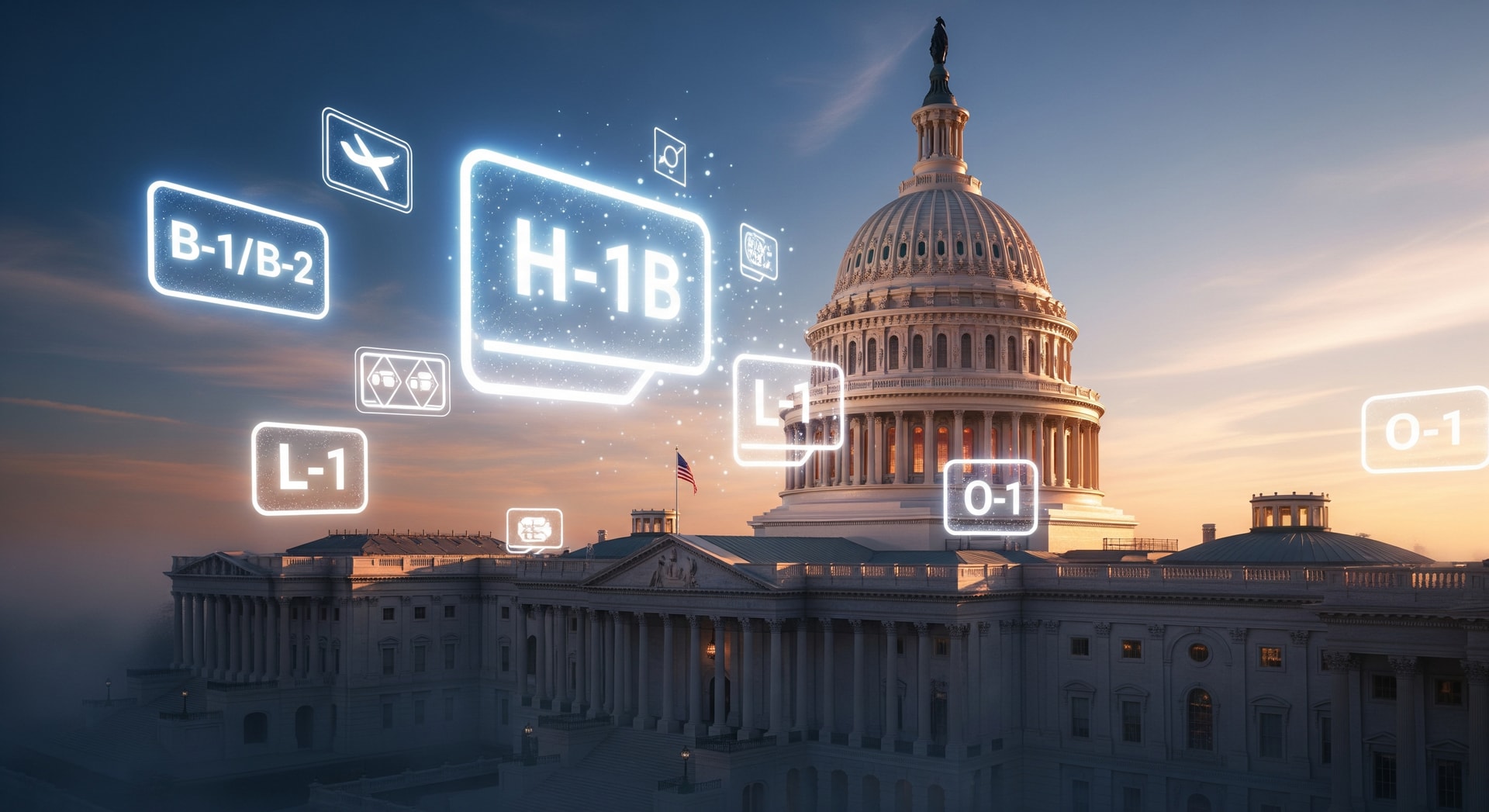
The EXILE Act proposes ending the H-1B visa program by 2027, a change that would affect nations including Brazil, Mexico, Canada, France and India.
Summary: The EXILE Act would phase out the H-1B visa — capped at 85,000 (including 20,000 for advanced degrees) — reducing the cap to zero by 2027 and affecting workers and travel between the U.S. and countries such as Brazil, Mexico, Canada, France, Jamaica, Spain, India and China.
The United States is advancing the EXILE Act, a bill that would effectively eliminate the H-1B visa program — a key route for skilled foreign professionals to enter the U.S. for work. The proposed change would have wide-ranging effects on employers, international travel for business, and the global movement of talent, touching countries such as Brazil, Mexico, Canada, France, Jamaica, Spain, India and China.
What the EXILE Act proposes
Under current U.S. rules the H-1B program issues 85,000 visas annually, including 20,000 set aside for applicants with advanced degrees. The EXILE Act seeks to reduce that cap to zero by 2027, which would end this specific pathway that allows employers to sponsor foreign professionals in specialized roles such as software engineering, healthcare, research and other technical fields.
Who and which countries are most affected
The H-1B program has historically been concentrated among a small group of origin countries. Removing the program will change travel patterns for professionals and may reduce routine business travel to the U.S.
- India: 2.83 lakh (283,000) approvals — 71% of H-1B approvals
- China: 46,680 approvals (12%)
- Brazil: 2,641 approvals (0.7%)
- Canada: 4,227 approvals (1.1%)
- Mexico: 3,335 approvals (0.8%)
- Spain: 1,043 approvals (0.3%)
- France: 1,281 approvals (0.3%)
- Jamaica: 851 approvals (0.2%)
How travel and airlines could feel the impact
Many H-1B holders travel frequently to the United States for conferences, client meetings and collaborative work. If that pipeline closes, demand for business travel on routes between the U.S. and countries like India, Mexico and Brazil could fall — affecting airlines that serve those corridors and reducing demand for business-class travel.
Potential effects on U.S. tourism and local economies
The loss of H-1B travel could amplify recent tourism weakness. International arrivals to the U.S. fell 4.2% in 2025, contributing to a $50 billion revenue shortfall. Cities that rely heavily on business tourism — such as San Francisco, New York and Los Angeles — could see reduced visitor spending if fewer skilled professionals travel to the U.S. for work and leisure.
Where skilled workers might move instead
If the U.S. tightens access, other destinations could attract more global talent. Canada, Australia and the UK already offer alternative immigration routes — for example, Canada’s Express Entry system — and may see increased interest from professionals seeking more flexible relocation options.
How companies are responding
Major employers are already preparing for the prospect of tighter H-1B rules. Firms such as Microsoft, Amazon and Google have encouraged foreign staff to return to the U.S. ahead of potential changes and are exploring alternatives like remote hiring or expanding local talent pipelines. Smaller tech startups may face more acute challenges filling specialised roles.
What this means for travellers and the industry: fewer H-1B visa holders travelling to the U.S. could reduce business-class bookings, lower tourism spending in major cities, and shift the destination choices of skilled professionals — altering both airline demand and the talent landscape.
Sources