

Planning a trip to South Korea requires understanding several entry requirements that have evolved significantly in recent years. From the cutting-edge K-ETA electronic travel authorization to the Q-Code health declaration system, Korea has modernized its immigration processes to ensure both security and efficiency. Whether you're visiting for the vibrant K-pop scene, delicious cuisine, ancient palaces, or world-class technology, proper preparation ensures a smooth arrival experience.
South Korea's entry system combines traditional arrival cards with digital pre-registration systems. The K-ETA (Korea Electronic Travel Authorization) is required for many visa-free travelers, while the Q-Code system streamlines health and customs declarations. Understanding which requirements apply to your nationality helps you prepare correctly before departing for Incheon, Gimpo, or other Korean entry points.
This comprehensive guide covers all South Korea entry requirements for 2026, including the K-ETA application process, Q-Code health declaration, traditional arrival cards, and practical tips for navigating Korean immigration. Whether it's your first visit or you're returning to this fascinating country, this guide will help you arrive prepared and ready to explore.
South Korea Entry Overview
South Korea's entry requirements vary by nationality and have undergone significant changes. The country offers visa-free access to many nationalities, but visitors from most visa-free countries must obtain a K-ETA (Korea Electronic Travel Authorization) before arrival. Additionally, all travelers are encouraged to complete the Q-Code health declaration for faster processing.
The traditional paper arrival card is still used at Korean airports, though the Q-Code system digitizes much of this information. Understanding each component helps ensure you have all necessary documents ready when you arrive at immigration.
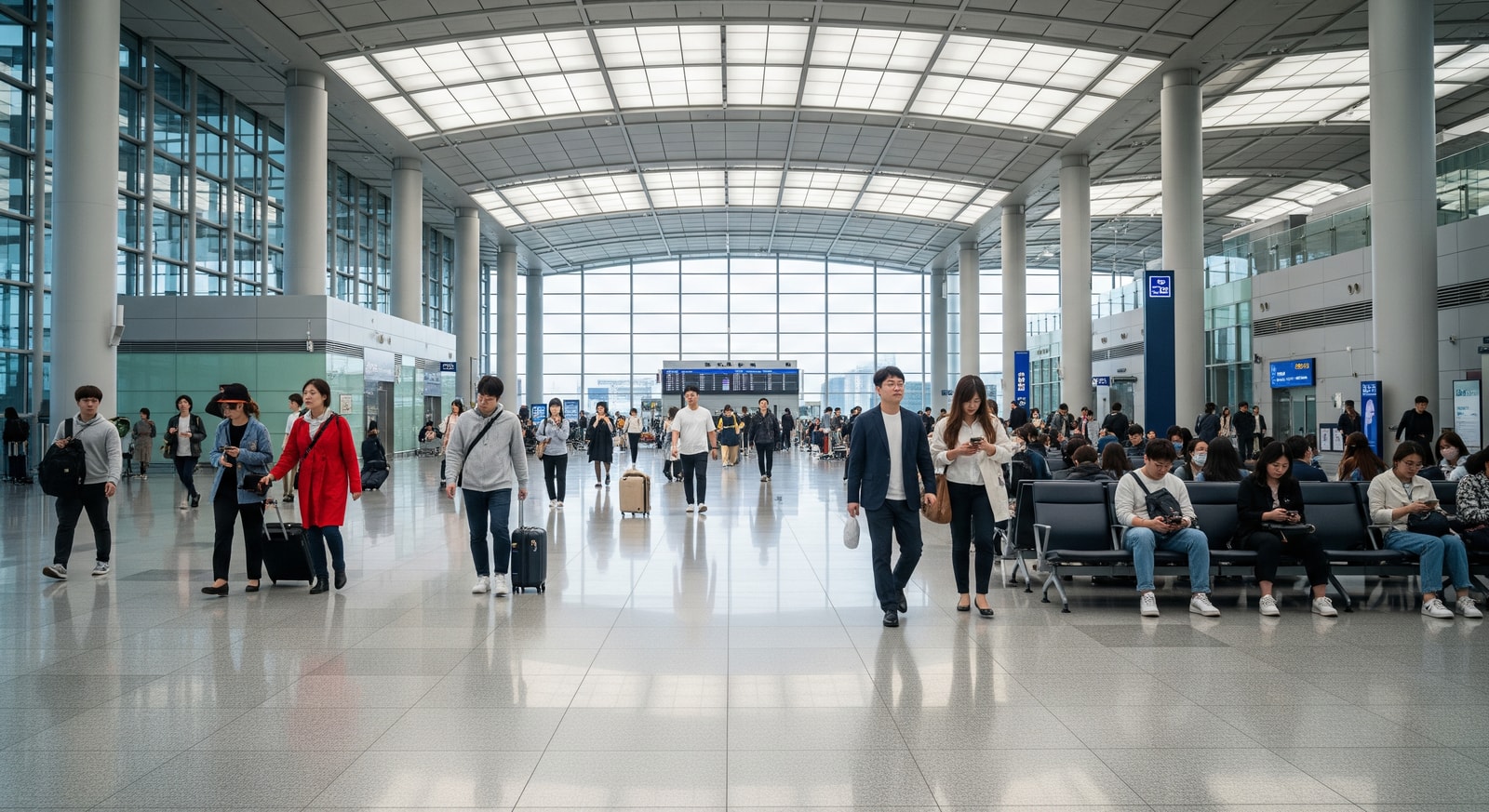
Korea has invested heavily in modernizing its immigration systems to provide a world-class arrival experience. Incheon International Airport, consistently rated among the world's best, showcases this commitment with automated immigration lanes, multilingual support, and efficient passenger flow management. The combination of K-ETA pre-screening and Q-Code health declarations allows immigration officers to process travelers quickly while maintaining robust security standards.
Korea Entry Quick Facts
K-ETA: Required for most visa-free nationalities (KRW 10,000)
K-ETA Validity: 2 years, multiple entries
Q-Code: Free health/customs declaration
Arrival Card: Paper form at immigration
Processing: K-ETA 24-72 hours; Q-Code instant
Visa-free stay: 30-90 days depending on nationality
K-ETA: Korea Electronic Travel Authorization
The K-ETA (Korea Electronic Travel Authorization) is an electronic pre-screening system for visitors from visa-free countries. Introduced in 2021, K-ETA allows Korean authorities to pre-screen travelers before they board their flights. It's not a visa but rather a travel authorization linked to your passport.
Note: Korea has temporarily suspended K-ETA requirements for certain nationalities through specific periods. Always check the latest status before applying, as these exemptions are periodically extended or modified. When in effect, travelers from exempt countries can enter without K-ETA while still completing Q-Code.
K-ETA Key Information
| Feature | Details |
|---|---|
| Cost | KRW 10,000 (~$7.50 USD) |
| Validity | 2 years or until passport expires |
| Entries | Multiple entries allowed |
| Processing time | Usually 24-72 hours (can take longer) |
| Application | Online at official K-ETA website |
| Required for | Most visa-free nationalities (when not temporarily exempt) |
How to Apply for K-ETA
- Visit official K-ETA website — Access the official Korea Electronic Travel Authorization portal (k-eta.go.kr)
- Create application — Start a new K-ETA application
- Enter personal details — Provide full name, date of birth, nationality, and contact information exactly as on passport
- Add passport information — Enter passport number, issue date, expiry date
- Upload photo — Provide a clear passport-style photo
- Answer screening questions — Complete security and health-related questions
- Enter travel details — Provide intended entry date and accommodation in Korea
- Pay the fee — Complete payment of KRW 10,000 (~$7.50)
- Submit and wait — Receive approval via email (typically 24-72 hours)
- Save confirmation — Your K-ETA is linked to your passport electronically
K-ETA Temporary Exemptions
Korea periodically exempts certain nationalities from K-ETA requirements. Check the official K-ETA website for current exemption status before applying. If your nationality is currently exempt during your travel dates, you don't need K-ETA but should still complete Q-Code.

Q-Code: Health & Customs Declaration
The Q-Code system is Korea's electronic health and quarantine declaration platform. All travelers entering Korea are encouraged to complete the Q-Code before arrival, as it significantly speeds up the immigration and customs process. The Q-Code is free and takes about 5 minutes to complete.
Originally introduced during the COVID-19 pandemic, Q-Code has been retained as an efficient way to collect traveler health information and customs declarations. While not strictly mandatory, travelers without Q-Code face longer processing times at arrival.
The Q-Code system integrates seamlessly with customs declarations, allowing travelers to report any goods subject to inspection through the same platform. Upon submission, you receive a personalized QR code that officers scan at designated checkpoints. This eliminates the need for separate paper customs forms and creates a streamlined arrival experience. The Korea Disease Control and Prevention Agency maintains the Q-Code system, ensuring traveler health data is handled securely and in compliance with privacy regulations.
- Access Q-Code portal — Visit the official Q-Code website (cov19ent.kdca.go.kr) or use the Q-Code mobile app
- Enter passport information — Provide your passport number and details
- Complete health declaration — Answer questions about symptoms and travel history
- Add Korea stay information — Enter your accommodation and contact details in Korea
- Complete customs declaration — Declare any goods subject to customs inspection
- Submit and receive QR code — Your personalized QR code is generated instantly
- Save the QR code — Screenshot or save to your phone for scanning at arrival
Q-Code Tips
Complete Q-Code within 24 hours of your arrival for the most current information. Have your phone battery charged for scanning the QR code at arrival. You can complete it on the plane if your airline offers WiFi. The same Q-Code covers both health declaration and customs.
Traditional Arrival Card
Despite the digital systems, Korea still uses paper arrival cards at immigration. These cards are distributed on flights to Korea or available at arrival halls. The form collects your personal information, passport details, and Korea stay information. Flight attendants typically distribute these cards during the descent into Korea, so have your details ready to complete it during the final hour of flight.
If you've completed Q-Code, you still receive a paper arrival card but the process at immigration is faster as officers can verify your digital submission. The arrival card remains part of the formal entry process. The card is straightforward to complete - most fields mirror the information you already submitted digitally through K-ETA and Q-Code, serving as an additional verification layer.
- Arrival Card: Paper form for immigration processing - filled on flight or at arrival hall
- Information required: Full name, passport number, flight number, address in Korea, purpose of visit
- Customs Declaration: If not using Q-Code, a separate paper customs form may be required
- Pen needed: Bring a pen for completing these paper forms on the flight

At Immigration: What to Expect
Korean immigration is efficient and well-organized, reflecting the country's reputation for technological excellence and customer service. Here's what to expect when arriving at Incheon, Gimpo, or other Korean airports. Officers are generally professional and efficient, though peak hours when multiple international flights arrive simultaneously can result in longer queue times.
- Health screening: Scan your Q-Code QR code at designated kiosks or show to officials
- Immigration queue: Join the line for foreign nationals
- Document check: Present passport, arrival card, and K-ETA confirmation (if asked)
- Biometrics: Fingerprints and photo taken at immigration counter
- Questions: Officers may ask about purpose and length of stay
- Entry stamp: Passport stamped with permitted stay duration
- Baggage claim: Proceed to collect luggage
- Customs: Scan Q-Code or present customs form; exit through appropriate channel
Automated immigration gates are available at Incheon for certain passport holders and registered travelers, offering faster processing. First-time visitors typically use the staffed immigration counters.
The entire process from landing to exiting the airport typically takes 30-60 minutes depending on flight arrivals and queue lengths. Incheon Airport is world-renowned for efficiency and excellent facilities. Beyond immigration, you will find currency exchange booths, SIM card vendors, and tourist information centers immediately after exiting. The Airport Railroad Express (AREX) provides direct connections to Seoul Station in approximately 43 minutes, while regular buses and taxis offer alternative transport options to destinations throughout the Seoul metropolitan area and beyond.
Common Myths About Korea Entry
Everyone needs K-ETA to enter South Korea
K-ETA requirements vary by nationality and are subject to temporary exemptions. Some nationalities are permanently exempt, others temporarily exempt for specific periods. Visa holders don't need K-ETA. Always check current requirements before your trip as policies change frequently.
Q-Code is mandatory and you can't enter without it
Q-Code is strongly recommended but not strictly mandatory. Travelers without Q-Code can still enter but face longer processing times as they must complete paper forms and manual screening. Completing Q-Code beforehand significantly speeds up your arrival experience.

South Korea
Capital: Seoul
Currency: South Korean Won (KRW)
Language: Korean, English widely understood in tourist areas
Timezone: UTC+9 (KST)
Processing: K-ETA 24-72 hours; Q-Code instant
Quick Facts
- K-ETA: KRW 10,000 (~$7.50)
- Q-Code: FREE
- K-ETA valid: 2 years
- Visa-free: Many nationalities

Frequently Asked Questions
Do I need K-ETA to visit South Korea?
How much does K-ETA cost?
What is Q-Code and is it required?
How long does K-ETA processing take?
How long can I stay in Korea without a visa?
Do I still need to complete paper arrival cards?
Can I get K-ETA at the airport upon arrival?
Is K-ETA the same as a visa?
What if I transit through Korea without leaving the airport?
Can I work or study with K-ETA?
Ready to Visit South Korea?

Get the DoVisa App
Manage your K-ETA and travel documents on the go.







Comments(12)
Leave a Comment
Just got back from 2 weeks in Korea! K-ETA was approved in about 18 hours, and Q-Code took 5 minutes. Immigration at Incheon was super smooth - maybe 20 minutes from plane to exit. Great airport!
Check the temporary exemption status before applying! I'm from the US and K-ETA was suspended during my travel dates, so I only needed Q-Code. Saved $7.50 and time. Policies change frequently.
Incheon Airport is amazing - spa, Korean culture center, and the best duty-free shopping. Arrive early on your departure day to enjoy it. Also, the airport train to Seoul is cheap and convenient.
T-money card for transport and get a Korean SIM/eSIM at the airport - makes everything easier. Use Kakao Maps instead of Google Maps in Korea - it's much more accurate!
Do I need K-ETA if I already have a Korean visa?
The paper arrival card is easy to fill out on the plane. Flight attendants distribute them. Have a pen ready and know your hotel address. Takes just a few minutes while flying over Korea.
Korean BBQ on your first night is a must! Also try Gyeongbokgung Palace with a rented hanbok - you get free entry in traditional dress. K-culture is everywhere you look in Seoul!
How long does immigration typically take at Incheon?
Complete Q-Code even if K-ETA is exempt for your nationality. It covers customs declaration too, so you breeze through everything at the end. Took 5 minutes on the plane using WiFi.
April was perfect for visiting - cherry blossoms everywhere and pleasant weather. Gyeongju for historical sites, Busan for beaches and seafood, Seoul for everything else. 2 weeks wasn't enough!
Book palace visits and popular restaurants in advance through Naver. English support is good in tourist areas but the Papago translation app helps a lot. Korean hospitality is wonderful!
K-ETA was easy to get - approved next morning. The automated gates at Incheon are super fast if you're eligible. Overall one of the smoothest immigration experiences I've had in Asia!